
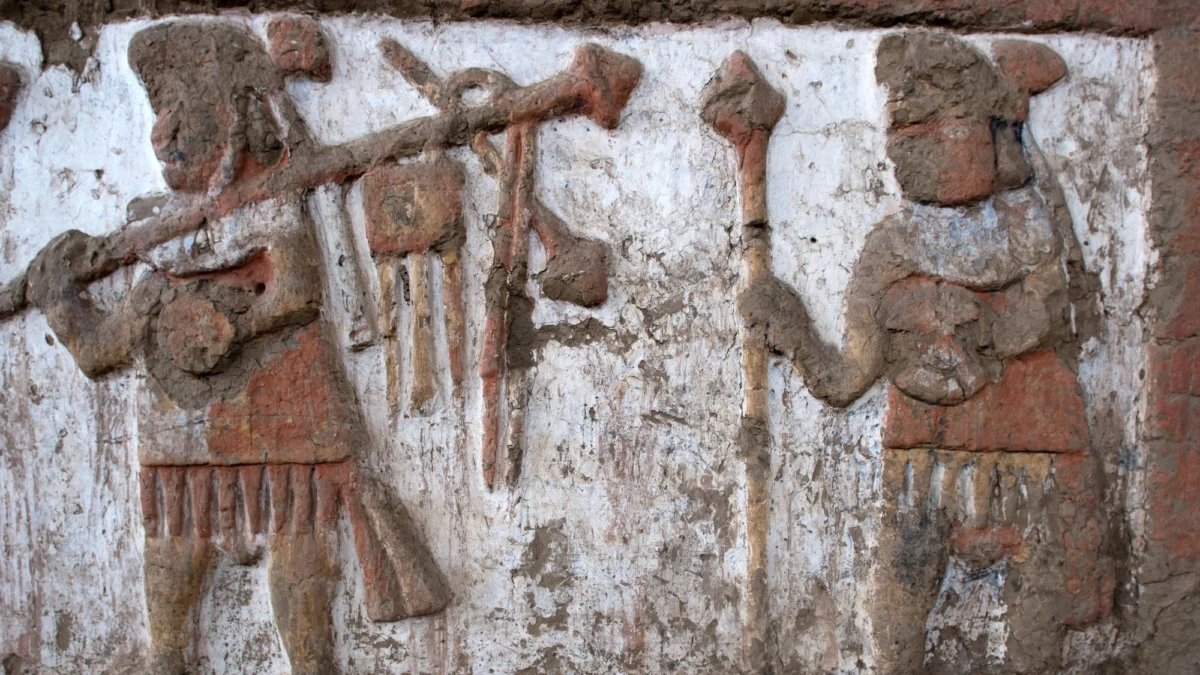
The historical narrative surrounding the collapse of major civilizations often leans heavily on the assumption that environmental collapse triggers immediate and widespread interpersonal violence. However, a comprehensive new study focused on the Lambayeque Valley in northern Peru suggests that these societal failures were not driven by an inherent shift toward chaos. Published in the journal Frontiers in Environmental Archaeology, the research provides a counter-narrative to the long-standing belief that prehistoric cultures responded to catastrophic climate-driven disasters, such as those caused by the El Niño-Southern Oscillation (ENSO), with internal bloodshed.
By analyzing skeletal remains spanning three millennia, researchers from New York University and George Mason University have determined that, contrary to popular theories, instances of interpersonal violence remained remarkably rare throughout the Moche and Sicán periods. This finding fundamentally challenges the deterministic view that environmental stress inevitably leads to social fragmentation and physical conflict.
A Landscape Defined by Adaptation
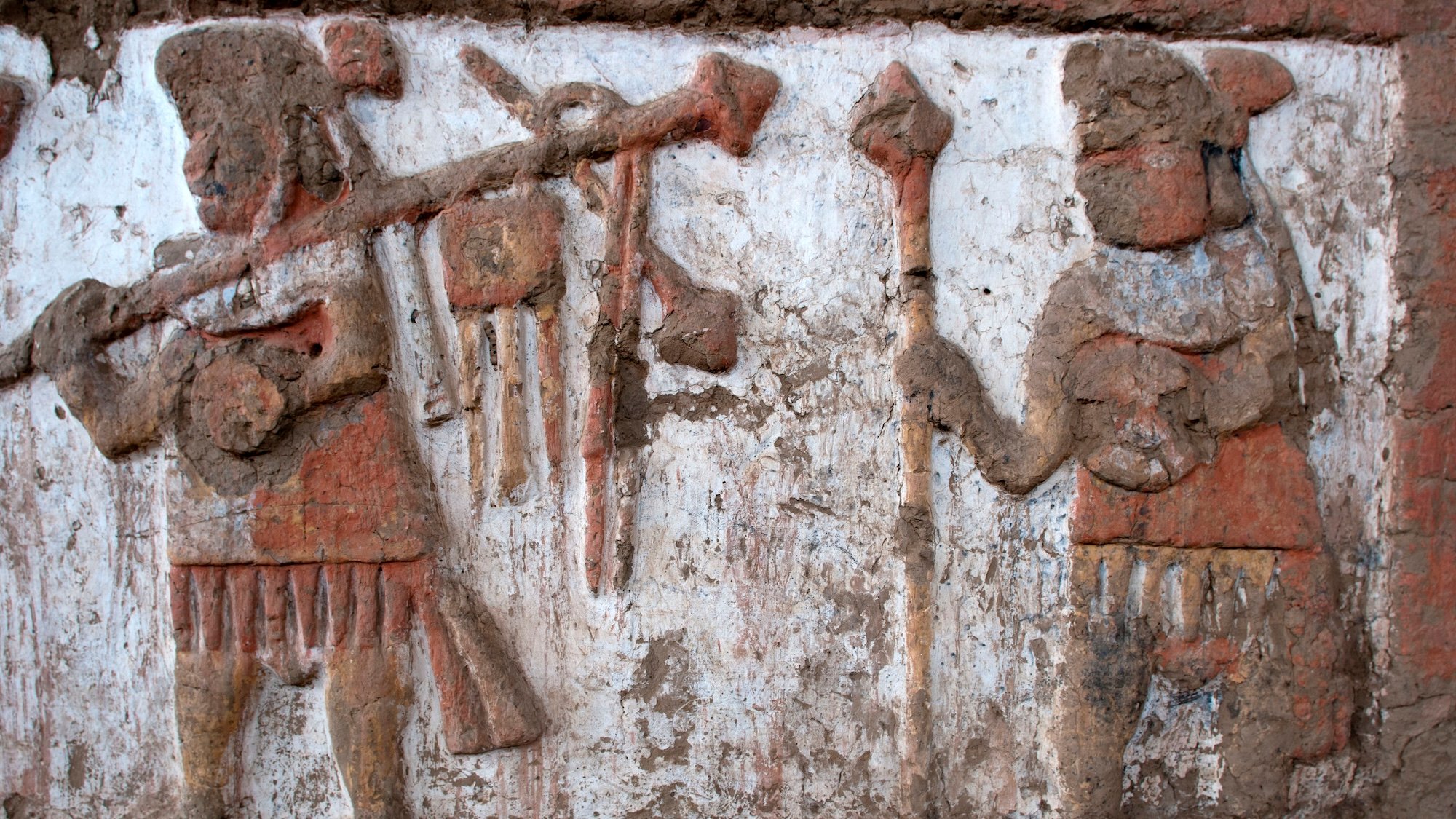
The Lambayeque Valley, situated along the arid coastline of northern Peru, has served as a crucible for human civilization for at least 6,000 years. Despite its harsh desert geography, the region’s complex network of river systems and proximity to the Pacific Ocean allowed it to become a cradle for advanced societies. Among the most prominent of these were the Moche (100–750 CE) and the Sicán (750–1375 CE). These cultures developed sophisticated irrigation systems, monumental architecture, and highly organized agricultural economies that allowed them to thrive in an environment defined by extreme scarcity.
However, the region’s prosperity was constantly threatened by the cyclical, often devastating, effects of the El Niño weather pattern. These events brought unprecedented flooding that frequently wiped out crops, destroyed infrastructure, and disrupted the food security of thousands. Historically, archaeologists have noted that the decline of both the Moche and the Sicán political systems seemed to coincide with these climatic anomalies. This led to the prevailing hypothesis that, as resources dwindled, these societies descended into violent competition and ritualized brutality to appease deities or reassert control.
The Biohistory Project: Methodology and Scope
To test the hypothesis that climate stress bred chronic violence, lead researchers Thomas Snyder and Haagen Klaus utilized the extensive Lambayeque Valley Biohistory Project archives. This collection is one of the most significant in the region, encompassing skeletal remains from 30 distinct archaeological sites and representing approximately 3,000 years of human history.
The research team performed a meticulous examination of 1,600 individual sets of remains. Their primary objective was to distinguish between ritualized violence—such as sanctioned human sacrifice—and everyday interpersonal violence, which would be evidenced by perimortem cranial trauma or defensive wounds. The study specifically sought correlations between these skeletal trauma markers and the known paleoclimatic record of severe El Niño flooding events.
The results were statistically striking. Only 25 individuals out of the 1,600-person sample, or approximately 1.6 percent, exhibited evidence of intentional, non-ritualized trauma. When the researchers cross-referenced these findings with the timeline of ecological instability, they found no significant clustering of violence during the years identified as climate-disrupted. The evidence suggests that for the vast majority of the population, life continued with a high degree of social cohesion, even when the environment turned hostile.
Chronology of Civilizational Resilience
The study underscores a 6,000-year history of successful adaptation rather than a descent into anarchy. The following timeline illustrates the environmental and social context of the region:
- 100–750 CE (Moche Period): The era saw the construction of massive adobe structures like the Huaca de la Luna. The economy relied heavily on coastal resources and canal-fed agriculture.
- 750–1375 CE (Sicán Period): Following the Moche, the Sicán society reached new heights in metallurgy and trade. Despite repeated environmental setbacks, they maintained complex social hierarchies and extensive trade networks.
- The El Niño Factor: Paleoclimatic data indicate major ENSO cycles occurred periodically throughout these centuries, creating extreme variability in rainfall and river flow.
- The Findings: The skeletal record reveals that despite the pressure of these events, the frequency of interpersonal violence remained consistently low, suggesting that social norms and cooperative survival strategies were robust enough to withstand even severe environmental shocks.
Expert Perspectives on Human Response
The implications of this research extend far beyond archaeology, offering a new lens through which to view modern climate policy and human behavior. Dr. Thomas Snyder, an archaeologist at New York University, noted that the absence of violence in the archaeological record serves as a testament to the resilience of these ancient populations.
"The main thing that jumped out at us was just how few cases of interpersonal violence we observed outside ritualized contexts," Snyder stated. He emphasized that while human sacrifice was a documented, intentional, and controlled event, it did not reflect the general state of civil society. According to the research, these sacrifices were likely a state-sponsored attempt to manage crisis through ideological means, rather than a reflection of a society tearing itself apart.
Dr. Haagen Klaus of George Mason University echoed this sentiment, noting that the ancient inhabitants of the Lambayeque Valley functioned in ways remarkably similar to modern societies. "Archaeological evidence shows that in so many ways they were mirrors of us—in how they lived their daily lives, interacted with their world, ran their economies, and confronted environmental crises," Klaus explained. The study concludes that the "collapse" of these civilizations was likely the result of complex socioeconomic and systemic failures rather than a simple, direct consequence of climate-induced warfare.
Implications for the Modern Climate Era
The study provides a sobering, yet hopeful, perspective for current discussions regarding the climate crisis. As contemporary societies face the accelerating reality of global climate change, there is a recurring narrative—often echoed in political and media discourse—that resource scarcity will inevitably lead to civil unrest, migration crises, and global conflict. The findings from the Lambayeque Valley suggest that this is not a biological or historical inevitability.
By documenting 3,000 years of stability in the face of unpredictable environmental extremes, the research team highlights that humanity’s primary, default response to crisis is adaptation and social coordination, not conflict. The authors explicitly state that violence is not a "predetermined response" to environmental pressure. Instead, societies possess the agency to choose how they react to external threats.
This research forces a reassessment of how we interpret "collapse" in the archaeological record. Rather than viewing the end of the Moche or the Sicán as a failure of social order, it should be viewed as a long-term transition where people ultimately sought new, more viable ways to exist within their environment. The takeaway for the 21st century is clear: the path taken during a climate crisis is defined by political, economic, and social choices, and violence is not a necessary outcome of environmental change.
Ultimately, the Lambayeque Valley Biohistory Project serves as a reminder that human history is as much defined by the quiet success of cooperation as it is by the loud, infrequent occurrences of trauma. As researchers continue to refine the data—particularly through future efforts to secure comprehensive radiocarbon dating for all remains—the picture of these ancient Peruvians as masters of adaptation continues to solidify. Their legacy is one of endurance, proving that even under the weight of catastrophic natural events, communities can sustain peace, order, and cultural continuity for generations.

