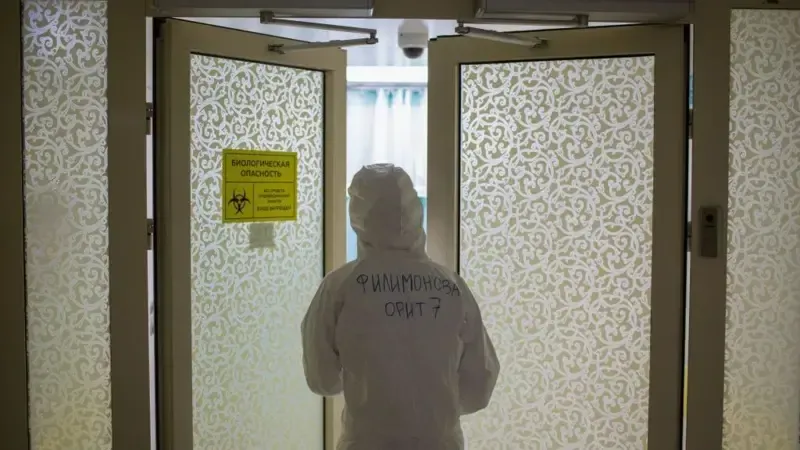
The United States Centers for Disease Control and Prevention (CDC) has formally initiated heightened monitoring protocols following reports of a fatal incident at a research facility in Siberia, Russia, where a worker succumbed to an undiagnosed case of pneumonia. While the specific pathogen remains under investigation by local authorities, the proximity of the facility to known endemic reservoirs of Yersinia pestis—the causative agent of the bubonic and pneumonic plague—has prompted international health bodies to evaluate the risk of a potential cross-border outbreak.
The alarm was raised following the death of a laboratory employee who reportedly exhibited symptoms consistent with severe respiratory distress. Pneumonic plague, which is the most virulent form of the disease, is uniquely concerning because it is the only form of plague that can spread from person to person through infectious droplets, making it a priority for global health security agencies.
Chronology of the Incident and Initial Response
The incident, which took place at a restricted research facility in the Siberian region, was first brought to the attention of international observers late last week. According to preliminary reports, the deceased individual had been performing routine laboratory duties when they developed acute pneumonia. Despite medical intervention, the patient’s condition deteriorated rapidly.
Russian health regulators, acting under the oversight of the Rospotrebnadzor—the federal agency for surveillance on consumer rights protection and human wellbeing—immediately quarantined the facility and initiated contact tracing protocols. While the Russian government has officially downplayed the incident, describing it as an isolated case with no risk of a wider epidemic, the international community has opted for a "precautionary principle" approach.
For the United States, the response was swift. Erica Schwartz, Director of the CDC, addressed the situation during the "Future of Health" symposium in Washington, D.C. She emphasized that while the probability of an importation event remains statistically negligible, the agency has activated specialized screening protocols at major ports of entry.
Strategic Inter-Agency Coordination
The CDC’s response is not a unilateral effort; it represents a multi-departmental security operation involving the Department of Homeland Security (DHS), the Department of State, and other intelligence and public health entities. This coordination is essential for identifying potential travelers who may have originated from the Siberian region before arriving in the United States.
"We are working in close concert with the Department of Homeland Security, the Department of State, and other government partners to ensure comprehensive visibility," Schwartz stated. "Our objective is to maintain a robust perimeter of public health surveillance without disrupting global commerce or travel unnecessarily."
The focal point of this surveillance effort is the John F. Kennedy International Airport (JFK) in New York. The CDC has mobilized its Port Health Station at JFK, equipping personnel with enhanced screening tools to identify travelers exhibiting symptoms of respiratory infection who may have recent travel history to affected Siberian provinces. These measures include infrared fever detection, secondary screening interviews, and, where clinically indicated, the collection of biological samples for rapid diagnostic testing.
Contextualizing the Plague Risk in the 21st Century
The plague, caused by the bacterium Yersinia pestis, has historically been one of the most feared infectious diseases. While the "Black Death" of the Middle Ages is a distant memory, the disease persists in natural reservoirs, particularly among rodent populations in Central Asia, the Western United States, and parts of Africa.
In Siberia, the presence of marmots and other ground-dwelling rodents, which are known natural hosts for the plague, makes the region a focal point for endemic disease surveillance. The primary concern for health officials in this specific instance is the potential for laboratory-acquired infection or exposure to an antibiotic-resistant strain. Historically, research facilities handling high-consequence pathogens have faced accidental breaches, necessitating stringent biosafety protocols.
From a global health perspective, the transition of the plague from an enzootic (animal-based) disease to a pneumonic (human-to-human) transmission event is the "red line" that dictates public health responses. Once the infection reaches the lungs, the mortality rate increases significantly if not treated with antibiotics within the first 24 hours of symptom onset.
Travel Dynamics and Mitigation Factors
One of the most significant factors mitigating the risk of spread between Russia and the United States is the current geopolitical landscape. Since the escalation of the conflict in Ukraine in 2022, direct commercial air travel between the Russian Federation and the United States has been suspended.
Data provided by the Department of Health and Human Services (HHS) indicates that approximately 200 individuals travel from the Siberian region to the United States annually. Given the lack of direct flights, these travelers typically transit through third-party hubs in the Middle East, Europe, or East Asia. This transit architecture complicates screening efforts, as it necessitates the cooperation of international transit airports to identify travelers who may have originated in high-risk zones.
Despite these complexities, the HHS maintains that the risk of a widespread outbreak in the United States is "very low." The combination of limited travel volume and the high efficacy of modern antibiotics—provided they are administered promptly—serves as a primary defense against a potential pandemic scenario.
Political Reactions and Biosafety Speculation
The nature of the research conducted at the Siberian facility has fueled speculation regarding the potential for "dual-use" research, where biological agents are studied for both medical defense and, potentially, offensive purposes.
Former President Donald Trump, in a public comment regarding the incident, sought to calm market and public fears by addressing the nature of the pathogen. Trump expressed confidence that the death was not the result of a bioweapon incident, framing the event as a localized tragedy rather than an act of state-sponsored biological aggression. While the scientific community generally avoids political commentary, the President’s statement reflects the high-level security focus on the incident.
The Russian government’s insistence that there is no risk of an outbreak has been met with cautious skepticism by international epidemiologists. However, the lack of evidence suggesting a deliberate release or a breach of the "cold chain" required to maintain a biological weapon suggests that the incident is likely related to laboratory-acquired infection through standard, albeit tragic, circumstances.
Implications for Global Health Security
The Siberian incident underscores the fragility of global biosafety. As research into infectious diseases expands to address climate-induced shifts in zoonotic reservoirs, the risk of laboratory-associated infections grows.
The CDC’s proactive stance serves as a reminder that in the post-COVID-19 era, the threshold for declaring a public health emergency has lowered, favoring early intervention over delayed confirmation. The integration of DHS and intelligence agencies into the public health response indicates a broader trend: the securitization of infectious disease.
In the coming weeks, international health observers will look for transparency from the Russian scientific community. The publication of genomic sequencing data regarding the pathogen responsible for the worker’s death would be the most effective way to dispel fears of a novel, resistant strain. Without such data, the CDC and its international counterparts are forced to operate under the assumption of maximum risk, maintaining high levels of vigilance at ports of entry.
Ultimately, while the current situation in Siberia does not constitute an immediate existential threat to the United States, it serves as a critical stress test for global biosecurity protocols. The ability to monitor, isolate, and treat potential cases while maintaining geopolitical stability remains the primary challenge for the CDC as it continues to track the fallout from this isolated but significant event. The agency continues to advise the public that no changes to general travel plans are necessary at this time, provided travelers remain vigilant and report any unusual respiratory symptoms to medical professionals if they have traveled through high-risk endemic areas.