
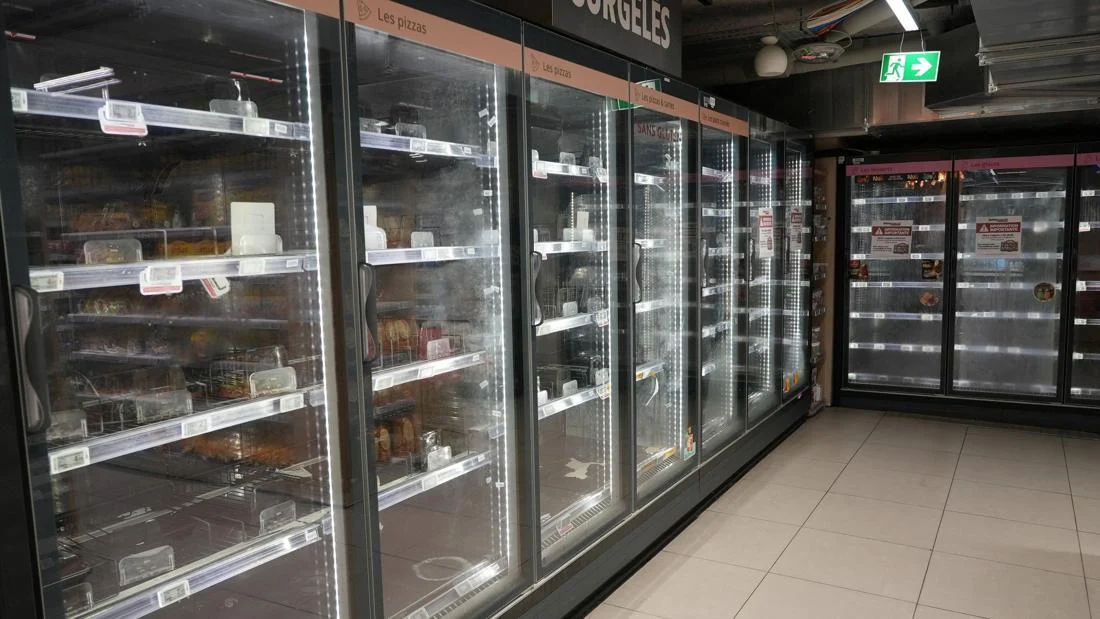
London — In a sweeping and unprecedented covert cyber security operation, British authorities and private sector specialists have successfully secured tens of thousands of commercial refrigerators and freezers across the United Kingdom. The emergency intervention was launched to stave off a catastrophic foreign hacking campaign that threatened to paralyze the nation’s food supply chain, disrupt supermarket operations, and rot millions of pounds worth of perishable goods in warehouses, retail stores, convenience chains, fueling stations, and major sports stadiums.
The clandestine operation, which remained tightly under wraps until mitigation efforts were substantially completed, underscores a chilling new frontier in cyber warfare. Critical infrastructure is no longer confined to traditional power grids, financial institutions, and telecommunication networks; it now extends into the temperature-controlled belly of the modern logistics and retail economy.
A Growing Continental Crisis
The UK’s urgent defensive posture was triggered by an alarming wave of cyber attacks that swept across mainland Europe earlier this year. In those incidents, malicious actors systematically targeted industrial refrigeration systems, altering temperature controls and causing massive thermal failures. The result was tons of rotting food across hundreds of retail outlets, culminating in financial losses running into the millions of euros.
The geopolitical dimensions of these attacks quickly came to light when French authorities publicly pointed the finger at Iran, alleging that state-backed actors were orchestrating the digital sabotage against Western supply chains. Tehrean vehemently denied the accusations, but the geopolitical fallout reverberated across European intelligence agencies.
Initially, British officials and industry experts believed the UK commercial landscape might remain immune to the threat. Unlike much of continental Europe, British retail and logistics infrastructure predominantly relied on a different brand of environmental and temperature control hardware. For a brief period, the island nation appeared to have dodged a digital bullet. However, that false sense of security was shattered in late October when independent security researchers uncovered a series of severe vulnerabilities within the specific hardware systems widely deployed across British commercial facilities. Had these flaws been weaponized by hostile hackers before being patched, the resulting disruption would have dwarfed the incidents seen on the European mainland.
The Race Against Time: Manual Disconnections and Cross-Industry Coordination
Following the chilling discovery, a coalition of cybersecurity researchers, corporate IT departments, and the UK’s National Cyber Security Centre (NCSC) mobilized into an around-the-clock crisis response unit. Recognizing the catastrophic potential of the flaw, officials made the calculated decision to withhold public disclosure of the operation until the vulnerabilities could be systematically identified, patched, or physically isolated.
The trail of discovery began when cooling systems consultancy Omega Solutions identified anomalies in domestic refrigeration control architectures. These findings were subsequently verified, deep-dived, and contextualized by ethical hacking specialists from Pen Test Partners. Realizing the systemic risk, the NCSC—operating in tandem with the Department for Environment, Food and Rural Affairs (Defra) and the Food Standards Agency (FSA)—convened urgent, cross-industry virtual briefings to sound the alarm among affected stakeholders.
Faced with a rapidly closing window before potential exploitation, authorities and corporate leadership implemented drastic mitigation measures. Tens of thousands of remote-access cooling controllers were abruptly disconnected from the open internet. In many cases, IT personnel had to bypass remote protocols entirely, dispatching technicians to pull ethernet cables, unplug routers, and transition facilities to manual temperature monitoring.
Retail insiders described a chaotic, high-stakes week characterized by round-the-clock crisis management. Major supermarket chains mobilized their entire IT workforces to audit, isolate, and secure hundreds of disparate nodes daily.
"It genuinely felt like we were running a marathon against an invisible clock, operating under the assumption that the next wave of refrigerator-targeting malware could drop at any second," said an IT infrastructure engineer at a leading UK supermarket chain, speaking on condition of anonymity. "From a pure business continuity perspective, the implications were terrifying. Our central distribution warehouses hold perishable inventories valued in the millions of pounds. A coordinated, malicious temperature spike would have turned our supply chain into a rotting wasteland within hours."
A Global Trend of Temperature Manipulation Vulnerabilities
The UK operation highlights a disturbing global trend. Throughout the year, researchers and intelligence agencies have tracked an escalating pattern of digital incursions targeting operational technology (OT) and Internet of Things (IoT) devices within the cold chain sector.
Global Cyber-Refrigeration Attack Timeline:
- Early Year: Initial anomalies and minor outages reported in regional European logistics hubs, sparking early intelligence warnings.
- Mid-Year: Widespread, coordinated cyber assaults hit supermarket chains across mainland Europe, resulting in massive food spoilage, multimillion-euro losses, and public accusations against state-sponsored actors.
- Late October: British security researchers discover critical, unpatched vulnerabilities in UK-deployed refrigeration hardware, prompting immediate cross-government intervention.
- November: The UK executes a covert, nationwide cyber defense operation, physically and digitally disconnecting thousands of controllers while deploying emergency firmware updates.
The Hardware at the Center of the Storm: Resource Data Management (RDM)
The continental attacks prompted security auditors to closely scrutinize the dominant temperature regulation technology deployed within British commercial spaces. Attention quickly focused on systems manufactured by Resource Data Management (RDM), a prominent local firm specializing in integrated environmental controls.
The security warnings were not restricted to traditional grocery giants. Alerts were hastily disseminated across a vast commercial ecosystem, including convenience store franchises, retail petroleum forecourts, fast-food chains, hospitality venues, pharmaceutical depots, industrial food-processing plants, and large-scale cold-storage logistics hubs.
Ken Munro, a veteran security researcher at Pen Test Partners, drew alarming parallels between the UK vulnerabilities and the Danfoss units exploited in European attacks. According to Munro, the RDM controllers suffered from architectural weaknesses, including overly simplistic default credential structures. He asserted that sophisticated cybercriminal syndicates or state-sponsored APT (Advanced Persistent Threat) groups could easily reverse-engineer and exploit these gaps within days.
"When you leave industrial IoT devices exposed to the public internet with weak administrative controls, you are essentially inviting malicious actors to walk through the front door," Munro noted in post-incident technical briefings. "The line between enterprise IT and physical operational infrastructure has completely blurred, and unfortunately, physical hardware manufacturers are still catching up to that reality."
Manufacturer Response and Industry Accountability
In the wake of the disclosures, RDM pushed back against some of the more catastrophic assessments put forward by independent security auditors. Company executives argued that drawing a direct equivalence between their systems and the units compromised on the continent was fundamentally inaccurate. RDM stressed that exploiting their hardware would ideally require physical access to the device architecture—a hurdle they argued significantly lowered the probability of widespread remote exploitation.
However, independent ethical hackers countered that physical access is hardly an insurmountable barrier in an era where specialized industrial hardware can be purchased cheaply on online secondary marketplaces like eBay or acquired through standard commercial supply channels.
Despite initial friction over the severity of the flaws, RDM earned praise from cybersecurity authorities for its collaborative and proactive remediation efforts. Ged Evans, Chief Executive Officer of RDM, clarified that the most severe vulnerabilities highlighted by researchers were identified under extreme, worst-case laboratory testing environments that involved the physical disassembly of hardware components.
Working collaboratively with the NCSC, RDM rapidly engineered, tested, and deployed the company’s first comprehensive emergency security patch. Furthermore, the firm initiated direct communications with its client base to audit systems, ensuring that no malicious actors had successfully established persistence within customer networks prior to the emergency mitigations.
Broader Implications for Critical Infrastructure and the IoT Landscape
The successful mitigation of the UK cold-chain crisis averts an immediate humanitarian and economic disaster, but security analysts warn that the underlying systemic vulnerabilities remain a profound global challenge. As industrial processes increasingly rely on automation, smart sensors, and cloud-connected IoT devices, the attack surface for malicious actors expands exponentially.
Historically, cybersecurity spending and regulatory compliance have concentrated on traditional data assets, financial databases, and intellectual property. The weaponization of industrial refrigeration demonstrates that physical goods—ranging from life-saving vaccines and pharmaceuticals to the daily food supply of millions—are now frontline targets in modern cyber warfare.
Experts emphasize that the incident should serve as a wake-up call for both manufacturing sectors and regulatory bodies. Moving forward, security-by-design principles must become mandatory for all operational technology vendors. Hardware manufacturers can no longer prioritize operational convenience and remote-management accessibility at the expense of robust authentication protocols and impenetrable encryption standards.
As supply chains become increasingly digitized, the line between software code and physical reality continues to thin. For British retailers, logistics operators, and government regulators, the covert operation of late 2026 was a narrow escape—a stark reminder that safeguarding the nation’s future requires protecting not just its digital networks, but the very appliances that keep society fed.

