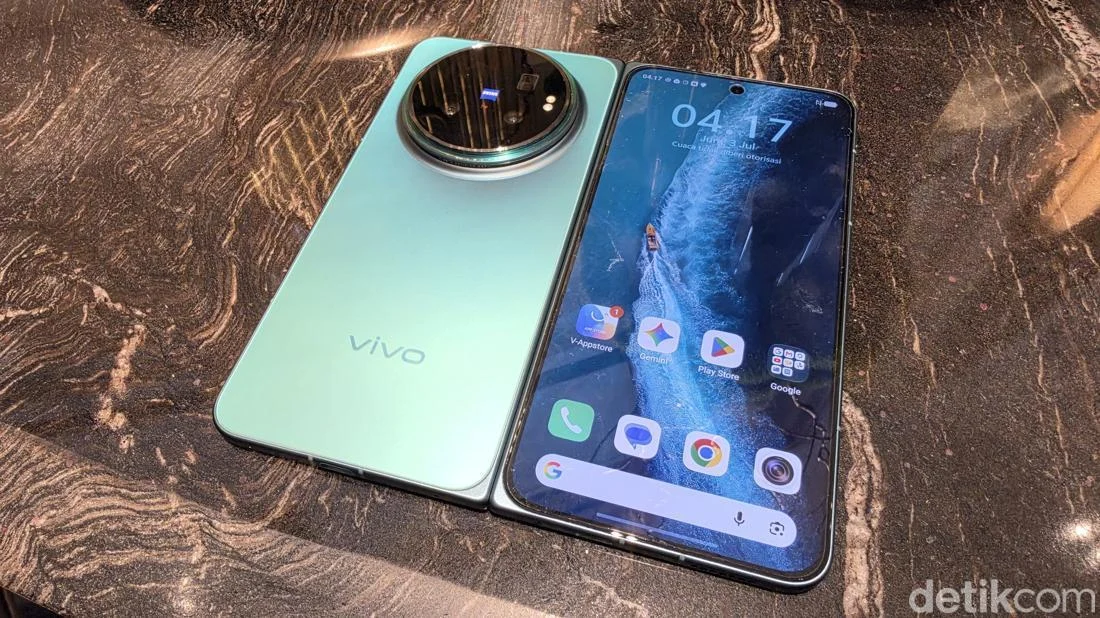
Vivo secara resmi memperkenalkan perangkat lipat flagship terbarunya, Vivo X Fold 6, dalam sebuah acara peluncuran akbar di China pada Juli 2026. Perangkat ini menandai babak baru dalam evolusi ponsel lipat, menggabungkan desain ultra-tipis dengan spesifikasi internal yang menantang batas kemampuan perangkat mobile saat ini. Dengan fokus pada efisiensi daya, kekuatan komputasi, dan sistem operasi yang dioptimalkan, Vivo menargetkan segmen pengguna profesional yang membutuhkan perangkat multitasking bertenaga dalam format yang portabel.
Spesifikasi Teknis dan Inovasi Hardware
Vivo X Fold 6 hadir dengan ditenagai oleh chipset MediaTek Dimensity 9500 Super Edition. Prosesor ini dibangun di atas arsitektur 3 nanometer (nm) yang menawarkan efisiensi energi jauh lebih baik dibandingkan generasi sebelumnya. Didukung oleh unit pemrosesan grafis (GPU) Arm Mali-G1 Ultra MC12, perangkat ini mampu menjalankan aplikasi berat, penyuntingan video 4K, hingga game dengan grafis intensif tanpa hambatan berarti.
Keunggulan utama yang diusung perangkat ini adalah manajemen daya. Vivo menanamkan baterai berkapasitas 7.000 mAh, sebuah angka yang jarang ditemukan pada perangkat layar lipat. Untuk mendukung mobilitas tinggi, sistem pengisian daya 80W FlashCharge disematkan untuk memastikan waktu pengisian yang singkat. Selain itu, fitur wireless charging 40W dan kemampuan reverse wireless charging semakin melengkapi ekosistem daya pada perangkat ini.
Dari sisi visual, Vivo X Fold 6 menggunakan layar utama 8,02 inci berpanel Samsung M14 LTPO AMOLED dengan resolusi 2K+. Layar ini menawarkan tingkat kecerahan puncak hingga 5.000 nits, menjamin visibilitas maksimal bahkan di bawah sinar matahari terik. Sementara itu, layar cover menggunakan panel BOE LTPO AMOLED berukuran 6,51 inci yang mendukung refresh rate 120Hz dan Dolby Vision, memberikan transisi yang mulus antara layar luar dan layar dalam.
Kolaborasi Zeiss dan Kecanggihan Fotografi
Sektor fotografi tetap menjadi pilar utama dalam strategi Vivo. Bekerja sama dengan Zeiss, Vivo X Fold 6 dibekali sistem kamera yang mumpuni. Kamera utama menggunakan sensor Samsung HPB 200 MP dengan ukuran sensor 1/1,4 inci dan aperture f/1.68 yang dilengkapi dengan Optical Image Stabilization (OIS).
Untuk kebutuhan jarak jauh, tersedia lensa telefoto 50 MP yang menggunakan sensor Sony LYT602, menawarkan zoom optik 3x dengan teleconverter ekuivalen 200 mm. Kombinasi ini memungkinkan pengguna menangkap detail yang tajam dari jarak jauh. Melengkapi sistem optik, terdapat kamera ultrawide 50 MP untuk pemandangan luas, serta dua kamera selfie 20 MP yang masing-masing ditempatkan pada layar utama dan layar cover, memastikan kualitas konferensi video tetap jernih dalam posisi terlipat maupun terbuka.
Desain Ergonomis dan Ketahanan Material
Meskipun membawa spesifikasi hardware yang masif, Vivo X Fold 6 tetap mempertahankan profil yang tipis dan elegan. Saat dibuka, dimensi perangkat mencapai 157,16 x 145,66 x 4,4 mm, dan dalam kondisi tertutup hanya berketebalan 9,4 mm. Vivo memberikan perhatian khusus pada durabilitas dengan menyematkan sertifikasi IP5X untuk ketahanan terhadap debu, serta IPX8 dan IPX9 untuk ketahanan terhadap air. Ini menjadikannya salah satu ponsel lipat dengan tingkat proteksi tertinggi di pasar saat ini.
Tersedia dalam varian warna Blue Hole, Salt Lake, dan Polar Night, desain casing yang senada dengan bodi memberikan estetika yang premium dan profesional. Perangkat ini juga hadir dalam berbagai konfigurasi memori, mulai dari RAM 12 GB hingga 16 GB tipe LPDDR5X, serta penyimpanan internal UFS 4.0 dengan pilihan 256 GB, 512 GB, hingga 1 TB.
Integrasi Perangkat Lunak: OriginOS 6 Fold
Perangkat keras yang canggih tidak akan maksimal tanpa optimasi perangkat lunak yang tepat. Vivo memperkenalkan OriginOS 6 Fold yang dirancang khusus untuk layar lipat. Fitur unggulan bernama "Atomic Workbench" memungkinkan pengguna melakukan multitasking dengan beberapa aplikasi secara bersamaan dalam tampilan yang intuitif. Antarmuka ini telah disesuaikan agar transisi antara layar cover dan layar utama terasa mulus, memfasilitasi produktivitas pengguna yang sering berpindah dari mode ponsel konvensional ke mode tablet.
Analisis Pasar dan Implikasi Industri
Peluncuran Vivo X Fold 6 mencerminkan tren pasar smartphone global yang mulai jenuh dengan perangkat candy-bar konvensional. Konsumen kini cenderung mencari perangkat yang menawarkan nilai tambah berupa fleksibilitas layar. Dengan kapasitas baterai 7.000 mAh, Vivo secara tidak langsung menjawab keluhan utama pengguna ponsel lipat selama bertahun-tahun, yakni daya tahan baterai yang kurang memadai dibandingkan ponsel flagship standar.
Keputusan Vivo untuk menggunakan chipset MediaTek Dimensity 9500 juga menunjukkan pergeseran peta kekuatan di industri chipset, di mana solusi MediaTek kini dianggap setara, atau bahkan lebih unggul dalam efisiensi panas dan konsumsi daya dibandingkan kompetitor tradisional. Secara kompetitif, langkah ini menempatkan Vivo dalam posisi kuat untuk menantang dominasi Samsung dan Huawei di segmen perangkat lipat kelas atas.
Strategi Penetapan Harga
Vivo menerapkan strategi harga yang kompetitif untuk pasar China sebagai pasar utamanya. Berikut adalah rincian harga resmi yang diumumkan:
- Varian 12GB + 256GB: 7.999 yuan (sekitar Rp 18 juta)
- Varian 12GB + 512GB: 8.999 yuan (sekitar Rp 20,2 juta)
- Varian 16GB + 512GB: 9.999 yuan (sekitar Rp 22,5 juta)
- Varian 16GB + 1TB: 10.999 yuan (sekitar Rp 24,8 juta)
Penetapan harga ini menempatkan Vivo X Fold 6 tepat di jantung persaingan ponsel lipat premium. Dengan menawarkan penyimpanan hingga 1 TB dan RAM 16 GB, Vivo menargetkan pengguna yang memposisikan ponsel sebagai pengganti laptop untuk pekerjaan kreatif maupun administratif.
Chronology Pengembangan
Pengembangan Vivo X Fold 6 dimulai segera setelah peluncuran seri sebelumnya, dengan fokus utama pada perampingan engsel dan peningkatan kapasitas kepadatan energi baterai. Sepanjang tahun 2025, rumor mengenai penggunaan baterai "Silicon-Carbon" berkapasitas besar mulai beredar, yang akhirnya terbukti melalui peluncuran ini. Kolaborasi berkelanjutan dengan Zeiss juga diperkuat, menandakan bahwa Vivo tidak hanya ingin bersaing di aspek mekanis layar lipat, tetapi juga dominasi dalam fotografi komputasi.
Dampak bagi Konsumen dan Masa Depan
Bagi konsumen, hadirnya Vivo X Fold 6 memberikan opsi baru yang lebih meyakinkan untuk beralih ke perangkat lipat. Faktor ketahanan air (IPX8/IPX9) dan debu (IP5X) yang biasanya menjadi kelemahan ponsel lipat, kini telah diatasi dengan baik. Selain itu, integrasi OriginOS 6 Fold menunjukkan bahwa pabrikan mulai serius menggarap ekosistem aplikasi agar lebih ramah terhadap layar yang bisa berubah bentuk.
Di masa depan, Vivo diperkirakan akan terus memperluas ketersediaan perangkat ini ke pasar global. Jika tren positif dalam hal efisiensi chipset dan durabilitas baterai ini terus dipertahankan, tidak menutup kemungkinan bahwa format ponsel lipat akan segera menggeser ponsel pintar konvensional sebagai perangkat utama bagi kalangan profesional. Dengan perpaduan antara desain tipis, performa 3nm yang tangguh, dan sistem kamera Zeiss yang mumpuni, Vivo X Fold 6 menetapkan standar baru dalam industri yang menuntut inovasi tanpa henti.
Secara keseluruhan, Vivo X Fold 6 bukan sekadar iterasi perangkat tahunan, melainkan pernyataan bahwa teknologi layar lipat telah mencapai tingkat kedewasaan yang mampu menunjang produktivitas harian secara penuh tanpa kompromi. Pengguna kini memiliki pilihan untuk mendapatkan perangkat yang elegan saat dilipat, namun tetap memiliki kapabilitas multitasking yang setara dengan workstation ketika dibuka. Keberhasilan Vivo dalam menyeimbangkan dimensi tipis dengan kapasitas baterai besar akan menjadi acuan bagi produsen lain dalam merancang perangkat generasi mendatang.