
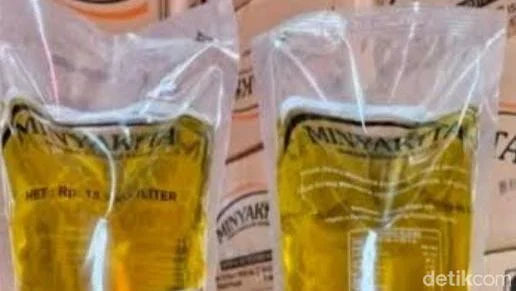
Jakarta, Indonesia – Indonesia’s Minister of Trade, Budi Santoso, has affirmed the significant success of the government’s Domestic Market Obligation (DMO) policy, specifically the requirement for a minimum 35% distribution of crude palm oil (CPO) and its derivatives through state-owned enterprises (BUMN Pangan) like Perum Bulog. This strategic intervention, according to the Minister, has been instrumental in stabilizing the retail price of Minyakita, the government-backed packaged cooking oil, across the national market. As of April 10, 2026, the national average price for Minyakita registered at Rp 15,961 per liter, marking a notable 5.45% decrease from Rp 16,881 per liter recorded on December 24, 2025, just before the enhanced policy framework came into full effect. This achievement underscores the critical role of structured distribution channels in ensuring equitable supply and price stability for essential commodities.
The Minister highlighted that the actual realization of DMO distribution has far exceeded the mandated minimum, reaching approximately 49.45% by April 10, 2026. This impressive figure surpasses the 35% threshold stipulated by the Minister of Trade Regulation Number 43 of 2025 concerning Packaged Palm Cooking Oil and the Governance of People’s Cooking Oil. In a written statement released on Thursday, April 16, 2026, Minister Santoso elaborated, "The DMO policy, requiring a minimum of 35 percent distribution through BUMN Pangan, has proven effective in safeguarding supply availability and maintaining the stability of Minyakita prices in the market. The realization, exceeding 49 percent, demonstrates the robust and efficient functioning of our distribution mechanism."
The Genesis of Intervention: A Response to Crisis
The current DMO and Domestic Price Obligation (DPO) framework is a direct consequence of the severe cooking oil crisis that gripped Indonesia in early 2022. As the world’s largest producer of palm oil, Indonesia faced the paradox of acute domestic shortages and soaring prices, even as its vast palm oil exports continued. This crisis, characterized by empty shelves and widespread public outcry, prompted the government to implement drastic measures, including a temporary export ban on palm oil and its derivatives in April 2022. The DMO and DPO policies were subsequently introduced as long-term structural solutions designed to prioritize domestic supply and price stability over export revenues, ensuring that Indonesian citizens would not again bear the brunt of global commodity price fluctuations.
The DMO mandates palm oil producers and exporters to supply a certain volume of their output to the domestic market at a predetermined price (DPO) before they are granted export permits. This mechanism aims to create a buffer against global price volatility and guarantee sufficient supply for local consumption. The integration of Perum Bulog and other BUMN Pangan into the distribution chain, particularly under Permendag No. 43/2025, represents a refinement of this policy, enhancing the government’s ability to directly influence market availability and reach consumers more effectively. Minyakita, introduced as a standardized, affordable packaged cooking oil, is a direct beneficiary of this DMO scheme, intended to be accessible to all segments of society.
Policy Implementation and Early Successes
The implementation of Permendag No. 43/2025 marked a significant evolution in the DMO policy. By specifically mandating a minimum 35% DMO through state-owned food enterprises, the government sought to streamline the distribution process and enhance accountability. Minister Santoso clarified that the 35% provision represents a floor, not a ceiling, for producers’ domestic contributions. "The 35% DMO provision through BUMN is the minimum threshold that businesses must meet. Increased distribution beyond this provision is, in principle, possible, provided there is sufficient supply readiness," he stated. This flexibility allows the government to encourage higher domestic distribution volumes when market conditions permit or necessitate it, reinforcing its commitment to consumer welfare.
The reported price reduction of Minyakita from Rp 16,881 to Rp 15,961 per liter within a few months demonstrates the immediate impact of the policy. While the current price of Rp 15,961 is slightly above the official Highest Retail Price (HET) of Rp 15,700 per liter, the downward trend is a positive indicator of the policy’s effectiveness in curbing inflationary pressures and making cooking oil more affordable. This success is particularly critical given the broader inflationary environment affecting household budgets. The significant over-realization of the DMO target, with nearly half of the required volume channeled through state-owned enterprises, further underscores the commitment of the industry and the efficacy of the government’s oversight.
Enforcement and Regulatory Oversight: Combating Malpractice
To ensure the integrity and effectiveness of the DMO policy, the Ministry of Trade has intensified its collaborative efforts with the National Police’s Food Task Force (Satgas Pangan Polri). This partnership aims to tighten supervision over the distribution of Minyakita and other cooking oils, preventing supply disruptions and unwarranted price spikes at the consumer level. Minister Santoso emphasized the ongoing coordination with industry players to avert any market disturbances.
The enforcement arm of the policy has already yielded tangible results. Based on comprehensive surveillance, the government has taken decisive action against non-compliant entities. Eight producers and non-producer exporters of cooking oil were sanctioned for failing to meet their DMO obligations. The sanctions imposed on these companies included the suspension of their export permit issuance, a severe penalty that directly impacts their profitability and access to international markets. This measure serves as a strong deterrent, signaling the government’s unwavering resolve to enforce compliance.
Furthermore, the Ministry of Trade has penalized two other businesses – a producer and a distributor – for various infractions. These violations included selling Minyakita above the stipulated DPO price and failing to comply with administrative requirements, such as possessing a Warehouse Registration Certificate (Tanda Daftar Gudang – TDG). The sanctions in these cases involved administrative penalties, specifically written warnings, accompanied by directives for the businesses to immediately align their practices with existing regulations. These actions collectively demonstrate a robust regulatory environment designed to protect consumers and ensure fair market practices.
Addressing Regional Disparities: A Continuing Challenge
Despite the overall positive trend in price stability and supply, disparities persist across different regions of Indonesia. Iqbal S. Shofwan, Director General of Domestic Trade at the Ministry of Trade, reported that while stock levels at retailers and monitored markets remain secure, and prices are largely controlled, 15 provinces have successfully maintained prices at or below the HET of Rp 15,700 per liter. However, the government acknowledges the presence of significant price discrepancies in certain areas, particularly in Eastern Indonesia, where prices can exceed the HET by more than 10%.
This regional imbalance presents a continuing challenge, often attributed to higher logistics costs, less developed infrastructure, and sometimes, opportunistic pricing by local distributors. To address these disparities, the Ministry of Trade is committed to optimizing distribution channels, with a particular focus on leveraging the network of BUMN Pangan, especially Perum Bulog, to reach remote and underserved areas. "The Ministry of Trade observes dynamics in Minyakita supply in several traditional markets recently. Therefore, distribution continues to be optimized through BUMN channels, particularly Perum Bulog and BUMN Pangan," Iqbal stated. He also encouraged businesses to maximize the production and distribution of "second brand" cooking oils as an additional alternative for consumers, aiming to diversify supply sources and enhance market resilience.
Industry Perspectives and Economic Considerations
The DMO policy, while achieving its domestic stability goals, inevitably introduces complexities for the palm oil industry. Producers and exporters must balance their domestic obligations with the pursuit of international market opportunities, which are often more lucrative. Industry associations have generally expressed support for the policy’s objectives of national food security but have also raised concerns about potential impacts on export competitiveness and the costs associated with DMO compliance. The global palm oil market is highly dynamic, influenced by factors such as geopolitical tensions, climate events, and demand from major importers like India and China. Fluctuations in global Crude Palm Oil (CPO) prices can create tension between domestic price ceilings and international market realities, affecting producers’ profit margins and investment decisions.
Economists and market analysts often weigh the benefits of price stability and food security against potential market distortions and the administrative burden on businesses. While interventionist policies like DMO can effectively mitigate immediate crises, their long-term sustainability depends on careful calibration and adaptability. The Minister’s statement that Minyakita is not a subsidized product but rather a contribution from exporters performing export activities is crucial. It positions the DMO as a trade-off mechanism where the privilege of exporting is contingent upon fulfilling domestic supply responsibilities. Furthermore, the Minister clarified that Minyakita is not the sole indicator of cooking oil prices and supply, emphasizing the availability of premium and second-brand oils as alternatives. This broader market perspective is vital for a comprehensive understanding of Indonesia’s cooking oil landscape.
Looking Ahead: Challenges and Future Outlook
The reported successes in stabilizing Minyakita prices and ensuring supply demonstrate the government’s enhanced capacity to manage essential commodity markets. However, the path forward is not without its challenges. Sustaining these gains will require continuous monitoring, adaptive policy adjustments, and robust enforcement. The disparity in prices in Eastern Indonesia remains a priority, demanding targeted interventions beyond blanket national policies. Investments in logistics, infrastructure, and local distribution networks will be critical to achieving true price equity across the archipelago.
Moreover, the long-term sustainability of the DMO model will depend on its ability to evolve with market dynamics, ensuring that it does not inadvertently stifle industry growth or deter investment in the palm oil sector. The government’s willingness to allow for increased DMO realization beyond the minimum, when supply conditions permit, suggests a flexible approach. As Indonesia continues to navigate its role as a global palm oil powerhouse, balancing domestic needs with international trade obligations will remain a delicate but crucial act of governance. The Ministry of Trade continues to provide comprehensive market information through its official portal, https://sp2kp.kemendag.go.id/, offering transparency and empowering consumers with data on commodity prices. The ongoing efforts underscore a deep commitment to ensuring that cooking oil, a fundamental household necessity, remains accessible and affordable for all Indonesians.

