
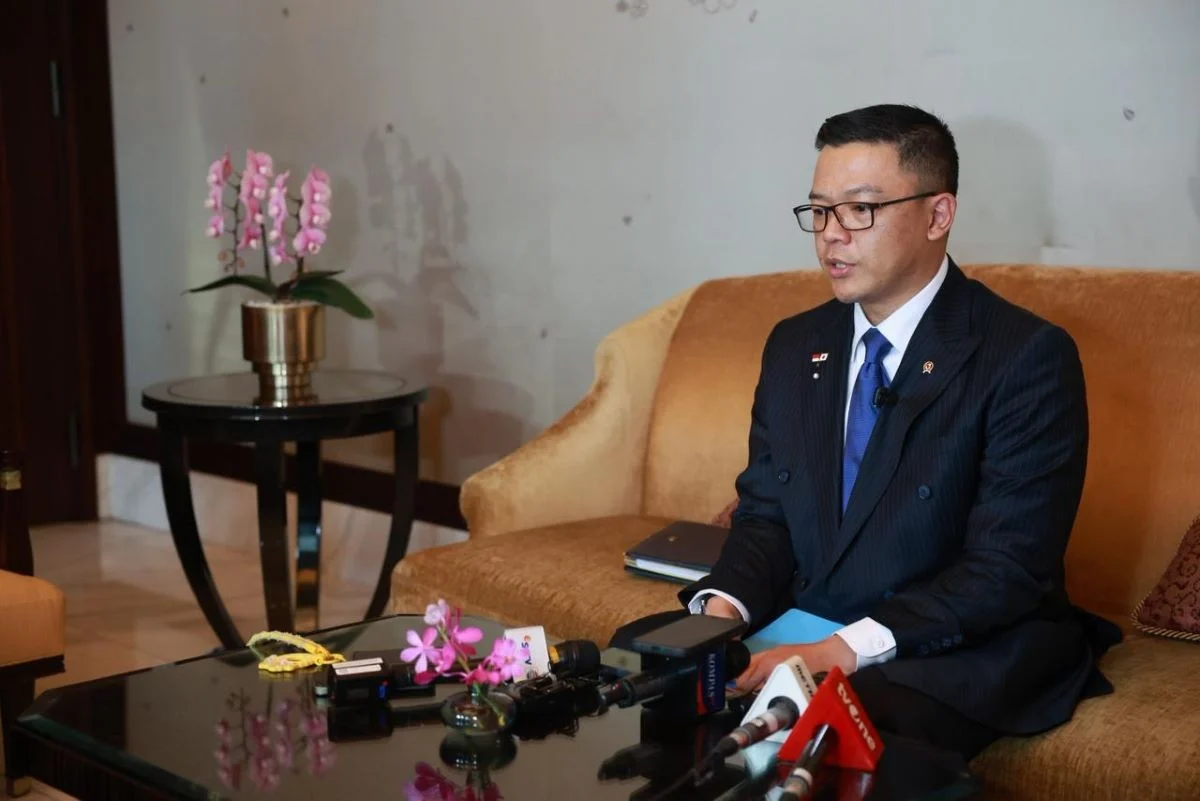
Indonesian Foreign Minister Sugiono is set to embark on a significant diplomatic visit to Antalya, Turkey, from April 17 to 19, 2026. The agenda includes his participation in the prestigious Antalya Diplomacy Forum (ADF), where he will serve as a panelist discussing the Association of Southeast Asian Nations (ASEAN), and attend a crucial ministerial meeting focused on the evolving situation in the Middle East. This high-profile visit underscores Indonesia’s commitment to multilateralism, regional stability, and its proactive role in global diplomatic discourse, as confirmed by the Indonesian Ministry of Foreign Affairs.
The Antalya Diplomacy Forum: A Global Platform for Dialogue
The Antalya Diplomacy Forum (ADF) has rapidly established itself as a premier international platform for diplomatic dialogue, fostering discussions on pressing global and regional issues. Launched in 2021 by the Republic of Turkey, the forum brings together heads of state and government, foreign ministers, high-ranking officials, academics, think-tank representatives, business leaders, and media from across the world. Its primary objective is to facilitate constructive exchanges of ideas, explore solutions to complex challenges, and promote cooperative approaches to international relations. The forum’s annual gathering in the scenic city of Antalya reflects Turkey’s growing ambition to serve as a bridge between diverse cultures and regions, amplifying its voice and influence on the global stage.
Each year, the ADF selects a overarching theme that encapsulates the most critical challenges and opportunities facing the international community. While the specific theme for the 2026 forum has not been explicitly detailed in the initial announcement, past themes have included topics such as "Recoding Diplomacy," "Digital Diplomacy," and "Innovative Approaches to Diplomacy." These themes consistently aim to push the boundaries of traditional diplomacy, encouraging participants to consider new methods and frameworks for international cooperation in an increasingly interconnected and complex world. The forum’s structure typically involves plenary sessions, thematic panels, roundtable discussions, and bilateral meetings, offering ample opportunities for substantive engagement and networking. Indonesia’s consistent participation in such high-level forums is a testament to its "free and active" foreign policy, which advocates for multilateral solutions to global problems and seeks to contribute constructively to international peace and stability.
Indonesia’s Proactive Diplomatic Engagement and the "Free and Active" Principle
Indonesia’s decision to send its top diplomat to the ADF and related meetings highlights the nation’s steadfast commitment to its "Bebas Aktif" (Free and Active) foreign policy doctrine. This principle, enshrined since the nation’s independence, dictates that Indonesia will not align itself with any major power bloc but will actively participate in international affairs to promote peace, stability, and prosperity. The visit to Turkey, a strategically important country at the crossroads of Europe and Asia, aligns perfectly with this approach. By engaging in diverse forums and with a wide array of international partners, Indonesia aims to project its independent foreign policy, advocate for the interests of developing nations, and contribute to a more equitable and peaceful global order.
Minister Sugiono’s presence at the ADF is expected to reinforce Indonesia’s role as a significant player in Asian diplomacy and a vocal proponent of multilateralism. The forum provides an invaluable opportunity for Indonesia to articulate its perspectives on various global challenges, ranging from economic development and environmental sustainability to regional security and humanitarian issues. Beyond the formal sessions, such visits invariably facilitate numerous informal interactions and bilateral discussions on the sidelines, which are crucial for strengthening diplomatic ties and exploring new avenues of cooperation with participating nations. These engagements are vital for Indonesia to gather insights, share experiences, and forge consensus on issues that impact its national interests and regional stability.
Showcasing ASEAN: A Regional Power’s Voice on the Global Stage
A key component of Minister Sugiono’s agenda at the Antalya Diplomacy Forum is his role as a panelist in a dedicated session focusing on ASEAN. This participation underscores the growing recognition of ASEAN as a cohesive and influential regional bloc, whose experiences and perspectives are increasingly relevant to global discourse. Indonesia, as the largest economy and a founding member of ASEAN, plays a pivotal role in shaping the bloc’s agenda and advocating for its interests on international platforms.
The panel discussion on ASEAN will likely delve into various aspects of the organization, including its journey towards regional integration, its economic resilience, its role in maintaining peace and security in Southeast Asia, and its vision for the Indo-Pacific region. Minister Sugiono is expected to highlight ASEAN’s achievements in fostering cooperation among its ten member states, its efforts in promoting a rules-based regional order, and its commitment to addressing transnational challenges such as climate change, cybersecurity, and public health crises. By presenting ASEAN’s narrative, Indonesia aims to enhance global understanding of the bloc’s significance, attract further investment and partnerships, and demonstrate its model of regional cooperation as a potential blueprint for other regions facing similar complexities. The opportunity to share ASEAN’s "centrality" and its approach to regional architecture with a diverse international audience at the ADF is a strategic move to solidify the bloc’s standing as a credible and indispensable partner in global governance.
Addressing the Complexities of the Middle East: A Critical Ministerial Dialogue
Perhaps one of the most critical aspects of Minister Sugiono’s visit is his scheduled attendance at a ministerial-level meeting of the Group of Eight (G8) nations on April 18, dedicated to discussing the evolving situation in the Middle East. While the term "Group of Eight" often refers to the former G8 economic bloc (now G7 after Russia’s suspension), in this context, it is highly probable that it refers to the Developing Eight (D-8) Organization for Economic Cooperation. The D-8 comprises Bangladesh, Egypt, Indonesia, Iran, Malaysia, Nigeria, Pakistan, and Turkey—all Muslim-majority developing countries with significant stakes and perspectives on Middle Eastern affairs. Such a grouping provides a platform for these nations to collectively address the multifaceted challenges in the region, which often have far-reaching geopolitical, economic, and humanitarian implications.
The Middle East has long been a focal point of international attention due to its complex geopolitical landscape, ongoing conflicts, humanitarian crises, and strategic importance in global energy markets. Discussions at this ministerial meeting are expected to cover a wide array of critical issues, including but not limited to, the Israeli-Palestinian conflict, the ongoing civil strife in various countries, regional security architectures, humanitarian aid efforts, and the role of international actors in fostering stability. Indonesia, a nation with the world’s largest Muslim population, has consistently advocated for a peaceful resolution to conflicts in the Middle East, particularly the Palestinian question, and has been a strong proponent of humanitarian assistance.
Minister Sugiono is anticipated to articulate Indonesia’s consistent position, which emphasizes the importance of international law, humanitarian principles, and a two-state solution for the Israeli-Palestinian conflict. He will likely call for de-escalation of tensions, protection of civilians, and renewed diplomatic efforts to achieve lasting peace and stability in the region. The D-8, if it is indeed this grouping, offers a unique opportunity for these influential developing nations to coordinate their diplomatic efforts, share intelligence, and explore joint initiatives that can contribute to conflict resolution and post-conflict reconstruction. This collective voice from a diverse group of nations can add significant weight to international efforts to address the deeply entrenched problems plaguing the Middle East.
Indonesia-Turkey Bilateral Relations: A Foundation for Strategic Partnership
Beyond the multilateral forums, Minister Sugiono’s visit to Turkey also serves to strengthen the robust bilateral relations between Indonesia and Turkey. Diplomatic ties between the two nations have historically been strong, underpinned by shared cultural heritage, religious affinity, and common aspirations for economic development and regional stability. Both countries are members of the G20, reflecting their significance in global economic governance, and share a commitment to fostering a more balanced and equitable international order.
In recent years, bilateral cooperation has expanded across various sectors, including trade, investment, defense, education, and culture. Trade volume between Indonesia and Turkey has seen consistent growth, with both nations actively exploring avenues to diversify their trade basket and enhance investment flows. Indonesia, a major producer of palm oil, rubber, and textiles, finds a significant market in Turkey, while Turkish exports to Indonesia include machinery, automotive components, and defense equipment. Defense cooperation, in particular, has emerged as a promising area, with both countries seeking to enhance their indigenous defense industries and collaborate on technology transfer and joint production. High-level exchanges, such as presidential visits and ministerial meetings, regularly punctuate the bilateral calendar, signaling a mutual desire to elevate their relationship to a strategic partnership. This visit by Minister Sugiono will provide an opportune moment to review existing cooperation frameworks, identify new areas for collaboration, and address any pending issues, thereby consolidating the strategic partnership for the future.
Chronology of the Diplomatic Engagement
The schedule for Minister Sugiono’s visit is tightly packed, reflecting the importance of the engagements.
- April 16, 2026: The Indonesian Ministry of Foreign Affairs, through its spokesperson Yvonne Mewengkang, officially announces Minister Sugiono’s impending visit during a press conference. This official announcement sets the stage for the diplomatic mission, providing key details about the objectives and schedule.
- April 17, 2026: Minister Sugiono is scheduled to arrive in Antalya, Turkey. His arrival will mark the official commencement of his diplomatic mission. This day is likely to involve initial preparatory meetings, possibly bilateral discussions with his Turkish counterpart or other dignitaries arriving for the ADF, and participation in the opening ceremonies or initial sessions of the Antalya Diplomacy Forum.
- April 18, 2026: This will be a particularly intensive day for Minister Sugiono. He is slated to participate as a panelist in a key session of the Antalya Diplomacy Forum, focusing on ASEAN. This provides a crucial platform for Indonesia to articulate ASEAN’s perspectives and achievements to a global audience. Later the same day, he is scheduled to attend the ministerial-level meeting of the Group of Eight (D-8) nations, where discussions will center on the critical and evolving situation in the Middle East. This dual engagement on a single day underscores Indonesia’s commitment to both regional and global issues.
- April 19, 2026: The final day of the visit is expected to include concluding sessions of the ADF, potentially further bilateral meetings with foreign ministers from participating countries, and a wrap-up of his engagements. Minister Sugiono will then depart from Turkey, concluding his diplomatic mission.
Statements and Official Perspectives
During her press briefing on April 16, 2026, Yvonne Mewengkang, Spokesperson for the Ministry of Foreign Affairs, emphasized the significance of the visit. "The Indonesian Foreign Minister, upon the invitation of the Turkish Foreign Minister, will undertake a visit to Antalya, Turkey, to participate in the Antalya Diplomacy Forum from April 17 to 19," Mewengkang stated. She further elaborated on the forum’s role as a routine annual event that provides a vital diplomatic space for the Turkish government to discuss global and regional issues with various stakeholders, including partner countries, international organizations, academics, think-tanks, and business actors.
Mewengkang highlighted Minister Sugiono’s specific roles: "In this year’s ADF, the Indonesian Foreign Minister will serve as a panelist in a discussion session related to ASEAN. Furthermore, on April 18, the Indonesian Foreign Minister is scheduled to attend a ministerial-level meeting of the Group of Eight nations, which will discuss developments in the Middle East." These statements clearly delineate the strategic objectives of the visit, emphasizing Indonesia’s active engagement in multilateral diplomacy and its commitment to addressing critical regional and global challenges. The invitation from Turkey itself signifies the high regard in which Indonesia’s diplomatic contributions are held by the international community.
Implications and Future Outlook
Minister Sugiono’s visit to Turkey carries several important implications. Firstly, it will undoubtedly strengthen the already robust bilateral relationship between Indonesia and Turkey, opening doors for further cooperation in economic, defense, and cultural spheres. Such high-level engagements are crucial for maintaining momentum in strategic partnerships. Secondly, Indonesia’s active participation in the ADF and its role as an ASEAN panelist will elevate its diplomatic profile on the global stage, showcasing its commitment to multilateralism and its leadership within Southeast Asia. This helps project Indonesia as a reliable and influential voice in international affairs.
Thirdly, the ministerial meeting on the Middle East situation provides a critical platform for Indonesia to contribute constructively to discussions on regional peace and stability. By articulating its principled stance and advocating for humanitarian solutions, Indonesia reinforces its image as a responsible global citizen. The collective voice of the D-8 nations, if it is indeed this grouping, can exert significant moral and diplomatic pressure on relevant actors, potentially influencing outcomes in a region fraught with complexities.
In the long term, these engagements are expected to foster greater understanding and cooperation between Indonesia and its international partners, contributing to a more stable, prosperous, and peaceful global environment. The insights gained and alliances forged during this visit will undoubtedly inform Indonesia’s future foreign policy decisions and diplomatic strategies, particularly concerning its engagement with the Middle East and its continued advocacy for ASEAN centrality in the Indo-Pacific region. The visit represents a tangible demonstration of Indonesia’s proactive and engaged approach to global diplomacy, seeking not just to observe, but to actively shape the international agenda.

