The Houthi movement in Yemen is reportedly escalating its military capabilities by deploying sophisticated cruise missiles modified from Iranian air-defense technology, posing a significant and indiscriminate threat to civil aviation and critical energy infrastructure across the Red Sea corridor. Military officials within the Yemeni government, supported by intelligence assessments from the Saudi-led coalition, allege that these modified munitions are designed to track heat signatures, creating a high-risk environment for both military and commercial flight paths. The integration of these systems is believed to be facilitated by the Islamic Revolutionary Guard Corps (IRGC), marking a dangerous evolution in the decade-long conflict that has destabilized the Arabian Peninsula.
The Technical Evolution of Houthi Arsenals
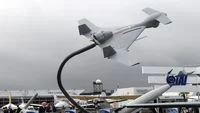
The core of the current international concern lies in the reported modification of legacy surface-to-air systems into lethal, loitering cruise missiles. Brigadier General Majed al-Nazili, a spokesperson for the Yemeni government forces, has publicly highlighted that these weapons possess the capability to remain airborne for approximately 25 minutes. During this window, the missiles utilize thermal tracking technology that lacks the sophisticated discrimination required to distinguish between military aircraft and civilian airliners.
Military analysts suggest that this development signifies a shift from traditional ballistic missile warfare toward precision-guided, autonomous threats. Unlike standard ballistic projectiles that follow a predictable parabolic trajectory, these modified cruise missiles can navigate complex flight paths, making them significantly harder to intercept by conventional radar-based defense systems. This "loitering" capability, essentially turning a defensive weapon into an offensive suicide drone-missile hybrid, represents a leap in the technical proficiency of non-state actors in the region.
A Decade of Conflict: Chronology and Context
The Yemeni Civil War, which ignited in 2014 when Houthi forces seized the capital, Sanaa, has remained one of the world’s most intractable conflicts. The struggle pits the Houthi movement—formally known as Ansar Allah—against the internationally recognized government, which has been backed by a Saudi-led military coalition since 2015.
The timeline of this conflict has been marked by sporadic attempts at diplomacy followed by intense escalations:
- 2014: Houthis capture Sanaa, displacing the government and initiating a widespread civil war.
- 2015: Saudi Arabia and a coalition of regional allies launch a military intervention aimed at restoring the internationally recognized government.
- 2022: A UN-brokered truce provides a temporary, though fragile, cessation of hostilities, leading to a period of relative calm.
- 2024-2025: The breakdown of informal de-escalation efforts has seen a resurgence in hostilities. The Houthis have increasingly targeted strategic maritime chokepoints, including the Bab al-Mandeb Strait, effectively weaponizing the Red Sea trade route.
Strategic Implications for Global Trade and Energy
The Red Sea serves as one of the world’s most critical maritime arteries, through which a significant portion of global energy supplies and commercial goods pass daily. The Houthi control over the coastal areas of Yemen, including the strategic island of Mayyun, has granted them the ability to project power directly into these shipping lanes.
The recent declaration of a maritime blockade against Saudi-bound vessels represents an economic strategy aimed at forcing political concessions. By targeting infrastructure like the Saudi Aramco facilities in Yanbu—a vital hub for the East-West Pipeline—the Houthis are attempting to strike the financial heart of the Saudi economy. The East-West Pipeline, which serves as a crucial bypass to the Strait of Hormuz, is now under constant threat, forcing international shipping companies to weigh the risks of regional transit against the costs of rerouting.
Assessing the Iran-Houthi Connection
The question of "conclusive evidence" regarding the origin of these weapons remains a subject of intense debate among international security experts. Eleonora Ardemagni, a senior researcher at the Italian Institute for International Political Studies (ISPI), notes that while there is no singular smoking gun confirming a direct transfer of fully assembled cruise missiles, the pattern of modular shipments is undeniable.
Evidence gathered over the years points to a sophisticated logistical pipeline. Rather than transporting complete weapon systems—which are easily detectable by naval patrols—the IRGC is believed to supply high-tech components, guidance kits, and sensitive electronics to Yemen. Once on the ground, Houthi engineers, often trained or advised by IRGC personnel, assemble these parts into functional weapon systems. This decentralized manufacturing process makes the arms embargoes imposed by the UN significantly harder to enforce.
In June 2025, the U.S. Central Command reported the seizure of a massive cache of military equipment, totaling approximately 750 tons, destined for Houthi-controlled territory. The shipment reportedly included hundreds of cruise missile parts, anti-ship missile components, and air-defense systems. Such seizures underscore the scale of the illicit supply chain supporting the Houthi war effort.
Expert Analysis: The "Loitering" Threat
Military experts, including Brigadier General Mohammed Al-Kumaim, emphasize that the Houthi transition to "loitering" cruise missiles is a game-changer for regional air superiority. These weapons do not merely strike a target; they occupy airspace.
"The ability of a missile to remain in the air for over 20 minutes while scanning for thermal signatures fundamentally alters the risk profile for every pilot flying over the region," says Ali Al-Dhahab, a prominent Yemeni military strategist. He notes that the mere presence of these weapons, even if not fired, creates a "denial of space" effect, compelling civilian airlines to alter flight paths or cancel routes entirely to avoid the risk of accidental interception.
The Diverse Houthi Missile Arsenal
To understand the gravity of the current situation, one must recognize the evolution of the Houthi arsenal from scavenged Soviet-era weaponry to modern, Iranian-inspired platforms. Their current inventory is classified into several tiers:
- Hypersonic and Long-Range Systems: The Palestine-2, a two-stage solid-fuel missile, is touted by the group as having a range exceeding 2,000 kilometers, placing major regional cities well within reach.
- The Toufan Series: Believed to be a variant of the Iranian Ghadr missile, these systems offer a range of up to 1,950 kilometers, serving as the backbone of their long-range strike capability.
- The Quds Series: These cruise missiles are the primary tools used in attacks against oil infrastructure. They are frequently deployed in swarms to overwhelm defensive batteries.
- Legacy Systems: Despite the influx of modern technology, the Houthis retain significant stockpiles of older Scud-B, Scud-C, and Tochka missiles, as well as Chinese-designed anti-ship C-802 cruise missiles.
Conclusion: The Need for International Vigilance
The escalation in the sophistication of Houthi weaponry poses a threat that extends far beyond the borders of Yemen. By targeting the intersection of civil aviation and global energy logistics, the conflict has entered a phase that necessitates a coordinated international response.
As the UN and global powers look toward a potential path for renewed peace talks, the proliferation of these thermal-tracking cruise missiles remains a primary obstacle. Without a robust mechanism to intercept the illicit flow of components and a concerted effort to neutralize the threat posed to civil transit, the Red Sea will continue to be a zone of extreme volatility. The international community faces a difficult challenge: balancing the need for de-escalation with the urgent requirement to protect global infrastructure and civilian lives from a rapidly modernizing and increasingly dangerous insurgent force.