
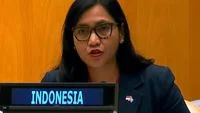
The 81st session of the United Nations General Assembly (UNGA) in New York became the latest diplomatic arena for a long-standing point of contention between Indonesia and several Pacific Island nations. During the high-level proceedings, the Indonesian delegation formally addressed and refuted allegations of systemic human rights violations in the provinces of Papua and West Papua, which had been raised by representatives from the Solomon Islands and Vanuatu. The confrontation highlights the persistent diplomatic friction surrounding the status and governance of the resource-rich, restive region, even as Jakarta emphasizes its commitment to national sovereignty and domestic legal processes.
A Diplomatic Clash on the Global Stage
The accusations leveled by the Solomon Islands and Vanuatu are not unprecedented. For over a decade, these two nations have consistently utilized the UN platform to call for international scrutiny of the situation in Papua. The recent allegations focused on reports of civilian displacement, restrictions on freedom of assembly, and reports of extrajudicial violence attributed to security forces.
In response, the Indonesian delegation adopted a firm, procedural posture. Jakarta’s representatives asserted that the allegations were based on incomplete or inaccurate information and underscored that Indonesia maintains a robust domestic mechanism to investigate any credible claims of misconduct. The delegation explicitly cited the role of the National Commission on Human Rights (Komnas HAM), an independent statutory body, as the primary arbiter for human rights grievances in the country. By highlighting the independence of this institution, Indonesia sought to frame the issue as a matter of internal governance rather than an international humanitarian crisis requiring external intervention.
Historical Context: The Papua Conflict
To understand the intensity of the debate at the UN, one must look at the historical trajectory of Papua’s integration into the Republic of Indonesia. The region, formerly a Dutch colony, was transferred to Indonesian administration following the 1962 New York Agreement and the subsequent 1969 "Act of Free Choice." Critics, including the United Liberation Movement for West Papua (ULMWP), argue that the 1969 referendum was flawed and coerced, an assertion that Jakarta has vehemently denied for decades.
Since the late 20th century, the region has seen sporadic, yet persistent, armed conflict between the Indonesian military (TNI) and the West Papua National Liberation Army (TPNPB). The conflict is rooted in a complex interplay of grievances, including the exploitation of natural resources, the influx of migrants from other parts of Indonesia, and the perceived marginalization of the indigenous Papuan population. The Indonesian government has attempted to mitigate these tensions through various policies, including the implementation of Special Autonomy status in 2001, which granted the provinces greater financial resources and legislative authority, though the efficacy of these measures remains a subject of intense debate.
Chronology of International Scrutiny
The friction at the 81st UNGA is part of a broader timeline of international engagement regarding Papua:
- 1969: The Act of Free Choice results in the formal integration of Papua into Indonesia, a process recognized by the United Nations under Resolution 2504.
- 2001: Implementation of the Special Autonomy Law for Papua, intended to address development gaps and political grievances.
- 2016–2019: Vanuatu and the Solomon Islands increase diplomatic pressure, urging the UN Human Rights Council to investigate reports of violence in the region.
- 2020: UN High Commissioner for Human Rights Michelle Bachelet expresses concern regarding the "escalating violence" and the "arrest of activists" in Papua.
- 2023: Indonesia hosts the ASEAN Summit, focusing on regional stability, while simultaneously managing localized security operations in the Nduga and Intan Jaya regencies.
- 2024 (81st UNGA): The latest exchange of accusations and rebuttals between Pacific Island nations and the Indonesian delegation occurs during the general debate.
Data and Development Metrics
Jakarta’s defense of its policies in Papua often hinges on developmental statistics. According to data from the Indonesian Ministry of National Development Planning (Bappenas), the government has significantly increased infrastructure spending in the region. This includes the construction of the Trans-Papua Highway, intended to reduce the cost of goods and services in remote highlands.
However, independent observers point to a discrepancy between infrastructure development and human security. Reports from NGOs such as Amnesty International and Human Rights Watch suggest that while infrastructure projects have expanded, the "security approach" adopted by the state has led to the displacement of thousands of indigenous villagers. According to recent estimates from the Indonesian internal displacement monitoring groups, intermittent clashes have displaced an estimated 60,000 to 100,000 people in the highland regencies over the past five years. These figures represent the primary data points cited by critics to argue that domestic mechanisms have failed to protect the rights of the civilian population.
Official Responses and Internal Mechanisms
The Indonesian government maintains that it is a vibrant democracy with a functioning judiciary. In their response at the UN, the delegation emphasized that any "credible allegation" is subject to investigation. The National Commission on Human Rights (Komnas HAM) is the cornerstone of this defense. As a member of the Global Alliance of National Human Rights Institutions (GANHRI), Komnas HAM is recognized internationally as an A-status institution, meaning it is compliant with the Paris Principles regarding independence.
The delegation also pointed to the government’s efforts to engage in dialogue with local Papuan leaders, tribal chiefs, and religious organizations to find a peaceful resolution to the conflict. Jakarta maintains that international interference complicates these domestic peace-building efforts and violates the principle of non-interference in the internal affairs of sovereign states, as enshrined in the UN Charter.
Broader Implications and Strategic Analysis
The persistence of this issue at the UNGA carries significant implications for Indonesia’s foreign policy and its standing in the Pacific.
- Diplomatic Capital: Indonesia is increasingly positioning itself as a leader in the Global South and a bridge-builder in ASEAN. Frequent public reprimands regarding Papua force Jakarta to expend significant diplomatic capital in the Pacific region to maintain its influence, potentially distracting from other regional objectives.
- The "Pacific Pivot": Indonesia has sought to counter the rhetoric of Pacific Island nations by strengthening economic ties with the Melanesian Spearhead Group (MSG) and other regional bodies. By offering development assistance and scholarships, Jakarta hopes to shift the focus from human rights disputes to shared economic prosperity.
- Human Rights as a Tool of Foreign Policy: The use of human rights allegations at the UN by the Solomon Islands and Vanuatu reflects the growing importance of "normative power" in international relations. Small states, lacking traditional military or economic leverage, are effectively using the UN platform to project the Papua issue into the global consciousness, making it difficult for Jakarta to ignore.
- Internal Governance Challenges: For the Indonesian administration, the challenge lies in reconciling its desire to maintain territorial integrity with the legitimate needs of the Papuan population. The reliance on military-led security operations is often criticized by scholars of political science as being counterproductive to the goals of long-term stability and national reconciliation.
Conclusion
The discourse at the 81st UNGA serves as a microcosm of the complex challenges Indonesia faces in the 21st century. As the nation seeks to balance its identity as a global democratic actor with the realities of internal governance in its most remote regions, the Papua issue remains a recurring test. While Jakarta remains steadfast in its reliance on national legal frameworks and its rejection of international intervention, the sustained pressure from the international community—and the underlying grievances of the Papuan people—suggest that the situation will remain a focal point of international debate for the foreseeable future. The efficacy of Indonesia’s "domestic mechanism" strategy will ultimately be judged not only by its diplomatic performance at the United Nations but by the measurable improvement in the lives, security, and political agency of the people of Papua.

