
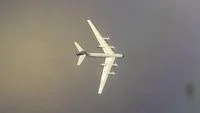
A devastating aviation accident has struck the Russian Aerospace Forces, as a Tu-95 strategic bomber crashed during a routine training flight in the Amur region of the Russian Far East. The Russian Ministry of Defense confirmed that the incident resulted in the deaths of six crew members, while one survivor was recovered and transported to a medical facility for urgent treatment. The crash, which occurred under conditions that are currently under formal investigation, has once again brought attention to the operational reliability of Russia’s aging long-range aviation fleet, which remains a cornerstone of the nation’s nuclear triad.
The Incident and Immediate Response
According to reports from the Russian Ministry of Defense, the aircraft was conducting a scheduled training sortie when contact was lost. The crash site was situated in a desolate, unpopulated area, which prevented further casualties on the ground. Military authorities emphasized that the bomber was not carrying any live munitions or weaponry at the time of the crash, mitigating the potential for a secondary disaster involving conventional or nuclear armaments.
Emergency services and a specialized commission from the Russian Aerospace Forces were immediately dispatched to the crash site to secure the area and recover the flight data recorders, commonly known as "black boxes." The sole survivor, who sustained injuries, is currently being treated in a military hospital. The Ministry has launched a comprehensive investigation to determine whether the cause was mechanical failure, human error, or an unforeseen environmental factor during the flight.
Technical Profile of the Tu-95 Bear
The Tupolev Tu-95, known to NATO as the "Bear," is one of the most iconic and enduring symbols of Soviet and Russian military aviation. First introduced into service in the mid-1950s, the aircraft has defied the typical lifecycle of modern military jets. It remains the only turboprop-powered strategic bomber still in operational service today. Despite its vintage design, the Tu-95 holds the title of the fastest turboprop-powered aircraft ever produced, capable of reaching high subsonic speeds that rival many jet-powered bombers of its era.
The aircraft’s longevity is attributed to its massive counter-rotating propellers and its airframe, which was engineered for extreme durability and long-range endurance. While the platform has undergone several modernization iterations—including the Tu-95MS variant, which features upgraded avionics and weapons systems—the underlying airframe architecture remains largely unchanged from its inception in 1952. This longevity has sparked ongoing debates among military analysts regarding the sustainability of maintaining such aged platforms in a modern conflict environment.
Strategic Significance and Role in the Ukraine Conflict
The Tu-95 is not merely a museum piece; it remains an active, high-priority asset within the Russian Armed Forces. In the context of the ongoing conflict in Ukraine, the bomber has been utilized extensively as a platform for launching long-range cruise missiles, specifically the Kh-101. By operating from within Russian airspace, far beyond the reach of Ukrainian air defense systems, these bombers serve as a primary means for the Russian military to strike critical infrastructure and strategic targets deep inside Ukrainian territory.
Beyond its role in conventional warfare, the Tu-95 is a fundamental component of the Russian nuclear triad. It serves as an airborne platform capable of delivering nuclear-tipped cruise missiles, providing the Kremlin with the ability to project power globally. The loss of a single aircraft, while statistically minor in a fleet of dozens, carries significant symbolic and operational weight. It underscores the intense usage and the logistical strain currently placed on the Russian Long-Range Aviation division due to the demands of the "special military operation."
Chronology and Operational History
The history of the Tu-95 is marked by decades of Cold War brinkmanship and modern-day power projection.
- 1952: The prototype makes its maiden flight, signaling a massive leap in Soviet long-range strike capabilities.
- 1956: The aircraft officially enters service, joining the Soviet Strategic Air Force.
- 1980s: The production of the Tu-95MS variant begins, optimizing the platform for cruise missile launches.
- 2022-2024: The Tu-95 fleet sees its most intensive combat usage since the Cold War, serving as a primary vector for cruise missile strikes in the Ukraine conflict.
- September 2026: The tragic crash in the Amur region highlights the risks associated with sustaining decades-old airframes during rigorous training schedules.
Historically, the Tu-95 has been involved in several high-profile incidents, largely due to its frequent "patrol" flights near the airspaces of NATO members, including the United States, Canada, and the United Kingdom. These encounters, often termed "interceptions," have served as a barometer for geopolitical tensions between Moscow and the West.
Analytical Perspectives on Fleet Readiness
The crash raises critical questions regarding the maintenance cycles of the Russian Aerospace Forces. As the conflict in Ukraine persists, the operational tempo for the Russian bomber fleet has increased significantly. Maintaining aircraft that are essentially over 60 years old requires a level of engineering oversight and spare-part availability that is increasingly difficult to secure under international sanctions.
Military analysts suggest that the "wear and tear" factor on such legacy airframes is cumulative. While the Russian Ministry of Defense maintains that the aircraft are modernized to current standards, the mechanical fatigue of the wings and fuselage cannot be fully mitigated by digital upgrades. The investigation into this crash will likely focus on whether structural fatigue or engine failure contributed to the loss of the aircraft.
Furthermore, the loss of six experienced crew members represents a "human capital" deficit. Training a strategic bomber crew—comprising pilots, navigators, and weapons systems operators—requires years of specialized instruction. In a period of heightened mobilization, the replacement of such highly skilled personnel is a significant challenge for the Russian military.
Official Reactions and Broader Implications
While international reactions have been muted due to the current geopolitical climate, the event has been noted by global defense observers. Western intelligence agencies, which closely monitor Russian strategic movements, are likely analyzing the crash to determine if it indicates a broader decline in the operational readiness of the Russian nuclear-capable fleet.
Inside Russia, the incident is being treated with the gravity accorded to high-level military losses. The investigation commission, led by senior officers from the Russian Aerospace Forces, has been tasked with reporting directly to the Ministry of Defense. The findings of this commission are expected to be kept largely classified, though any systemic issues identified could lead to a temporary grounding of the Tu-95 fleet for safety inspections, which would have an immediate impact on the intensity of air campaigns in the ongoing conflict.
Conclusion: The Future of the "Bear"
The crash of the Tu-95 in the Amur region serves as a somber reminder of the dangers inherent in aviation, particularly when dealing with aging military hardware. As Russia continues to rely on the Tu-95 to project its strategic influence, the balance between maintaining these legacy platforms and the risks they pose to their own crews will remain a subject of intense scrutiny.
The tragedy underscores the human cost of military operations, regardless of the technological sophistication of the machinery involved. As the investigation progresses, the global community will be watching to see if this incident acts as a catalyst for a re-evaluation of Russia’s long-range aviation strategy or if it remains an isolated, albeit tragic, operational mishap. The legacy of the Tu-95 remains complex—a testament to Soviet engineering ingenuity that is increasingly strained by the relentless demands of 21st-century warfare. For the families of the six fallen crew members, however, the technical significance of the aircraft is secondary to the profound loss of life that occurred on that fateful day in the Russian Far East.

