
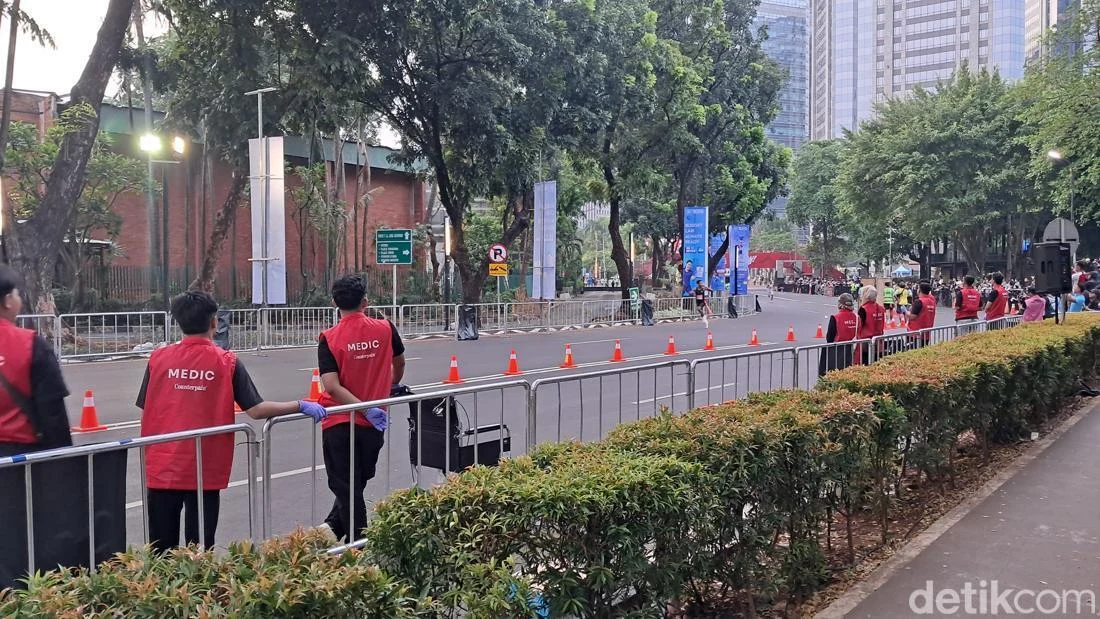
The Jakarta Running Festival (JRF) 2026 transformed the streets of the Indonesian capital into a vibrant canvas of athletic endurance, sweat, and community spirit. Thousands of national and international runners converged in the metropolitan heart to test their limits across various categories, ranging from the full marathon to shorter recreational distances. However, beneath the celebratory atmosphere of personal bests and medal finishes lies the demanding physical toll endurance racing exacts on the human body. As temperatures rose and the asphalt radiated tropical heat, the unsung heroes of the festival—the dedicated medical teams stationed along the route—worked tirelessly to keep participants safe and moving forward.
According to reports from the frontline of the event, the medical response units faced a steady stream of requests for assistance as runners battled fatigue, dehydration, and the grueling demands of the course. Among the medical personnel deployed for the event was Fiqih, a field medic assigned to the mobile medic sport 1 unit, who spent the morning of Sunday, October 25, 2026, patrolling the race route. Throughout his shift, Fiqih and his colleagues encountered numerous participants grappling with acute physical distress, offering a sobering reminder of the rigorous nature of long-distance running.
Anatomy of Running Injuries: Calf Cramps and Hamstring Strains
The rigorous demands of pounding the pavement for kilometers at a time often manifest in predictable yet debilitating musculoskeletal issues. Based on firsthand accounts from the medical teams patrolling the JRF 2026 routes, the most prevalent complaints among distressed runners involved acute muscle spasms in the lower extremities. Specifically, medical personnel frequently treated participants suffering from severe cramps in their gastrocnemius muscles—commonly known as the calf muscles—as well as tightness and cramping in the hamstrings.
"What is certain, during my journey patrolling the route, the majority of cases involved the gastrocnemius, which is cramping, and the hamstrings; those were definitely the most common areas," Fiqih explained while detailing his experiences on the ground.
These injuries typically arise from a combination of muscle fatigue, electrolyte depletion, and inadequate hydration. As runners push past their anaerobic thresholds, microscopic tears in muscle fibers can occur, compounded by the depletion of essential minerals like sodium, potassium, and magnesium necessary for proper muscle contraction and relaxation. When these biological reserves run dry, muscles involuntarily seize up, causing sudden, intense pain that forces runners to halt their progress abruptly.
Immediate Field Triage and Treatment Protocols
Managing medical emergencies during a mass-participation sporting event like the Jakarta Running Festival requires a delicate balance of swift triage, immediate intervention, and careful judgment regarding whether a runner can safely resume the race or requires mandatory withdrawal. The mobile medical units deployed for JRF 2026 were equipped to handle a wide spectrum of physical complaints directly at the roadside, minimizing downtime and preventing minor issues from escalating into severe medical emergencies.
When runners flagged down or were intercepted by medical personnel along the course, the response was immediate and methodical. "If the condition permits, we handle it directly on the spot. We provide stretching, and we apply a cooling or relief spray," Fiqih noted, describing the standard protocol for treating muscle cramps and minor strains.
For many participants, targeted physical therapy interventions—such as assisted stretching to lengthen the contracted muscle fibers and cooling sprays to numb localized pain and reduce inflammation—proved sufficient to alleviate the acute discomfort. Under the watchful eye of trained medical professionals, runners who successfully recovered from their initial muscle spasms were cleared to cautiously resume the race and chase their finishing line goals.
However, the medical staff maintained strict safety parameters for cases that exceeded the threshold of manageable fatigue. When assessments revealed structural damage, debilitating pain, or a high risk of compounding injuries, the protocol shifted from rehabilitation to mandatory rest. "If the condition is truly severe, we certainly advise them to rest first," Fiqih emphasized, highlighting the priority placed on long-term health over finishing times.
Beyond Muscle Cramps: Dehydration and Near-Fainting Incidents
While musculoskeletal complaints formed the bulk of the daily log for the medical teams, the physiological stress of the race occasionally manifested in more systemic and alarming ways. Environmental factors played a significant role in testing the limits of the participants, with the tropical climate of Jakarta presenting an additional layer of difficulty for endurance athletes.
As the morning progressed, ambient temperatures climbed, and humidity levels intensified across the urban landscape. This combination of physical exertion and environmental heat load placed immense strain on the cardiovascular and thermoregulatory systems of the runners. Consequently, medical units had to respond to incidents that went beyond localized muscle fatigue, including instances of near-fainting and acute dizziness.
"There was one case today where someone nearly lost consciousness," Fiqih recounted, pointing to the unpredictable nature of street-level medical response during major marathons. While heat exhaustion is a primary suspect in such incidents, medical professionals must consider a multifactorial matrix of causes when diagnosing sudden cognitive impairment or acute vertigo during endurance events.
In assessing the potential root causes of these severe systemic reactions, field medics pointed toward variables that often precede race-day complications. Insufficient physical conditioning, inadequate dietary preparation in the days leading up to the event, and poor sleep hygiene can critically compromise an athlete’s physical resilience. "Added to that, perhaps they lacked preparation, or maybe they stayed up late the night before," Fiqih suggested, reflecting on the lifestyle factors that can undermine months of training. Sleep deprivation significantly impairs recovery, immune function, and cardiovascular regulation, making runners far more susceptible to exhaustion and collapse when exposed to the physiological stressors of a race.
The Broader Context of Jakarta Running Festival 2026
The incidents managed by Fiqih and his fellow medical responders underscore the monumental logistical and safety challenges inherent in modern mass-sporting events. The Jakarta Running Festival has rapidly evolved into a premier fixture on the regional athletic calendar, drawing thousands of participants from diverse backgrounds, ranging from elite international athletes to first-time recreational runners.
Such rapid expansion in popularity brings distinct operational responsibilities for event organizers, municipal authorities, and emergency medical services. Ensuring the safety of a sprawling, mobile crowd requires a comprehensive network of fixed medical tents, fully equipped ambulances, and agile mobile response units capable of navigating congested urban routes or reaching distressed runners in narrow street corridors.
The presence of mobile medic sport units, which operate dynamically along the course rather than waiting passively at aid stations, represents a critical evolution in sports medicine logistics. By embedding trained professionals directly within the flow of the race, organizers can drastically reduce response times, offering immediate triage that preserves the health of participants and alleviates the burden on emergency rooms and fixed medical posts.
Medical Preparedness and Injury Prevention for Endurance Runners
The experiences recorded at JRF 2026 serve as a vital educational touchstone for the broader running community. Sports medicine experts continually emphasize that race-day success is forged long before the starting gun fires. Comprehensive preparation encompasses not only structured cardiovascular training and distance accumulation, but also meticulous attention to nutrition, hydration strategies, and recovery science.
Preventing the calf and hamstring cramps that plagued so many runners requires proactive physiological management. Athletes are strongly advised to incorporate targeted strength training for the posterior chain—including the calves, hamstrings, and glutes—into their weekly routines to build muscular endurance capable of withstanding repetitive impact forces. Furthermore, progressive tapering in the weeks leading up to a major race ensures that muscle tissue is fully repaired and primed for peak performance, rather than entering the starting corral in a state of chronic fatigue.
Hydration and electrolyte management are equally critical components of injury prevention. Drinking water alone is often insufficient during prolonged efforts in tropical climates; maintaining the body’s delicate electrolytic balance through sports drinks or salt tablets helps prevent the neuromuscular instability that triggers sudden, agonizing cramps. Additionally, respecting the body’s need for restorative sleep in the crucial 48 hours prior to an event cannot be overstated, as circadian rhythm disruption directly impacts neuromuscular coordination and thermal regulation.
Conclusion: A Testament to Resilience and Professional Care
The Jakarta Running Festival 2026 ultimately stands as a celebration of human perseverance, community engagement, and athletic ambition. Yet, the vivid accounts shared by frontline medical personnel like Fiqih remind the public that endurance racing is an uncompromising test of physical limits. The prevalence of calf and hamstring cramps, alongside isolated incidents of heat-induced exhaustion and near-fainting, highlights the delicate boundary between athletic triumph and physical breakdown.
Through the swift intervention, professional expertise, and compassionate care provided by the event’s mobile medical units, many participants who faced the threat of DNF (Did Not Finish) found the relief necessary to either complete their journey or safely step aside. As urban running continues to surge in popularity across Indonesia, the seamless integration of robust medical infrastructure remains an indispensable pillar of event management—ensuring that every runner who steps onto the asphalt can chase their goals under the watchful eye of professionals dedicated to keeping them safe.

