
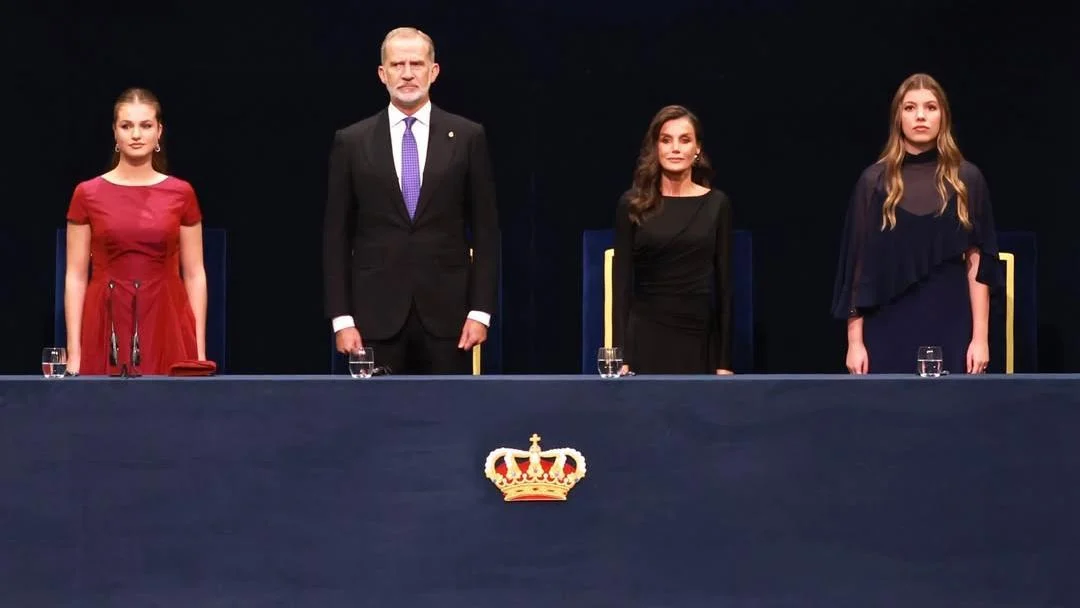
The 2026 edition of the Princesa de Asturias Awards, held in the historic city of Oviedo, Spain, marked a historic intersection of royalty and global sports culture as Princess Leonor formally presented the esteemed honor to football icon Lionel Messi. This year’s ceremony, which serves as one of the most significant cultural events in the Spanish calendar, highlighted the confluence of humanitarian impact and sporting excellence. As the heir to the Spanish throne, Princess Leonor’s role in the proceedings underscored the Monarchy’s commitment to recognizing figures who have transcended their professional domains to influence society at large.
The ceremony, conducted under the watchful eye of King Felipe VI and Queen Letizia, saw Lionel Messi become the first professional footballer in history to receive this specific recognition. The award, often referred to as the "Nobel Prize of the Spanish-speaking world," has historically been granted to scientists, writers, and world leaders, making Messi’s inclusion a pivotal moment in the evolution of the foundation’s criteria, which now increasingly values the power of sports as a tool for social cohesion and inspiration.
A Historic Chronology of the 2026 Ceremony
The events leading up to the gala were characterized by a rigorous selection process overseen by the Princess of Asturias Foundation. The jury, comprised of distinguished figures from the worlds of academia, sports, and journalism, announced the selection of Messi in the spring of 2026, citing his “unrivaled career, his exemplary behavior on and off the pitch, and his dedication to youth development and humanitarian aid through the Leo Messi Foundation.”
On the morning of the ceremony, the Royal Family participated in a series of traditional receptions. Princess Leonor, appearing poised and composed, engaged with the laureates at the Hotel de la Reconquista before moving to the Campoamor Theatre for the main event. The atmosphere was one of profound formality, juxtaposed with the immense public interest surrounding the presence of the Argentine athlete.
Following the arrival of the Royal party, the ceremony commenced with an orchestral performance, followed by a series of speeches. When Messi ascended the stage to receive the diploma and the Joan Miró sculpture that accompanies the award, the auditorium erupted in a standing ovation that bridged the gap between traditional Spanish high society and the global sporting community.
Elegance and Protocol: The Royal Presence
Princess Leonor’s appearance at the 2026 gala drew significant attention from international fashion observers and royal correspondents. Eschewing the conventional, the Princess opted for a sophisticated maroon A-line gown that adhered to the solemnity of the occasion while reflecting her evolving personal style. The minimalist approach to her accessories—subtle jewelry and kitten heels—complemented her flawless, natural makeup aesthetic.
Her performance during the ceremony—the delivery of the laudatory address and the act of bestowing the medals—demonstrated a seasoned approach to her royal duties. Observers noted the seamless synergy between the Princess and her father, King Felipe VI, as they navigated the complexities of the event. The interaction between the Princess and Messi was described by royal aides as respectful and professional, symbolizing a bridge between the historical legacy of the Spanish Crown and the contemporary cultural influence of global sports icons.
Broader Implications of the Award
The decision to award the 2026 Princesa de Asturias to Lionel Messi is not merely a celebration of his eight Ballon d’Or titles or his historic World Cup victory. Instead, the Foundation focused heavily on his philanthropic endeavors. The Leo Messi Foundation has, over the past decade, become a cornerstone of social welfare, funding healthcare initiatives for children in impoverished regions, educational programs in Argentina, and sustainable infrastructure in developing nations.
From an analytical standpoint, this award serves to legitimize the status of professional athletes as public diplomats. In an era where sports figures command more social capital than many traditional politicians, the recognition by the Spanish Monarchy provides a stamp of institutional approval that transcends athletic statistics. It acknowledges that the influence of a global icon like Messi can be directed toward systemic social change, effectively aligning the "soft power" of football with the diplomatic influence of the Spanish state.
A Diverse Class of Laureates
While Messi’s presence dominated the media headlines, the 2026 ceremony recognized a diverse group of intellectuals and change-makers. The Foundation’s commitment to a wide breadth of human endeavor was evident in the roster of other recipients:
- Patti Smith (Arts): The legendary musician and poet was recognized for her profound influence on counterculture and her ability to weave literature into the fabric of rock and roll.
- Julian Barnes (Literature): The British author received the award for his intellectual rigor and his mastery of the contemporary novel, further cementing the award’s reputation in the literary sphere.
- Timothy Garton Ash (Social Sciences): A preeminent historian, Garton Ash was honored for his decades of analysis regarding European integration and the challenges to liberal democracy.
- Christina Koch (Concord): The NASA astronaut and record-breaking space explorer was recognized for her contributions to science and for serving as a beacon of international cooperation in the pursuit of extraterrestrial exploration.
The inclusion of these figures alongside an athlete like Messi suggests a deliberate strategy by the Foundation to remain relevant in a globalized society, ensuring that the Princesa de Asturias Award remains a barometer for what constitutes "excellence" in the mid-21st century.
Official Reactions and Public Reception
The announcement of the award earlier in the year prompted a flurry of reactions from the footballing world. Former teammates and coaches took to social media to praise the Foundation for recognizing the "humanity" behind the player. "It is not just about the goals," a spokesperson for the Argentina Football Association stated, "it is about the legacy of humility and the quiet impact he has had on millions of children who have never seen a football stadium but have benefited from the clinics his foundation supports."
In Spain, the public reaction was largely positive, though some traditionalists raised questions regarding the suitability of a sports figure for an award that has historically favored academic and political heavyweights. However, the Palace of Zarzuela maintained that the award criteria are designed to be reflective of the times, stating that "the Princesa de Asturias Awards seek to highlight those who have truly moved the needle of human progress, regardless of the field in which they operate."
Economic and Cultural Impact on Oviedo
The city of Oviedo experiences a significant economic and cultural influx during the week of the ceremony. Local authorities reported that hotel occupancy reached 100% capacity in the days surrounding the event, with an estimated economic impact reaching into the millions of euros. Beyond the fiscal benefits, the city undergoes a transformation into a global media hub, with journalists arriving from across Europe, Asia, and the Americas to cover the event.
The ceremony acts as a "soft power" engine for the Principality of Asturias, showcasing its cultural heritage, its architectural beauty, and its commitment to the arts. For the residents of Oviedo, the presence of the Royal Family and world-renowned figures like Messi, Smith, and Koch is a point of immense civic pride, reinforcing the region’s identity as a focal point for global intellectual and social dialogue.
Looking Ahead: The Legacy of the 2026 Awards
As the 2026 ceremony concludes, the discourse shifts toward the long-term impact of this specific class of laureates. For Princess Leonor, the successful navigation of such a high-profile event reinforces her capability as the future monarch. For Lionel Messi, the award serves as a capstone to a career that has already seen him conquer every major trophy in his sport.
The 2026 Princesa de Asturias Awards will likely be remembered as the moment the Spanish Monarchy signaled a shift toward a more modern, inclusive definition of excellence. By honoring the contributions of those who operate on the global stage—whether in the laboratories of space agencies, the pages of literary journals, or the stadiums of international football—the Crown has positioned itself as an institution that understands the complexities of the modern world.
As the Royal Family returns to Madrid and the laureates disperse to their respective corners of the globe, the lasting memory remains the image of a young Princess, representing the continuity of an ancient institution, presenting a medallion to an athlete who spent his life chasing a ball, yet succeeded in capturing the collective conscience of a global generation. This intersection of tradition and modernity, of high culture and mass appeal, remains the hallmark of the Princesa de Asturias Awards, ensuring their relevance for years to come.

