
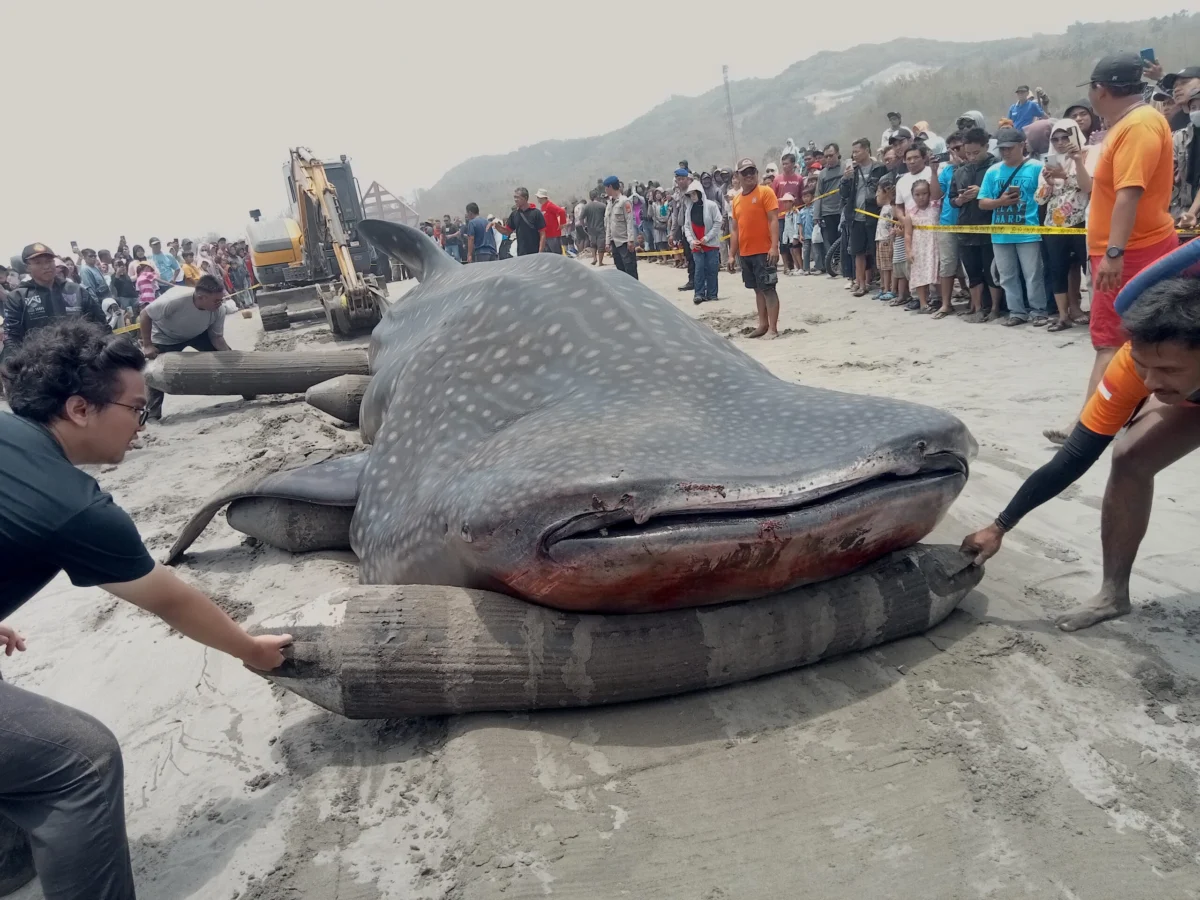
The coastal serenity of Parangkusumo Beach in Bantul, Yogyakarta, was disrupted in the early hours of Sunday, October 18, 2026, when a massive whale—measuring nine meters in length and weighing over two tons—was discovered stranded in the intertidal zone. The incident, which occurred around 3:00 a.m., caught local fishermen off guard as they were preparing their nets for the morning catch. This event is part of an increasingly frequent and troubling pattern of marine megafauna strandings across the Indonesian archipelago, particularly along the southern coast of Java.
The discovery prompted an immediate emergency response. Local fishermen alerted the Sealife First Responder team, initiating a race against time. Within two hours, a coordinated task force—comprising personnel from the Satlinmas Wilayah 3 of Parangtritis Beach, the Jogo Segoro Task Force, the Marine and Air Police Unit (Ditpolairud) of the Yogyakarta Regional Police, and local environmental activists—converged on the site. Despite their best efforts to guide the animal back into the deeper waters of the Indian Ocean, the whale succumbed to its condition. By the time rescuers arrived, the whale had transitioned from a live stranding to a confirmed mortality.
A Chronology of the Rescue and Investigation
The recovery operation was fraught with technical and logistical challenges. Galang, a member of the Satgas Linmas Jaga Segara, reported that the animal was in a critical state upon arrival. "When we reached the site, the whale was still exhibiting signs of life, but it passed away shortly after," Galang stated. The lack of specialized equipment forced the team to use makeshift tools under the cover of night, further complicating the rescue attempt.
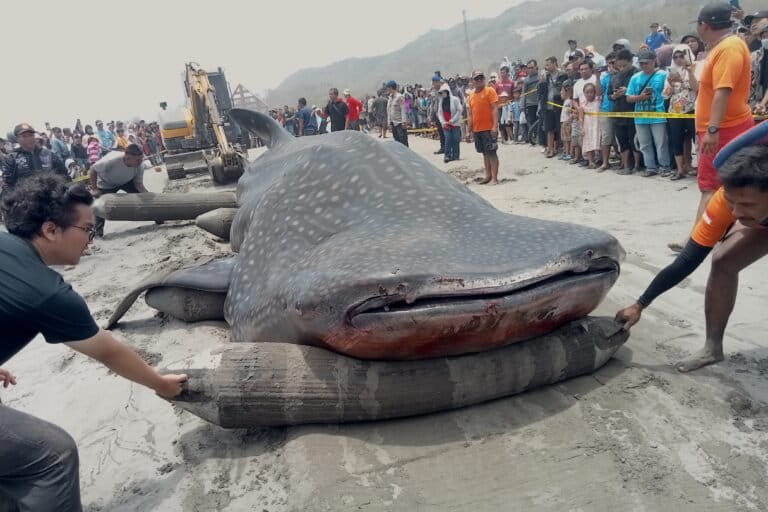
Once the death was confirmed, the focus shifted to disposal and scientific data collection. Two heavy-duty excavators were deployed to move the carcass to an area of dry, sandy terrain suitable for burial. Prior to interment, a specialized team of veterinarians from Sealife Indonesia and the Department of Marine and Fisheries (DKP) performed a comprehensive necropsy. The procedure involved the collection of tissue and organ samples for laboratory analysis to determine the exact cause of death.
The investigative process was hindered by large crowds of onlookers who bypassed safety cordons to take photographs with the carcass. Authorities expressed significant concern regarding this behavior, noting that beyond the physical interference with the evacuation, the proximity of the public to the decomposing whale posed potential biohazard risks. As the cause of death remained unknown at the time, officials warned that the carcass could be a carrier of zoonotic diseases.
The Financial Burden of Conservation
A recurring theme in the aftermath of the Bantul incident is the strain on resources. The task force is currently operating under severe financial constraints, forced to absorb the costs of emergency equipment rentals, surgical tools for necropsies, chemical preservatives like formalin, and laboratory testing fees. While Veronika Foniroro of the DKP Yogyakarta acknowledged the budgetary limitations, she assured the public that these financial gaps did not delay the immediate response in Bantul. However, the reliance on ad-hoc funding mechanisms remains a vulnerability in the region’s marine disaster management strategy.
Dr. Dwi Suprapti, a veterinarian specializing in aquatic megafauna who oversaw the necropsy, noted that the specimen showed no immediate external signs of trauma or illness. Remarkably, the whale’s stomach was found to be full of undigested food, including krill and small anchovies, suggesting that the animal had been feeding actively shortly before its death. The rapid succession of these events is startling; in the first half of 2026 alone, eight whale strandings have been recorded along the southern coast of Java, with only six specimens successfully sampled for scientific study.

Contextualizing the Crisis: A Decade of Data
The trend of whale strandings in Indonesia has shifted from isolated incidents to a recurring regional crisis. According to data provided by Iqbal Herwata, Senior Manager of Species Conservation at the Yayasan Konservasi Indonesia, the period between 2011 and 2023 saw 115 reported cases involving 127 individual whales across 23 provinces. These figures are starkly higher than historical global records, which documented only 114 cases over the entire period from 1880 to 2021.
This statistical jump is partially attributed to higher reporting rates driven by the ubiquity of social media and increased public awareness. Nevertheless, the frequency of strandings in Indonesia remains an anomaly on the global stage. Experts indicate that the southern waters of Java serve as a critical migratory corridor for whale sharks and other megafauna traveling between Australia and the Indonesian archipelago.
The environmental phenomenon known as upwelling—where deep, cold, nutrient-rich water rises to the surface—is believed to play a central role. While this process creates a fertile feeding ground for whale sharks, it also brings them into closer proximity to the coastline, where they become susceptible to entrapment in shallow waters, entanglement in fishing gear, and exposure to pollutants.
Biological and Environmental Threats
The survival of these species is currently threatened by a "perfect storm" of human-induced and environmental factors. Investigations into recent strandings have pointed toward several consistent hazards:

- Anthropogenic Debris: Ingested plastics often lead to intestinal blockages and malnutrition.
- Chemical Pollution: High levels of heavy metals, potentially linked to effluent from coastal shrimp farming and industrial runoff, have been identified in past necropsies as a potential contributor to systemic health degradation.
- Fisheries Interaction: Accidental entanglement in commercial and artisanal fishing nets remains a leading cause of mortality.
- Environmental Instability: Climate-driven changes in water temperature and prey distribution are forcing these migratory animals to alter their routes, occasionally leading them into hazardous coastal traps.
Policy Responses and Future Outlook
The Indonesian government has categorized whales as protected species under the National Action Plan (RAN) for Whale Shark Conservation, governed by the Decree of the Minister of Marine Affairs and Fisheries No. 16 of 2021. Currently, officials are finalizing the next iteration of the conservation plan for the 2026–2029 period.
Andrian Saputra, representing the Ministry of Marine Affairs and Fisheries at the Pontianak Marine Management Center (Yogyakarta work area), emphasized that these tragic events provide essential data for future policy. "The data gathered from these necropsies is not merely a record of death; it is a critical diagnostic tool for the health of our oceans," Saputra noted. The government is now moving to institutionalize a more robust network for rapid response, aiming to integrate local communities into the surveillance and rescue framework.
The scientific community, represented by researchers like Dr. Dwi Suprapti, is advocating for a more integrated study that synthesizes necropsy results with oceanographic data and environmental quality assessments. Without such a comprehensive approach, the mystery behind the high mortality rate in the southern Javanese waters may remain unresolved.
As the Indonesian government prepares to roll out its updated conservation strategies, the focus remains on mitigating the human footprint on these migratory corridors. The challenge lies in balancing the socio-economic needs of coastal communities with the biological necessity of preserving marine biodiversity. For now, the "silent message" from the deep, as described by conservationists, serves as a poignant reminder that the health of the ocean is inexorably linked to the health of the communities that rely upon it. The goal, according to conservation experts, is not just to manage the death of these animals, but to ensure that the ocean remains a viable habitat for their continued existence over the next century. Through political will, increased research funding, and community-led protection networks, there remains a window of opportunity to reverse the decline and secure the future of these marine giants.

