
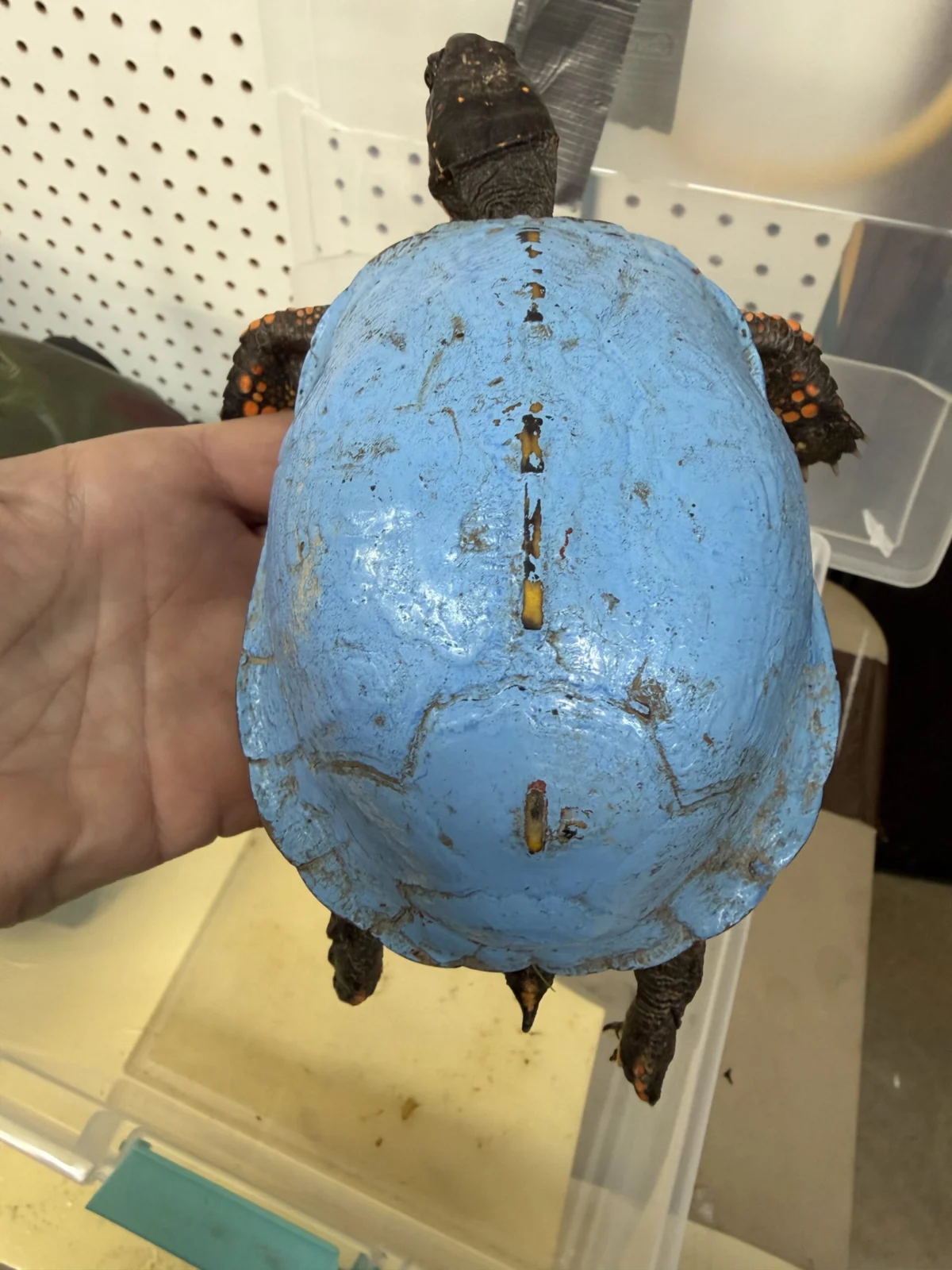
When a resident in Campbellsville, Kentucky, recently moved into her new home, she anticipated the typical adjustments of property ownership—landscaping, minor repairs, and neighborhood introductions. However, she was met with an unusual ecological discovery: an Eastern box turtle (Terrapene carolina carolina) wandering the grounds, its shell coated in a thick, vibrant layer of blue paint. This sight, while striking to the untrained eye, signaled a significant welfare concern for the reptile, which had been subjected to human interference that threatened its survival in the wild.
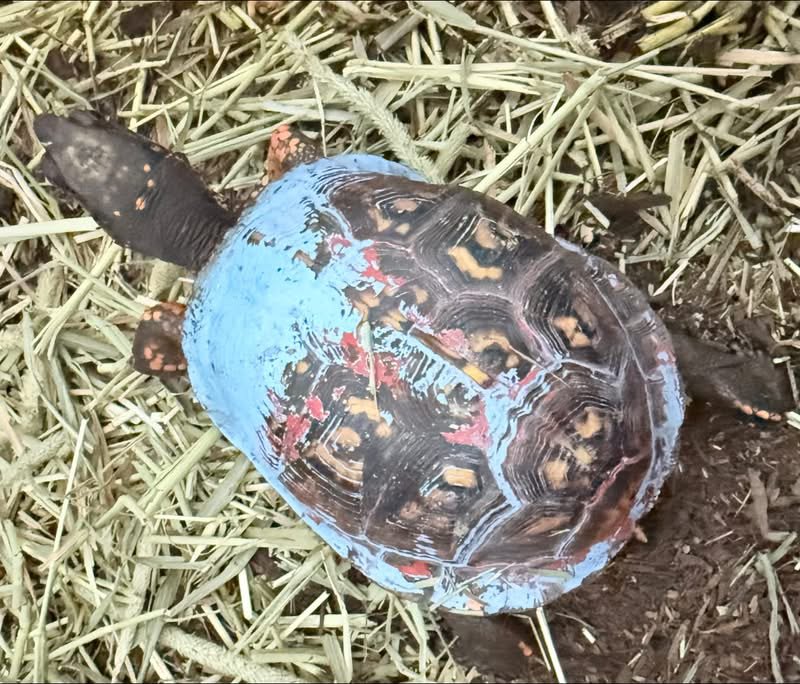
The discovery prompted the homeowner to reach out to the Wilderness Trail Wildlife Center in London, Kentucky. Tonya Poindexter, a licensed wildlife rehabilitator, spearheaded the effort to retrieve the turtle and address the chemical damage inflicted upon its shell. Upon closer inspection at the facility, the rescue team discovered that the damage was more extensive than surface-level blue pigment; beneath the blue layer, the turtle was also coated in red paint. This layering suggested that the animal had been captured and painted on multiple occasions, likely by a previous resident of the property who viewed the local wildlife as a canvas rather than a protected species.
A Chronology of the Rescue and Rehabilitation
The timeline of this incident remains somewhat obscured by the turtle’s history, but the physical evidence indicates a long-term exposure to these synthetic materials. According to local reports, the practice of painting turtles on this specific property appears to have been a habit of a previous occupant, though the exact duration remains unknown.
Once the turtle arrived at the Wilderness Trail Wildlife Center, the rehabilitation process began. Given that the paint appeared to be oil-based and exceptionally resilient, the team could not simply scrape it off without risking damage to the turtle’s scutes—the horny plates that make up the shell. The rehabilitation protocol was established as follows:
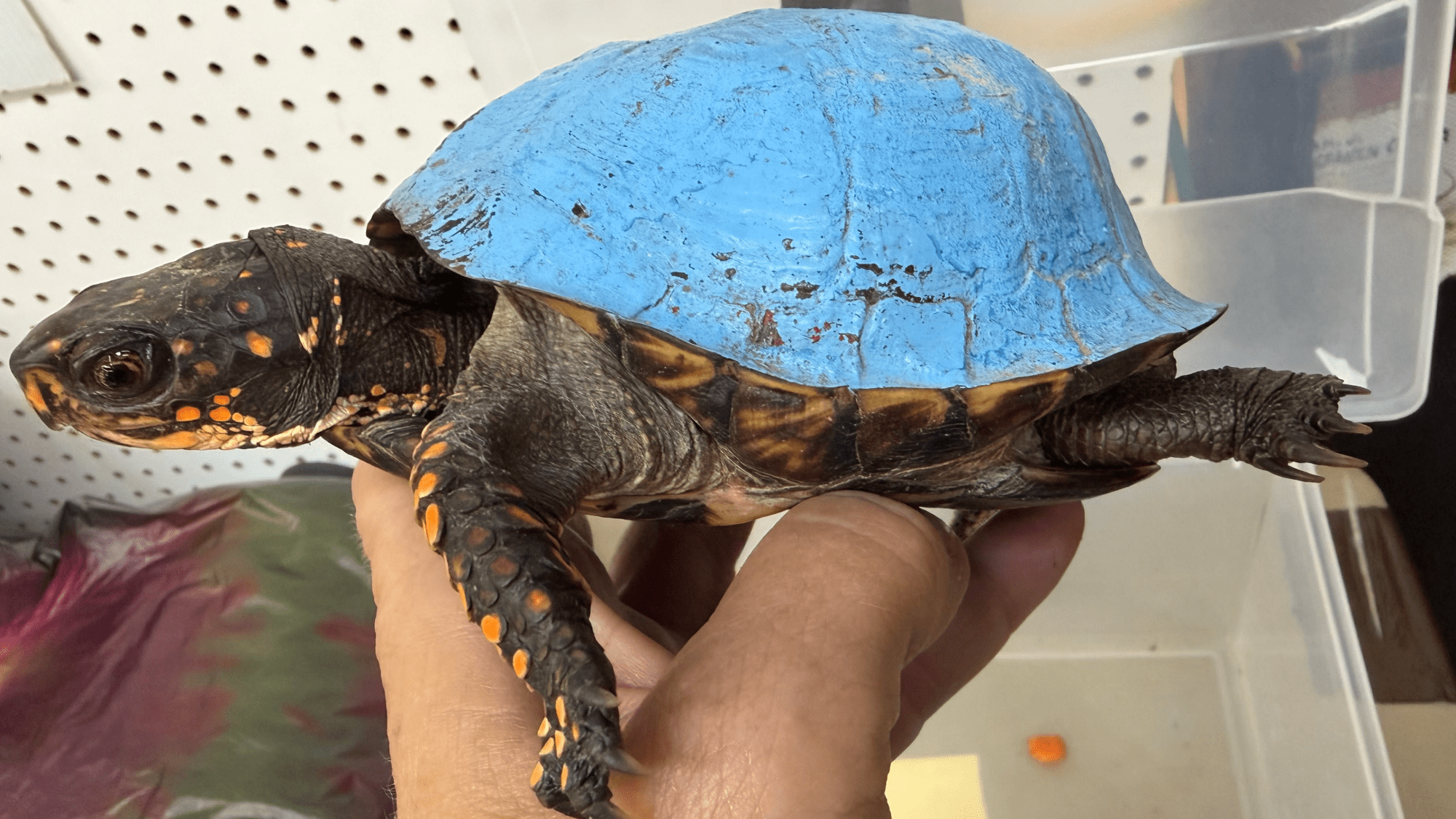
- Initial Assessment: The team evaluated the turtle’s health and determined that, despite the chemical coating, she was in relatively good physical condition.
- Controlled Soaking: To soften the hardened chemicals, the turtle was placed in warm water baths.
- Gradual Removal: Using soft-bristled toothbrushes and mild dish soap, rehabilitators began the slow process of lifting the paint.
- Solvent Management: In areas where the paint proved stubborn, the team utilized small, controlled amounts of mineral spirits. Throughout this stage, the team maintained rigorous airflow around the turtle’s head to prevent the inhalation of toxic fumes, followed immediately by thorough rinsing to ensure no chemical residue remained on the shell or skin.
This methodical approach is designed to span several weeks, ensuring that the turtle remains stress-free and that the underlying bone structure of the shell is not compromised by the cleaning process.
The Biological Significance of the Shell
The shell of an Eastern box turtle is not merely a protective outer layer; it is an integral part of the animal’s anatomy. The carapace is fused to the turtle’s rib cage and spine, and the plastron—the bottom portion—is connected to the rest of the skeleton. Consequently, a turtle’s shell is a living, growing organ.
Applying paint to this surface has several deleterious effects. First, shells are porous. Chemicals in commercial paints, including volatile organic compounds (VOCs), can be absorbed through the scutes into the turtle’s bloodstream, potentially leading to systemic toxicity. Second, the shell serves as a critical heat-exchange surface. Turtles are ectothermic, meaning they rely on environmental temperatures to regulate their body heat. Dark or opaque paints can alter the way the shell absorbs or reflects solar radiation, potentially causing the animal to overheat or fail to reach necessary metabolic temperatures.
Camouflage and Predator Avoidance
Perhaps the most immediate threat caused by the unauthorized paint job is the disruption of the turtle’s natural camouflage. Eastern box turtles have evolved over millennia to possess patterns of brown, yellow, and orange that allow them to blend into the forest floor, leaf litter, and dappled sunlight of their woodland habitats.
"Their natural patterns are their primary defense against predation," Poindexter explains. "By applying bright blue or red paint, the human individual essentially stripped this animal of its ability to hide from predators such as raccoons, foxes, and coyotes."
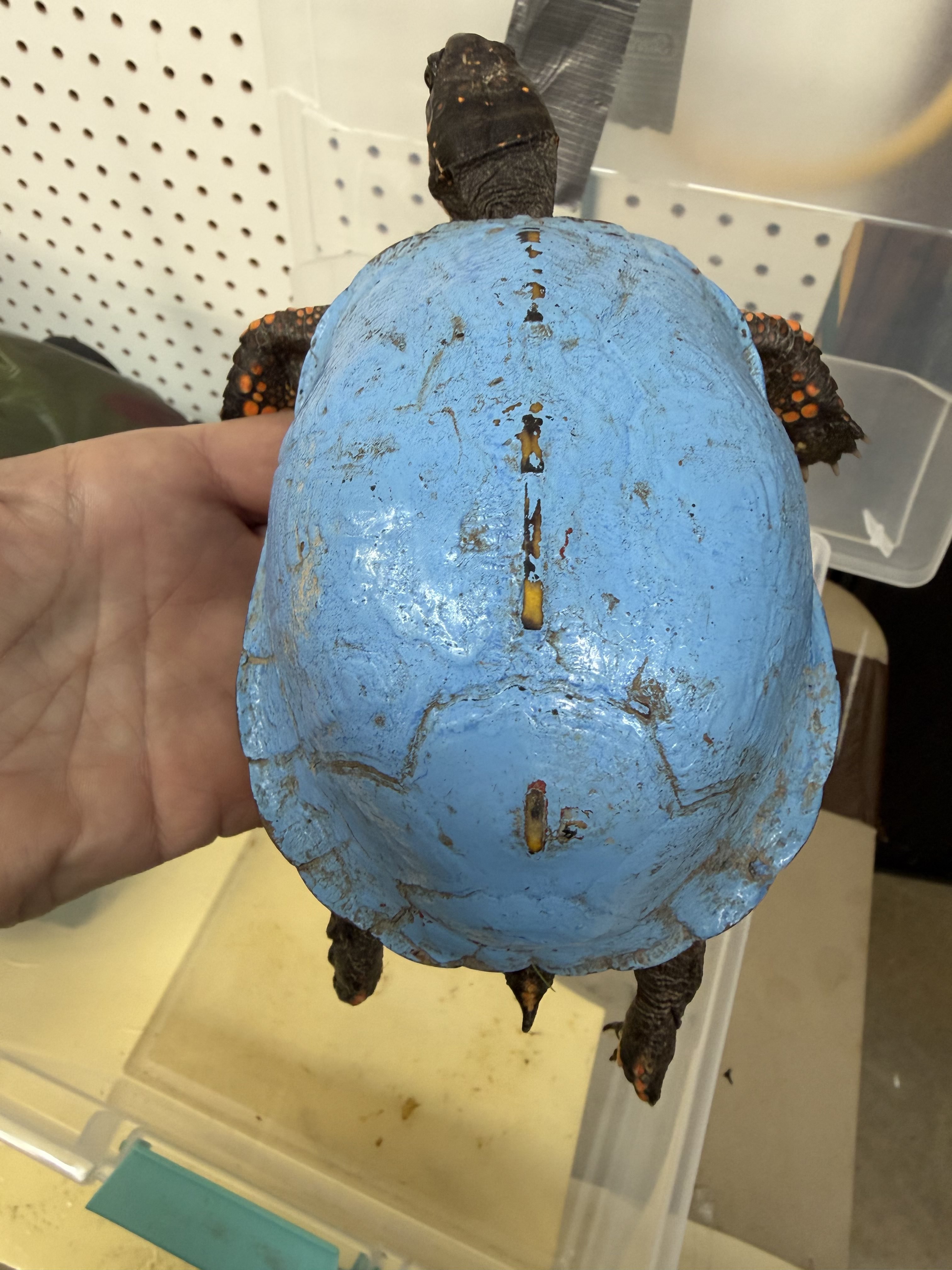
In the wild, a turtle that stands out as a vibrant, artificial color is a beacon for opportunistic predators. This lack of camouflage was the deciding factor in Poindexter’s choice to keep the animal in rehabilitation rather than releasing her back into the wild immediately. Releasing her in her current state would have been a death sentence, as her visibility would have been significantly increased.
Legal and Ethical Implications
The incident in Campbellsville highlights a broader, ongoing issue regarding the treatment of local wildlife. In many states, including Kentucky, it is illegal to capture or harass certain protected species, and the intentional modification of wildlife is often viewed as a violation of state conservation laws.
Wildlife experts emphasize that this practice is not only unethical but also reflective of a fundamental misunderstanding of wildlife biology. The "painted turtle" phenomenon is a recurring problem across the United States, often driven by a human desire to mark animals for identification or, more troublingly, for aesthetic amusement.
"Putting paints and chemicals that were never intended for an animal onto that shell is simply not something we should be doing to wildlife," Poindexter says. "These animals have a role in our ecosystem, and they deserve to be treated with the same respect we afford other protected animals."
Expert Guidance for the Public
The Wilderness Trail Wildlife Center has issued a strong warning to the public regarding the discovery of "decorated" animals. If a member of the public encounters a turtle with paint, glue, or other contaminants, the recommended course of action is to refrain from attempting home remedies.
- Do not attempt to scrape or peel the paint: This can cause deep lacerations or permanent damage to the scutes, leading to infections or shell rot.
- Avoid harsh solvents: Household cleaners, nail polish remover, or paint thinners can be absorbed through the shell and cause severe chemical burns or internal organ damage.
- Contact a professional: Only licensed wildlife rehabilitators possess the equipment and training to safely remove foreign substances without inducing shock or chemical poisoning.
The Path Forward
The turtle is currently showing positive progress. As the paint begins to chip away, the underlying natural colors are becoming visible again. The homeowner, who has been cooperative and concerned throughout the process, has volunteered to return the turtle to her native habitat once the rehabilitation team confirms the shell is clean and the animal is fit for release.
This incident serves as a stark reminder of the unintended consequences of human interaction with the natural world. As urban development continues to encroach upon the habitats of species like the Eastern box turtle, the potential for such encounters increases. The story of this blue-painted turtle is not just a tale of a singular rescue, but a plea for the public to recognize the intrinsic value of wildlife as it exists in nature—unadorned and undisturbed.
For those interested in the ongoing status of the turtle, the Wilderness Trail Wildlife Center continues to provide updates through their professional channels. The case serves as an educational tool for the community, illustrating that while some may view a turtle as a curious object to be decorated, it is, in reality, a sensitive biological organism that requires specific, undisturbed conditions to thrive in the Kentucky wilderness. The success of this rehabilitation will ultimately be measured not just by the removal of the blue paint, but by the turtle’s successful return to the forest, where her survival will once again depend on her natural, cryptic coloration.

