
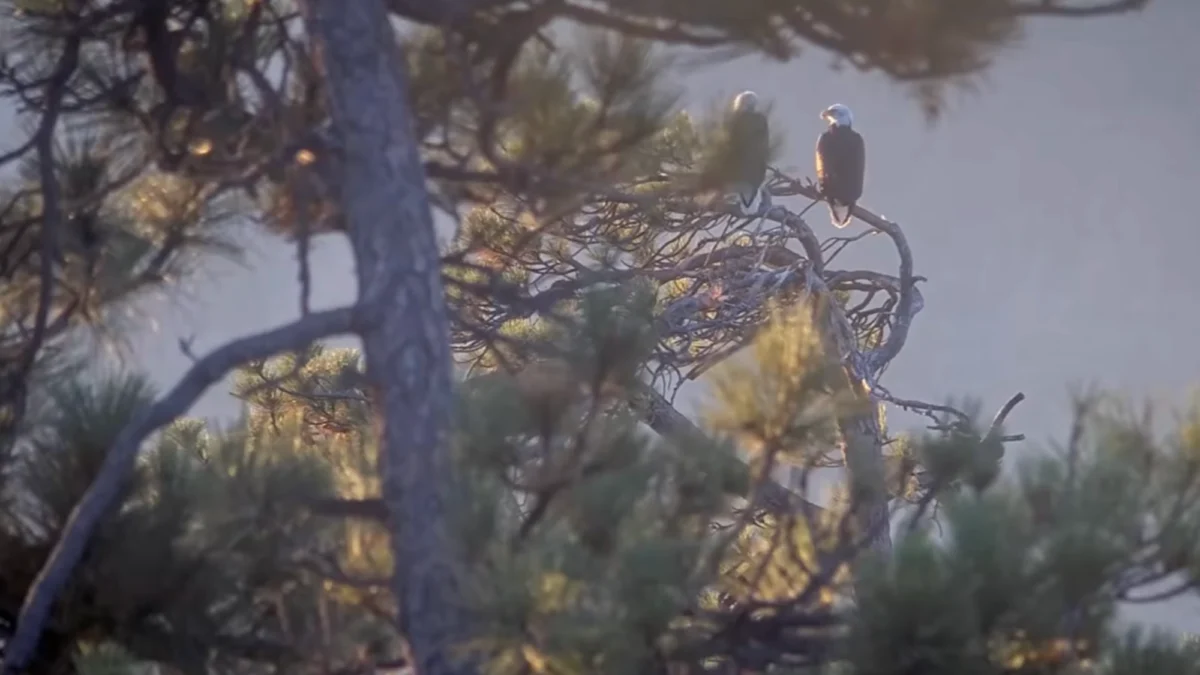
As the seasonal transition from summer to autumn settles over the San Bernardino Mountains, a notable shift in the avian hierarchy of Big Bear Valley has captured the attention of biologists and wildlife enthusiasts alike. Shadow, the venerable bald eagle father whose life has been documented for years by the Friends of Big Bear Valley (FOBBV), is currently navigating a period of transition. Following the death of his long-time mate, Jackie, in August, a young female bald eagle identified as KD1, or "Kaydee," has been observed in the vicinity, sparking widespread interest regarding the potential for a new breeding partnership.
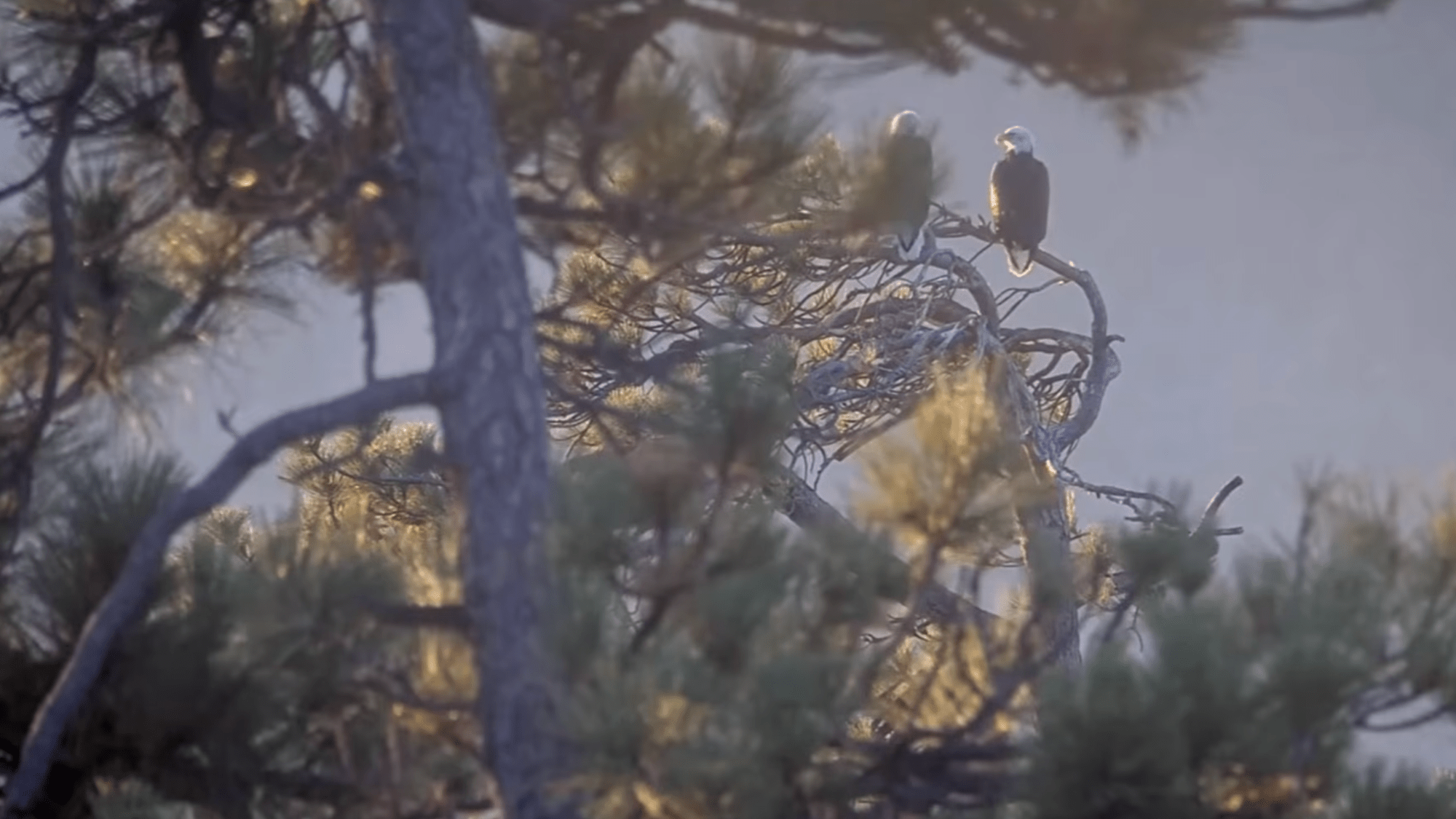
The recent sightings of Shadow and Kaydee have been characterized by the cautious, exploratory behaviors typical of bald eagles during the pre-nesting phase. On several mornings throughout late September, the two have been observed utilizing the "Roost Tree"—a common gathering point for eagles—before taking flight together to the Lookout Snag, a prominent vantage point overlooking the valley. These interactions, while not yet confirming a formal pairing, represent a significant behavioral development in the wake of the loss of one of the region’s most famous residents.
A Chronology of the Big Bear Eagles
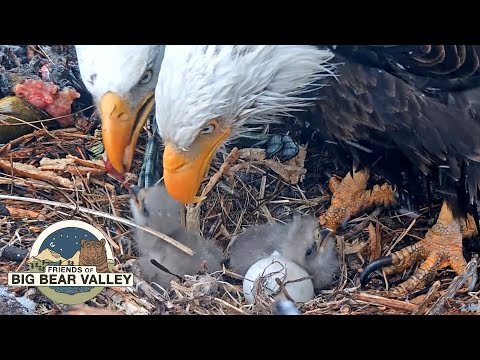
The story of the Big Bear eagles is a multi-year saga of environmental adaptation and resilience. Shadow and Jackie became an established pair in 2018, transforming the local nest into a focal point for ornithological study and public education. Over the subsequent six years, the pair successfully navigated the challenges of high-altitude nesting, including harsh weather, predation, and the complexities of raising multiple broods.
The timeline of their partnership was marked by both triumph and difficulty:
- 2019: The pair successfully fledged two chicks, Cookie and Simba.
- 2022: The pair successfully raised and fledged one chick, Spirit.
- 2023–2024: Consecutive nesting seasons were plagued by egg failure, a common occurrence in wild eagle populations due to environmental factors or parental experience.
- 2025: A significant season saw three chicks hatch in March. Despite a severe late-season snowstorm that buried the nest in two feet of snow, two of the chicks, Sunny and Gizmo, survived and fledged.
- 2026: In the spring, Jackie laid two clutches of eggs. The first was lost to raven predation; the second produced two chicks, Luna and Sandy.
The trajectory of the pair was abruptly altered in July 2026. On July 17, Jackie was discovered grounded near Dana Point, California. Witness reports and subsequent analysis revealed that she had engaged in a territorial dispute with two younger subadult eagles. While she defended herself, the physical toll was substantial. She was transported to the Ojai Raptor Center, where clinicians diagnosed her with severe anemia, accompanied by blood clots and organ dysfunction. Despite intensive veterinary intervention, Jackie passed away on August 10. A necropsy later confirmed that no single event was responsible, but rather a combination of systemic health issues led to her decline.
Understanding the New Arrival: KD1 (Kaydee)
The appearance of Kaydee, or KD1, in the months following Jackie’s death has provided a natural, if bittersweet, continuation of the valley’s eagle population story. Kaydee is a banded female eagle, born in 2022 in the Prado Basin, approximately 70 miles from Big Bear Lake. Her history is well-documented thanks to the banding program conducted by the Orange County Water District, which aims to monitor the survival and dispersal rates of eagles in Southern California.
Kaydee is currently approaching her fifth year, an age at which bald eagles typically reach sexual maturity and begin seeking nesting territories. Her presence in Big Bear is not necessarily a result of a direct search for a mate but rather follows the standard dispersal patterns of young eagles looking for suitable habitat. Biologists note that her interactions with Shadow—characterized by soft vocalizations known as "chortles" and communal perching—are consistent with the "get-to-know-you" phase of eagle bonding. However, the presence of a black spot on her head and her youthful plumage indicate that she is still maturing, and it remains unclear if she will successfully establish a permanent bond with Shadow before the primary nesting season commences.

Data and Environmental Implications
The nesting season for bald eagles in California is a rigorous cycle that spans more than half a year. For the Big Bear pair, the clock officially begins in September, when birds begin refurbishing nests and securing territory. Egg-laying typically occurs in mid-to-late January, provided the pair bond is sufficiently solidified.
The success of a pair depends on a complex interplay of environmental stability and individual compatibility. The Friends of Big Bear Valley, who maintain 24/7 livestream cameras, have emphasized that public interest must remain grounded in the reality of natural selection. While the cameras offer an intimate view of the eagles’ lives, the survival of potential future chicks is never guaranteed. Factors such as food availability in Big Bear Lake, the presence of apex predators, and unpredictable weather patterns remain the primary variables for any eagle pair in the San Bernardino National Forest.
Official Responses and Community Engagement
The local community and the FOBBV have approached the transition with a mix of reverence and objective observation. The "Wings Over Big Bear" celebration, scheduled for October 3 at the Bear Mountain Ski Resort, serves as both a memorial for Jackie and a forward-looking event. Representatives from the Yuhaaviatam of San Manuel Nation, whose ancestral lands include the San Bernardino Mountains, are expected to participate, highlighting the cultural significance of the eagle to local Indigenous populations.
"Watching the wings over Big Bear Valley continues to bring a sense of wonder, even as the cast of characters changes," a spokesperson for the FOBBV noted. By providing an open stream, the organization aims to demystify the life cycle of raptors while fostering a broader appreciation for the fragile ecosystems that support them.
Analysis: What Lies Ahead?
From an ecological standpoint, the arrival of a new, young female in a vacated territory is an expected outcome of population density. As older, established birds pass away, their territories are often claimed by younger, fitter individuals. The primary question for observers is whether Shadow, who is an experienced father, will accept a younger mate who may lack his level of breeding experience.
If a bond is formed, the upcoming months will be critical. The refurbishment of the nest—often involving the moving of heavy sticks and the lining of the bowl with soft moss—is a collaborative effort that tests the pair’s synchronization. If they fail to coordinate these efforts, it is highly likely that no eggs will be laid, or that any attempt will result in failure.
For the researchers tracking these birds, the next four months represent a crucial data-gathering window. They will be monitoring the frequency of the pair’s joint flights, the division of labor at the nest, and the intensity of their territorial defense against intruders. While the public often anthropomorphizes these behaviors, for the biologists, every stick placement and shared perch is a data point in the ongoing study of how Southern California’s bald eagle population continues to rebound from historical declines.
As winter approaches, the "Lookout Snag" remains a focal point for the drama of the wild. Whether Shadow and Kaydee will successfully navigate the coming season is a matter of natural timing and biology, but their presence ensures that the Big Bear nest remains one of the most significant sites for wildlife observation in the United States. For now, the pair remains in a period of acquaintance, serving as a reminder of the cycle of life that defines the rugged, beautiful landscape of the San Bernardino Mountains.

