
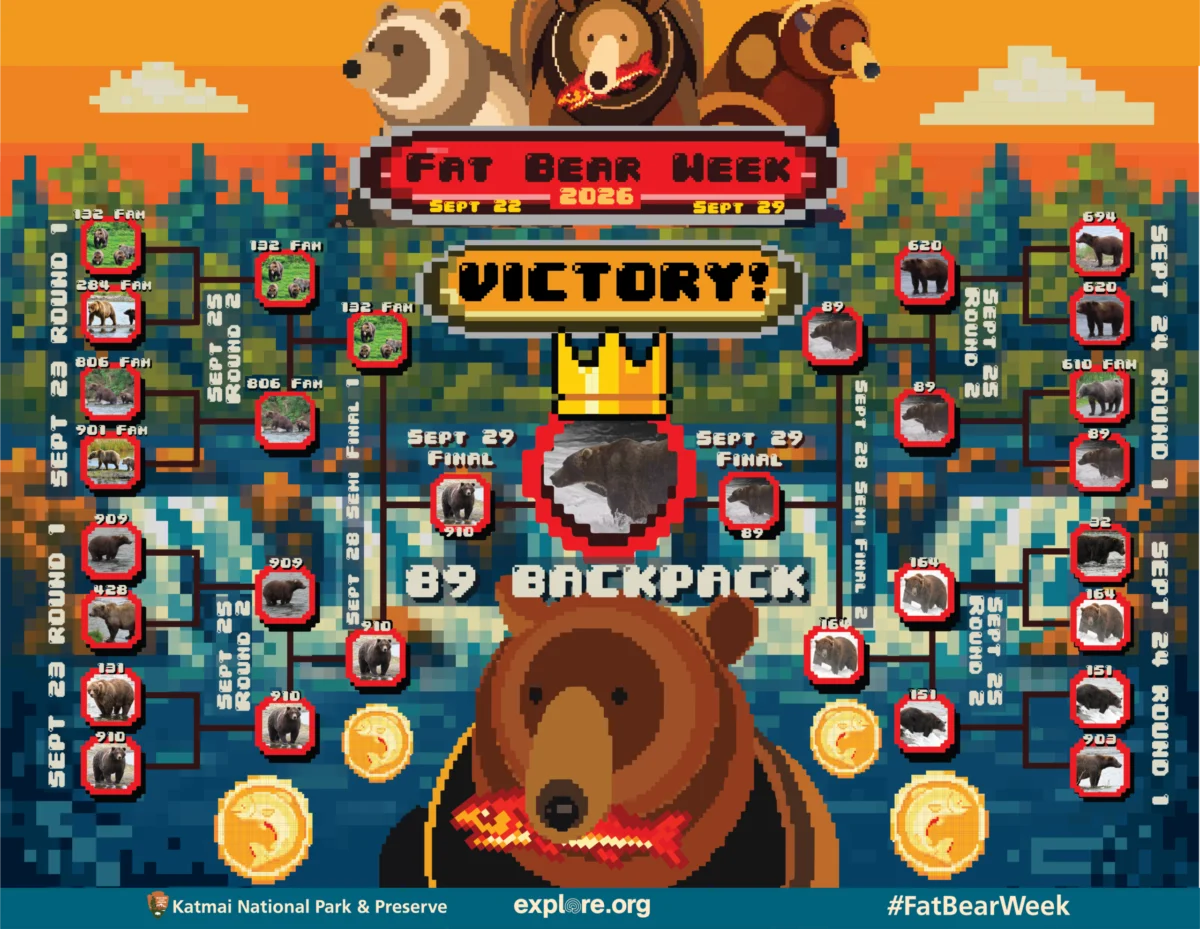
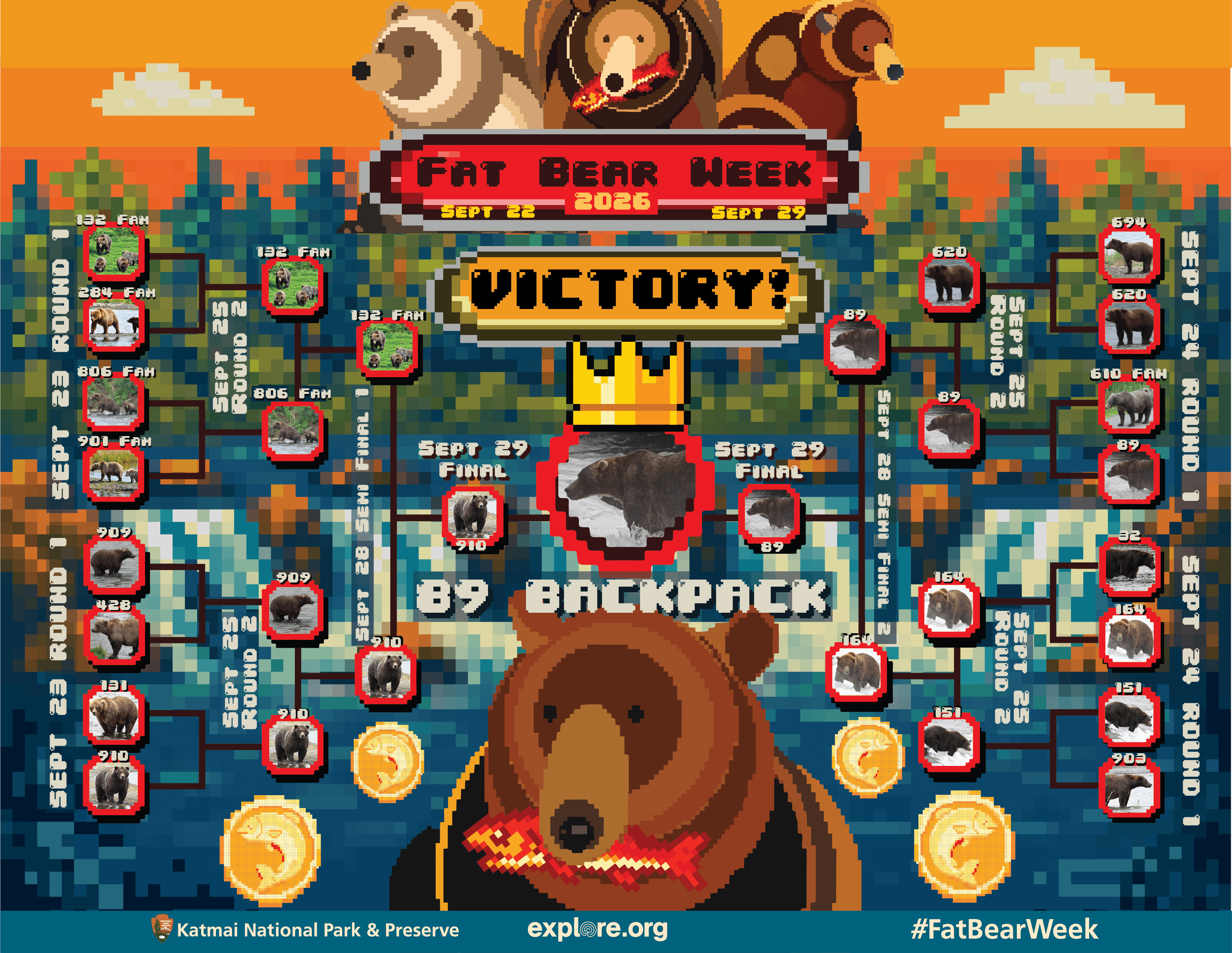
The annual celebration of ursine girth, Fat Bear Week, has reached its conclusion for 2026, with Bear #89, affectionately known as Backpack, officially securing the title of champion. In a high-stakes, bracket-style tournament that captivated global audiences, Backpack emerged victorious over Bear #910 in the final round of voting. This event, hosted by Katmai National Park and Preserve in Alaska in partnership with explore.org, serves as both a lighthearted digital competition and a serious platform for public education regarding the ecology of the Brooks River.
Backpack succeeds the 2025 champion, Bear #32, famously known as Chunk. The transition of power follows a rigorous series of matchups that began on September 22, featuring a diverse field of 16 adult brown bears (Ursus arctos) categorized into four competitive divisions: mother bears, single females, sub-adults, and adult males.
A Legacy Defined by Resilience
The moniker Backpack is rooted in the bear’s early life, specifically his habit of riding on the back of his mother, the legendary Katmai matriarch Bear #435, known as Holly. Now 20.5 years old, Backpack has become a fixture of the Brooks Falls landscape. His journey to this year’s championship is particularly noteworthy given the precarious nature of his youth.
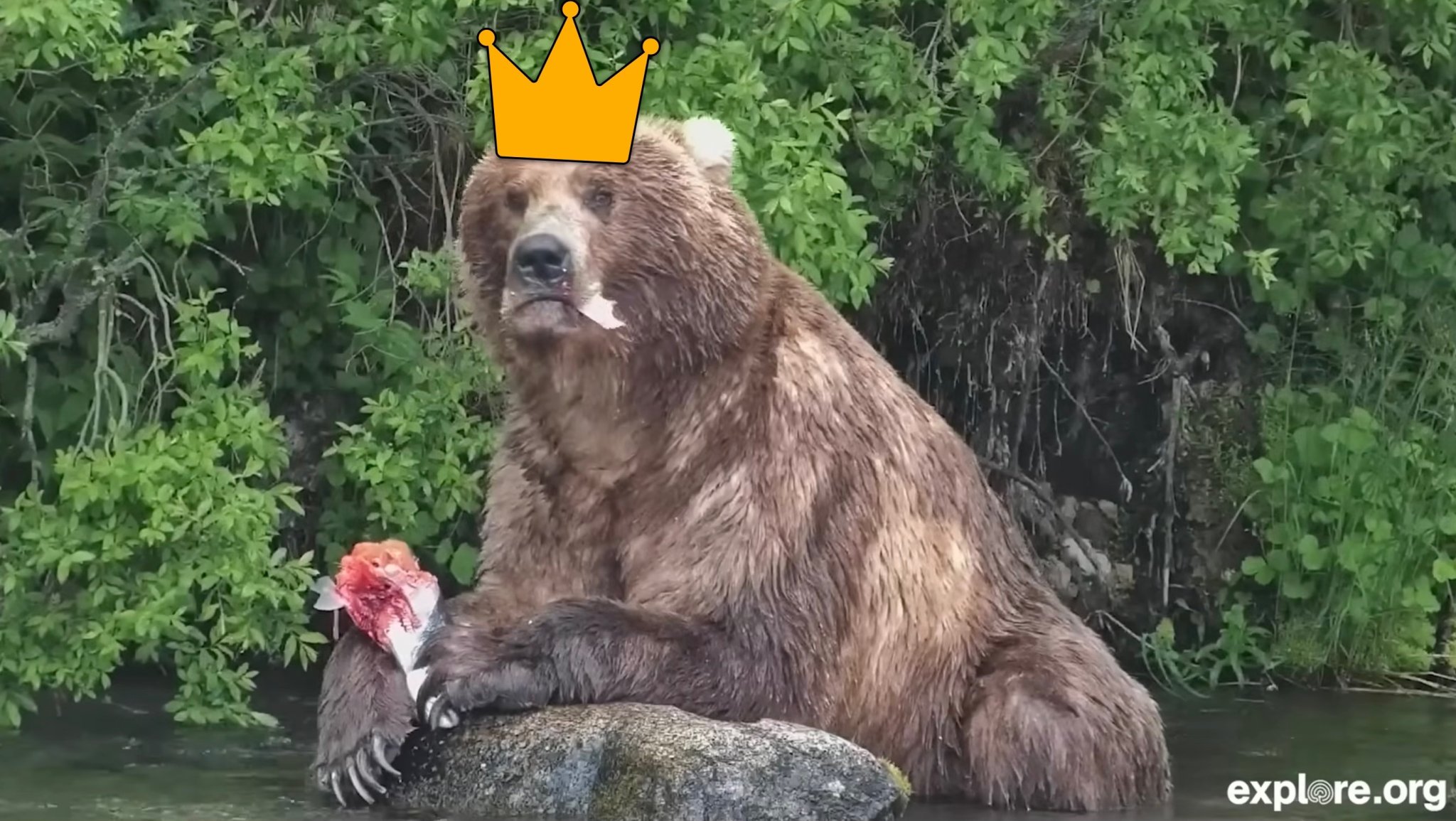
In 2007, as a yearling, Backpack suffered a severe leg injury that threatened his survival. The incident, which occurred during the spring, left the cub unable to navigate the river effectively, causing significant alarm among park rangers and the dedicated community of bear-cam enthusiasts. While many viewers at the time urged park staff to intervene, the National Park Service maintained its policy of non-interference. Ultimately, with the protective guidance of Holly, Backpack overcame his physical impairment, eventually growing into one of the most substantial bears in the park. Observers note that he carries his massive frame with a distinct, quiet temperament, avoiding the typical aggressive posturing often seen among dominant males at the falls.
The 2026 Competition Timeline
The road to the 2026 title was defined by narrow margins and intense engagement from voters worldwide. The bracket was structured to showcase the biological diversity of the Katmai bear population, tracking their progress as they transitioned from the prime fishing grounds of the upper Brooks Falls to the lower river areas.
- September 22: The tournament commenced with 16 contenders, including crowd favorites and established veterans.
- September 24: A major upset occurred in Round 1, Part 2, when the reigning champion, Chunk, was defeated by the newcomer and tactical fishing specialist, Bear #164, Bucky Dent.
- Late September: As the bracket narrowed, Backpack secured a spot in the semi-finals, where he faced Bucky Dent. The matchup was one of the most competitive in the history of the event, with Backpack advancing by less than a single percentage point of the total vote.
- Finals: The concluding vote saw Backpack face Bear #910, ultimately securing the victory and the unofficial "crown" of the season.
The Biological Imperative: Salmon and Survival
Fat Bear Week is fundamentally anchored in the biological necessity of pre-hibernation weight gain. The brown bears of Katmai rely heavily on the annual salmon migration, which typically peaks in late June. Throughout the summer and early autumn, these bears congregate at Brooks Falls to capitalize on the nutrient-dense run.
As the season progresses into September and October, the bears shift their focus to the lower Brooks River, scavenging for salmon that have completed their spawning cycles and died. This caloric intake is vital, as these animals must accumulate sufficient body fat to sustain them through their winter state of torpor.

Contrary to common misconceptions, bears do not experience "deep hibernation" in the traditional biological sense. Instead, they enter torpor, a state of metabolic suppression triggered primarily by the depletion of food sources and the onset of colder temperatures. During this period, their heart rates drop, and their metabolic processes slow significantly, allowing them to rely entirely on the fat stores accumulated during the preceding months. The "fatness" celebrated during the week is, therefore, a direct indicator of the individual bear’s health and their probability of surviving the harsh Alaskan winter.
Conservation and the Otis Fund
While the competition provides a platform for entertainment, the underlying goal remains the promotion of conservation efforts within the Katmai National Park and Preserve. The event highlights the work of the Katmai Conservancy, particularly the Otis Fund.
Named after Bear #480 (Otis), a four-time Fat Bear Week champion known for his calm demeanor and exceptional fishing techniques, the fund supports vital research, habitat protection, and educational outreach. To bolster these efforts, explore.org has committed to matching all donations made to the Otis Fund through October 3, 2026. This financial support is crucial for the continued monitoring of the park’s bear population and the maintenance of the infrastructure that allows the public to view these animals in their natural habitat via livestreaming technology.
Broader Implications of Public Engagement
The success of Fat Bear Week illustrates the power of digital connectivity in modern wildlife conservation. By gamifying the observation of natural phenomena, the National Park Service and explore.org have successfully fostered a global constituency of "citizen scientists" and advocates who are deeply invested in the well-being of individual animals.
The implications of this engagement extend beyond simple popularity contests. The data collected by observers—ranging from the behavioral shifts of bears like Backpack to the impact of climate variations on salmon runs—provide researchers with qualitative insights into the health of the ecosystem. Furthermore, the narrative arcs of specific bears, such as the survival of a formerly injured cub, serve to humanize the complex challenges faced by wildlife in a rapidly changing environment.
As the 2026 season draws to a close and the bears of Katmai begin to retreat into their dens, the legacy of this year’s competition remains clear. Backpack’s victory is not merely a celebration of size, but a testament to the resilience of a population that continues to thrive under the careful observation of an international audience. The park service has indicated that preparations for the 2027 season are already being considered, ensuring that the intersection of technology, biology, and public interest will continue to serve as a cornerstone of Katmai’s conservation strategy.

