
The transition toward sustainable urban mobility in Yogyakarta has hit a significant roadblock as the introduction of electric-assisted pedicabs, known as "Bekalista," faces intense scrutiny from the very operators they were intended to support. Designed to preserve the cultural heritage of the Malioboro corridor while eliminating carbon emissions, the program has instead become a source of financial strain and operational frustration for dozens of traditional pedicab drivers. What was envisioned as a progressive leap toward "green tourism" has been marred by mechanical failures, design flaws, and a widening gap between regulatory expectations and the realities of the street.
A Program Born from Ambition
The initiative, spearheaded by the Yogyakarta provincial government, aims to phase out the motorized pedicabs (bentor) that have dominated the streets for decades. The goal is to align the historic Sumbu Filosofis (Philosophical Axis) with UNESCO heritage standards, requiring a shift to zero-emission transport. With the support of the Ministry of Finance’s Government Investment Center (PIP) and a consortium of state-owned enterprises—including PT Sarana Multi Infrastruktur, PT Pegadaian, and PT Permodalan Nasional Madani—the project secured the necessary funding to roll out 1,000 units of the electric-assisted vehicles.
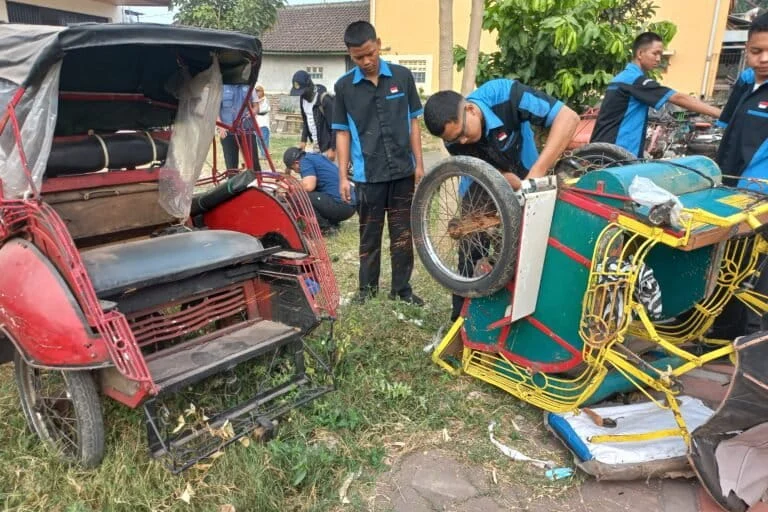
The project is a complex public-private partnership. PT Langit Biru Istimewa (LBI) provided the conceptual design, while PT Yogya Presisi Tehnikatama Industri (YPTI) handled the manufacturing engineering. Crucially, the program mandated the involvement of local vocational high schools (SMK) in the assembly and maintenance processes, intended to foster a new generation of technical talent within the region.
The Reality of the Streets
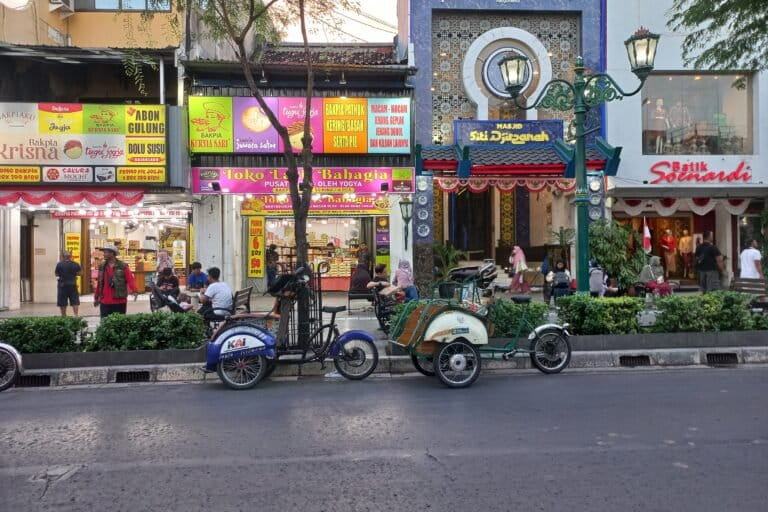
For veteran operators like 64-year-old Gio, the transition has been anything but smooth. After receiving his vehicle on July 16, he expected a reliable, clean, and cost-effective upgrade. Instead, he encountered immediate mechanical failure. While traveling through the Piyungan district, a faulty electrical socket connection ignited, burning out the wiring and rendering the vehicle completely immobile.
Gio’s experience is not an isolated incident. Drivers report a litany of technical failures: melting wires due to substandard insulation, insufficient torque, and design flaws that make the vehicles cumbersome. For Giyono, 57, a primary breadwinner for a six-member family, the speed limitation of 10 kilometers per hour is a disaster. His morning commute, which previously took one hour with a motorized unit, now stretches to five hours. During an informal test, Giyono found that his grandchild’s bicycle could easily outpace the government-issued electric pedicab.
The economic impact is compounded by the design of the vehicle. The high step-in height discourages potential passengers, particularly women, from choosing the electric units over the more robust, traditional motorized alternatives still operating in the area. Consequently, many drivers report a sharp decline in daily income. Furthermore, operators are now burdened with higher electricity bills—often doubling their monthly costs to roughly 200,000 IDR—to sustain the long charging cycles required for daily operation.
Mechanical Vulnerabilities and Design Deficiencies
Technical analysis of the early units reveals significant oversights. The wiring harnesses are frequently described as undersized, leading to heat buildup and fire hazards. More fundamentally, the lack of a robust shock-absorption system turns every pothole and speed bump in the city into a jarring experience for both the driver and the passenger.
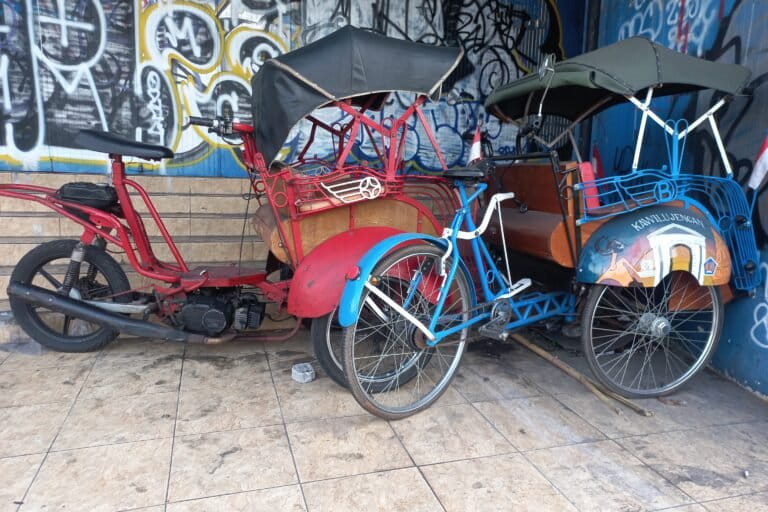
These issues are exacerbated by the vehicle’s inability to handle the rigors of commercial use. Unlike motorized pedicabs, which offer consistent power for a full week on a single tank of fuel, the electric versions require constant maintenance and frequent servicing. Drivers are often forced to pay for repairs out of pocket, with tire replacements alone costing as much as 500,000 IDR per unit—a prohibitive expense for workers living hand-to-mouth.
Conflicting Perspectives: Regulation vs. Utility
The friction between the operators and the program organizers stems from a fundamental disconnect in objectives. The government and developers argue that the Bekalista is not a replacement for high-speed motorized transport, but rather a tool for slow-paced, short-distance tourism.
Winih Wicaksono, Manager of the Regional Public Service Agency (BLUD), emphasized that the vehicles were never designed for high-speed heavy labor. The 15 km/h limit is a regulatory necessity, mandated by the Gubernatorial Decree No. 39/2024, which governs the specifications for pedicabs with electric assistance. This regulation dictates everything from wheel diameter to braking distance, ensuring the vehicles meet the aesthetic and safety requirements of a heritage zone.
Ary Tjahyono, President Director of LBI, maintains that the design process was inclusive, involving pilot testing with a group of 10 drivers over a one-week period. He acknowledges the frustrations but notes that the developers are bound by strict government regulations. "We cannot fulfill all requests for more power because we are limited by the Governor’s regulations," Tjahyono stated. The intention, he argues, is to protect the historic structures of the Sumbu Filosofis from the long-term degradation caused by air pollution and vibrations from motorized traffic.
The Broader Implications for Urban Policy
The situation in Yogyakarta serves as a case study in the challenges of "green" urban transitions in developing economies. While the shift to electric mobility is globally lauded, its implementation often ignores the socio-economic context of the users. For the drivers, the vehicle is not a historical artifact or a piece of environmental policy—it is a livelihood.
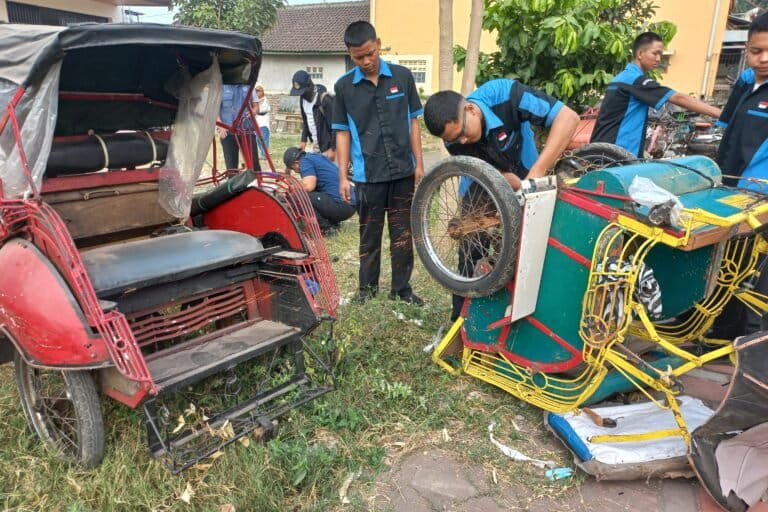
The involvement of SMK students in the maintenance ecosystem is a noble educational endeavor, but it has not yet translated into the rapid-response support network that the drivers desperately need. If the vehicles are to succeed, the program must address the gap between the rigid regulatory framework and the practical requirements of the operators. This includes reconsidering the build quality of components like the electrical systems and providing subsidies or more robust support for the increased maintenance costs.
Looking Ahead
The provincial government remains committed to the goal of 1,000 electric pedicabs. The success of this target will depend on whether the program can evolve from a top-down mandate into a collaborative model that values the feedback of the drivers. Without meaningful adjustments to the vehicle’s power, safety, and durability, the risk of total project abandonment by the target demographic remains high.
For now, drivers like Gio and Giyono continue to operate in a state of uneasy compliance. They understand the necessity of following government directives to maintain their right to operate in the city center, but they are increasingly vocal about the price they are paying for that privilege. As the program continues to roll out, the pressure will be on the provincial government and its manufacturing partners to demonstrate that the future of urban tourism does not have to come at the expense of the people who make it possible. The "green" transition must be sustainable in both environmental and human terms to be truly successful.

