
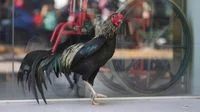
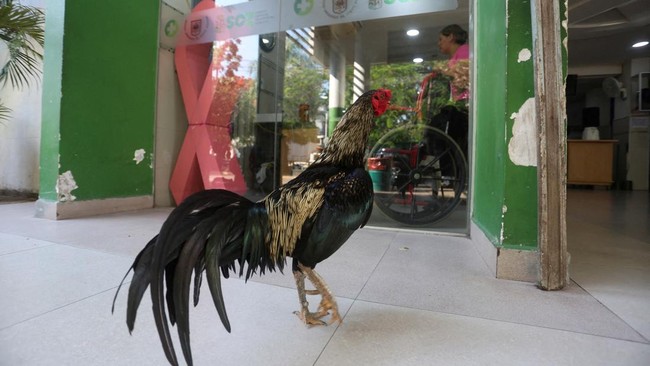
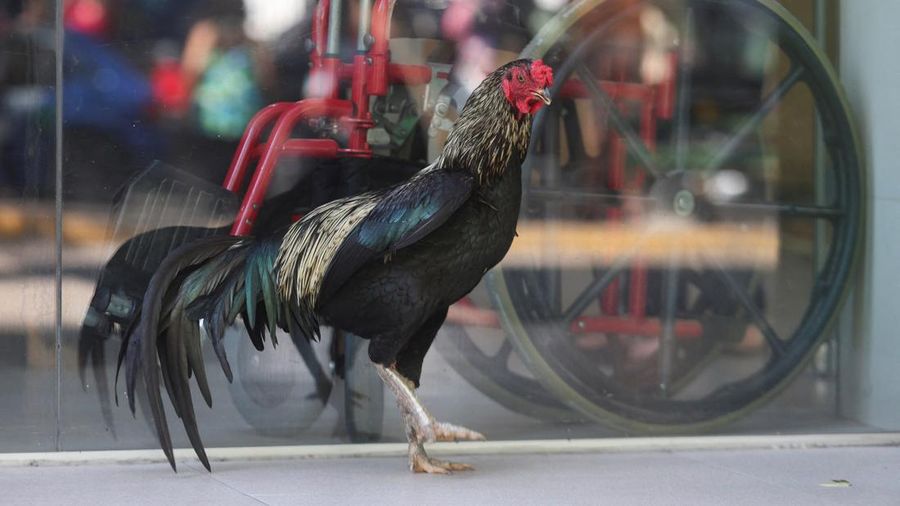
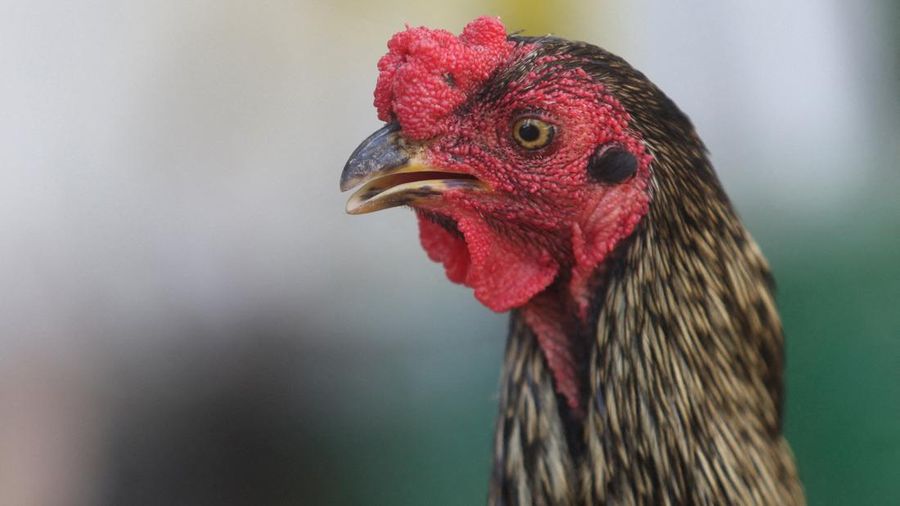
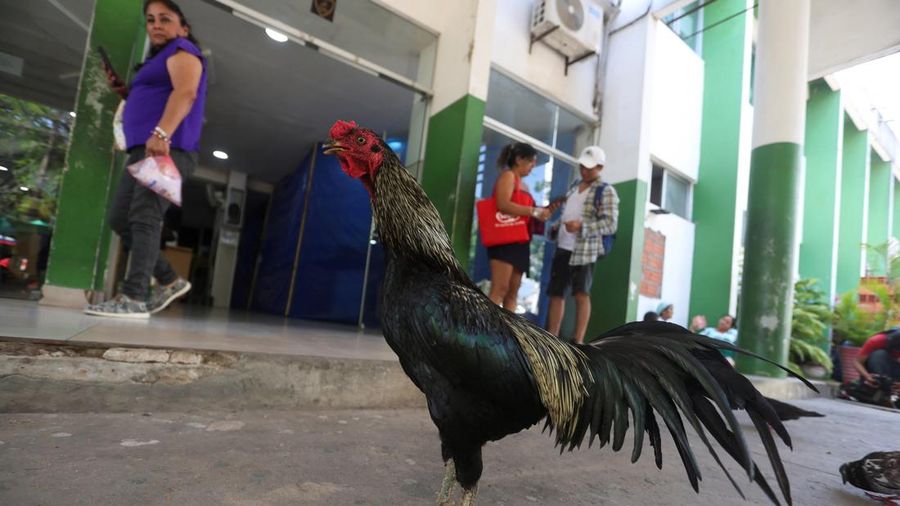
The bond between humans and animals has long transcended conventional boundaries, frequently producing narratives of profound loyalty that capture global attention. While stories of canine devotion—typified by legendary figures such as Hachiko in Japan or Greyfriars Bobby in Scotland—are well-documented in popular culture, avian loyalty remains an extraordinary anomaly. In the city of Santa Cruz, situated in eastern Bolivia, a rooster named Martin has established a remarkable legacy of fidelity. For eight consecutive years, Martin has maintained a steadfast vigil outside the Oncology Institute of Eastern Bolivia, refusing to leave the premises after the cancer patient who brought him there tragically passed away. This unusual phenomenon has transformed the domestic fowl from a transient visitor into a cherished institution, garnering admiration from hospital staff, patients, and international observers alike.
The Origins of a Unique Bond: Arrival at the Oncology Institute
The chronicle of Martin began nearly a decade ago under heartbreaking circumstances. According to historical accounts provided by medical personnel and social workers at the Oncology Institute of Eastern Bolivia, Martin first arrived at the healthcare facility accompanying his owner, a cancer patient seeking treatment. In many rural and semi-urban communities across Bolivia, domestic animals often share remarkably close, companionable relationships with their owners, sometimes accompanying them during major life transitions or medical journeys.
When the owner was admitted to the hospital for intensive cancer care, the rooster remained on the hospital grounds. In the weeks that followed, the patient’s condition deteriorated, ultimately resulting in their death within the facility. While family members and visitors eventually departed to mourn and resume their lives, Martin remained. Rather than wandering off or returning to a rural homestead, the bird chose the hospital’s main entrance as its permanent territory. What initially seemed like a temporary straying behavior evolved into a permanent residency that has now spanned eight years, enduring through changes in hospital administration, medical staff, and the physical landscape of the facility itself.
Daily Life and Community Caretaking
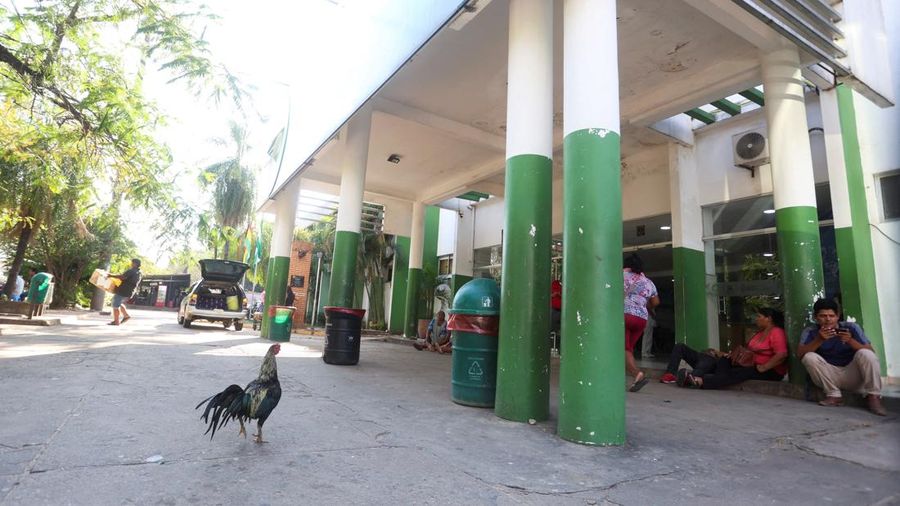
Maintaining an animal on the grounds of a major medical facility for nearly a decade requires a cooperative support system, and Martin has successfully integrated himself into the daily ecosystem of the hospital. Social workers, such as Rosmery Guardia, have noted that the rooster is no longer viewed as an intrusion, but rather as an integral part of the hospital’s identity. The feathered sentinel spends his days patrolling the perimeter of the main entrance, greeting incoming patients, visitors, and medical personnel with familiar predictability.
The survival and well-being of the rooster over such an extended period are largely attributed to the compassion of regular individuals. A local man named Juan Claros has taken on a primary caretaker role, visiting the hospital grounds consistently to provide Martin with fresh feed and clean water. Furthermore, Claros performs routine maintenance tasks for the bird, such as trimming its claws to ensure that mobility remains unhindered on the concrete pavements surrounding the medical center. Beyond Claros, numerous hospital visitors and staff members contribute to Martin’s care, offering scraps of food and ensuring the animal remains safe from vehicular traffic and urban hazards. This community-driven stewardship underscores the emotional resonance the animal has cultivated among people undergoing their own trials with illness and loss.
Parallels in Animal Behavior: The Legacy of Hachiko and Avian Cognition
Martin’s unwavering vigil inevitably draws comparisons to historical icons of animal loyalty, most notably Hachiko, the Akita dog who waited at Shibuya Station in Tokyo for nearly ten years after the death of his owner, Professor Hidesaburo Ueno, in the 1920s. While canines possess well-mapped social bonding mechanisms rooted in pack dynamics and domestication, the cognitive and emotional capacities of birds—specifically gallinaceous species like chickens—are frequently underestimated by the general public.
Ethologists and animal behaviorists note that domestic chickens (Gallus gallus domesticus) are cognitively complex creatures capable of forming strong individual recognition bonds, spatial mapping, and emotional attachments. They possess long-term memory capabilities and can distinguish between various human faces, as well as recognize individuals who exhibit benevolence or hostility. In Martin’s case, the association of the hospital entrance with the final place he encountered his owner appears to have created a profound psychological anchor. The continuous reinforcement provided by compassionate humans feeding him at the same location has further cemented this site fidelity, transforming a grief response into a lifelong routine.
Cultural and Emotional Impact on Cancer Patients and Healthcare Workers
Beyond the biological and behavioral curiosities of the case, Martin’s presence at the Oncology Institute of Eastern Bolivia carries a profound psychological dimension. Hospitals—particularly oncology wards—are environments heavily saturated with anxiety, physical suffering, grief, and existential uncertainty. For patients undergoing grueling chemotherapy regimens and radiation therapies, navigating the entrance of the hospital can be an intimidating psychological hurdle.
The presence of Martin offers an unexpected source of therapeutic distraction and emotional grounding. Social workers and hospital administrators have observed that the rooster often serves as an icebreaker, eliciting smiles from patients burdened by the heavy prognosis of oncological diseases. The narrative of enduring loyalty provides a quiet, comforting metaphor for resilience, perseverance, and unconditional attachment in the face of mortality. In a setting defined by clinical sterile precision and the fragility of human health, the resilient bird represents an enduring, simple constancy.
Broader Implications for Human-Animal Relations in Healthcare Settings
The phenomenon of Martin the rooster also sheds light on evolving policies regarding human-animal interactions in institutional environments. Traditionally, hospitals enforce strict sanitary and biosecurity protocols that strictly prohibit non-service animals from entering or lingering around clinical facilities due to infection control risks. However, the unique accommodation of Martin by the staff of the Oncology Institute illustrates a nuanced, compassionate approach to institutional management.
By establishing a symbiotic boundary—where local caretakers manage the animal’s feeding and grooming outside the sterile clinical zones—the hospital has managed to balance public health requirements with community empathy. This coexistence highlights the growing recognition of the psychological benefits that animal presence can confer, even in high-stakes medical environments. As Martin continues his daily routine outside the gates of the Santa Cruz medical institute, his story remains a powerful testament to the depths of emotional memory in animals and the capacity of human communities to embrace the extraordinary in the everyday.

