The Indonesian financial landscape experienced a turbulent morning session on Tuesday, September 22, as the Jakarta Composite Index (IHSG) struggled to maintain its footing, succumbing to persistent downward pressure. By 10:04 WIB, the benchmark index had retreated by 0.63%, settling at the 6,344 level. This bearish sentiment was mirrored in the currency markets, where the Indonesian Rupiah faced significant headwinds, sliding to a valuation of Rp 17,890 per US Dollar. These movements reflect a broader trend of investor caution as domestic market participants navigate a complex interplay of geopolitical shifts, energy price fluctuations, and evolving global monetary policies.
The Macroeconomic Landscape and Market Sentiment
The current decline in the IHSG is not an isolated event but rather the culmination of several weeks of cooling investor confidence. The index, which serves as a primary barometer for the health of the Indonesian equity market, has been grappling with volatility throughout the month of September. Analysts point to a combination of domestic inflationary concerns and the cascading effects of global macroeconomic uncertainty as the primary drivers of this trend.
The depreciation of the Rupiah remains a critical focal point for policymakers at Bank Indonesia. A currency nearing the Rp 17,900 mark poses significant challenges for import-reliant sectors, potentially exerting inflationary pressure on domestic consumer goods. As the US Dollar continues to exhibit strength against emerging market currencies—fueled by expectations of prolonged high-interest rates in the United States—the Rupiah finds itself in a precarious position. Foreign institutional investors have exhibited a trend of risk aversion, opting to rotate capital into more stable safe-haven assets, thereby intensifying the selling pressure on Indonesian stocks.
Geopolitics and the Energy Commodity Divergence
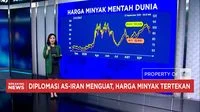
The commodities market presents a bifurcated reality, with oil and coal prices moving in opposite directions, each carrying distinct implications for the Indonesian trade balance. Crude oil prices have remained under downward pressure, hovering near the psychological threshold of USD 100 per barrel. This softness in the oil market is largely attributed to renewed diplomatic efforts between the United States and Iran. The potential for a breakthrough in nuclear talks, which could lead to the easing of sanctions on Iranian oil exports, has introduced a bearish sentiment among traders who anticipate a surge in global supply.
Conversely, the coal market tells a story of resilient demand. Coal prices have surged to USD 144 per ton, a significant increase driven by the global scramble to secure reliable energy supplies. For Indonesia, as one of the world’s largest exporters of thermal coal, this price rally serves as a vital economic buffer. The heightened demand for energy, particularly in emerging economies and parts of Europe, continues to provide a tailwind for the national trade surplus, even as other sectors of the economy face headwinds.
Chronology of September Market Developments
To understand the current state of the markets, it is necessary to examine the events leading up to this Tuesday’s trading session.
- Early September 2026: Markets opened the month with optimism, buoyed by positive earnings reports from major domestic financial institutions. However, this sentiment began to wane by the second week as global central bank rhetoric turned hawkish.
- September 15, 2026: Market analysis highlighted by CNBC Indonesia’s Profit program underscored the brewing risks in the bond market, noting that yield spreads were widening, signaling a shift in investor risk appetite.
- September 18, 2026: The Rupiah began a noticeable descent, breaking through key support levels against the Dollar, prompting market participants to brace for potential intervention from the central bank.
- September 21, 2026: International markets experienced a sell-off in technology and emerging market stocks, setting a somber tone for the opening of the Indonesian market on Tuesday morning.
Analytical Perspectives on Market Implications
The divergence between the energy sector’s performance and the broader equity market highlights the structural challenges within the Indonesian economy. While coal revenues bolster the state budget and provide a cushion for the balance of payments, the equity market’s sensitivity to the Rupiah’s volatility suggests that domestic interest rate policies and corporate debt service coverage ratios are currently the primary concerns for investors.
Financial analysts suggest that the current market pullback is a correction of over-optimistic valuations observed earlier in the year. "The market is recalibrating to a new normal," noted an analyst following the morning session. "Investors are no longer pricing in a ‘soft landing’ for the global economy. Instead, they are positioning portfolios to weather a prolonged period of currency volatility and high energy costs."
Furthermore, the pressure on the Rupiah is expected to continue unless there is a significant shift in the US Federal Reserve’s stance or a stabilization in regional geopolitical tensions. The Indonesian government’s commitment to fiscal discipline will be scrutinized in the coming weeks as it seeks to manage the impact of imported inflation on the broader population.
Institutional Responses and Strategic Outlook
While official statements from Bank Indonesia have remained measured, emphasizing the bank’s readiness to intervene to prevent excessive volatility in the exchange rate, the market is looking for more tangible signs of stability. Market participants are closely watching for the upcoming monetary policy meeting, where the decision on benchmark interest rates will be pivotal. A hawkish move could support the Rupiah but might further dampen the performance of the IHSG by increasing the cost of capital for domestic firms.
In the energy sector, the government’s focus remains on balancing domestic supply obligations with the opportunity to capitalize on high global coal prices. By prioritizing energy security while maximizing export value, the state-owned enterprises involved in the energy sector are playing a crucial role in maintaining the country’s macroeconomic stability during these turbulent times.
Broader Economic Context
The challenges currently facing the Indonesian market are mirrored across much of the ASEAN region. As global supply chains continue to adjust to new trade realities, countries like Indonesia are forced to balance the benefits of commodity exports against the rising costs of imports. The reliance on the US Dollar as a transaction currency for most global commodities makes the strength of the dollar a primary determinant of domestic economic health.
Moreover, the shifting diplomatic landscape—specifically the US-Iran rapprochement—demonstrates how quickly market fundamentals can change based on external political developments. Indonesia’s policy of non-alignment and its focus on economic cooperation with diverse global partners are being tested as the global economic order becomes increasingly fragmented.
Conclusion and Future Outlook
As the trading day progresses, market participants remain cautious. The resilience of coal prices offers a glimmer of hope, but the broader index remains sensitive to the macroeconomic tremors felt in global financial centers. The remainder of September will likely be characterized by defensive trading, with investors favoring sectors that offer stable dividends and those that are less sensitive to currency fluctuations.
For individual investors and institutional funds alike, the current environment necessitates a strategy rooted in diversification and risk management. As Indonesia navigates the complexities of global energy markets and currency devaluation, the coming weeks will provide a clearer picture of whether the economy can maintain its growth trajectory despite the prevailing headwinds. Further in-depth analysis of these trends and their impact on various asset classes will continue to be a priority for investors seeking to navigate the shifting sands of the Indonesian financial landscape.
Ultimately, the events of September 22 serve as a stark reminder of the interconnected nature of global finance. Whether it is the price of a barrel of oil influenced by Middle Eastern diplomacy or the value of the Rupiah dictated by international interest rate differentials, the Indonesian economy remains inextricably linked to global developments. Monitoring these factors in real-time is essential for understanding the volatility and identifying the potential for a rebound in the months ahead. The path forward remains uncertain, yet the fundamental strength of Indonesia’s export-oriented sectors provides a platform upon which long-term stability may be built, provided that domestic policy remains both agile and responsive to the evolving economic narrative.