
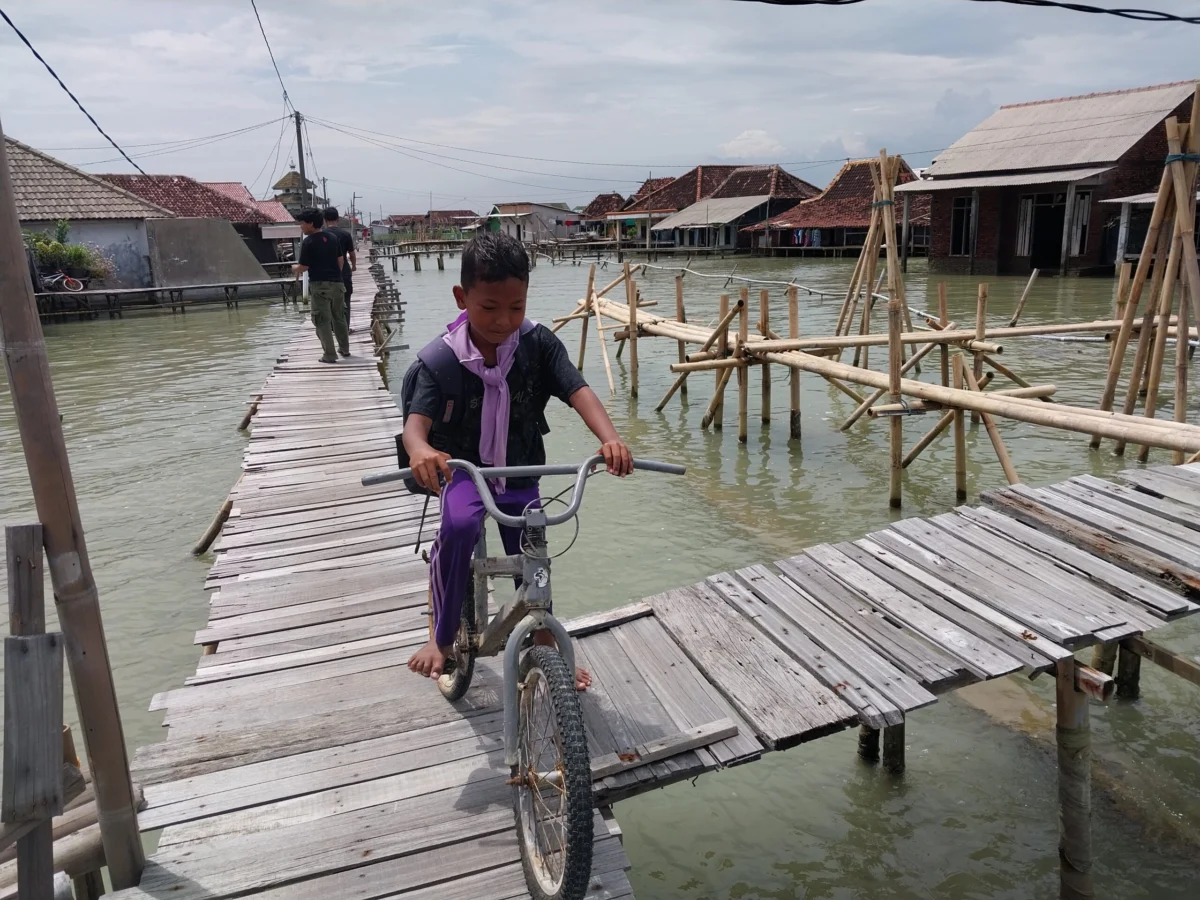
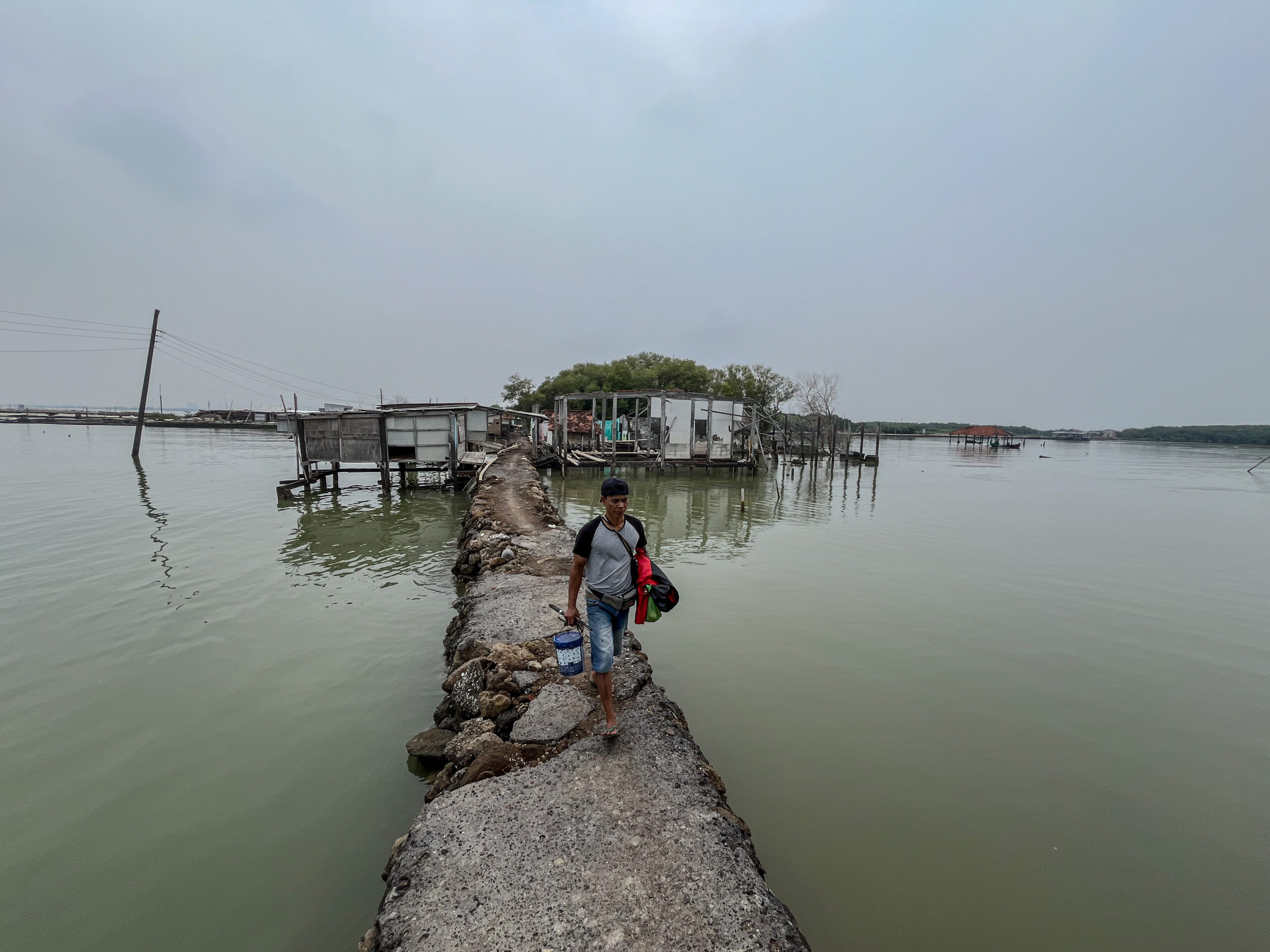
In the coastal district of Sayung, located in the Demak Regency of Central Java, the horizon is no longer defined by the lush rice paddies or productive fishponds that once characterized the region. Instead, the landscape is a haunting expanse of grey water, where the skeletal remains of rooftops and the upper halves of utility poles poke through the advancing Java Sea. For the residents of villages like Timbulsloko and Bedono, the climate crisis is not a distant theoretical threat but a daily, suffocating reality that has dismantled their livelihoods and stripped them of their ancestral heritage. Over the last three decades, a catastrophic combination of rising sea levels and rapid land subsidence has transformed a thriving agricultural hub into a submerged wasteland, creating a vacuum where economic desperation meets predatory land speculation.
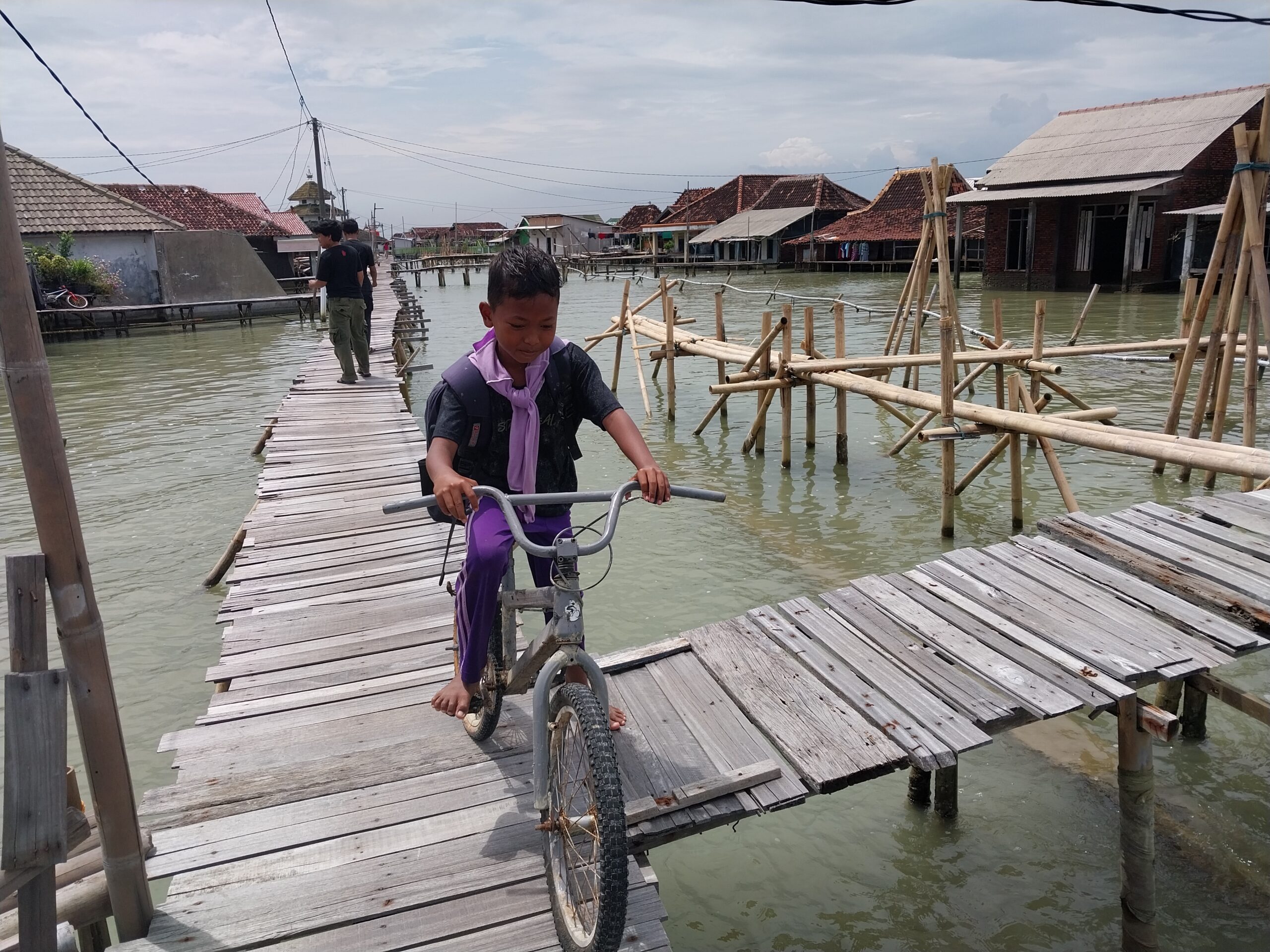
The transformation of Sayung began in the early 1990s, an era when tidal flooding, locally known as "rob," was considered a minor seasonal nuisance. At that time, the seawater would barely reach an ankle’s height and would recede within hours. However, as the years progressed, the frequency and intensity of these floods escalated. What was once a temporary inconvenience became a permanent inundation. By the 2010s, thousands of hectares of farmland had been reclaimed by the sea, forcing hundreds of families to flee. In Timbulsloko, one of the hardest-hit areas, a community that once boasted hundreds of households has dwindled to just 70 resilient families living in homes elevated on wooden stilts or concrete pillars, connected by precarious boardwalks.
The Economics of Despair: Selling Submerged Ancestry
For many residents, the physical loss of their homes is compounded by a secondary crisis: the total collapse of land value. Those with the financial means and alternative land holdings have long since relocated, but for the majority, the "himpitan ekonomi" or economic squeeze has left them with no choice but to sell their now-submerged assets for a pittance. The emergence of land brokers in these "sinking villages" has created a market for what many consider to be worthless property.
Baharuddin, a resident of Sayung, is a testament to this tragic trend. In 2023, he was forced to sell his former shrimp ponds, which are now entirely underwater, for a mere Rp20,000 (approximately $1.25) per square meter. "It is no longer productive," Baharuddin explained, noting that the land is now indistinguishable from the open sea. "Even if we tried to rebuild the embankments for ponds, the waves would just wash them away."
The situation is even more dire for others. Zaini, another local, sold his submerged land for Rp15,000 per square meter in early 2024, using the meager proceeds to renovate his son’s house and provide capital for a small market stall. In the village of Bedono, the prices drop even lower. Rohmad, a resident who was in the process of relocating, sold his land to a broker for just Rp8,000 per square meter in 2015. Perhaps most shocking is the case of Makmun, whose land was reportedly scouted by brokers offering as little as Rp700 to Rp2,000 per square meter—prices that reflect a total lack of bargaining power on the part of the victims.
Despite the apparent worthlessness of land covered by several meters of seawater, brokers continue to circle these communities. According to locals, these "middlemen" represent wealthy "bosses" who view the submerged coast as a long-term investment. While the residents see a watery grave for their memories, speculators see a strategic footprint in one of Indonesia’s most ambitious industrial expansion zones.
The Strategic Masterplan: From Disaster Zone to Industrial Hub
The paradox of speculators buying underwater land is resolved when one examines the Indonesian government’s long-term developmental roadmap for the Northern Coast (Pantura) of Java. Susan Herawati, the Secretary-General of the People’s Coalition for Fisheries Justice (KIARA), argues that the state’s perceived "neglect" of Sayung may be a calculated move.
KIARA suggests that by allowing the land to sink and the residents to relocate voluntarily due to hardship, the government can eventually classify these areas as "tanah musnah" or "vanished land." Under Indonesian law, once land is declared "vanished," the original ownership rights are extinguished, and the state can reassert control over the territory. This process clears the way for massive reclamation projects and industrial development without the logistical and financial burden of large-scale community compensation or resettlement programs.
According to documents analyzed by Mongabay, Sayung is a focal point of the National Strategic Area (KSN) known as Kedungsepur—an acronym for the metropolitan agglomeration of Kendal, Demak, Ungaran, Semarang, and Purwodadi. Under Presidential Regulation (Perpres) No. 60 of 2022, this region is designated as a primary engine for international economic activity in Central Java. Specifically, the Sayung district is slated to function as the "Genuk-Sayung industrial corridor."
The government’s vision for the area involves a concept titled "Eco-industry & Green Economy." This plan aims to create a "liveable waterfront city" that integrates industrial activity with coastal defense mechanisms. Proponents of the plan suggest that large-scale reclamation and the construction of industrial dikes could serve as a solution to the tidal flooding and land subsidence that currently plague the region. However, critics like Herawati fear that this "solution" is designed for investors rather than the displaced fishing and farming communities.
Environmental Data and the Subsidence Crisis
The tragedy in Demak is part of a broader environmental catastrophe affecting the entire northern coast of Java. Scientific data indicates that land subsidence in the Semarang-Demak area is among the fastest in the world, with some spots sinking at a rate of 10 to 20 centimeters per year. This subsidence is driven by several factors, including the natural compaction of alluvial soil, the weight of massive urban infrastructure, and, most critically, the excessive extraction of deep groundwater for industrial and residential use.
As the land sinks, global sea levels continue to rise due to climate change, creating a "double whammy" effect. Statistics from the Central Java provincial government suggest that coastal abrasion and inundation in the province have affected over 7,900 hectares of land. In Demak alone, entire hamlets like Rejosari have been erased from the map, leaving only a few holdouts, such as Parsijah (known as Mak Jah), who refuses to sell her land and continues to plant mangroves in a solitary effort to hold back the tide.
Legal Perspectives and the "Vanished Land" Doctrine
The legal status of these sinking properties is a complex intersection of property rights and disaster management. Theo Adi Negoro, a legal expert from the Catholic University (Unika) Soegijapranata in Semarang, points out that the situation in Sayung touches upon fundamental human rights and state obligations.
Government Regulation (PP) No. 18 of 2021 and the more recent Ministry of Agrarian Affairs/National Land Agency (ATR/BPN) Regulation No. 3 of 2024 provide the framework for "vanished land." These regulations define vanished land as plots that have changed shape or form due to natural events to the point where they can no longer be utilized for their original purpose.
While the law allows for the reclassification of this land, Negoro emphasizes that the state has a constitutional mandate to provide "social handling" and fair compensation. "Normatively, the law recognizes the concept of vanished land, but it also mandates that the state must assess the social impact," Negoro stated. He argues that the state, through the BPN and local governments, must ensure that residents are not exploited by speculators and that they receive adequate relocation support.
If the state fails to intervene while residents are forced to sell their assets for a fraction of their value, it could be seen as a violation of the constitutional right to a decent living and a healthy environment. Negoro suggests that the current administrative tools should allow citizens to claim compensation or demand structured relocation, rather than being left to the whims of the informal land market.
The Human Toll and the Uncertain Future
The stories of Baharuddin, Zaini, and Rohmad highlight a disturbing trend where the victims of climate change are being marginalized twice: first by the environment and then by the economy. The "Eco-industry" promised by the government offers a gleaming future of high-tech factories and green ports, but for the people currently wading through the salt water of Sayung, that future seems to have no place for them.
The collaboration between the Indonesian and British governments under the UK Partnering for Accelerated Climate Transitions (UK PACT) scheme, announced for late 2025, aims to develop low-carbon transportation and transit-oriented development in the Kedungsepur area. While these international partnerships signal a commitment to sustainable development, the immediate reality for Demak’s coastal residents remains one of survival.
As the Genuk-Sayung corridor prepares for its industrial transformation, the question of equity remains at the forefront. Without a transparent "political will" to declare the situation a national disaster—which would trigger mandatory state aid—the residents of Sayung remain in a legal and economic limbo. They are the "canaries in the coal mine" for Java’s coastal future, caught between the rising tide of the sea and the relentless march of industrial expansion.
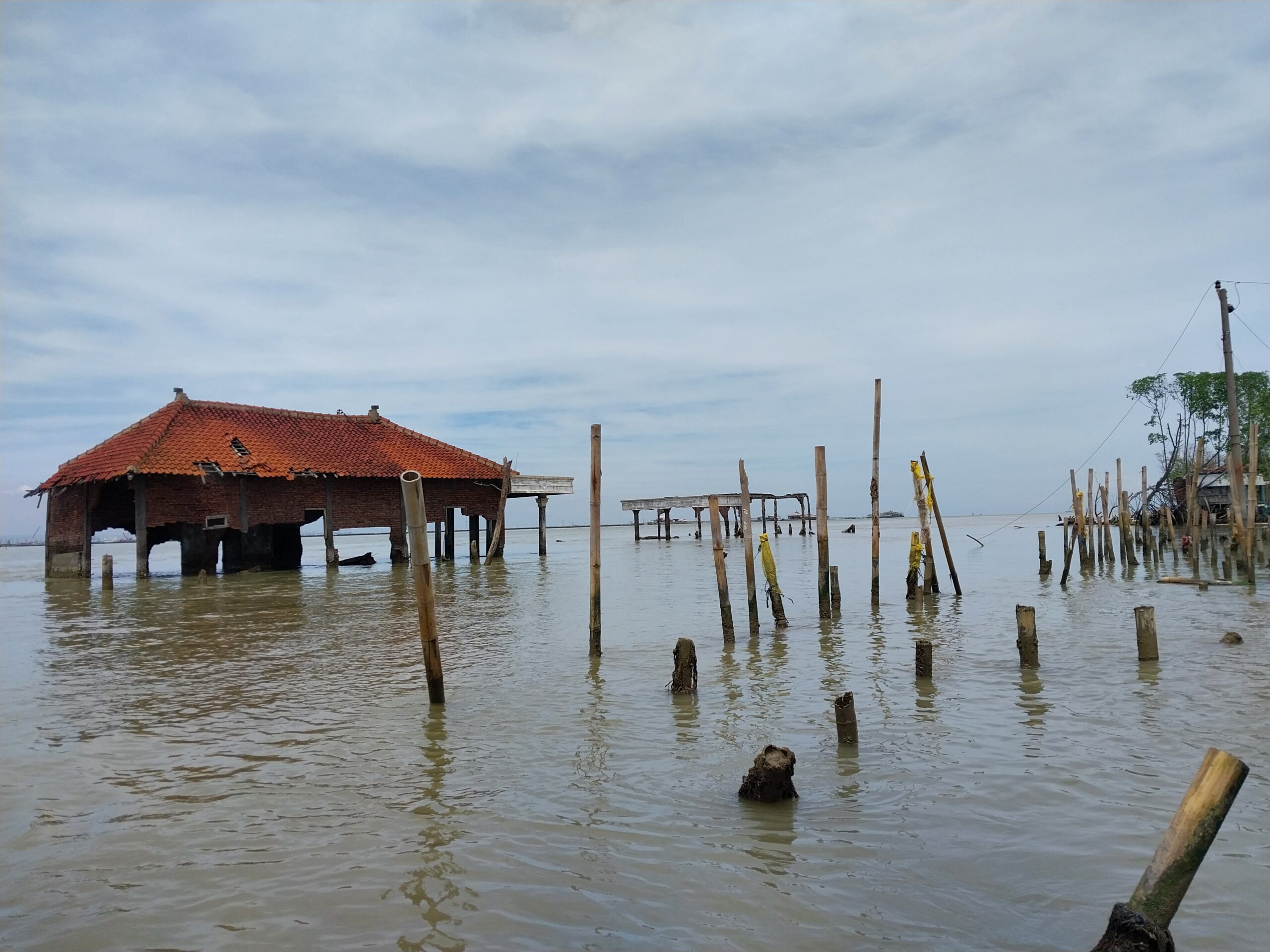
The puing-puing (rubble) of Timbulsloko serves as a stark reminder of what is at stake. While children still play on wooden boardwalks and families continue to elevate their floors, the clock is ticking. The transformation of "vanished land" into "industrial zones" may solve a logistical problem for the state, but for the thousands who once called this coast home, it represents a permanent displacement that no amount of industrial growth can truly compensate.

