
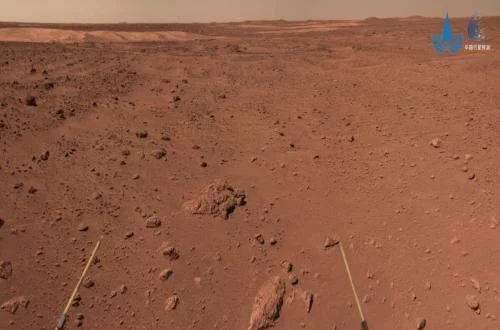
The National Aeronautics and Space Administration (NASA) has officially announced the funding of a cutting-edge propulsion system known as the Pulsed Plasma Rocket (PPR), a technology that could fundamentally alter the timeline for human exploration of the Red Planet. Developed by Howe Industries, the PPR is designed to bridge the gap between high-thrust chemical propulsion and high-efficiency electric propulsion, potentially allowing a crewed mission to reach Mars in as little as two months. This announcement marks a significant pivot in NASA’s long-term strategy, addressing the two most significant hurdles of deep-space travel: the duration of the journey and the associated health risks to astronauts. According to a statement released by NASA, this system has the potential to revolutionize space exploration, moving the agency closer to its goal of a sustained human presence on Mars.
The Pulsed Plasma Rocket represents a departure from traditional rocket science. Current propulsion technologies typically force a trade-off between power and endurance. Chemical rockets provide the massive thrust needed to escape Earth’s gravity but burn through fuel rapidly, necessitating long, coasting trajectories that result in a seven-to-nine-month transit to Mars. Conversely, existing electric propulsion systems are highly efficient but lack the "oomph" required for heavy crewed vessels. The PPR utilizes nuclear fission-based pulses to generate high-velocity plasma, offering a "sweet spot" of high thrust and high specific impulse. By shortening the transit time to 60 days, NASA aims to drastically reduce the crew’s exposure to galactic cosmic radiation and the debilitating effects of long-term microgravity, while also lowering the logistical costs of life support.
Technical Specifications and the NIAC Program
The PPR project has entered Phase II of the NASA Innovative Advanced Concepts (NIAC) program. The NIAC program is specifically designed to nurture "visionary" ideas that could transform future NASA missions. In this phase, Howe Industries will focus on optimizing the rocket’s engine design, conducting proof-of-concept experiments, and designing a shielded spacecraft capable of protecting the crew from the radiation generated by the nuclear-based engine itself.
Preliminary data suggests that the PPR could generate up to 100,000 Newtons of thrust with a specific impulse (a measure of fuel efficiency) of 5,000 seconds. For comparison, the Space Shuttle’s main engines had a specific impulse of about 450 seconds. This exponential leap in efficiency means the spacecraft can carry more payload—including essential scientific equipment and habitat modules—while still traveling at unprecedented speeds. The reduction in travel time from the current projected seven months to just two months is not merely a convenience; it is a safety imperative. During a standard nine-month journey, astronauts would be subjected to radiation doses that approach the career limits set by international space agencies. A two-month transit effectively mitigates this risk, making the mission biologically viable.
A Legacy of Unfulfilled Ambition: The 1950s and 1960s
The quest to reach Mars is not a new phenomenon in American history. The current enthusiasm for the PPR is the latest chapter in a narrative that began shortly after World War II. In the late 1940s and early 1950s, Wernher von Braun, the architect of the Saturn V rocket that eventually took humans to the Moon, authored "Das Marsprojekt" (The Mars Project). This was the first technical blueprint for a Mars mission, proposing a fleet of ten massive ships and a crew of 70 explorers. While the plan was grounded in the physics of the time, the sheer scale and cost made it a political impossibility during the nascent years of the Cold War.
By the late 1950s, the focus shifted toward more radical propulsion methods. Theodore Taylor and the renowned theoretical physicist Freeman Dyson launched Project Orion. Their concept was as audacious as it was controversial: a spacecraft propelled by the controlled detonation of small nuclear bombs behind a massive pusher plate. Project Orion promised to move massive tonnages across the solar system at high speeds. However, the project faced insurmountable hurdles. NASA leadership was deeply concerned about the safety of launching hundreds of nuclear devices into the atmosphere. The 1963 Partial Test Ban Treaty, which prohibited nuclear explosions in outer space, effectively ended the project’s viability, and it was officially canceled in 1964.
The 1965 Mariner 4 Revelation and the Nixon Pivot
As the 1960s progressed, NASA’s Ernst Stuhlinger proposed a plan to send five crewed ships to Mars by the early 1980s. However, scientific data soon dampened the public’s "Martian fever." In 1965, NASA’s Mariner 4 performed the first successful flyby of the Red Planet. The grainy, black-and-white images it returned showed a cratered, moon-like surface with no signs of the "canals" or vegetation that early 20th-century astronomers had imagined. This revelation characterized Mars as a barren, hostile desert, shifting the focus of the space program back toward the Moon and low-Earth orbit.
Following the success of the Apollo 11 Moon landing in 1969, a Space Task Group appointed by President Richard Nixon recommended a bold follow-up: a human mission to Mars by 1982. This proposal represented the peak of post-Apollo optimism. However, the political climate had shifted. The United States was embroiled in the Vietnam War, and domestic social programs were competing for federal funding. President Nixon rejected the Mars objective, opting instead for the Space Shuttle program. The Shuttle was designed to make access to space "routine" and affordable, but its focus on low-Earth orbit meant that deep-space exploration was effectively sidelined for decades.
The 1980s and 1990s: Resurgence and Retreat
In the 1980s, under the administration of George H.W. Bush, the Space Exploration Initiative (SEI) attempted to revive the Mars dream. On the 20th anniversary of the Apollo 11 landing, Bush announced a long-term commitment to build Space Station Freedom, return to the Moon, and eventually land on Mars. However, the initiative was doomed by a "90-Day Study" that estimated the cost of the program at roughly $450 billion over 30 years. The sticker shock led to immediate congressional pushback, and the SEI was never fully funded.
The 1990s saw a shift toward "Faster, Better, Cheaper" robotic missions under NASA Administrator Daniel Goldin. While these missions—such as the Pathfinder rover—were scientific triumphs, they lacked the "human element" that drives large-scale public and political support. The dream of a crewed mission remained a secondary priority, relegated to long-term "roadmap" documents that lacked the budget to become reality.
The Modern Context: Artemis and the Private Sector
The contemporary push for Mars, exemplified by the funding of the Pulsed Plasma Rocket, is part of a broader strategy known as the "Moon to Mars" architecture. Unlike previous eras, NASA is no longer the sole player. The rise of private entities like SpaceX and Blue Origin has introduced a competitive and collaborative dynamic. SpaceX’s Starship, for instance, is built on the philosophy of rapid reusability and heavy lift, providing a potential transport vehicle that could utilize advanced propulsion systems like the PPR.
NASA’s Artemis program is the immediate precursor to Mars exploration. By establishing a sustainable presence on the Moon and building the Gateway—a small space station in lunar orbit—NASA intends to test the life-support systems, radiation shielding, and psychological resilience needed for the years-long journey to Mars. The PPR is the "missing piece" of this puzzle. If the technology matures, the "Moon to Mars" transition could happen much faster than the 2040s timeline currently projected by many analysts.
Implications and Future Outlook
The successful development of the Pulsed Plasma Rocket would have implications far beyond a single mission to Mars. High-thrust, high-efficiency propulsion is the "holy grail" of interplanetary commerce and planetary defense. A ship capable of reaching Mars in two months could also reach the asteroid belt in a fraction of the time currently required, opening the door to space-based resource extraction. Furthermore, such a system would provide the rapid-response capability needed to intercept potentially hazardous asteroids on a collision course with Earth.
However, the PPR still faces significant technical and political hurdles. Developing a space-rated nuclear reactor requires navigating complex international treaties and stringent safety protocols. There is also the matter of sustained funding. History shows that Mars missions are often the first victims of budgetary realignments when administrations change.
The PPR represents more than just a new engine; it is a testament to the enduring human drive to reach the next horizon. While the 1950s gave us the dream and the 1960s gave us the first glimpses of the reality, the 2020s may finally provide the technology to make the journey a reality. As Howe Industries continues its Phase II development, the eyes of the global scientific community remain fixed on the promise of a two-month trip to the Red Planet—a goal that would finally bridge the gap between the ambitious proposals of the past and the practical exploration of the future.

