
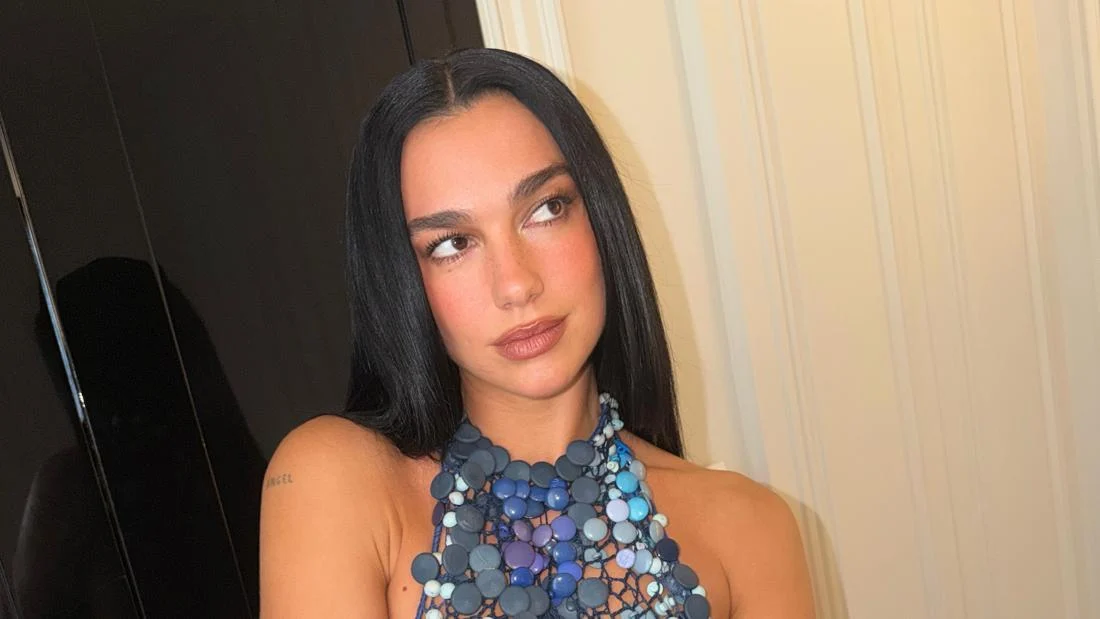
Global pop sensation Dua Lipa has once again captivated the fashion industry, solidifying her reputation as a modern style icon through a daring and meticulously crafted ensemble. The singer, known for her chart-topping hits and influential aesthetic, recently debuted a bespoke halter-neck top constructed entirely from 740 individual buttons. This garment, which blends avant-garde construction with high-fashion sensibilities, has sparked widespread discussion regarding the intersection of sustainability, artisanal labor, and luxury design.
The garment, which features a sophisticated ombre transition of blue hues, was designed by the visionary French designer Lou de Bétoly. By utilizing hundreds of vintage-inspired buttons mounted on a translucent mesh structure, the piece offers a masterclass in texture and structural design. The daring silhouette, characterized by its open-back architecture and side cut-outs, serves as a testament to the singer’s preference for experimental fashion that pushes the boundaries of traditional couture.
The Anatomy of an Artisanal Masterpiece
The construction of the garment represents a significant departure from mass-market manufacturing. According to documentation provided by the design house, the creation process was an intensive labor of love, requiring the careful curation of 740 distinct buttons. Each button was meticulously hand-applied to the mesh base, a process that reflects the "slow fashion" movement’s commitment to quality over quantity.
The ombre effect, which shifts from deep sapphire to lighter, ethereal shades of cerulean, was achieved through the deliberate placement of buttons of varying material densities and color saturations. This technique creates a visual depth that suggests movement even when the subject is stationary. Beyond the aesthetic appeal, the technical challenge of ensuring the structural integrity of a garment made from hundreds of rigid, circular objects highlights the advanced engineering skills required in contemporary fashion design.
A Chronology of Style Evolution
Dua Lipa’s relationship with high fashion has been a central pillar of her public identity since her debut. Her transition from a breakout pop star to a runway favorite has been marked by strategic collaborations with major houses such as Versace, Saint Laurent, and Balenciaga. However, this recent ensemble signals a shift toward smaller, more conceptual labels like Lou de Bétoly.
In early 2026, the artist began pivoting toward a more curated, archival-inspired wardrobe. Her collaboration with independent designers—often those who prioritize artisanal craftsmanship over seasonal trends—has become a hallmark of her recent public appearances. The unveiling of this specific button-adorned piece in late September 2026 serves as a culmination of this stylistic evolution, demonstrating a sophisticated appreciation for the complexities of garment construction.
The Value of Luxury: The Bulgari Connection
Complementing the intricate button-work was a timepiece that underscored the singer’s commitment to luxury accessory curation. Dua Lipa donned the Bulgari Serpenti Seduttori, a hallmark of the Italian jeweler’s horological collection. Crafted from 18-karat rose gold, the watch is a study in refined elegance, providing a sharp contrast to the experimental nature of her top.
With a retail valuation of approximately US$39,800, or roughly Rp 700 million, the watch represents more than just an accessory; it is a significant investment piece. The choice of the Serpenti model—a design inspired by the sinuous form of a snake—aligns with the singer’s frequent use of animalistic and geometric motifs in her fashion choices. The juxtaposition of the handmade, unconventional top and the established, high-value status symbol of the Bulgari timepiece reflects a balanced approach to modern luxury: the fusion of emerging design talent with historical prestige.
Industry Implications: The Rise of Conceptual Couture
The attention garnered by this ensemble extends beyond the realm of celebrity gossip. Fashion analysts point to this moment as a clear indicator of the growing consumer appetite for "narrative-driven" clothing. In an era dominated by fast fashion and ephemeral trends, garments that tell a story—or that possess a transparent, labor-intensive history—are becoming increasingly valuable.
By highlighting a designer who utilizes thousands of reclaimed or curated components, Dua Lipa is effectively platforming a more sustainable model of production. Although the garment is not mass-produced, its existence validates the practice of upcycling and artisanal assembly. Industry experts suggest that when global stars leverage their platforms to showcase these techniques, it inevitably influences broader market trends, potentially encouraging larger fashion houses to invest in similar handcrafted details for their ready-to-wear lines.
Sustainability and the Future of Red Carpet Fashion
The conversation surrounding this garment also touches upon the sustainability movement within the luxury sector. While the garment itself is an outlier in terms of production methods, it challenges the industry to reconsider the lifecycle of components like buttons, which are often discarded or mass-produced in plastic. By repurposing and elevating these functional objects into a sculptural form, Lou de Bétoly has engaged in a creative dialogue about waste and utility.
Furthermore, the public reception of the look suggests that audiences are becoming increasingly discerning. The technical details—the specific count of 740 buttons, the ombre gradient, and the structural mesh—have become key talking points, showing that consumers are interested in the "how" and "why" behind their favorite looks. This shift indicates a maturing fashion culture that values the intellect behind the design as much as the visual impact of the final photograph.
Broader Cultural Context and Public Reaction
Dua Lipa’s impact on cultural discourse remains profound. As a cross-cultural icon, her style choices are analyzed in global markets, from the runways of Paris to the digital fashion hubs in Jakarta. The viral nature of this look, shared extensively across platforms like Instagram and TikTok, demonstrates the power of visual storytelling in the digital age.
Social media responses have been overwhelmingly focused on the "labor-intensive" aspect of the top. In a landscape often criticized for superficiality, fans have expressed appreciation for the craftsmanship involved. This reaction suggests a potential shift in how celebrities are viewed; they are no longer just "wearing" clothes, but are increasingly perceived as curators of artistic projects. The dialogue surrounding this ensemble has moved away from mere critique of the aesthetic toward an acknowledgment of the skill involved in its creation.
Conclusion: A New Standard for Celebrity Style
As we look toward the future of fashion in late 2026 and beyond, the influence of Dua Lipa’s experimental approach remains significant. By marrying the avant-garde sensibilities of designers like Lou de Bétoly with the timeless prestige of legacy houses like Bulgari, she has set a new benchmark for red-carpet and editorial styling.
The button-adorned halter neck is more than just a fleeting fashion moment; it is a case study in how the music and fashion industries can collaborate to elevate traditional craftsmanship. Whether through the technical prowess of 740 hand-applied buttons or the strategic selection of luxury timepieces, Dua Lipa continues to curate a public image that is as intellectually engaging as it is visually arresting. As designers continue to explore the boundaries of material use and sustainable construction, the influence of such high-profile showcases will undoubtedly continue to shape the direction of global style for seasons to come.
The event serves as a reminder that fashion is not merely about clothing; it is a complex language of identity, labor, and artistry. Through this ensemble, the singer has successfully bridged the gap between the raw, manual effort of the artisan and the polished, high-gloss world of international pop stardom, leaving an indelible mark on the fashion landscape of the mid-2020s.

