
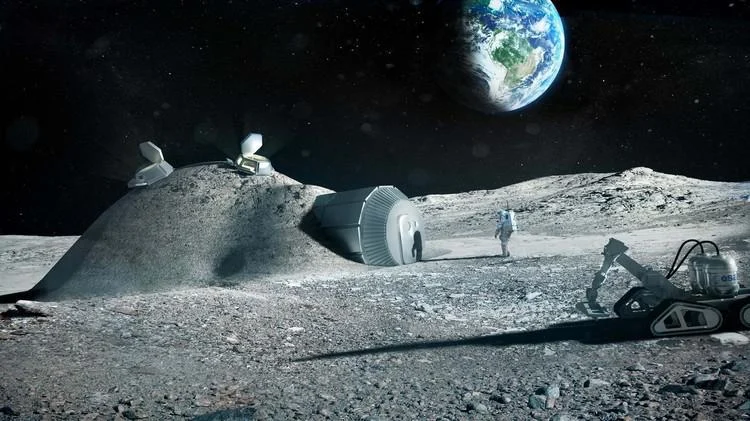
The dream of establishing a self-sustaining lunar civilization housing one million people faces a critical, perhaps insurmountable, physical obstacle: the finite nature of lunar water reserves. While visionaries like Jeff Bezos, founder of Blue Origin, and Elon Musk, CEO of SpaceX, have proposed ambitious plans to industrialize the Moon and establish permanent human colonies, a sobering new analysis published in the journal Frontiers in Space Technologies suggests that the lunar environment cannot support such demographic scales. According to researchers at the Smithsonian Astrophysical Observatory, even under the most optimistic projections, the Moon’s estimated one billion tons of water would be exhausted within a century by a population of one million, rendering the concept of large-scale, self-sufficient lunar metropolises scientifically problematic.
The analysis serves as a stark reality check against the backdrop of the modern "New Space" race, where private entities are increasingly pivoting toward off-world resource extraction and colonization. While proponents argue that the Moon could serve as an industrial hub for Earth, removing heavy manufacturing from the planet’s surface, the fundamental physics of resource consumption suggest that the lunar surface is far less hospitable than the grand architectural renderings of corporate space programs might imply.
The Physics of Lunar Survival
Water on the Moon is not merely a commodity for human consumption; it is the lifeblood of a functioning extraterrestrial infrastructure. It is essential for drinking, sanitation, and life-support systems—specifically for the production of oxygen. Furthermore, water serves as the primary source of hydrogen and oxygen propellant for rocket fuel, which is necessary for lunar transit and return missions to Earth.
The researchers calculated that a single lunar inhabitant would require approximately 500 tons of water per year to maintain a standard of living equivalent to Earth-based norms, incorporating food production and the necessary replacement of water lost through respiration and industrial processes. Even when applying highly optimistic assumptions regarding the efficiency of lunar agriculture, the math remains grim. A population of one million people would consume the entire estimated reserve of one billion tons of water in just over two years if no recycling were in place.
While the International Space Station (ISS) has achieved an impressive 98% water recovery rate as of 2023, the study indicates that even if a lunar colony were to replicate this level of efficiency, a one-billion-ton reservoir would be depleted in roughly 100 years. If the population were reduced to 100,000, that same reservoir could theoretically sustain the colony for a millennium. However, the economic models proposed by figures like Bezos—who envision the Moon as a base for heavy industrial activity—often require population centers of several million to be truly cost-effective.
The History of Lunar Water Exploration
The scientific community has spent decades attempting to quantify the amount of water trapped within the lunar surface. The narrative of lunar water shifted dramatically in the late 20th and early 21st centuries. In 1998, the Lunar Prospector mission provided early evidence of hydrogen enrichment at the poles, suggesting the presence of ice.
Subsequent missions, such as NASA’s Lunar Crater Observation and Sensing Satellite (LCROSS) in 2009, confirmed the presence of water ice in the Cabeus crater. These reservoirs are located in "cold traps"—permanently shadowed regions near the lunar poles where temperatures remain low enough to preserve ice for billions of years. However, estimates of the total volume of this ice have been notoriously volatile. A 2013 study suggested reserves in the hundreds of millions of tons, while a more conservative 2022 analysis focused on the eight most "ice-rich" craters concluded that their combined capacity was closer to 34 million tons.
The researchers behind the new Smithsonian study chose to use a generous figure of one billion tons for their calculations. By selecting a value significantly higher than any currently supported by empirical satellite data, the authors aimed to provide a "best-case scenario" for colonization. That the reserve would still vanish in a century under this optimistic assumption highlights the sheer scale of the mismatch between current lunar resources and the requirements of a million-person city.
Energy vs. Resource Constraints
One of the most persistent myths in the discussion of lunar colonization is that energy is the primary bottleneck. The new study challenges this notion, noting that energy production on the Moon is, by comparison, a manageable engineering problem. The placement of solar arrays on high-altitude towers near the lunar poles—where they can access near-constant sunlight—or the deployment of small modular nuclear reactors could provide sufficient power for a city of one million.
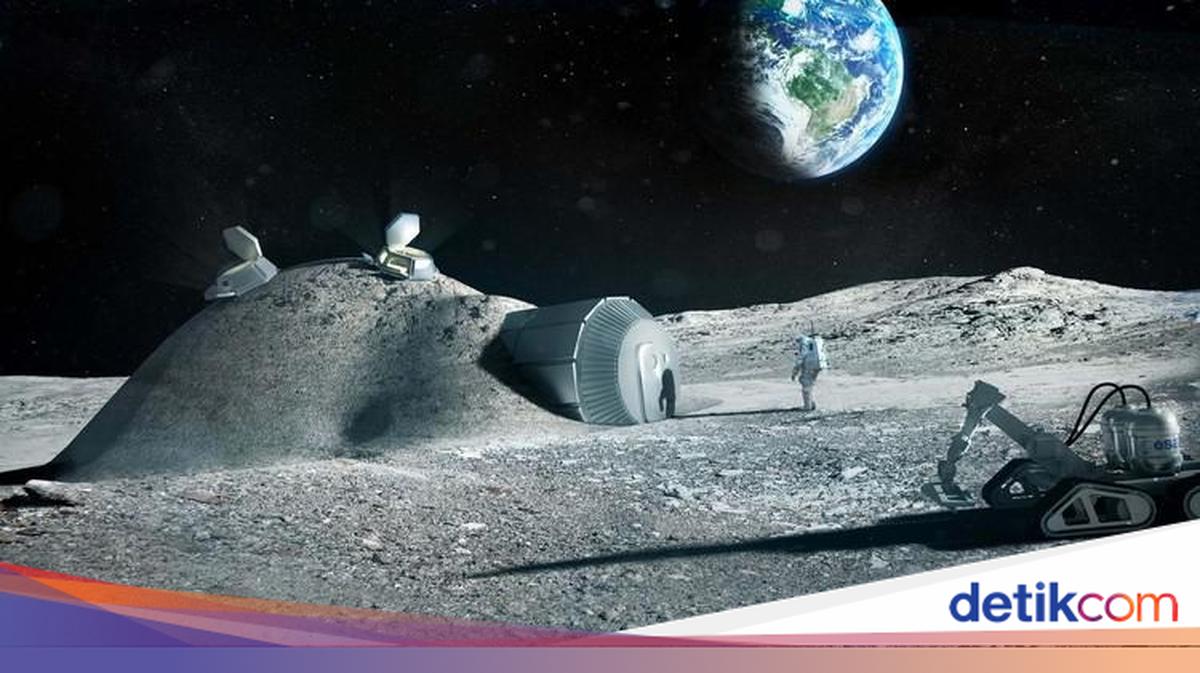
"The energy problem is solved by physics and engineering," the report suggests, "but the water problem is a matter of geological scarcity." Unless future exploration reveals vast, subterranean aquifers that have thus far eluded orbital detection, the current "known" lunar water supply is insufficient to support the kind of industrial base required to make the Moon a meaningful extension of the Earth’s economy.
Corporate Ambitions and Economic Realities
The visions set forth by SpaceX and Blue Origin are not merely technological goals; they are economic imperatives for the future of humanity’s expansion. Jeff Bezos has frequently spoken of moving heavy industry—such as steel production and semiconductor manufacturing—off-world to protect Earth’s environment. Elon Musk, meanwhile, has discussed the "Starship" architecture as a bridge to building self-sustaining cities on the Moon and Mars.
However, the researchers note that for a lunar colony to make a tangible impact on the Earth’s economy, it would need to host roughly 1% of the Earth’s current population, or approximately 80 million people. At that scale, the demand for water would outpace the Moon’s natural capacity to provide it within a matter of months.
The study also addresses the potential for importing water from asteroids or other celestial bodies. While theoretically possible, such a venture would require a constant, high-frequency stream of transport craft, creating a logistical "conveyor belt" that would likely negate the economic benefits of lunar-based manufacturing. The carbon footprint of launching such a massive amount of water from Earth, or the energy cost of mining it from asteroids, could make the endeavor prohibitively expensive.
The "Lunar Village" Concept
While a megacity may be an impossible goal, the authors of the study do not argue that lunar colonization is entirely out of reach. They suggest that a smaller, research-focused "Lunar Village" with approximately 1,000 residents—similar in population to the seasonal research stations maintained in Antarctica—is a realistic, sustainable goal. Such a community could function as a scientific outpost, utilizing local resources for long-term survival without exhausting the surrounding environment.
The danger, according to the researchers, lies in the premature rush to stake claims on lunar territory. As companies and nations race to secure the rights to the most ice-rich craters, there is a risk of misallocating resources before a clear, long-term scientific framework has been established. The report concludes that stakeholders must prioritize a conservative, data-driven approach to water management.
Implications for Space Policy
The findings have profound implications for international space policy, specifically the Artemis Accords and the growing number of lunar mining proposals. If the total accessible water on the Moon is significantly lower than projected, it may eventually be classified as a critical, strategic resource rather than an infinite utility.
The scientific community is now calling for more precise mapping of the Moon’s interior. Future missions, such as the Volatiles Investigating Polar Exploration Rover (VIPER), were intended to provide ground-truth data on lunar ice, though such programs have faced significant budget and timeline setbacks. Without accurate data, the gap between the visionary rhetoric of private aerospace companies and the physical limitations of the Moon will continue to widen.
In summary, the transition from Earth-based civilization to a multi-planetary existence requires more than just innovative rocketry. It demands a profound reconciliation with the material limits of our neighboring worlds. For now, the Moon remains a harsh, arid environment where every drop of water is a precious, finite asset, and the vision of a sprawling, million-person metropolis remains, for the foreseeable future, a scientific fantasy rather than a feasible engineering milestone.

