
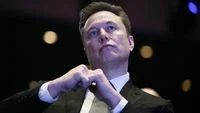
Elon Musk, the visionary CEO of Tesla and SpaceX, recently captured global attention during his attendance at the 33rd APEC Economic Leaders’ Meeting in Shenzhen, China. Accompanied by his young son, Musk’s presence was not merely a diplomatic gesture but a calculated display of his deepening ties with the world’s second-largest economy. By framing China as a "toy paradise" for his child—given the prevalence of Chinese-manufactured goods in his son’s daily life—Musk utilized a blend of personal anecdote and professional charm to reinforce the importance of the Chinese market to his business empire. This visit, while seemingly informal in its social aspects, occurred against a backdrop of complex geopolitical tensions and significant economic shifts within the automotive sector.
The Shenzhen Arrival: A Diplomatic Overture
On the morning of Friday, November 20, local media outlets, including Jiemian News, captured footage of Musk departing his hotel in Shenzhen alongside his son. The duo was observed heading toward the Shenzhen International Exchange Center in the Xiangmihu district, the primary venue for the two-day APEC summit. This high-profile appearance signaled a departure from Musk’s usual tech-centric engagements, placing him squarely in the realm of high-level economic diplomacy.
Later that same day, Yuyuan Tantian, a media outlet affiliated with CCTV, broadcast footage of Musk in a formal meeting with Ren Hongbin, the Chairman of the China Council for the Promotion of International Trade (CCPIT). During this encounter, the presence of his son served as a soft-power tool. In a widely circulated video clip, Musk, who has frequently identified himself as a fervent admirer of China’s rapid technological advancement, prompted his son to express his affection for the country. When asked if he loved China, the child responded affirmatively, leading Musk to remark, "Of course, he thinks of China as a toy paradise." This lighthearted exchange underscored a reality often cited by economists: China’s manufacturing dominance is so pervasive that it is woven into the fabric of daily life for global citizens, even the children of the world’s wealthiest individuals.
A Chronology of Musk’s Engagement with China
Musk’s relationship with China has evolved significantly over the past decade. It is no longer just a business interest; it is a fundamental pillar of Tesla’s global manufacturing strategy.
- 2019: Tesla opens its Gigafactory Shanghai, the first wholly foreign-owned car plant in China, marking a historic shift in Chinese industrial policy.
- May 2023: Musk travels to China, visiting both Beijing and the Shanghai Gigafactory, where he meets with senior government officials, signaling a commitment to expanding autonomous driving technology.
- November 2024 (Current): Attendance at the 33rd APEC summit in Shenzhen, focusing on supply chain resilience and the future of electric vehicle (EV) production.
- Historical Context: Musk’s previous high-profile visit occurred on May 14, when he accompanied then-President Donald Trump to China. During that visit, his son was photographed wearing traditional Chinese-modern attire at the Great Hall of the People, cementing the image of a family comfortable navigating the intersection of Western capital and Eastern tradition.
The Economic Significance of the Shanghai Gigafactory
To understand why Musk is so focused on China, one must look at the production data. The Shanghai Gigafactory is currently the crown jewel of Tesla’s global operations. In 2023, the facility reached a production capacity of over 950,000 vehicles annually, accounting for more than half of Tesla’s global deliveries.
The efficiency of the Chinese supply chain is a subject of frequent praise from Musk. During his time in Shenzhen, he lauded the country’s infrastructure, specifically noting the sophistication of its high-speed rail network. This appreciation is reflective of Tesla’s operational strategy: leveraging local logistics, talent, and manufacturing capabilities to keep production costs low while maintaining high output. By aligning himself closely with Chinese economic officials, Musk is effectively hedging against potential trade wars and ensuring that Tesla remains a favored foreign entity within China’s heavily regulated EV market.
Official Responses and Strategic Implications
The meeting with Ren Hongbin of the CCPIT was particularly significant. The CCPIT acts as a bridge between the Chinese government and international business interests. During their discussions, Musk emphasized Tesla’s commitment to expanding its production capacity within China. While specific investment figures were not disclosed, the sentiment was clear: Tesla intends to remain a long-term participant in China’s "Made in China 2025" vision, which aims to lead the world in high-tech manufacturing and clean energy.
Analysts suggest that Musk’s "fan of China" persona is a strategic necessity. With the rise of domestic Chinese EV competitors like BYD, NIO, and Xpeng, Tesla faces unprecedented pressure. By positioning himself as a cultural and economic partner rather than merely a foreign competitor, Musk is attempting to secure favorable regulatory treatment and maintain Tesla’s market share in a country that is moving rapidly toward total electrification of its transport sector.
A Balancing Act: The Geopolitical Tightrope
Musk’s visit also highlights the friction inherent in running a global company during a period of strained US-China relations. As the CEO of SpaceX, a company with deep ties to the US Department of Defense, Musk occupies a unique and occasionally precarious position. His ability to move seamlessly between Washington and Beijing is a testament to his influence, yet it remains a subject of intense scrutiny by policymakers in the United States who fear that such close ties to China could lead to technology transfers or undue influence.
However, from an investor perspective, the stability of Tesla’s Chinese operations is paramount. Tesla’s stock performance is historically tethered to its ability to meet production targets in Shanghai. Any disruption in this relationship—whether due to tariffs, regulatory shifts, or political unrest—could have catastrophic consequences for the company’s bottom line. Consequently, Musk’s public diplomacy, including bringing his son to public events to foster a sense of warmth and familiarity, serves as a form of "reputation management" that keeps the doors of communication open.
The Broader Impact: China as the Global Hub
The broader implication of Musk’s recent visit is the acknowledgment that China has transitioned from a low-cost manufacturing hub to a center of global innovation. Musk’s remarks regarding the country’s architecture and high-speed rail systems reflect a broader trend among Western CEOs: the recognition that China’s domestic market has matured into a competitive ecosystem that demands high-level participation.
As of November, with reports indicating Musk has 14 children, the inclusion of his family in these high-stakes business trips adds a layer of personal branding that is rare among his peers. It humanizes the corporate executive, making the "hard" economics of trade deals and factory expansions appear more palatable. Whether this approach will continue to yield the desired dividends in an increasingly polarized global climate remains to be seen. However, for now, the alliance between Musk and the Chinese industrial apparatus remains one of the most consequential partnerships in the modern global economy.
By continuing to prioritize his presence in events like the APEC summit, Musk is signaling to both his shareholders and the Chinese leadership that Tesla’s future is inextricably linked to the success of the Chinese market. The "toy paradise" comment, while whimsical, serves as a poignant reminder of the pervasive influence of Chinese manufacturing—a reality that Musk is not only acknowledging but actively participating in as he steers Tesla toward its next phase of global growth. As the company looks to integrate more AI and autonomous capabilities into its vehicles, the support of the Chinese government will be a critical, if not decisive, factor in maintaining its competitive edge.

