
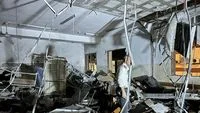
The Nasser Medical Complex in southern Gaza, one of the last remaining functioning healthcare facilities in the region, was struck by an Israeli military airstrike in the early hours of Thursday, November 12. The precision-guided missile, according to local officials, penetrated multiple floors of the structure, causing catastrophic damage to the hospital’s surgical department and its Intensive Care Unit (ICU). The attack resulted in the deaths of at least six Palestinian civilians and left twenty others severely injured, many of whom were already hospitalized and awaiting critical surgical procedures.
The facility, located in the western sector of Khan Younis, serves as a vital lifeline for approximately 500,000 residents in southern Gaza. As the only major hospital still operational in the immediate area, its partial neutralization has sent shockwaves through an already strained medical network. Raed al-Dashan, the director of the facility, reported that the strike was not merely a peripheral hit but a structural breach that has severely compromised the hospital’s ability to provide life-saving care.
Chronology of the Incident and Immediate Aftermath
The strike occurred under the cover of darkness, catching medical staff and patients off guard. According to reports from the ground, a single missile pierced the building vertically, moving through several floors before detonating. The timing of the strike—during the quietest hours of the night—resulted in a high concentration of casualties among bedridden patients.
By daybreak, rescue teams from the Gaza Civil Defense were working through the debris, attempting to recover bodies and stabilize the wounded. Hospital administrators have expressed grave concerns that the death toll will likely rise in the coming hours, given that many of the twenty injured patients remain in critical condition with complex trauma wounds that are difficult to treat in a facility whose surgical capabilities have been severely curtailed by the impact.
Journalists on the ground, including Hind Khoudary, have noted that the victims of this strike were largely non-combatants, many of whom were scheduled for surgeries that were essential for their survival. The loss of the surgical and ICU capacity at Nasser Medical Complex represents a severe blow to the healthcare infrastructure of southern Gaza, which has been under immense pressure for months.
Israeli Military Justification and Strategic Objectives
In response to the incident, the Israel Defense Forces (IDF) issued a statement claiming that the strike was a targeted operation aimed at a senior Hamas commander allegedly operating within the hospital premises. The Israeli military has consistently maintained that Hamas utilizes civilian infrastructure, including hospitals and schools, as shields for its tactical operations—an assertion that remains a central point of contention in the ongoing conflict.
The Israeli military emphasized that the strike was intended to neutralize a specific threat, arguing that the presence of high-value targets within protected medical zones necessitates military intervention. However, this justification has faced intense scrutiny from human rights organizations and international observers, who argue that the military necessity of such strikes must be weighed against the principle of proportionality and the absolute protection of medical facilities under international humanitarian law.
Hamas Response and International Condemnation
Hamas has vehemently denied the Israeli military’s claims, describing the incident as a "war crime" and a "blatant attempt to justify the destruction of civilian medical infrastructure." In a formal statement, the group asserted that the narrative of a "command center" is a fabricated pretext used to facilitate attacks on medical personnel and patients.
The group further called upon international mediators and the United States government to intervene, demanding that they force a cessation of such operations and ensure that Israel adheres to the terms of the fragile ceasefire that has technically been in place since October 2025. The attack has been framed by Palestinian authorities as part of a broader, systemic effort to render the Gaza Strip uninhabitable by dismantling its essential public services.
The Fragile State of the October 2025 Ceasefire
The strike on the Nasser Medical Complex occurs within the context of a highly volatile ceasefire. Since the agreement reached in October 2025, the region has seen periodic outbursts of violence, with both sides accusing the other of violating the terms of the truce. According to figures provided by the Gaza Ministry of Health, approximately 1,600 Palestinians have lost their lives since the inception of the current ceasefire arrangement, highlighting that the cessation of hostilities has been far from absolute.
The failure to maintain a robust ceasefire has left the humanitarian situation in a state of perpetual collapse. With the health system functioning at only a fraction of its capacity, the destruction of infrastructure like the Nasser Medical Complex creates a cascading effect: patients are displaced, essential medicine is lost, and the risk of disease outbreaks increases as sanitary conditions worsen.
Broader Implications for Global Humanitarian Law
The strike raises profound questions regarding the interpretation of International Humanitarian Law (IHL), specifically the Geneva Conventions, which provide special protection to hospitals and medical units. Under IHL, these facilities lose their protected status only if they are used to commit "acts harmful to the enemy," and even then, such an attack must follow a specific process of warning and proportionality.
International legal analysts point out that the burden of proof rests on the military force conducting the strike. If the international community cannot verify the presence of combatants within the facility, the attack risks being classified as a violation of the laws of war. Furthermore, the strategic implications are significant: by targeting the last remaining major medical hubs, the conflict is shifting from a military-to-military engagement into a systemic crisis that threatens the survival of the civilian population at large.
Analysis of the Healthcare Collapse
The Nasser Medical Complex is not merely a building; it is a node in a collapsing network. With the destruction of its ICU and surgical suites, the surrounding population is now effectively cut off from emergency care. For a resident in Khan Younis suffering from a cardiac event, a severe infection, or trauma from other peripheral skirmishes, the options for care are rapidly diminishing.
This systematic degradation of healthcare has several long-term impacts:
- Increased Mortality Rates: Without access to ICU care, patients with treatable conditions face a significantly higher probability of death.
- Medical Staff Burnout and Flight: The constant threat of being targeted while performing their duties creates an unsustainable environment for doctors and nurses, leading to the emigration of medical professionals, which permanently damages the region’s intellectual and social capital.
- Public Health Crisis: As hospitals become targets, the ability to manage infectious diseases and provide maternal health services evaporates, setting the stage for a secondary humanitarian catastrophe.
The Path Forward: Diplomatic Pressures
The incident has reignited calls for a more robust diplomatic framework. International observers suggest that without a mechanism to monitor and enforce the ceasefire—perhaps through a neutral third party or an international peacekeeping mandate—the cycle of violence against civilian infrastructure will likely continue.
The United States, as a key diplomatic player, finds itself in an increasingly difficult position. While maintaining its support for Israel’s security, the pressure to ensure the protection of civilians and the integrity of humanitarian spaces is mounting. The death of patients in the Nasser Medical Complex is expected to be a focal point in upcoming discussions between the U.S. State Department and Israeli officials, as the administration seeks to balance its strategic alliances with the growing international outcry over the humanitarian death toll in Gaza.
As of now, the situation remains tense. The staff at Nasser Medical Complex, despite the devastation, continue to attempt to treat the remaining patients in the less damaged wings of the facility. Their resilience is a testament to the ongoing struggle for survival in Gaza, but it also underscores the extreme vulnerability of those who remain caught in the crossfire of a conflict that shows little sign of reaching a permanent, peaceful resolution.
The coming days will be critical in determining whether this event serves as a turning point for renewed diplomatic negotiations or if it merely becomes another tragic chapter in the protracted conflict. For the families of the six victims and the thousands of patients who rely on the Nasser Medical Complex, the reality is stark: the sanctuary they sought has been breached, and the road to recovery for the region’s healthcare system remains obstructed by the persistent logic of war.

