
In an increasingly globalized corporate landscape, the barrier of language remains one of the most significant friction points for international collaboration. While generative AI has revolutionized meeting transcription, the current industry standard for meeting assistants is fundamentally reactive. Most tools operate on a "summarize-after" model, where an AI enters a call, generates a transcript, and provides a post-meeting recap. However, these tools often lack a long-term understanding of company-specific jargon, product acronyms, or nuanced organizational goals. JotMe is positioning itself as a disruptive alternative by implementing an "AI memory" architecture that prioritizes contextual intelligence before the first word of a meeting is even spoken.
The core innovation behind JotMe lies in its ability to build a persistent, evolving profile of a user’s professional ecosystem. Unlike traditional bots that approach every call as a blank slate, JotMe synthesizes information from previous meeting notes, chat threads, uploaded documentation, and direct user prompts to create a foundational knowledge base. By integrating with productivity suites such as Google Drive, Notion, Gmail, and Outlook, the platform constructs a semantic map of a user’s business environment. This ensures that when a procurement manager in Jakarta discusses specific component specifications with a supplier in Nagoya, the AI correctly identifies the proprietary part numbers and industry-specific acronyms, maintaining consistency throughout the conversation.

A Chronology of the Shift in Meeting Intelligence
The evolution of meeting tools has moved through three distinct phases. In the early 2010s, simple audio recording services dominated, requiring manual transcription. By the early 2020s, the market saw the rise of the "meeting bot"—automated entities that joined calls to transcribe audio and provide rudimentary keyword extraction. These tools, while effective, often introduced privacy concerns and administrative overhead.
JotMe represents the third phase: the "context-aware" assistant. By moving the processing layer to a desktop-based application rather than a cloud-hosted participant bot, JotMe avoids the "Notetaker" label that often creates unease among external clients. This shift is timely; as remote work and cross-border partnerships have become standard, companies are facing increasing pressure to maintain high-fidelity communication in multiple languages. JotMe’s support for over 200 languages and 39,000 language pairs addresses the needs of multinational teams that frequently navigate the complexities of multilingual negotiations.
Technical Architecture and Operational Mechanics
JotMe’s functional superiority is largely attributed to its "pre-call" context injection. By defining key terms and project goals in the system before a meeting begins, the AI is primed to recognize and correctly translate specific terminology. This is particularly vital in sectors like manufacturing, law, or engineering, where a mistranslated technical term could lead to significant operational errors.

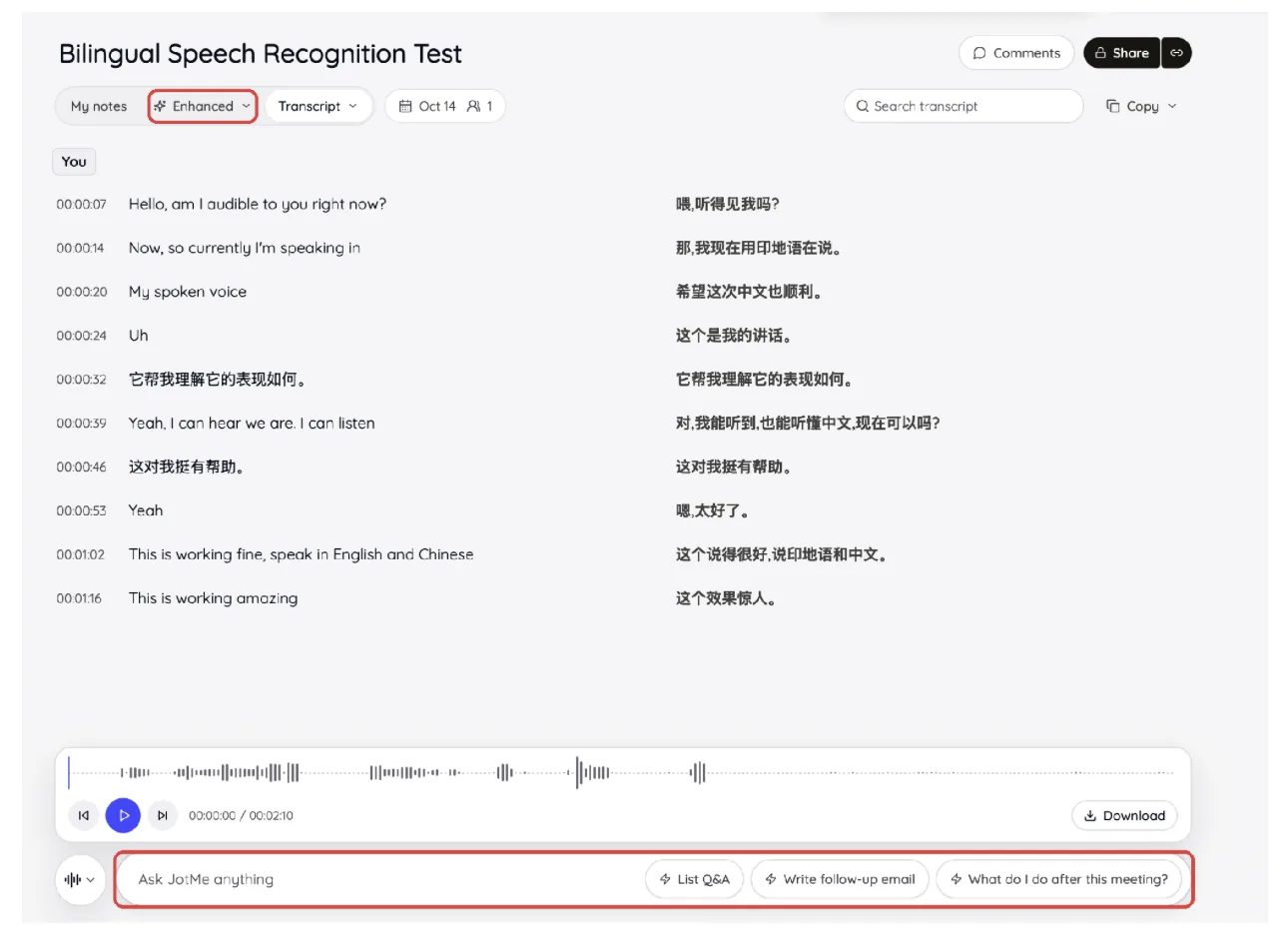
During a live session, the platform employs a real-time memory loop. If an acronym is introduced in the first few minutes, the system retains that definition for the duration of the 40- or 60-minute call, preventing the translation drift that often plagues generic large language models. The software’s capability to handle multilingual sessions—where participants may switch between languages mid-sentence—is facilitated by a sophisticated multilingual model capable of tracking more than ten languages simultaneously. This allows for a seamless transcript that preserves the original language in one column while providing a real-time translation in another.
Beyond the Meeting Room: The Voice Keyboard and Ecosystem Integration
JotMe’s utility extends beyond the confines of live video conferencing. The introduction of the "JotMe Voice Keyboard" represents an attempt to embed translation intelligence into the operating system’s primary input method. By utilizing system-level shortcuts—such as the Fn key on macOS or the Ctrl-Windows combination on Windows—users can dictate text directly into any application, including Slack, Apple Notes, or Google Docs.
This feature offers three distinct modes: Direct, which transcribes verbatim; Curate, which uses AI to clean up syntax and improve flow; and Translate, which bridges the gap between disparate linguistic groups. A marketing lead in Indonesia, for instance, can dictate a response in Bahasa Indonesia that is simultaneously transcribed and translated into Japanese for a colleague in Tokyo, all within the existing communication platform. This effectively turns a standard typing experience into an automated, cross-language messaging service, drastically reducing the time spent on manual translation tasks.

Supporting Data and Implementation Logistics
The platform is designed with a tiered approach to accessibility. It currently operates across Windows, Mac, and mobile platforms, with a dedicated Chrome extension for Google Meet. For those who require document-level translation, JotMe offers an integrated file processor that supports PDF, DOCX, PPTX, and XLSX, as well as more technical formats like XLIFF, SRT, and JSON.
According to internal benchmarks, the document translator maintains the original layout of the file, a critical requirement for legal contracts and product specification sheets. The cost structure is based on an AI credit system, where users receive a baseline for standard text and can purchase additional capacity for large-scale documentation. This "pay-for-utility" model is designed to scale with the needs of both small startups and enterprise-level firms.
Analytical Implications for Global Business
The broader impact of tools like JotMe on global business is substantial. By lowering the cognitive load associated with cross-border communication, companies can potentially accelerate decision-making cycles. The ability to instantly translate documents and maintain a shared, searchable knowledge base of meeting outcomes allows organizations to function more cohesively despite geographical and linguistic dispersion.

However, the adoption of such tools is not without challenges. Data security remains the primary concern for any organization integrating AI into their internal workflows. JotMe’s approach—storing only text and avoiding the retention of raw audio data—addresses some of these concerns, but firms operating in highly regulated industries will likely need to perform rigorous due diligence regarding data residency and encryption standards.
Furthermore, the shift away from meeting bots addresses the "social friction" of digital collaboration. Many corporate clients have policies that restrict the use of third-party recording bots due to security protocols. By running the translation on the user’s local machine, JotMe bypasses these restrictions, ensuring that the meeting remains a private engagement between the participants, while still benefiting from the power of AI-assisted interpretation.
Future Trajectory and Market Position
While JotMe currently faces some limitations—most notably the lack of native integration for non-Google calendars—it represents a significant shift in how artificial intelligence is being applied to the workplace. The move from "recording everything" to "understanding everything" is the next logical step in the maturity of the AI software market.

For teams that operate across languages—such as distributors, global procurement units, and international venture capital firms—the value proposition is clear. The ability to maintain institutional memory across language barriers is not merely a productivity convenience; it is a competitive advantage. As these tools continue to refine their accuracy and expand their integration ecosystem, the role of the human translator or the post-meeting note-taker is likely to diminish, replaced by a persistent, background intelligence that ensures every participant is fully informed, regardless of the language they speak.
As JotMe continues to iterate, the industry will be watching to see how the platform handles the inevitable complexities of nuanced cultural context and regional idiom—areas where even the most advanced AI currently struggles. Nevertheless, for firms seeking to bridge the communication gap, JotMe’s commitment to context-first, memory-based AI provides a compelling framework for the future of global collaboration.

