
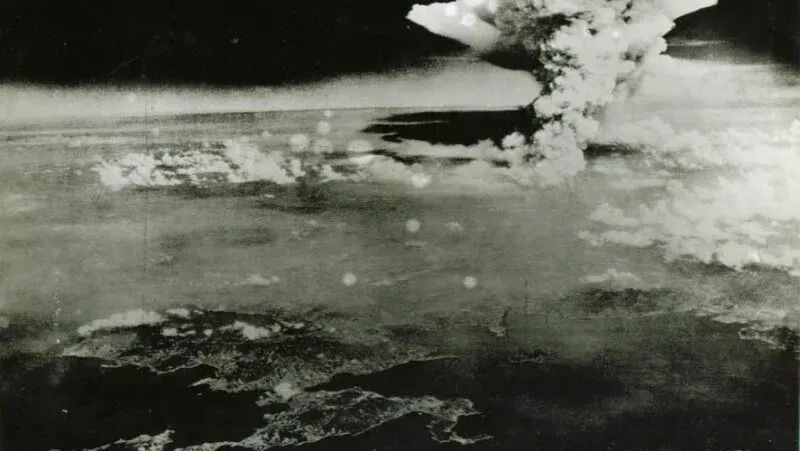
The atomic bombing of Hiroshima remains one of the most consequential events in human history, marking both the dawn of the nuclear age and a terrifying threshold for global existence. Recent archival research focusing on the flight logs of the Enola Gay—the B-29 Superfortress that delivered the ‘Little Boy’ atomic bomb—has unearthed a cryptic and unsettling notation: "cloud gone." This brief entry, recorded hours after the initial detonation, has prompted a modern scientific investigation into the true scale of the atmospheric disturbance caused by the blast, shedding new light on the potential for catastrophic global environmental consequences.
The Shadow of Atmospheric Ignition
Before the Enola Gay took flight on August 6, 1945, the scientists of the Manhattan Project were haunted by a singular, existential fear. J. Robert Oppenheimer, the scientific director of the Los Alamos Laboratory, and his colleagues had calculated the possibility that a nuclear explosion might trigger a self-sustaining chain reaction in the Earth’s atmosphere. The primary concern involved the fusion of nitrogen or hydrogen atoms, which, if ignited, could theoretically lead to the destruction of all life on the planet.
Physicist Arthur Compton recalled in 1959 that the risk was discussed at the highest levels of the project. "Hydrogen nuclei are unstable and can combine to form helium with the release of large amounts of energy, as happens in the sun," Compton explained. "For such a reaction to occur, extremely high temperatures are needed; could the extreme heat of the atomic bomb serve as the catalyst to ignite the atmosphere?" The fear was that the nitrogen in the air or the hydrogen in the oceans might act as fuel for a global conflagration, effectively turning the atmosphere into a bomb. Although calculations eventually suggested the probability of such an event was near zero, the anxiety persisted until the moment of the detonation.
Chronology of the Blast and the "Cloud Gone" Mystery
At 08:15 local time on August 6, 1945, the ‘Little Boy’ device detonated over Hiroshima. The explosion, equivalent to approximately 15 kilotons of TNT, instantly razed the city. However, the mission did not end with the detonation. The crew of the Enola Gay, along with their companion aircraft, remained in the vicinity to observe and document the unprecedented event.
George Caron, the tail gunner of the Enola Gay, provided a chilling eyewitness account of the aftermath. "I could see the city, and it was covered by a low-lying, churning mass. It was like boiling molasses, spreading wide to the foothills, covering the entire city," Caron described. "Then there was fire, and I could see flames piercing through the layer covering the city. Tongues of fire appeared at various points."
The phrase "cloud gone" appeared in the flight logs at 10:52 a.m. At that juncture, the aircraft were approximately 750 to 765 kilometers away from the epicenter, flying at an altitude of roughly 7.6 kilometers. For decades, this notation remained a mere administrative record, but recent research published in Geophysical Research Letters has re-examined this entry to determine the altitude of the massive plume created by the firestorm that engulfed Hiroshima.
Scientific Analysis: Modeling the Plume
To understand the environmental impact of the blast, researchers utilized historical weather data and 100,000 computer simulations to interpret the "cloud gone" observation. The goal was to determine how high the smoke and debris column reached into the atmosphere. The "cloud gone" notation likely refers to the point at which the plume became invisible to the observers due to the Earth’s curvature or atmospheric refraction, rather than the dissipation of the plume itself.
The modeling results were startling. The researchers concluded with 95% confidence that the plume reached an altitude of at least 11.3 kilometers. Furthermore, the median estimate for the plume’s height was 12.1 kilometers, with a greater than 50% probability that it exceeded this height. By reaching this altitude, the debris would have been injected into the upper troposphere and potentially the lower stratosphere.
The Nuclear Winter Hypothesis
The finding that the Hiroshima blast plume reached such extreme heights provides a vital data point for the theory of "nuclear winter." Nuclear winter is a hypothetical climate phenomenon in which the detonation of a significant number of nuclear weapons causes a massive injection of soot and aerosol particles into the upper atmosphere. These particles, reflecting sunlight and absorbing heat, could lead to a sharp decline in global temperatures, resulting in agricultural collapse and widespread famine.
While the Hiroshima explosion was a single event, it remains the only historical instance of a nuclear weapon triggering a massive, city-wide firestorm. Unlike the Nagasaki blast, which occurred in a different geographic and atmospheric context, the Hiroshima firestorm created a distinct, vertical column of smoke that functioned as a proto-model for larger-scale nuclear conflict scenarios.
The implications are sobering. If a single, relatively small atomic bomb in 1945 was capable of injecting material high enough to significantly influence the upper atmosphere, a modern nuclear exchange involving thousands of warheads would almost certainly result in a global climate catastrophe. The study emphasizes that the "cloud gone" report serves as a historical warning rather than a mere footnote.
Historical and Global Context
The bombing of Hiroshima remains a subject of intense historical scrutiny. It stands as a pivotal moment where the capabilities of human engineering outpaced the political and moral frameworks required to govern them. The internal debates among scientists during the Manhattan Project, as documented in the records of Oppenheimer and Compton, highlight that the creators of the bomb were acutely aware of the risk of total human extinction.
The recent study, while technical in nature, reinforces the fact that the environmental consequences of nuclear warfare were understood—or at least feared—from the very beginning. The "cloud gone" entry, initially a functional observation for military navigators, has become a lens through which modern science views the fragility of the global ecosystem.
Conclusion: A Legacy of Risk
The archival discovery and subsequent modeling suggest that our understanding of the Hiroshima event is still evolving. By quantifying the altitude of the blast plume, scientists have provided a clearer picture of how nuclear energy interacts with the Earth’s atmosphere. The data underscores the reality that any use of nuclear weapons is not merely a local military event but a potential catalyst for global environmental destabilization.
As the world continues to grapple with the existence of nuclear arsenals, the records of the Enola Gay serve as a stark reminder. The "cloud gone" was not just a disappearance of smoke; it was a testament to the power unleashed that day—a power that, if scaled, remains capable of forcing the planet into a state of climatic collapse. The study serves as a scientific contribution to the ongoing necessity of nuclear non-proliferation, illustrating that the scars of 1945 are not merely found on the ground in Japan, but in the potential long-term damage to the very atmosphere that sustains all human life.

