
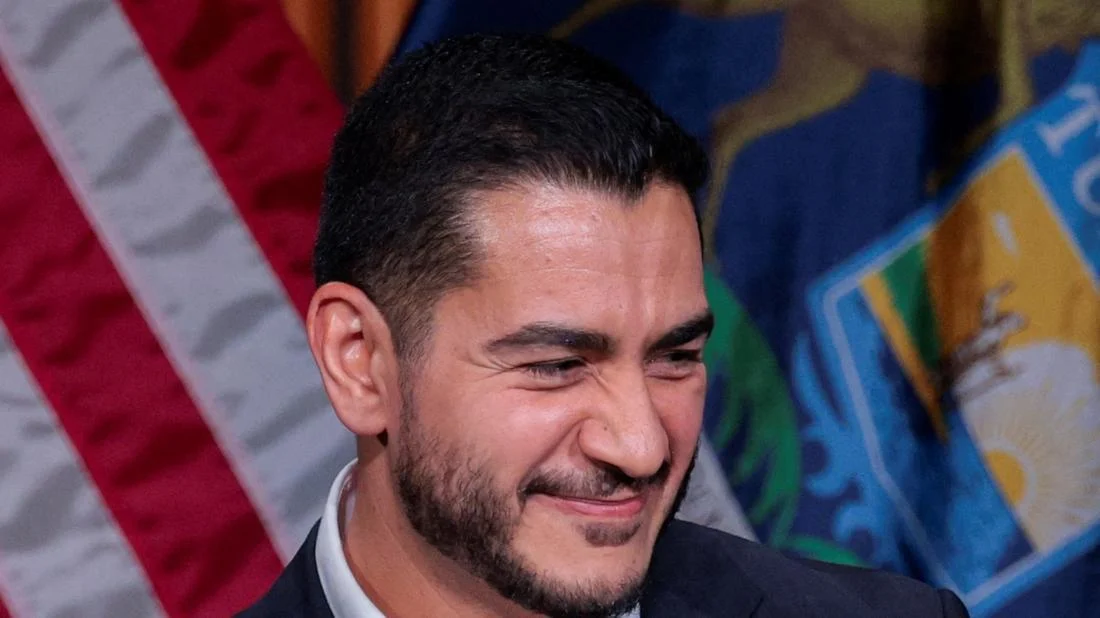
The intersection of public service and personal wellness has found an unlikely champion in Abdul El-Sayed, the 42-year-old senator-elect whose recent ascent to national prominence has been marked by as much attention to his legislative agenda as to his meticulous approach to dermatological health. El-Sayed, who has carved out a unique space as one of the most prominent Muslim political figures in the United States, has inadvertently sparked a nationwide conversation regarding male self-care. Dubbed the "King of Retinol" by social media users and political commentators alike, El-Sayed’s viral transparency about his skincare regimen has challenged traditional notions of masculinity in the American political sphere.
The Emergence of the "King of Retinol"
The discourse surrounding El-Sayed’s appearance originated from a resurfaced video interview conducted in May 2026, featuring the senator-elect alongside comedian Suzanne Lambert. While the initial segment focused on his legislative priorities, a casual tangent regarding his youthful complexion shifted the narrative toward the science of skincare. The clip gained significant traction on X (formerly Twitter) in mid-November 2026, leading to a broader investigation into the habits of public figures and their impact on public health perceptions.
El-Sayed, who possesses a formal background as a physician and public health expert, initially credited his complexion to genetic factors. However, as the questioning turned more granular, he provided a detailed breakdown of his daily regimen. Far from being a mere vanity project, his approach mirrors the clinical precision one would expect from a medical professional, emphasizing barrier protection, hydration, and evidence-based active ingredients.
A Clinical Approach to Skincare
For the modern professional, the time investment required for a rigorous skincare routine is often cited as a barrier. El-Sayed, however, treats his skincare as a foundational element of his daily maintenance. His morning protocol is characterized by simplicity and efficacy, centered on the use of CeraVe Facial Cleanser—a staple in dermatological recommendations for its non-comedogenic and barrier-repairing properties.
Following his morning cleanse, El-Sayed emphasizes the application of broad-spectrum sunscreen. Perhaps most notably, he highlights the necessity of reapplication—a step frequently overlooked by the general public. "I usually apply it again in the afternoon," El-Sayed noted in the viral interview. "We often forget that sunscreen can be compromised throughout the day, so I ensure I reapply around noon or 1 PM." This practice aligns with the American Academy of Dermatology’s guidelines, which recommend consistent reapplication of SPF every two hours to maintain adequate protection against UVA and UVB radiation.
The cornerstone of his evening routine, and the source of his viral moniker, is his strategic use of retinoids. Recognizing the potential for irritation associated with potent vitamin A derivatives, El-Sayed employs the "sandwich method." This technique involves applying a layer of moisturizer before and after the application of a retinoid. By buffering the active ingredient with a hydrating base, he minimizes the risk of transepidermal water loss and sensitivity—a method frequently endorsed by dermatologists to ensure long-term adherence to anti-aging protocols.
Contextualizing the Shift in Political Image
The fixation on a male politician’s skincare routine reflects a significant shift in how the public perceives authority and self-presentation. Historically, the image of an American politician was expected to be rugged, utilitarian, and largely devoid of performative grooming. However, the 21st-century political landscape, heavily influenced by high-definition media and digital engagement, has placed new pressures on public figures to maintain a curated image.
Sociologists observing this trend suggest that El-Sayed’s openness serves as a bridge between traditional masculine ideals and contemporary health-conscious living. By normalizing skincare, El-Sayed is effectively de-stigmatizing a practice that has long been coded as "feminine" within the American cultural lexicon. His status as a Muslim leader in the United States also adds a layer of cultural significance, as he represents a modern intersectionality—balancing religious identity, medical expertise, and secular professionalism in a way that resonates with younger, diverse demographics.
Data and Dermatological Trends
The "El-Sayed effect" arrives at a time when the male grooming industry is experiencing unprecedented growth. According to data from market research firms such as Grand View Research, the global men’s grooming market is projected to reach significant valuations by 2030, driven largely by an increased interest in skincare products among men aged 25 to 45.
Dermatologists have noted that the public’s focus on El-Sayed’s routine could have tangible health benefits. Skin cancer remains the most common form of cancer in the United States, and the consistent use of daily sunscreen is the primary preventative measure. By discussing his routine openly, El-Sayed has inadvertently conducted a public health campaign, reinforcing the necessity of sun protection regardless of gender or professional status. His adherence to evidence-based skincare—avoiding luxury trends in favor of scientifically backed, accessible products—further validates the importance of efficacy over marketing.
Political Implications and Public Reaction
While the conversation began as a lighthearted viral moment, the implications for El-Sayed’s political career are multifaceted. Supporters argue that his transparency humanizes him, making him appear more relatable and grounded. In an era of political polarization, such mundane, personal insights can serve as an effective tool for building rapport with constituents.
Conversely, some political strategists caution that an overemphasis on image can lead to accusations of superficiality. However, given El-Sayed’s established record as a serious policy-focused senator-elect, the impact of the "King of Retinol" label has been largely positive. His ability to navigate the transition from serious public health discourse to casual lifestyle discussion suggests a level of media literacy that is increasingly essential for 21st-century governance.
Public reactions have been overwhelmingly curious, with many users on social media platforms questioning their own routines and seeking guidance based on the "sandwich method" El-Sayed described. The lack of backlash underscores a broader cultural acceptance of male skincare. As the senator-elect prepares to take his seat, his skincare routine has become a small but significant symbol of his disciplined approach to his duties—showing that whether it is drafting legislation or maintaining skin health, consistency and scientific rigor are paramount.
The Future of Professional Presentation
Looking ahead, the narrative of Abdul El-Sayed demonstrates the evolving standards for public officials. The days of the "untouchable" political archetype are fading, replaced by a demand for authenticity. When a public servant can discuss the benefits of retinoids with the same ease as economic policy, it signals a move toward a more transparent, integrated form of leadership.
As he assumes office, El-Sayed will likely face challenges far more complex than maintaining a clear complexion. However, the viral nature of his self-care routine has secured his place in the current cultural zeitgeist. It serves as a reminder that the personal is political, and in the case of the senator-elect, the personal is also quite practical. By demystifying the steps required to maintain one’s health and appearance, El-Sayed has inadvertently set a new standard for the modern, professional, and well-groomed politician.
In summary, the story of the "King of Retinol" is more than a viral social media anecdote; it is a case study in how public figures can influence health behaviors and challenge societal norms. Through his commitment to a simple, effective, and science-driven regimen, Abdul El-Sayed has shown that modern leadership requires an attention to detail that extends from the floor of the Senate to the bathroom mirror. His experience highlights the growing intersection of public life and personal wellness, proving that in the digital age, a leader’s routine can be just as influential as their rhetoric.

