
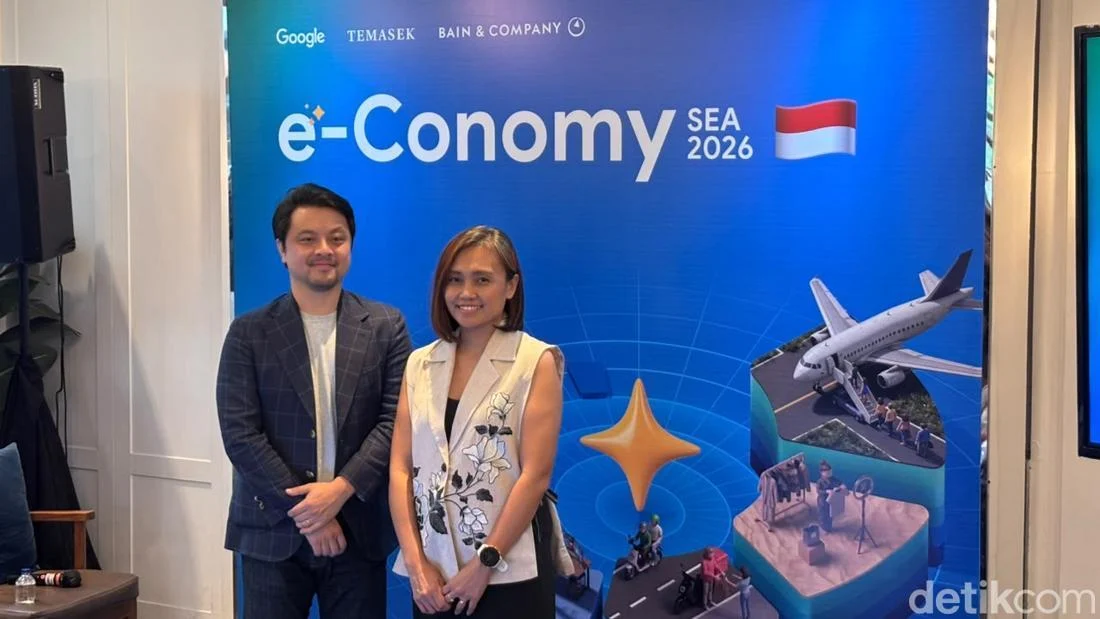
The digital landscape of Southeast Asia is undergoing a profound transformation as artificial intelligence (AI) integrates into the daily lives of millions. According to the latest e-Conomy SEA 2026 report, a collaborative study authored by Google, Temasek, and Bain & Company, the region’s digital economy is projected to reach an impressive valuation of USD 368 billion by 2026. This figure represents a robust 17% growth compared to the previous year, signaling that the region remains a high-growth market despite global economic headwinds. However, beneath the surface of this rapid expansion lies a critical structural imbalance: while consumer adoption of generative AI has surged, the translation of this technology into complex, high-value enterprise applications remains in its nascent stages.
A Historic Surge in Consumer Adoption
The report, titled Building the Intelligent Economy, highlights a remarkable milestone in technological diffusion. In the three-year period leading up to 2026, approximately 243 million people across Southeast Asia have actively engaged with generative AI tools. This figure accounts for 58% of the region’s entire working-age population.
Speaking at a press conference in Jakarta on November 11, 2026, Veronica Utami, Country Director for Google Indonesia, emphasized the unprecedented speed of this adoption. "In the last three years, Southeast Asia has seen 243 million generative AI users. This means that 58% of the working population in our region is already utilizing AI," Utami stated. To put this in perspective, the traditional digital economy—encompassing e-commerce, digital payments, and online travel—required approximately two decades to reach its current level of maturity. In stark contrast, AI has achieved a similar breadth of integration in less than 15% of that time.
The Token Metric: A New Standard for Computational Complexity
One of the most innovative aspects of the e-Conomy SEA 2026 report is its shift in how it measures AI progress. Traditional metrics, such as monthly active users, are often insufficient to capture the depth of engagement. To address this, the researchers introduced the "token" as a primary indicator of computational intensity.
Tokens serve as a proxy for the volume and complexity of data processed by AI models. A simple request, such as a summary of a short email, consumes a limited number of tokens. Conversely, complex tasks—such as developing proprietary software, managing cloud architecture, or deploying autonomous AI agents to automate business workflows—require significantly higher token counts. By tracking token consumption, analysts can differentiate between casual AI use and high-value, productivity-enhancing industrial applications.
The findings reveal a substantial gap between Southeast Asia and more developed markets like the United States. Currently, the total token consumption in Southeast Asia is only about 10% of that observed in the United States. This discrepancy serves as a quantitative baseline for the "usage depth" gap that analysts are now urging regional policymakers and business leaders to address.
The Enterprise-Consumer Divide
The report highlights a striking disparity in how AI is utilized across different Southeast Asian nations, with the divide largely dictated by economic maturity and industrial focus. Currently, more than 60% of all AI tokens consumed in the region are linked to consumer-facing tasks, such as drafting emails, personal learning, and basic information retrieval.

The contrast between regional economies is best illustrated by comparing Singapore and Indonesia. In Singapore, a hub for high-tech services and regional corporate headquarters, the split between AI usage is 60% enterprise-focused and 40% consumer-focused. Indonesia, conversely, presents an inverted profile: 80% of its AI usage is driven by individual consumer needs, with only 20% dedicated to enterprise-level integration.
Utami noted that the prevalence of mobile devices as the primary computing platform in countries like Indonesia contributes to this trend. Mobile-first populations tend to utilize AI for on-the-go tasks, which are inherently more consumer-oriented. In contrast, developed markets often see AI integration occur through desktop environments and integrated enterprise software stacks, which are better suited for heavy-duty computational tasks.
Chronology of the Digital Shift in Southeast Asia
- 2000–2015: The Infrastructure Era. The focus was on laying the foundation for internet connectivity, mobile penetration, and the birth of early-stage e-commerce platforms.
- 2016–2023: The Digital Economy Maturity. The region saw the rise of "Super Apps" and the mass adoption of digital payments, fintech, and ride-hailing services.
- 2024–2026: The AI Inflection Point. With the release of accessible large language models (LLMs), the region moved from basic digital interaction to generative AI experimentation, reaching 243 million users by late 2026.
- 2027–2030 (Projected): The Enterprise Integration Phase. Analysts expect a shift toward AI-native business processes, cloud-based automation, and the widespread deployment of AI agents in the workforce.
Implications for Regional Competitiveness
The findings of the e-Conomy SEA 2026 report suggest that while Southeast Asia is winning the battle for AI awareness, it has yet to capture the full economic potential of the technology. The "usage depth" gap implies that many businesses in the region are missing out on the productivity gains that AI can offer through software development, automated customer support, and sophisticated data analytics.
Industry experts suggest that the path forward requires a three-pronged approach:
- Workforce Reskilling: Training the labor force to move beyond basic prompt engineering toward managing and deploying AI agents.
- Cloud Infrastructure Investment: Strengthening the cloud architecture necessary to support high-intensity enterprise workloads.
- Regulatory Frameworks: Creating safe, ethical, and standardized environments that encourage corporate adoption without stifling innovation.
Future Outlook: A 60-Fold Increase
Despite the current lag in enterprise adoption, the outlook for the region is highly optimistic. Google’s projections suggest that AI usage in Southeast Asia could increase by as much as 60 times by the year 2030 compared to current levels.
"The true value of AI will be realized when it successfully simplifies tasks that were previously complex for us," Utami concluded. The transition from consumer-driven engagement to business-driven utility is not merely a trend but a necessity for maintaining economic competitiveness in an increasingly automated global market.
The data presented by the e-Conomy SEA 2026 report serves as a wake-up call for stakeholders. For Indonesia and its neighbors, the next phase of the digital economy will not be defined by how many people use AI, but by how effectively those users—and the companies they work for—leverage the technology to solve systemic problems and drive regional growth. As the region pivots from a consumer-first AI landscape to one that embraces industrial-grade complexity, Southeast Asia is well-positioned to evolve from a user of global technology into a significant architect of the intelligent economy.

