
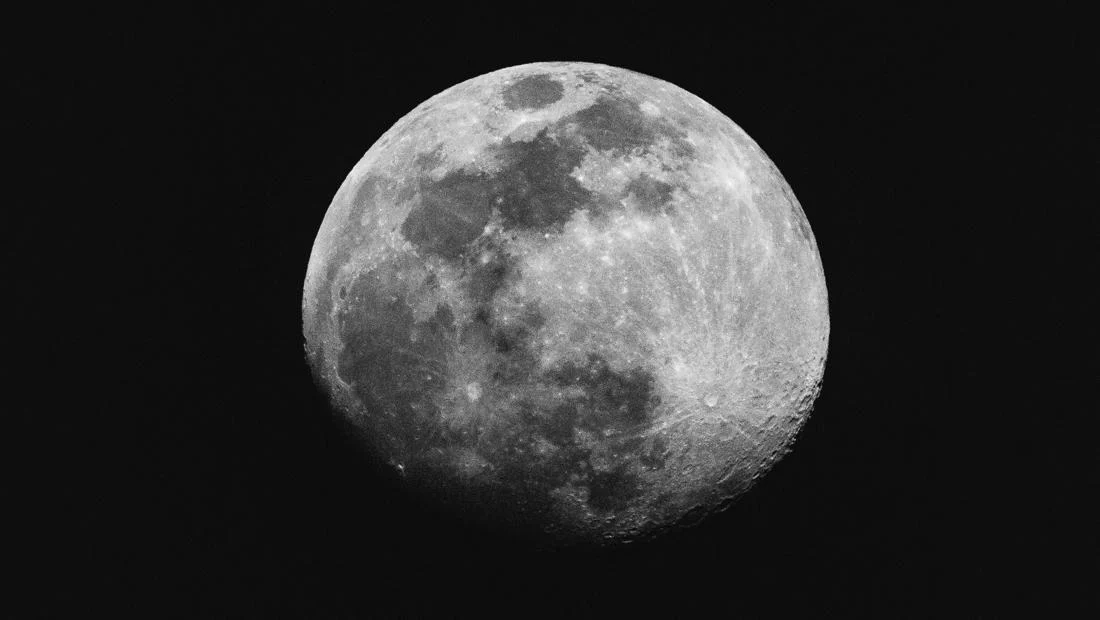
The skies above Indonesia are set to witness a striking astronomical event later this week, as the nation’s meteorological agency reports the arrival of the first perigean full moon of the year. The celestial phenomenon, widely known in popular culture as a supermoon, will bring the lunar satellite notably closer to Earth, making it appear significantly larger and brighter than a standard full moon.
According to official statements released by the Agency for Meteorology, Climatology, and Geophysics (BMKG), this unique lunar alignment is scheduled to take place on November 24. While stargazers and astronomy enthusiasts eagerly anticipate the visual spectacle, scientific institutions have also issued crucial advisories regarding environmental impacts, particularly concerning coastal tides. As communities along the archipelago prepare to observe the event, authorities emphasize the importance of understanding the mechanics behind the phenomenon, separating astronomical fact from popular terminology, and remaining vigilant against potential natural disruptions.
Understanding the Mechanics of a Perigean Full Moon
To fully grasp the significance of the upcoming event, one must look at the orbital mechanics governing the Earth-Moon system. The Moon does not travel around Earth in a perfect circle; rather, its orbit is elliptical, or oval-shaped. This geometric reality means that the distance separating the two celestial bodies is in a state of constant flux.
At its furthest point from Earth, known as the apogee, the Moon sits at a considerable distance, whereas at its closest point, known as the perigee, it swings remarkably near. A perigean full moon—colloquially termed a supermoon—occurs when a full moon phase coincides closely with the time the Moon reaches its perigee.
Teguh Rahayu, the Director of Technical Seismology, Potential Geophysics, and Time Keeping at BMKG, elaborated on the precise measurements governing the event. During this phase, the apparent radius of the Moon as viewed from the surface of Earth will measure approximately 16 minutes and 33.33 seconds of arc. At this juncture, the lunar body will be positioned at a distance of roughly 360,768 kilometers from Earth.
"The elliptical orbit of the Moon around Earth results in a constantly changing distance between the two bodies. Meanwhile, this perigean full moon marks the period when the Moon is heading toward its closest approach to Earth for this specific cycle," Rahayu explained from Jakarta.
Chronology of the Lunar Alignment
While the visually stunning full moon will dominate the night sky on November 24, the actual orbital mechanics involve a precise timeline spanning several days. The progression of the lunar cycle for this event features distinct milestones that astronomers and observers can track.
The sequence begins on Saturday, November 21, 2026, when BMKG formally releases its advisory detailing the impending celestial display, alerting both the public and coastal authorities to the approaching perigean phase.
On Tuesday, November 24, 2026, the visual spectacle reaches its public peak. In the capital city of Jakarta and surrounding regions, observation can commence the moment the Moon breaches the eastern horizon at 17:36 Western Indonesia Time (WIB). The lunar disk will attain its official full phase later that evening at 21:53 WIB, providing hours of prime viewing conditions across the archipelago, weather permitting. The lunar journey for that night concludes the following morning, November 25, as the moon sets in the western horizon at 05:42 WIB.
A separate milestone occurs a few days later on Thursday, November 26, 2026. At precisely 03:57 WIB, the Moon will reach its absolute perigee—its physical closest point to Earth for this orbital cycle, measuring a mere 359,346 kilometers away. Interestingly, because this absolute perigee occurs slightly after the exact moment of the full moon phase, the lunar disk will not be geometrically 100 percent full at the exact moment of closest approach, though the visual difference will be virtually imperceptible to the naked human eye.
Observational Guidelines and Visibility
One of the defining characteristics of a perigean full moon is its accessibility to the general public. Unlike solar eclipses, which require specialized solar filters to prevent permanent eye damage, supermoons are entirely safe to observe with the naked eye. No telescopes, binoculars, or specialized optical equipment are required to appreciate the enhanced scale and brilliance of the lunar surface.
For observers in Jakarta and throughout the broader western regions of Indonesia, optimal viewing conditions rely primarily on local weather patterns rather than sophisticated instrumentation. Atmospheric clarity, cloud cover, and light pollution will play the primary roles in determining the sharpness of the view. Urban dwellers are encouraged to seek locations with unobstructed eastern horizons during moonrise to experience the optical illusion known as the "moon illusion," where the moon appears even larger when juxtaposed against terrestrial landmarks near the horizon.
Broader Environmental Implications: Coastal Tides and Flood Risks
Beyond the aesthetic appeal for astronomers and photographers, the convergence of the Moon at its perigee carries tangible physical consequences for Earth, specifically regarding marine dynamics. The gravitational pull exerted by the Moon is the primary driver of ocean tides on Earth. When the Moon draws closer during a perigee coinciding with a full moon, its gravitational influence intensifies.
This heightened gravitational pull results in what oceanographers and meteorologists term perigean spring tides, frequently referred to in public discourse as king tides. During these events, tidal ranges expand, causing high tides to push further up beaches and low tides to recede further out.
Consequently, BMKG has issued proactive advisories directed at residents living along coastal communities, low-lying shorelines, and estuarine environments. The primary hazard associated with king tides is the heightened risk of tidal flooding, commonly known in Indonesia as rob floods. When combined with localized weather phenomena such as strong onshore winds, high sea swells, or heavy rainfall, these elevated tides can inundate coastal infrastructure, roads, and residential areas.
Local disaster mitigation agencies and maritime authorities have been placed on alert to monitor coastal water levels closely during the deployment of these perigean tides, ensuring swift responses should localized flooding impact vulnerable coastal populations.
Comparative Analysis: Perigee Versus Apoge
To understand the scale of the November 24 event, it is helpful to contrast it with the opposite lunar extreme: the apogean full moon, widely known as a minimoon.
Throughout the annual cycle, lunar perigees and apogees alternate as the moon continues its elliptical journey. For the current year, multiple perigean full moons are registered, notably occurring on both November 24 and a subsequent event on December 24. During both of these winter perigean occurrences, the distance separating Earth and the Moon dips below the 360,000-kilometer threshold. This proximity ensures that the apparent radius of the moon exceeds 16 minutes and 30 seconds of arc.
However, fine distinctions exist even within these supermoon categories. For instance, the supermoon slated for December 24 will bring the lunar body fractionally closer than the event on November 24, resulting in a slightly larger apparent radius.
Conversely, minimoon events represent the exact opposite parameter. Earlier in the year, specifically on May 31 and June 30, minimoon phenomena occurred when the full moon coincided with the apogee—the point where the Earth-Moon distance exceeded 400,000 kilometers. During those summer months, the apparent radius of the moon shrank to less than 14 minutes and 45 seconds of arc.
A direct scientific comparison utilizing identical photographic equipment and camera settings reveals stark differences between the two extremes. Photographic analysis demonstrates that the lunar radius during a perigee is approximately 14 percent larger than during an apogee. Furthermore, the luminosity—or apparent brightness—of a supermoon exceeds that of a minimoon by roughly 30 percent, a measurable variance driven entirely by the inverse-square law of light propagation relative to distance.
Origins and Evolution of the Term Supermoon
While the celestial mechanics of perigean full moons have been understood by astronomers for centuries, the popular nomenclature surrounding the event is of relatively modern origin.
The term "supermoon" was coined in 1979 by American astrologer Richard Nolle. Originally born out of astrological frameworks rather than strict astronomical definitions, the term described either a new or full moon that occurs when the moon is at or near (within 90 percent of) its closest approach to Earth in a given orbit.
Although the term initially lacked official recognition within academic astronomical circles—where scientists traditionally prefer the formal descriptor "perigee-syzygy" or simply "perigean full moon"—the cultural resonance of the word proved irresistible. Over the ensuing decades, media organizations, science communicators, and the global public enthusiastically adopted the phrase. Today, "supermoon" is recognized universally as the standard public descriptor for these striking lunar alignments, effectively bridging the gap between rigorous scientific observation and public fascination with the night sky.
Looking Ahead: The Final Lunar Spectacles of the Year
As the astronomical calendar for the year draws toward its conclusion, the November 24 event serves as a major highlight for science enthusiasts across Indonesia. It initiates a brief winter series of close lunar approaches, culminating in the subsequent perigee on Christmas Eve.
Scientists and educational institutions plan to utilize the upcoming event to foster greater public interest in astronomy, geophysics, and Earth sciences. Through public outreach, BMKG aims to balance the awe-inspiring visual nature of the supermoon with essential safety communications regarding coastal vigilance. As the date approaches, communities nationwide are encouraged to look upward, weather permitting, to witness firsthand the dynamic, ever-changing dance between Earth and its closest celestial neighbor.

