
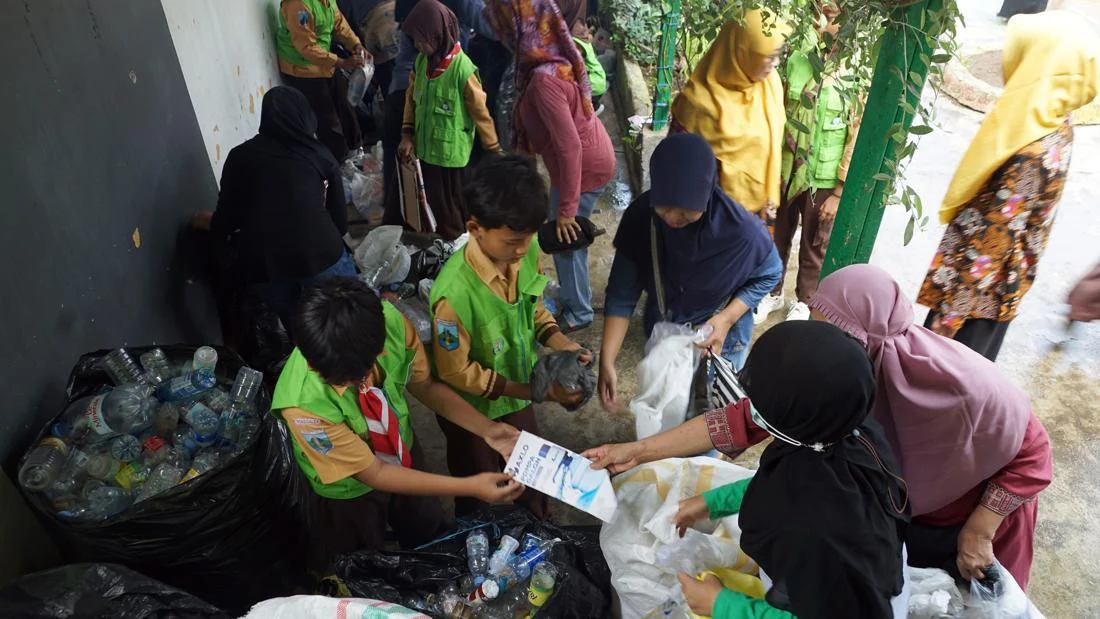
In an innovative approach to environmental stewardship and early financial literacy, students at SDN 2 Bendorejo in Trenggalek, East Java, are transforming everyday household waste into valuable savings through a localized initiative known as the Sangu Sampah program. Implemented on Friday, October 30, 2026, this pioneering educational project encourages school children across various grade levels to collect and sort recyclable waste—with a particular emphasis on used cooking oil, commonly referred to as jelantah—and convert it directly into points or monetary savings.
The program bridges the gap between ecological responsibility and practical economics. By treating discarded materials not as refuse, but as an alternative currency, the initiative is reshaping how young students view sustainability while simultaneously instilling the discipline of personal finance and banking from an early age.
The Mechanics of Sangu Sampah: Turning Waste into Wealth
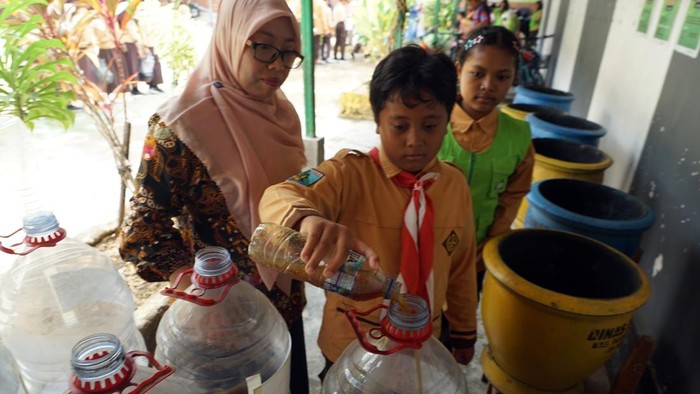
At the heart of the Sangu Sampah program is a structured collection mechanism designed to be engaging and accessible for primary school students. Armed with small containers from home, children arrive at designated school drop-off points carrying sorted items, most notably used cooking oil (jelantah), which poses significant environmental disposal challenges if poured directly into sinks or soil.
Once collected, the recyclable materials are weighed and logged by coordinators. Instead of receiving immediate cash—which might be impulsively spent—the value of the deposited waste is translated into digital points or direct cash deposits into the students’ personal savings accounts. This system not only prevents environmental degradation caused by improper waste management but also provides a tangible incentive for children to actively participate in recycling efforts alongside their families.
Local educators and community leaders have observed that children participating in the program exhibit a heightened awareness of environmental conservation. Rather than viewing waste management as an abstract textbook concept, students experience firsthand the closed-loop cycle of resource utilization: household waste creates pollution, proper sorting enables recycling, recycling generates economic value, and that value secures a financial future.
Background Context and Environmental Urgency in Trenggalek
The introduction of Sangu Sampah in Trenggalek schools arrives at a critical juncture for municipal waste management in Indonesia. Across many regional regencies, improper disposal of household refuse remains a persistent challenge, straining local landfills and contributing to waterways pollution. Used cooking oil, in particular, is a notoriously problematic byproduct of domestic kitchens. When disposed of improperly, jelantah clogs drainage systems and contaminates groundwater tables, posing long-term ecological risks.
Recognizing these challenges, local governments and educational stakeholders in East Java have increasingly turned toward grassroots initiatives to curb environmental degradation at the source. Schools serve as ideal testing grounds for behavioral change, given their capacity to influence not only the students themselves but also entire households. When a child learns the value of separating used cooking oil for recycling at school, that habit invariably translates into domestic routines, effectively educating parents and older siblings in the process.
Furthermore, Indonesia’s broader educational framework has increasingly emphasized character building and the strengthening of Pancasila student profiles, which explicitly include environmental care (berakhlak mulia dan peduli lingkungan). Programs like Sangu Sampah align seamlessly with these national curriculum goals, transforming abstract moral values into daily, measurable actions.
Chronology of the Initiative and Implementation
While the specific collection event on October 30, 2026, at SDN 2 Bendorejo drew significant public attention through photographic documentation and media coverage, the program represents a broader, scaling strategy rather than an isolated occurrence.
The initiative’s rollout typically follows a structured timeline:
- Phase 1: Socialization and Education. Teachers introduce the concept of waste segregation to students, explaining the environmental hazards of items like plastic waste and used cooking oil. Children are taught how to safely store jelantah in plastic bottles or jars at home before bringing them to school.
- Phase 2: Establishment of Drop-off Infrastructure. Schools collaborate with local waste banks (bank sampah) or recycling enterprises capable of processing specific commodities like cooking oil into biodiesel or other industrial derivatives.
- Phase 3: Regular Collection Days. Designated days—such as the Friday event captured in Trenggalek—serve as collection hubs where students bring their sorted materials, monitor their accumulated points, and deposit their earnings into school-managed savings books.
- Phase 4: Periodic Evaluation and Savings Withdrawal. Students are permitted to withdraw their accumulated savings under specific conditions, often encouraging them to use the funds for educational supplies, books, or long-term financial goals.
Fostering Early Financial Literacy
Beyond its undeniable ecological benefits, Sangu Sampah serves as a vital laboratory for financial inclusion and literacy. In many developing communities, children rarely have direct exposure to formal banking systems or structured saving habits until much later in life. By converting discarded items into a tangible monetary asset, the program introduces fundamental economic principles—such as earning, saving, and deferred gratification—at an impressionable age.
Financial experts have long advocated for experiential learning when teaching children about money. Traditional classroom instruction regarding savings often fails to resonate because students lack a personal income stream to manage. By generating their own "earnings" through environmental stewardship, students develop a sense of economic agency. They realize that their actions hold real-world financial consequences, fostering a prudent approach to resource management that extends far beyond school grounds.
Official Responses and Stakeholder Perspectives
Although formal statements from specific national ministries are continuously evolving regarding localized waste-to-school initiatives, regional educational authorities in East Java have expressed strong support for community-driven sustainability models.
Local educators at SDN 2 Bendorejo noted that the program has dramatically shifted classroom dynamics. Students who previously showed little interest in environmental clean-up campaigns are now enthusiastic participants, driven by the dual desire to protect their surroundings and watch their savings accounts grow. Parents have similarly welcomed the initiative, noting that it provides a safe, structured method to dispose of hazardous kitchen waste while teaching children the virtue of saving money.
Environmental advocates point out that such programs help demystify the circular economy for the younger generation. By showing children that trash holds intrinsic economic value, society lays the groundwork for future entrepreneurs who view sustainability as an opportunity rather than a regulatory burden.
Broader Implications and Future Outlook
The success of the Sangu Sampah program in Trenggalek highlights a scalable model that could be replicated across other regencies and provinces throughout Indonesia. As the nation grapples with ambitious targets for waste reduction and climate resilience, grassroots innovations driven by schools offer a low-cost, high-impact solution.
The implications of this initiative extend across three major pillars:
- Environmental Impact: Significant reduction in household hazardous waste, particularly used cooking oil entering local waterways, coupled with increased diversion rates of recyclables from municipal landfills.
- Educational Impact: Direct reinforcement of character education, shifting students from passive consumers to active environmental stewards.
- Economic Impact: The cultivation of early financial independence and banking habits among children from diverse socioeconomic backgrounds.
Ultimately, the initiative at SDN 2 Bendorejo demonstrates that profound systemic changes often begin with simple, localized habits. By teaching children to look at a bottle of used cooking oil not as garbage, but as a building block for their future savings, Trenggalek is quietly shaping a generation that is both financially astute and deeply protective of the natural world.

