
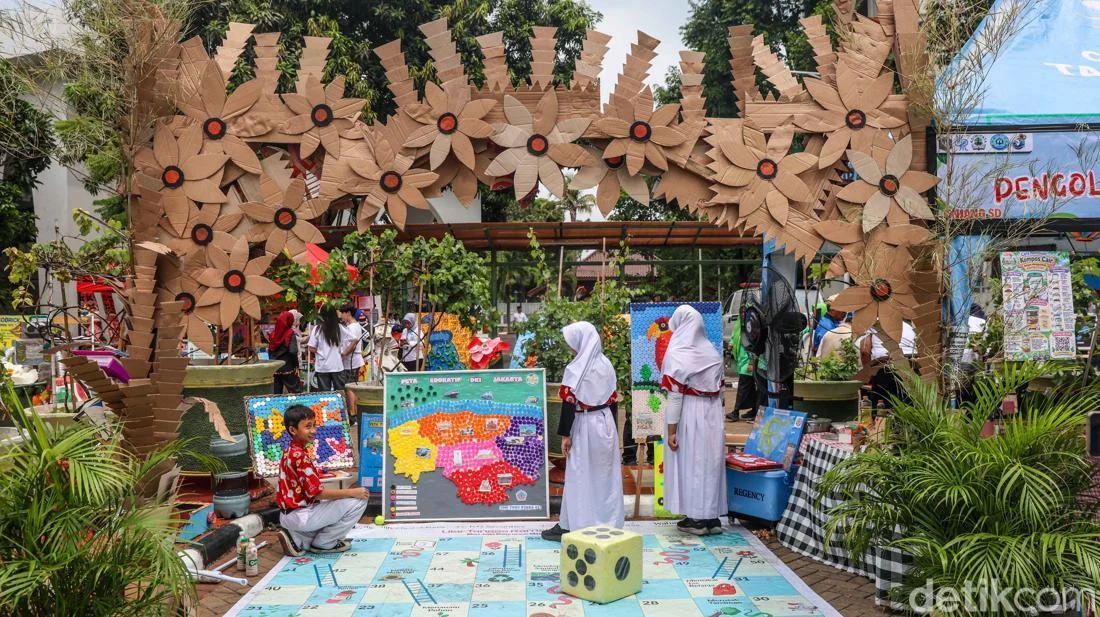
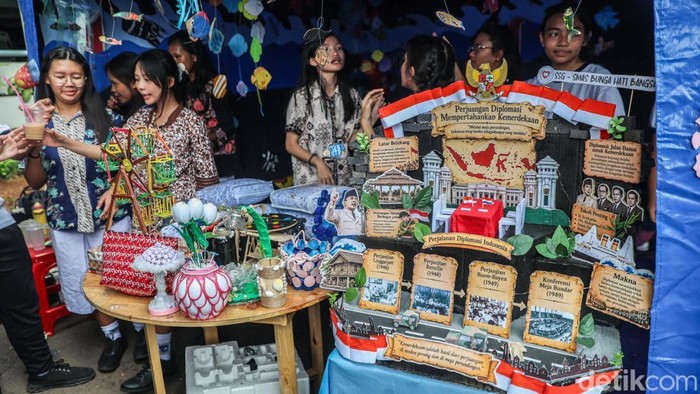
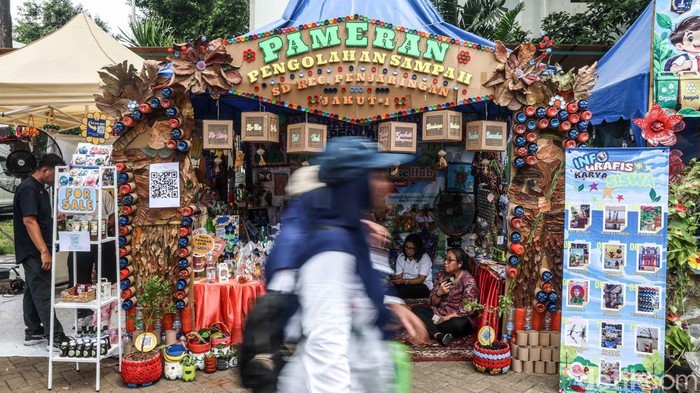
The courtyard of the North Jakarta Mayor’s Office transformed into a vibrant gallery of environmental consciousness and youthful ingenuity on Friday, November 13, 2026. A consortium of students from across the administrative municipality gathered to showcase an array of sophisticated art installations, intricate handicrafts, and decorative objects crafted entirely from domestic waste and discarded materials. The exhibition, which drew local government officials, educators, and members of the general public, served as both a celebration of student artistry and a compelling public awareness campaign addressing the escalating challenges of urban waste management.
Transforming Urban Waste into Aesthetic Value
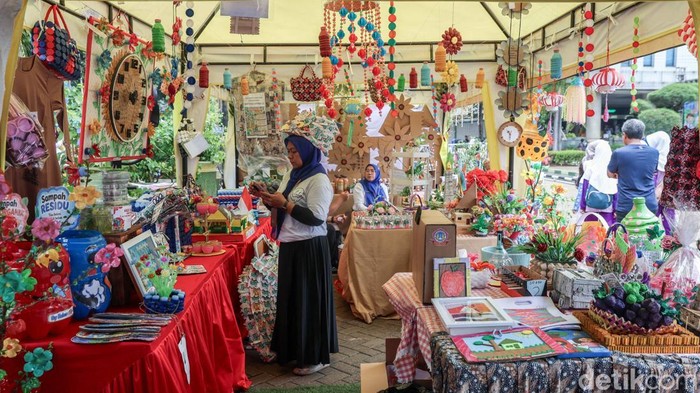
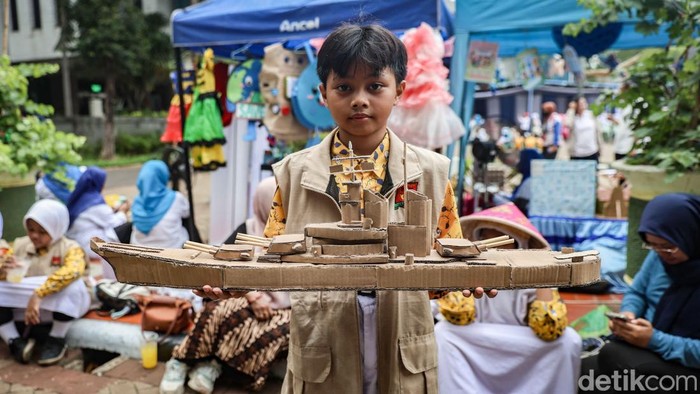
At the heart of the exhibition was a fundamental shift in perception: turning what is conventionally discarded as valueless refuse into items of high aesthetic and practical utility. Visitors stepping into the exhibition area were greeted by rows of meticulously crafted displays featuring materials typically relegated to landfills. Plastic bottles were transmuted into delicate floral chandeliers and woven baskets; discarded cardboard boxes found new life as architectural scale models and relief sculptures; and electronic waste, ranging from tangled wires to obsolete circuit boards, was reassembled into avant-garde mosaic portraits.
Participating students demonstrated remarkable dexterity and creative vision, utilizing simple household tools alongside advanced craft techniques taught within their respective school curricula. Instructors and student representatives stood beside their exhibits throughout the day, engaging directly with visitors. These young creators offered detailed explanations of their methodologies, outlining the meticulous processes of sorting, sanitizing, shaping, and assembling various types of polymer, paper, and metallic refuse.
The initiative underscored a growing pedagogical emphasis within Jakarta’s educational institutions on experiential learning, where environmental science intersects directly with vocational and fine arts. By tasking students with sourcing their own raw materials from their immediate neighborhoods and schools, educators fostered a deeper, firsthand understanding of material lifecycles and consumer waste generation.
Chronology and Event Context
The exhibition on November 13, 2026, represented the culmination of months of preparatory work initiated at the beginning of the academic semester. The initiative began as a localized school-based recycling challenge designed to curb single-use plastics and paper waste within classrooms. Following rigorous internal evaluations at the school level, the most innovative and structurally sound projects were selected to represent their respective districts at the municipal level.
Early Friday morning, organizers and student delegates mobilized at the North Jakarta Mayor’s Office to arrange the displays prior to the official opening. By 9:00 AM local time, the venue was open to the public, drawing steady streams of civil servants, neighborhood association leaders, and curious residents. Throughout the day, panel presentations and live demonstrations allowed students to walk audiences through the physical labor and conceptual inspiration behind their pieces. The event concluded with a brief recognition ceremony honoring the most inventive entries, though organizers emphasized that every participant contributed meaningfully to the overarching environmental message.
Broader Environmental Implications for Jakarta
The timing of this exhibition aligns with urgent municipal imperatives faced by the capital region. Jakarta continues to grapple with monumental solid waste management challenges, housing millions of residents who generate thousands of tons of municipal waste daily. Landfill capacities, notably at the Bantargebang Integrated Waste Management Site serving the broader metropolitan area, face mounting pressure as urbanization and consumption rates accelerate.
Environmental analysts and municipal planners have long advocated for decentralized waste reduction strategies, noting that conventional end-of-pipe municipal collection systems are insufficient without behavioral shifts at the grassroots level. Educational initiatives such as the North Jakarta student art exhibition play a vital, preventative role in this ecosystem. By instilling circular economy principles—reduce, reuse, recycle—in children and adolescents, the program helps cultivate a demographic that views waste not as a terminal nuisance, but as a secondary resource.
Furthermore, public exhibitions held at municipal civic centers serve a dual purpose: they bridge the gap between educational theory and civic policy. When local government officials interact directly with student innovators, policymakers are reminded of the ingenuity residing within the community. Observers note that grassroots projects of this nature often inspire municipal agencies to scale up support for school-based environmental programs, potentially integrating them into official city sustainability frameworks.
Community Reactions and Educational Impact
Visitors and civic leaders responded to the exhibition with widespread acclaim, praising the technical proficiency of the student works and the clarity of the environmental messaging. Several educators accompanying the students noted a marked positive change in student attitudes toward waste since the inception of the project. Rather than casually discarding packaging and containers, students exhibited a heightened sensitivity to material recovery, actively collecting items suitable for artistic and structural projects.
Parents and community members touring the exhibits expressed optimism regarding the future of urban environmental stewardship. Many remarked on the commercial viability of several items on display, suggesting that with minor refinements in packaging and durability, certain student-crafted decorative goods could potentially find a sustainable market in local green-economy initiatives or artisan bazaars.
Ultimately, the student exhibition at the North Jakarta Mayor’s Office transcended a conventional school art show. It functioned as a micro-scale model of sustainable urban living, proving that creativity, resourcefulness, and environmental responsibility can converge to inspire meaningful behavioral change across generations.

