
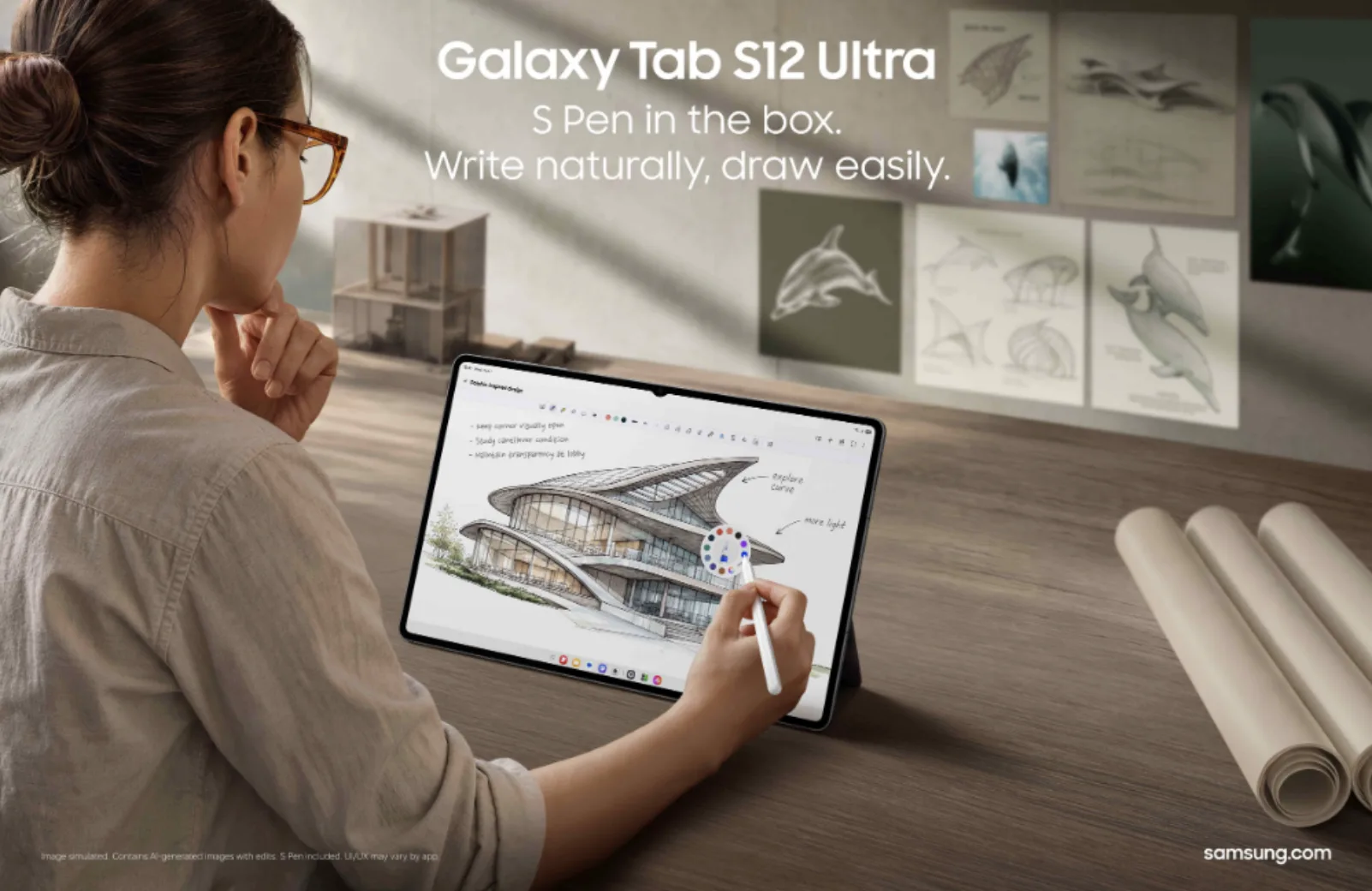
The tablet market has undergone a fundamental transformation, evolving from a secondary entertainment device into a primary hub for professional productivity and creative expression. This shift, driven by the integration of sophisticated artificial intelligence and hardware optimization, is exemplified by the launch of the Samsung Galaxy Tab S12 Series, comprising the Galaxy Tab S12 Ultra and the Galaxy Tab S12+. By synthesizing expansive display technology with the precision of the S Pen and the cognitive power of AI, Samsung is positioning its latest premium tablet line as a comprehensive workstation designed to meet the demands of a high-paced, digitally native workforce.
The evolution of the tablet into a powerhouse of productivity is not merely a hardware trend but a direct response to changing consumer behavior. Recent industry reports indicate that mobile professionals are increasingly seeking a balance between the portability of a smartphone and the computational capability of a laptop. Samsung’s internal research confirms this, revealing a significant shift in usage patterns over the last three years. Data shows that approximately 50 percent of Galaxy Tab usage is now dedicated to productivity applications, 30 percent to entertainment, and 20 percent to creative projects. This transition underscores a broader market reality: users no longer view tablets as mere media consumption tools, but as essential instruments for synthesizing information, drafting complex ideas, and managing collaborative projects.
The Strategic Vision Behind the Galaxy Tab S12 Series
The development of the Galaxy Tab S12 Series represents a strategic pivot toward "meaningful innovation." According to Yadi Prayitno, Head of MX Business at Samsung Electronics Indonesia, the focus has shifted from simply introducing new features to creating a versatile space that facilitates deeper cognitive processes. The design philosophy centers on the concept of a multi-workspace environment, where the device serves as an interactive canvas that eliminates the need for constant context-switching.
The inclusion of AI features—most notably Gemini, Circle to Search, and Writing Assist—is central to this mission. These tools are designed to streamline repetitive tasks, allowing professionals to dedicate more time to strategic thinking and creative execution. By offloading data synthesis and information retrieval to AI, the device effectively acts as a cognitive partner, enabling users to manage the growing complexity of modern work environments without being overwhelmed by the deluge of information.
Evolution of the Tablet: A Chronological Context
The trajectory leading to the Galaxy Tab S12 series can be traced back to the industry’s initial struggle to define the tablet’s role. In the early 2010s, tablets were largely marketed as devices for media consumption, gaming, and basic web browsing. However, as mobile processing power increased and software ecosystems matured, the limitations of smaller displays became apparent.
By 2020, the global shift toward remote and hybrid work models accelerated the demand for more robust mobile computing solutions. Samsung responded by enhancing its "DeX" interface, which allowed for a desktop-like experience on tablets. The introduction of the Galaxy Tab S8 and S9 series saw the refinement of this hardware-software integration, emphasizing the S Pen as an essential tool for digital notation and design. The release of the Galaxy Tab S12 Series serves as the latest milestone in this progression, marking the first time that deep-learning AI integration has been prioritized as a core pillar of the hardware’s value proposition.
Analyzing the Impact of AI Integration
The integration of artificial intelligence in the Galaxy Tab S12 series is not merely a software update; it is a fundamental reconfiguration of the user experience. By analyzing the most frequently accessed features, Samsung has identified that users are primarily utilizing AI for three distinct purposes: ideation, task management, and information synthesis.
- Ideation and Creative Exploration: Tools such as generative AI models allow users to draft outlines, brainstorm concepts, and visualize creative projects with significantly reduced latency.
- Information Synthesis: With the integration of advanced search features, users can bypass traditional browsing flows, instantly finding context-sensitive information within their documents or across the web.
- Task Efficiency: Automated writing and summarizing assistants effectively reduce the time spent on administrative tasks, such as drafting emails or summarizing meeting minutes, which historically occupied a large portion of a professional’s daily schedule.
Industry analysts note that this shift toward AI-driven hardware provides a competitive edge in a crowded market. While many manufacturers focus on specifications such as processing clock speeds or screen resolution, Samsung’s focus on the "utility of space"—the ability to hold multiple active windows and tools without clutter—addresses the genuine pain points of professional users.
Bridging the Ecosystem Gap
For the modern entrepreneur or creator, the challenge often lies in maintaining a seamless workflow across multiple devices. The Galaxy Tab S12 series is designed to act as a bridge between the smartphone and the laptop. It offers a unique value proposition: it is light enough to be as portable as a phone but powerful enough to manage tasks that would typically require a laptop.
In a professional ecosystem, the tablet acts as the primary device for field work, creative drafting, and presentation, while its connectivity features allow for fluid data synchronization with other devices in the user’s ecosystem. This cross-device capability ensures that a project started on a smartphone can be finalized on the tablet and archived on a laptop, all within the same digital environment. This interoperability is essential for maintaining productivity in an era where work is increasingly decentralized and nomadic.
The Future of Mobile Productivity
As we look toward the future, the role of the tablet as a primary computing device is expected to solidify. The Galaxy Tab S12 series sets a standard for how manufacturers should approach the balance between hardware and software. By creating a device that is essentially a mobile "think tank," Samsung has addressed the growing need for a focused workspace in a distracted world.
The implications for the broader tech market are significant. We can expect to see an increased emphasis on "AI-native" hardware, where the processor, software, and input tools are all optimized to support generative AI tasks locally. As these technologies become more accessible, the barrier between professional-grade computing and mobile computing will continue to dissolve.
Furthermore, the focus on user-centric innovation—where the technology is designed to adapt to human behavior rather than forcing the human to adapt to the technology—marks a move toward more sustainable and ergonomic design. The goal, as expressed by Samsung’s leadership, is to open more room for creativity. By reducing the friction inherent in digital workflows, the Galaxy Tab S12 series allows users to focus on the quality of their output rather than the mechanics of the input.
In summary, the Galaxy Tab S12 Ultra and Galaxy Tab S12+ are more than just tablets; they are the result of a decade of hardware refinement and a recent, critical investment in artificial intelligence. They represent a significant step forward in the quest to provide professionals with the tools they need to succeed in an increasingly complex digital landscape. Whether used for enterprise project management, creative design, or strategic planning, the series demonstrates that the future of work is not confined to a desk, but is instead as mobile, intelligent, and expansive as the user’s own ambitions.
As the industry continues to evolve, the success of the Galaxy Tab S12 will likely be measured by how well it empowers its users to move beyond the limitations of the past, leveraging AI to reclaim their time and expand the boundaries of what is possible in a mobile environment. The transition from a "second screen" to a "primary workstation" is complete, and the trajectory suggests that for many, the tablet will become the most important tool in their professional arsenal.

