
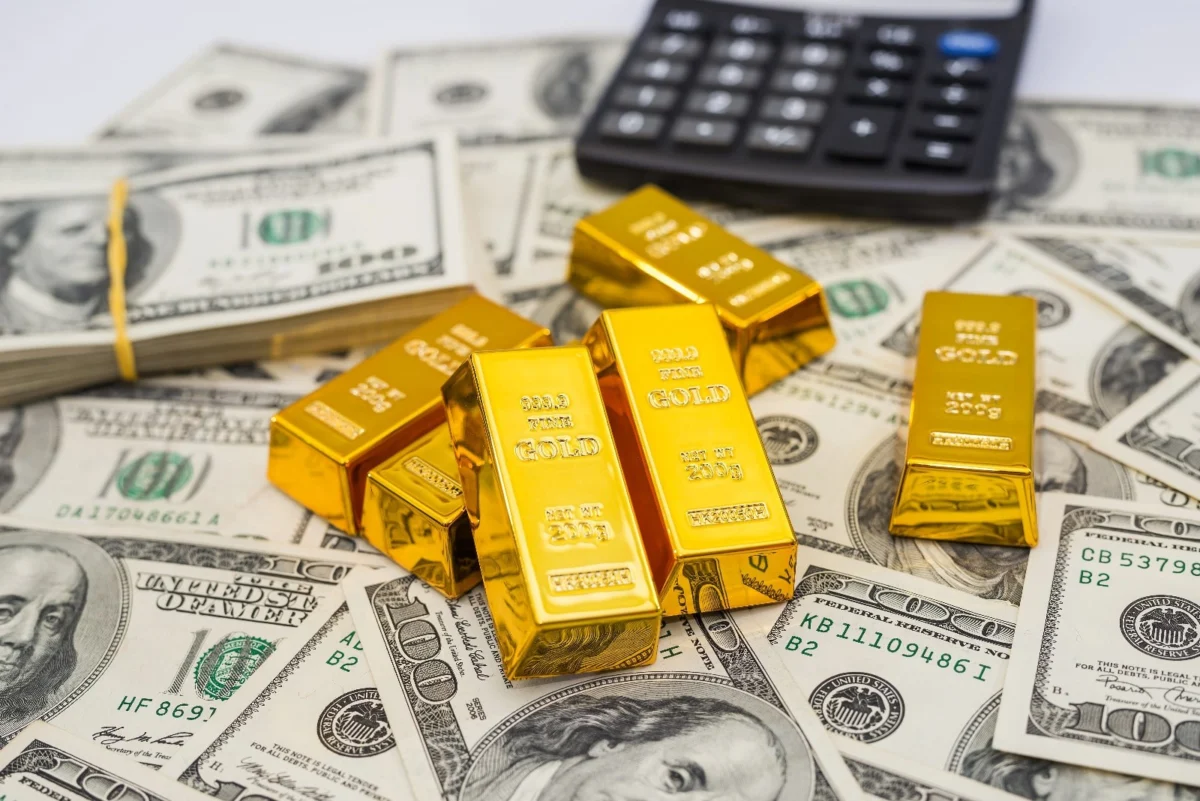
The global gold market experienced a severe downturn on Thursday, November 19, 2026, as bullion prices plunged by more than two percent. This sharp correction drove the precious metal to its weakest position in 14 months, unsettling investors who had long viewed gold as a reliable hedge against economic instability. The downward spiral reflects a shifting macroeconomic landscape characterized by a resurgent United States dollar and growing convictions that the Federal Reserve will implement further monetary tightening before the year concludes. As persistent inflationary pressures continue to challenge policymakers, the appeal of non-yielding assets like gold has diminished significantly, triggering widespread liquidation across global commodity exchanges.
Main Facts and Market Movement
During Thursday
’s trading session, spot gold suffered a substantial loss of 2.70 percent, settling at USD3,624.63 per troy ounce. Earlier in the session, the precious metal breached critical psychological thresholds, touching its lowest price point since mid-September 2025. This dramatic drop wiped out significant gains accumulated earlier in the year and forced institutional and retail investors to reassess their portfolio allocations.
The sell-off was not limited to spot transactions; futures contracts also recorded steep declines, accompanied by heightened trading volumes. Market analysts noted that the velocity of the drop caught several leveraged traders off guard, leading to margin calls and accelerated selling pressure. The combination of strong macroeconomic headwinds and technical chart breakdowns created a formidable barrier for any immediate price recovery.
Chronology and Catalysts Leading to the Drop
The genesis of Thursday’s sell-off can be traced through a series of key economic releases and policy signals that accumulated over the preceding weeks.
- Early November 2026: Initial consumer price index (CPI) reports for the US revealed that inflation remained stubbornly above the Federal Reserve’s targeted two percent threshold. This stoked fears that monetary policy would need to remain restrictive for an extended period.
- Mid-November 2026: The release of the minutes from the Federal Open Market Committee (FOMC) meeting held the previous month provided the definitive catalyst for the market shift. The document revealed a hawkish consensus among central bank officials, with nearly all participants agreeing that further interest rate hikes might be necessary to fully subdue inflationary forces.
- Thursday, November 19, 2026: Reacting directly to the FOMC minutes and a parallel surge in the US Dollar Index (DXY), foreign exchange and commodity markets adjusted rapidly. The greenback strengthened against a basket of major currencies, making dollar-denominated gold increasingly expensive for international buyers and triggering the 2.70 percent slide down to USD3,624.63 per troy ounce.
Expert Insights and Industry Reactions
Financial markets have reacted swiftly to the shifting monetary policy outlook. Chris Gaffney, Head of World Markets at EverBank, provided crucial context on the forces steering the market during an interview with Reuters.
"The combination of aggressive interest rate expectations and a persistently strong US dollar are the two primary wrecking balls hitting the gold market right now," Gaffney stated. He emphasized that the transparency offered by the recent FOMC meeting minutes eliminated lingering market doubts regarding the central bank’s resolve. "When the market realizes that nearly every voting and non-voting official at the Federal Reserve sees a path toward higher rates to combat sticky inflation, the opportunity cost of holding non-yielding assets like gold simply becomes too high for many institutional players."
Other commodity strategists echoed these sentiments, noting that institutional capital flows have visibly rotated away from precious metals and into short-term fixed-income instruments and cash equivalents that now offer attractive, risk-free yields.
Supporting Data and Historical Context
To understand the magnitude of the current correction, one must look at gold’s trajectory over the past several quarters. Throughout late 2025 and the early months of 2026, gold prices enjoyed a robust bull run, driven by geopolitical uncertainties, central bank reserve diversification, and early expectations of monetary easing. During that peak period, spot prices regularly challenged historic highs, supported by safe-haven buying.
However, the macroeconomic data gathered through the third and fourth quarters of 2026 reversed this narrative. Key data points underlying the current environment include:
- Interest Rate Projections: Markets are now pricing in a high probability of a benchmark rate hike at the upcoming December 2026 FOMC meeting, a stark contrast to earlier expectations of a prolonged pause or rate cuts.
- Currency Strength: The US Dollar Index has gained approximately 4.5 percent over the last two months, bolstered by resilient domestic labor market data and higher relative Treasury yields.
- ETF Outflows: Global gold-backed exchange-traded funds (ETFs) reported net institutional outflows for three consecutive weeks leading up to the mid-November slump, signaling a broader reduction in investor appetite.
Broader Implications for Global Markets
The sharp depreciation of gold carries wide-ranging implications for both domestic and international financial ecosystems.
For retail investors and domestic jewelry markets in emerging economies, the lower price point may eventually stimulate physical demand, as consumers historically view price dips as an attractive entry point for accumulation. However, short-term sentiment remains cautious as traders wait to see whether the USD3,600 support level will hold or if further technical deterioration lies ahead.
On a macroeconomic scale, the dynamic underscores the central banks’ ongoing balancing act. As policymakers grapple with resilient inflation, the suppression of asset bubbles and commodities through higher borrowing costs remains a primary policy instrument. For global investors, the current environment serves as a reminder of the inverse relationship between aggressive monetary tightening and precious metal valuations. As the market approaches the pivotal December Federal Reserve meeting, all eyes will remain locked on incoming employment and inflation datasets to determine whether this 14-month low represents a temporary floor or the beginning of a prolonged cyclical correction.

