
PT Permodalan Nasional Madani (PNM), a prominent state-owned enterprise dedicated to bolstering Indonesia’s ultra-micro and small business sectors, has officially rolled out an ambitious financial inclusion initiative titled the Prosperous Women Prasejahtera Credit (Kredit Perempuan Prasejahtera – KPPS). Featuring a competitive interest rate capped at 8 percent, the program aims to drastically reduce the cost of capital for underprivileged female entrepreneurs across the archipelago. By broadening access to formal financial services, PNM seeks to catalyze business expansion at the grassroots level while systematically elevating household incomes. The overarching objective of the initiative is to reach a staggering 1.7 million active clients by the conclusion of 2026.
This strategic push reflects a broader national commitment to fostering equitable economic growth, particularly in regions that serve as strategic gateways for international trade. As Indonesia navigates the complexities of global economic shifts, empowering women who operate at the lowest rungs of the economic ladder has emerged as a cornerstone of resilient domestic development.
Strategic Launch in Batam: A Gateway for Border Region Empowerment
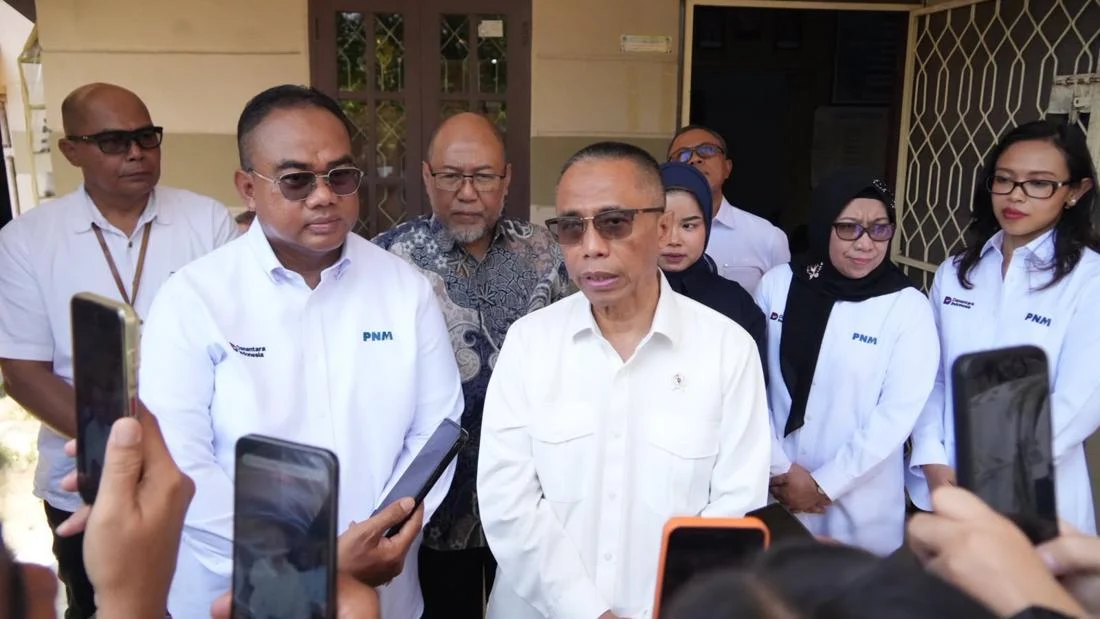
As an initial milestone toward the nationwide rollout of the KPPS initiative, PNM inaugurated the program in Batam on Tuesday, November 10. The launch specifically targeted members of PNM’s flagship ultra-micro financing program, Membina Ekonomi Keluarga Sejahtera (Mekaar). This inaugural event served as a critical operational testbed for the streamlined, low-interest financing scheme, allowing officials to evaluate disbursement workflows and client reception in real time.
The choice of Batam as the launchpad was far from arbitrary. Situated directly adjacent to Singapore, Batam occupies a uniquely strategic geographic and economic position within the ASEAN region. Its status as a free trade zone and a bustling hub for manufacturing, logistics, and international commerce creates a spillover effect that local micro-entrepreneurs can potentially leverage. By anchoring the launch in this border city, PNM aims to integrate ultra-micro enterprises—traditionally confined to hyper-local markets—into broader regional supply chains. This localized empowerment is viewed as vital for fortifying economic resilience in Indonesia’s outer islands and border territories.
High-Level Government Oversight and Technological Integration
The significance of the KPPS initiative drew high-level government attention when Dradjad Hari Wibowo, Vice Minister for Coordinating Economic Affairs, conducted a direct field inspection of the program’s target beneficiaries in Batam. During his visit, the Vice Minister engaged directly with Mekaar clients to assess the ground-level realities, operational challenges, and financial needs of women who rely on ultra-micro enterprises as their primary source of household sustenance.
Dradjad emphasized that the long-term success and scalability of the KPPS program hinge upon the rigorous adoption of advanced technology and integrated information systems. According to the Vice Minister, a digitized architecture is indispensable for streamlining the identification, background checks, and verification processes of prospective beneficiaries. By minimizing administrative bottlenecks and human error through robust data integration, PNM can ensure that state-backed capital injections are disbursed efficiently and reach the intended demographic without leakage.
"We also view the economic strengthening of communities in border regions such as Batam as a crucial component in maintaining national economic resilience," Dradjad stated in a written official release on Wednesday, November 11, 2026. "Therefore, access to financing for ultra-micro women entrepreneurs needs to be continuously reinforced so they can grow and actively participate in regional economic activities."
The Broader Context of Ultra-Micro Financing in Indonesia
To fully appreciate the scope of PNM’s KPPS initiative, it is necessary to examine the evolution of microfinance within Indonesia’s macroeconomic framework. For decades, traditional banking institutions have often overlooked ultra-micro entrepreneurs—typically street vendors, home-industry artisans, tailors, and small-scale culinary operators—due to a lack of formal collateral, credit histories, and traditional documentation.
Program Mekaar was established to bridge this structural gap by utilizing a group-lending model ( tanggung renteng), which replaces physical collateral with social capital and mutual accountability. Weekly group meetings serve not only as collection points for loan installments but also as forums for mandatory business coaching, financial literacy workshops, and health education.
Despite the success of Mekaar in bringing millions of unbanked women into the formal financial ecosystem, high borrowing costs from informal lenders—such as illegal loan sharks or predatory daily moneylenders—have remained a persistent hurdle. By introducing the KPPS scheme with an 8 percent interest rate, PNM is directly undercutting predatory informal credit markets, providing a safe, regulated, and affordable financial runway for vulnerable households.
PNM Leadership Vision: Fostering Sustainable Growth and Market Linkages
Reflecting on the core philosophy driving the institution, PNM President Director Kindaris underscored that financial capital alone is insufficient to pull families out of intergenerational poverty. Sustainable empowerment requires a multi-layered approach encompassing continuous financing, intensive business mentoring, and strategic market expansion.
"The mothers who make up our Mekaar clients are the unsung heroes of their families, fighting every day to maintain the economic survival of their households," Kindaris remarked. "They do not merely strive for themselves; they ensure their families secure a better quality of life."
Kindaris elaborated that the 8 percent interest rate under the KPPS framework is designed to grant women greater fiscal breathing room, enabling them to reinvest retained earnings back into their inventories, upgrade equipment, and expand production capacities. However, PNM recognizes that increased production is meaningless without guaranteed buyers. To address this, the institution is aggressively implementing a "link and match" approach. This strategy connects micro-entrepreneurs directly with institutional buyers, corporate partners, and regional off-takers, effectively widening product distribution channels and integrating grassroots producers into formal supply chains.
The Comprehensive Support Ecosystem: Beyond Capital
The operational framework of PNM Mekaar, now augmented by the KPPS initiative, relies on four foundational pillars: social capital building, financial literacy, capacity building, and market access.
- Social Capital and Mutual Accountability: Borrowers are organized into small neighborhood groups. This communal structure fosters discipline, peer support, and collective responsibility, ensuring exceptionally high repayment rates without the need for predatory enforcement mechanisms or physical collateral.
- Financial Literacy and Business Training: Weekly mandatory meetings function as mobile classrooms where clients are taught basic bookkeeping, cash flow management, profit calculation, and digital marketing strategies. These sessions demystify formal banking concepts and empower women to make sound financial decisions.
- Capacity Building and Product Standardization: Through partnerships with both public and private stakeholders, PNM facilitates training in product packaging, quality control, and compliance with health and safety standards. This helps transition informal home-cooked goods and handicrafts into market-ready retail products.
- Market Integration (Link and Match): By bridging producers with regional off-takers, PNM mitigates the risk of overproduction. Entrepreneurs receive guidance on market demand trends, enabling them to align their production volumes with verifiable commercial contracts.
Timeline and Implementation Roadmap Toward 2026
The rollout of the KPPS scheme is part of a meticulously planned operational timeline managed by PNM’s executive leadership and risk management divisions:
- Phase 1: Conceptualization and Risk Modeling (Early to Mid-2025): Actuarial studies and financial feasibility assessments conducted to determine the sustainability of the 8 percent interest rate cap while maintaining institutional solvency.
- Phase 2: Pilot Testing and Infrastructure Preparation (Late 2025 to Early 2026): Upgrading of core banking software, integration of digital verification systems, and staff training protocols.
- Phase 3: Strategic Inauguration (November 2026): Official pilot launch in Batam, featuring high-level government oversight and initial disbursement to select Mekaar cohorts.
- Phase 4: Nationwide Scaling and Regional Expansion (Late 2026 Onward): Systematic deployment of the KPPS scheme across provincial branches, with the ultimate target of encompassing 1.7 million active beneficiaries by December 31, 2026.
Economic Implications and Socio-Economic Impact Analysis
From an analytical standpoint, the implementation of the KPPS program carries profound implications for Indonesia’s macroeconomic landscape. Ultra-micro, small, and medium enterprises (MSMEs) account for over 60 percent of Indonesia’s Gross Domestic Product (GDP) and absorb the vast majority of the national workforce. Within this segment, women-led micro-enterprises represent a disproportionately high percentage of economic actors at the base of the pyramid.
Empowering these women yields a high multiplier effect on household welfare. Empirical studies consistently demonstrate that female entrepreneurs allocate a significantly higher proportion of their discretionary income toward children’s education, healthcare, and nutritional needs compared to their male counterparts. Consequently, subsidized micro-credit programs like KPPS function simultaneously as poverty alleviation tools and human capital investments.
Furthermore, by embedding technology into loan verification and leveraging regional trade hubs like Batam, PNM is accelerating the digital transformation of rural and semi-urban economies. The integration of off-taker networks prevents market saturation, ensuring that micro-enterprises do not cannibalize each other’s local customer bases but instead scale into regional suppliers.
Conclusion and Future Outlook
As PT Permodalan Nasional Madani marches toward its 2026 target of empowering 1.7 million women through the KPPS initiative, the program stands as a testament to the viability of state-backed, socially conscious microfinance. By combining an affordable 8 percent interest rate with rigorous technological verification, holistic mentoring, and structured market access, PNM is redefining the parameters of financial inclusion in Indonesia.
The successful inauguration in Batam marks not merely a localized corporate milestone, but a critical stride toward fortifying national economic resilience from the ground up. As these female entrepreneurs gain the tools, capital, and market linkages necessary to thrive, they transform from vulnerable economic actors into formidable pillars of local commerce and sustainable national prosperity.

