
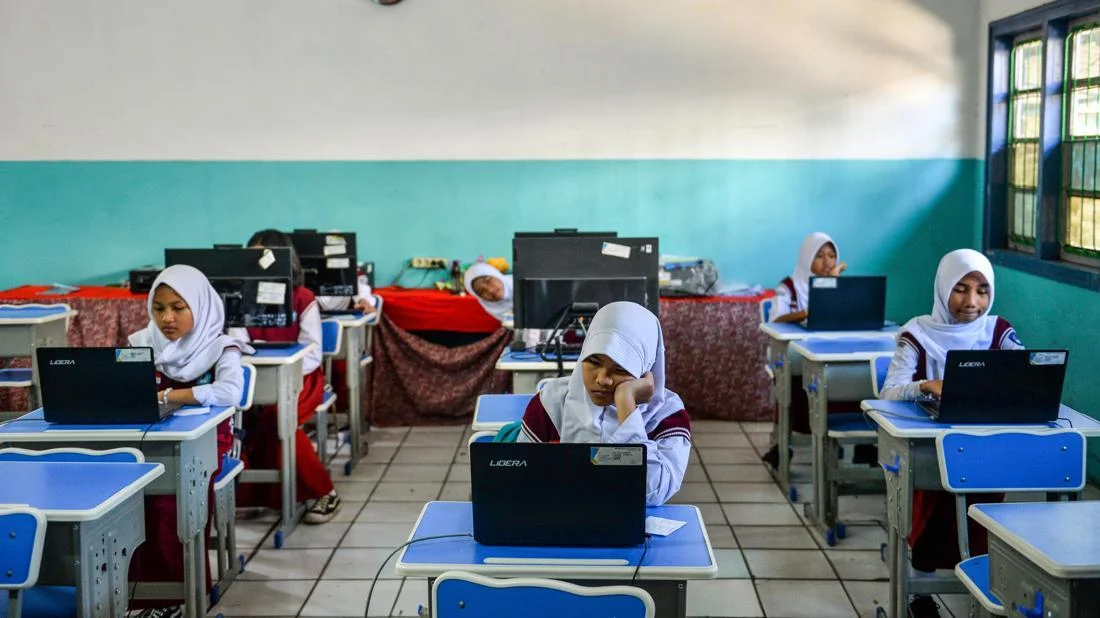
The implementation of the Academic Ability Test (Tes Kemampuan Akademik or TKA) in Bandar Lampung, Lampung, has come under intense scrutiny from the House of Representatives (DPR RI) following a series of technical disruptions that threatened the validity of student performance data. Abdul Fikri Faqih, a prominent member of Commission X—the legislative body overseeing education, sports, and tourism—publicly addressed these concerns during a specific working visit aimed at evaluating the regional execution of the national assessment program. The disruptions, ranging from hardware malfunctions to total server outages, have raised alarms regarding the fairness of the testing process and the reliability of the resulting data, which the government utilizes for long-term educational planning. According to Fikri, these technical hurdles do not merely represent a temporary inconvenience but pose a significant risk to students whose academic potential may be obscured by the failures of the digital infrastructure.
Technical Disruptions and the Risk of Inaccurate Assessment
During the evaluation session in Bandar Lampung, the legislative delegation received reports detailing how students struggled with "server down" scenarios and unresponsive computer terminals. Fikri emphasized that the impact of these failures is disproportionately felt by high-achieving students. He argued that students who possess strong academic capabilities and have prepared extensively for the TKA are often the most disadvantaged when the system fails. Instead of being able to demonstrate their mastery of the subjects, these students are forced to contend with the stress of technical instability, which frequently leads to results that do not accurately reflect their true intelligence or academic standing.
Fikri noted that when a student who is "smart" or well-prepared encounters a glitch, the psychological toll and the interruption in cognitive flow can lead to "unfavorable results." This creates a sense of injustice among the youth and their parents, as the assessment is intended to be a benchmark of their hard work. From a broader perspective, Fikri warned that if the data collected from these tests is flawed due to technical interference, the government’s ability to use these results as a foundational tool for educational planning will be compromised. The TKA is designed to serve as a diagnostic instrument for the "Rapor Pendidikan" (Education Report Card), which helps the Ministry of Basic and Secondary Education identify which regions require more resources, teacher training, or curriculum adjustments. If the "input" data is corrupted by server crashes, the "output" of the national planning strategy will inevitably be misaligned with reality.
A Recurring Pattern Across the Archipelago
The issues observed in Lampung are not isolated incidents. Fikri and other members of Commission X expressed concern that similar technical bottlenecks are likely occurring in various other provinces, particularly those outside the highly developed hubs of Java. The digital divide in Indonesia remains a formidable challenge; while urban centers often enjoy high-speed fiber-optic connectivity, many regional districts still rely on unstable satellite links or aging telecommunications towers.
The TKA, which is a cornerstone of the modern Indonesian educational evaluation system, relies heavily on a centralized digital ecosystem. However, the decentralization of infrastructure maintenance means that the readiness of local school laboratories varies wildly. Fikri urged the central government to take a more proactive stance in auditing the technical readiness of every testing site before the assessment window opens. He suggested that the Ministry must look beyond the readiness of the software and deeply examine the stability of local power grids and regional internet service providers (ISPs).
Government Response and the Offline Contingency Plan
In response to the growing criticism, the Ministry of Basic and Secondary Education (Kemendikdasmen) has attempted to reassure the public by highlighting existing contingency measures. Minister Abdul Mu’ti previously addressed these concerns during a separate visit to SMPN 2 Curug in Tangerang Regency, Banten. He clarified that the TKA system was designed with a degree of flexibility to accommodate Indonesia’s diverse geographical and technological landscape.
One of the primary solutions offered by the Ministry is the provision of an "offline mode" for the TKA. According to Mu’ti, the government understands that many regions suffer from a lack of consistent internet access. To mitigate this, the Ministry has developed a version of the test that can be pre-installed on school computers. This method allows students to take the exam without a live internet connection, with the results being synced to the central server once the connection is restored or via manual data transfer by technical staff.
"The test does not have to be strictly online," Mu’ti stated during his visit in early April. "For areas without internet networks, we have prepared questions that are already installed on each computer." This "semi-online" or "offline" approach is intended to serve as a safety net, ensuring that even the most remote schools in the archipelago can participate in the national assessment without being penalized for their location. However, critics like Fikri argue that even with these options, the transition to offline modes often involves its own set of technical hurdles, including outdated hardware that cannot support the pre-installed software requirements.
Protocol for Handling Technical Emergencies
To provide a structured response to the inevitable glitches that occur during large-scale digital testing, the Education Policy Agency under Kemendikdasmen has outlined a specific three-step protocol for schools and students. This protocol is disseminated through official social media channels, such as @litbangdikbud, to ensure that test-takers and administrators know how to react in real-time.
- Immediate Reporting: Students who encounter a frozen screen, a server error, or hardware failure are instructed to immediately report the issue to the school officials or the exam proctors present in the room. The proctors are trained to perform basic troubleshooting, such as restarting the application or moving the student to a backup terminal.
- Escalation to Regional Technical Teams: If the problem persists or involves a systemic failure that the school cannot resolve (such as a local ISP outage), the school is required to report the incident to the district or provincial technical teams. These teams are tasked with providing more advanced technical support and documenting the extent of the disruption.
- Central Government Intervention for Extraordinary Events: In cases where the disruption is classified as an "extraordinary event"—such as a natural disaster, a massive regional power blackout, or a national server compromise—the central government retains the authority to make executive decisions. This can include postponing the test for the affected region, rescheduling the session, or adjusting the grading criteria to account for the lost time.
The Broader Impact on Educational Quality and Planning
The stakes for the TKA are high, as it represents a shift in Indonesian education policy away from the high-stakes "National Examination" (UN) toward a more holistic "National Assessment" (AN). The TKA is intended to measure not just rote memorization, but critical thinking, literacy, and numeracy. When the delivery mechanism for such a sophisticated assessment fails, it undermines the credibility of the entire reform movement.
Data integrity is the lifeblood of modern educational policy. The Ministry uses TKA results to allocate "Bantuan Operasional Sekolah" (BOS) funds and to design targeted interventions for underperforming schools. If a school in Lampung receives a low score not because of poor teaching, but because its server crashed three times during the exam, that school might be incorrectly categorized, leading to an inefficient allocation of national resources.
Furthermore, there is the issue of "test anxiety" exacerbated by technology. Educational psychologists point out that technical failures during a high-pressure exam can trigger significant stress in adolescents, potentially leading to a long-term aversion to digital learning tools. For a country aiming to achieve the "Indonesia Emas 2045" (Golden Indonesia 2045) vision—which relies heavily on a digitally literate workforce—these early negative experiences with technology in the classroom could be counterproductive.
Analysis of Infrastructure Disparity and Future Outlook
The critique provided by Abdul Fikri Faqih serves as a reminder that the digital transformation of the Indonesian education system is a work in progress. While the Ministry’s move toward computer-based testing is a necessary step to align with global standards, the physical infrastructure of the nation is still catching up. Data from the Ministry of Communication and Information Technology suggests that while internet penetration has reached over 70% of the population, the quality and stability of that connection vary significantly between the western and eastern parts of Indonesia.
Moving forward, Commission X of the DPR is expected to push for a larger budget allocation specifically for school digital infrastructure. This includes not just the purchase of laptops and tablets, but also the installation of stable local area networks (LANs) and uninterruptible power supplies (UPS) in schools. There is also a growing call for the recruitment of dedicated IT staff for schools, as the current model often relies on teachers who must juggle their pedagogical duties with technical troubleshooting.
The situation in Bandar Lampung is a localized symptom of a national challenge. As the government continues to refine the TKA and other digital assessment tools, the focus must shift from merely "providing the test" to "ensuring the reliability of the test environment." Only then can the TKA truly serve its purpose as a fair, accurate, and transformative tool for the future of Indonesian education. The legislative oversight provided by Fikri and his colleagues ensures that these technical "glitches" are seen not as minor errors, but as critical barriers to the constitutional right of every Indonesian child to receive a high-quality, equitable education.

