
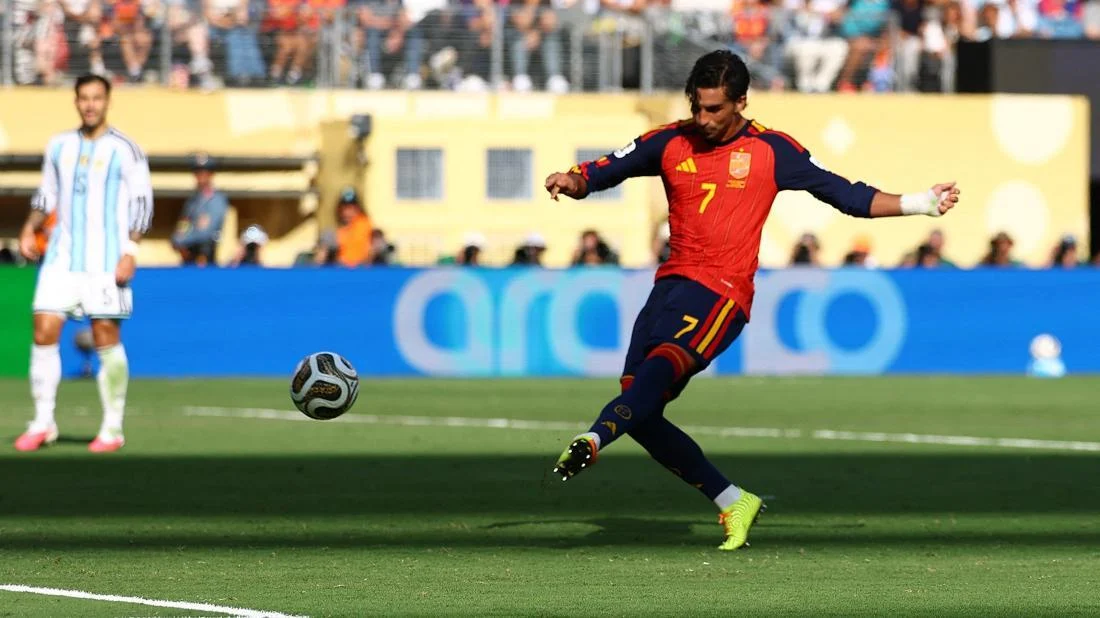
Jakarta – Ferran Torres emerged as the undisputed hero for the Spanish national team in the dramatic final of the 2026 FIFA World Cup, etching his name in football history. His solitary, decisive strike in extra time secured a hard-fought 1-0 victory over a formidable Argentinian side, gifting Spain their coveted second world championship trophy. This monumental win, sixteen years after their inaugural triumph in 2010, also saw Spain achieve a remarkable continental double, having previously conquered the UEFA European Championship in 2024, a feat that underscores their resurgence as a global footballing powerhouse.
However, beyond the jubilant celebrations and the glint of the golden trophy, lies a deeply personal narrative of resilience and recovery. The 26-year-old forward, a pivotal figure for both the national team and his club, Barcelona, has battled through a period of profound mental struggle that remained largely hidden from the public eye until now. His journey from the depths of despair to the pinnacle of sporting achievement offers a powerful testament to the importance of mental health awareness in professional sports.
The Darkest Hour: Torres’s Battle with Depression
The immense pressure of performing at the highest level, coupled with the intensified scrutiny that comes with being a recognizable figure on social media as a Barcelona player, cast a long shadow over Torres’s career. He candidly revealed in interviews, as reported by AS, that he found himself in a "bottomless pit" and struggled to find a way out. This period was marked by a significant loss of self-confidence, with every aspect of his performance and public perception contributing to his mental turmoil.
"I fell into a bottomless pit, I didn’t know how to get out," Torres recounted, his voice reflecting the gravity of his past experiences. "I lacked self-confidence, and everything affected me. It was a very bitter experience, but also one of the best moments because now I feel stronger." This vulnerability, shared with a public often accustomed to the stoic facade of elite athletes, has resonated deeply, sparking conversations about the mental well-being of footballers.
A Shift in Perspective: Rediscovering Joy in the Game
Torres’s recovery was not merely about overcoming a period of sadness; it was a fundamental re-evaluation of his relationship with the sport he loves. He embarked on a journey of self-discovery, learning to appreciate the game beyond the singular focus on scoring goals. This newfound perspective allowed him to navigate the intense pressures of professional football with greater equanimity.
"Before, I thought more about scoring goals, even if I wasn’t playing well," he explained. "Now I have learned to leave the field, enjoy myself, and from there, everything will happen on its own." This subtle yet profound shift in mindset has been instrumental in his resurgence, enabling him to perform consistently and contribute significantly to his team’s success. It highlights a maturity that transcends his years, demonstrating an understanding of the holistic nature of athletic performance, where mental fortitude is as crucial as physical prowess.
The Road to Redemption: A Chronology of Success and Struggle
The narrative of Ferran Torres’s journey is interwoven with the recent successes of Spanish football.
- 2020: Torres joins Manchester City, marking his arrival on the international stage. He quickly establishes himself as a promising talent.
- 2021: He transfers to Barcelona, a move that significantly amplifies his public profile and the associated pressures. This period begins to coincide with the onset of his mental health struggles.
- 2024: Spain clinches the UEFA European Championship title. Torres is a key player in this triumph, though the internal battles he was facing were not widely known.
- Early 2025 – Mid 2026: This period marks the nadir of Torres’s mental health challenges. He openly admits to seeking professional help, a brave decision that laid the groundwork for his recovery. During this time, he learns to recalibrate his approach to the game and manage the pressures of elite football.
- June – July 2026: The FIFA World Cup takes place. Torres’s form steadily improves throughout the tournament, a testament to his regained confidence and mental resilience.
- July 28, 2026: The World Cup Final. In a tense encounter, Ferran Torres scores the winning goal in extra time, securing Spain’s second World Cup title and fulfilling a dream for his nation. His decisive strike is not just a moment of sporting glory but also a symbol of his personal victory.
Supporting Data: Spain’s Dominance and the Rise of the Mentally Resilient Athlete
Spain’s victory in the 2026 World Cup is not an isolated event but the culmination of a strategic resurgence in international football. The national team, often characterized by its technical brilliance and fluid passing game, has demonstrated a remarkable ability to blend this traditional strength with newfound grit and mental fortitude.
The 2026 World Cup saw Spain emerge as a statistically dominant force. According to FIFA data, they led the tournament in several key metrics:
- Possession: Averaging 62.5% possession per match throughout the tournament.
- Pass Completion Rate: Achieving an impressive 89.1% pass completion rate, showcasing their control and precision.
- Defensive Solidity: Conceding an average of only 0.6 goals per game, highlighting their organized and robust defense.
- Shot Conversion Rate: While not always the highest volume shooters, their ability to convert chances in crucial moments, as evidenced by Torres’s winner, proved decisive.
Beyond team statistics, the individual narratives emerging from this World Cup, particularly Torres’s, underscore a growing trend in professional sports: the increasing importance of mental health. Organizations like FIFPRO (the International Federation of Professional Footballers) have been advocating for greater support systems for players, recognizing the unique pressures they face. Research from sports psychology bodies consistently shows that athletes who prioritize their mental well-being often exhibit improved performance, better injury recovery, and longer, more fulfilling careers. Torres’s story serves as a powerful real-world example of these findings.
Reactions and Repercussions: A Nation United and a Global Conversation Sparked
The victory has been met with widespread jubilation across Spain. King Felipe VI of Spain issued a statement praising the team’s "unwavering spirit and exceptional skill," adding that their triumph "inspires a nation." The Spanish Football Federation (RFEF) released a statement commending the players and coaching staff, with particular mention of their "collective resilience and individual brilliance."
Coach Luis Enrique, a figure known for his pragmatic approach and emphasis on player welfare, commented on Torres’s journey: "Ferran is a warrior, both on and off the pitch. We have always supported him, and to see him score the winning goal in a World Cup final after everything he has been through is incredibly moving. This victory is for all of us, and it shows the strength of character within this team."
The broader implications of Torres’s openness about his mental health struggles extend far beyond the footballing world. His candid admission has been lauded by mental health advocates globally. Dr. Anya Sharma, a leading sports psychologist, remarked, "Ferran Torres has done a tremendous service to athletes everywhere by sharing his experience. He has broken down barriers and demonstrated that seeking help is a sign of strength, not weakness. This will undoubtedly encourage many others to come forward and seek the support they need."
Social media platforms were flooded with messages of support for Torres, with fans and fellow athletes alike sharing their admiration for his courage. The hashtag #TorresStrong trended internationally for days following the final.
The Broader Impact: A New Era of Awareness in Football
Spain’s triumph in the 2026 World Cup marks a significant moment in the history of the sport, not only for the nation but also for the global discourse surrounding athlete well-being. The victory, secured through a combination of exceptional skill, strategic brilliance, and profound mental fortitude, sets a new benchmark.
Ferran Torres’s personal journey, from the brink of despair to the zenith of his career, serves as a potent reminder that the lives of professional athletes are often more complex than they appear. His courage in confronting his mental health challenges and his subsequent success on the world’s biggest stage have cemented his legacy as more than just a World Cup hero; he has become an emblem of resilience and a powerful advocate for mental health awareness within the demanding landscape of professional sports. The echoes of his triumph will undoubtedly resonate for years to come, inspiring a generation of athletes to prioritize their holistic well-being, knowing that true strength lies not only in physical prowess but also in mental fortitude.

