
Jakarta — The highly anticipated Transmart Full Day Sale officially returned on Sunday, September 20, 2026, welcoming eager shoppers across Indonesia with sweeping price reductions across a wide array of retail categories. The nationwide shopping event, which has established itself as a staple in the country’s retail calendar, commenced at store opening hours and continued uninterrupted until 10:00 PM local time. Consumers seeking substantial savings on household goods, daily necessities, electronics, and lifestyle products flocked to local Transmart branches to take advantage of the limited-time promotions, which featured steep discounts and specialized payment-method incentives designed to stimulate consumer spending amid evolving economic conditions.
Main Facts and Core Promotional Highlights
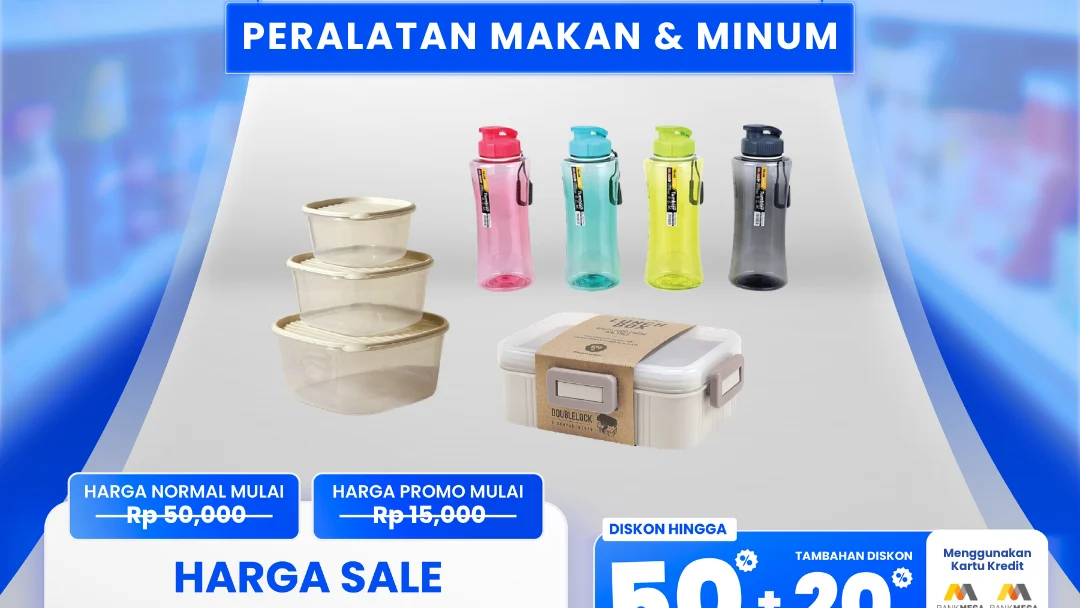
At the heart of Sunday’s promotional blitz were aggressive price cuts on essential home goods, spearheaded by significant markdowns on dining and beverage tableware sets. According to retail announcements released ahead of the event, specific tabletop items that typically retail at an original price of IDR 50,000 were heavily discounted to a promotional baseline of IDR 15,000.
Furthermore, shoppers utilizing preferred financial instruments—specifically credit cards issued by Bank Mega and Islamic financing options through Bank Mega Syariah—gained access to an additional pricing tier, dropping the cost of these tableware sets further to an exceptionally low IDR 12,000. Retail analysts noted that such aggressive entry-level pricing strategies are deliberately engineered to draw foot traffic into brick-and-mortar locations, where consumers are subsequently encouraged to explore broader store offerings.
Beyond individual home accessories, the overarching framework of the Transmart Full Day Sale centered on a cumulative discount structure reaching up to 50% plus an additional 20% off. This compounding discount mechanism applied to a diverse inventory spectrum, encompassing staple groceries (sembako), household cleaning products, home furnishings, cosmetics, and apparel items.
However, store management implemented specific terms and conditions to regulate the flow of discounted goods and prevent inventory hoarding. The promotional pricing explicitly excluded wholesale or bulk purchases, establishing a minimum transaction threshold of IDR 300,000 for customers wishing to qualify for the maximum tier of discounts and financial rebates.
Chronology and Implementation Timeline
The operational timeline of the September 20, 2026, Transmart Full Day Sale was meticulously structured to maximize consumer participation throughout the Sunday leisure window. Doors opened in accordance with standard operating schedules for each respective region, typically between 8:00 AM and 10:00 AM local time.
As the morning progressed into the early afternoon, foot traffic steadily increased across major metropolitan branches, particularly in urban centers such as Jakarta, Surabaya, Bandung, and Medan. By midday, retail floor data indicated a surge in purchases concentrated around daily necessities and household appliances.
To accommodate shoppers eager to capitalize on the additional Bank Mega and Bank Mega Syariah discounts without prior account status, Transmart deployed rapid-service infrastructure directly on-site. Specifically, instant credit card opening units were established at high-volume flagship locations, including Transmart Cibubur and Transmart Central Park. These pop-up registration desks allowed prospective cardholders to complete application procedures and secure instant approval mechanisms, enabling them to immediately leverage the supplementary 20% billing reduction on their same-day purchases before the event concluded at 10:00 PM.
Supporting Data and Contextual Background of the Retail Event
The recurring success of the Transmart Full Day Sale sits within a broader strategic framework designed by major Indonesian retail conglomerates to navigate shifting consumer purchasing behaviors. In recent years, periodic high-discount flash sales have emerged as a primary instrument for maintaining retail velocity, countering inflationary pressures, and sustaining consumer purchasing power.
Industry data from the Indonesian Retailers Association (Aprindo) indicates that promotional campaigns combining traditional physical retail experiences with exclusive banking partnerships consistently yield double-digit increases in daily transaction volumes compared to standard trading days. By partnering tightly with financial institutions like Bank Mega—both entities operating under the broader CT Corp umbrella—Transmart has effectively created a closed-loop ecosystem that incentivizes cashless transactions while offering tangible, deep-discount value to price-conscious households.
The inclusion of staple goods such as cooking oil, rice, sugar, and packaged foods within the 50+20% discount matrix reflects a deliberate alignment with household budgetary priorities. While luxury items and electronics traditionally anchor large-scale retail promotions, contemporary consumer demand heavily favors essential commodities. By blending everyday grocery savings with discretionary categories like cosmetics and fashion, Transmart successfully captured both essential and discretionary spending under a single promotional umbrella during the September 20 event.
Official Responses and Retailer Strategy
While direct commentary from corporate executives on the event day focused primarily on operational readiness and crowd management, previous statements from Transmart management underscore a long-term commitment to delivering high-value episodic shopping experiences. Retail strategists within the organization have consistently emphasized that the Full Day Sale model is not merely a clearance mechanism, but a vital brand loyalty driver.
"Our objective with the Full Day Sale series is to provide structural relief to household expenditures while simultaneously energizing the physical retail sector," noted a retail operations representative close to the planning of the national event. "By combining direct merchant markdowns with targeted banking synergies, we create a multi-layered value proposition that resonates strongly with families managing strict monthly budgets."
The rapid deployment of instant card-issuing desks at key branches further highlights a strategic emphasis on expanding the digital and cashless customer base. Financial analysts observing the retail sector point out that acquiring new credit cardholders through high-intent shopping environments—where immediate financial savings serve as a powerful conversion tool—represents a highly efficient customer acquisition cost model for retail-banking joint ventures.
Broader Economic Impact and Market Implications
The widespread execution of events such as the Transmart Full Day Sale carries notable implications for the broader Indonesian macroeconomy, particularly regarding retail sector performance, consumer confidence indices, and the velocity of money within domestic commerce.
From a macroeconomic perspective, periodic retail sales injections help mitigate the dampening effects of localized inflation on consumer demand. When households face rising costs for basic living requirements, discretionary spending frequently contracts. Campaigns that incorporate staples alongside lifestyle products allow consumers to reallocate their purchasing power more efficiently, thereby maintaining a baseline level of consumption that supports upstream suppliers, manufacturers, and logistics providers.
Furthermore, the emphasis on digital and card-based payment incentives during these sales actively supports government initiatives aimed at accelerating financial inclusion and expanding the penetration of electronic payment systems. By offering tangible financial rewards—such as an additional price reduction from IDR 15,000 down to IDR 12,000, or compounding percentage cuts—consumers are systematically guided toward structured, traceable banking products.
However, market analysts also caution that while such flash sales provide vital short-term spikes in turnover, sustained retail health ultimately depends on steady wage growth and stable supply chain costs. Retailers must carefully balance aggressive discounting strategies with sustainable margin management to ensure long-term operational viability.
Conclusion and Outlook for Future Retail Campaigns
As the doors closed at 10:00 PM on Sunday, September 20, 2026, initial internal assessments from Transmart indicated robust engagement across virtually all regional branches, with particularly high conversion rates recorded at locations featuring instant financial onboarding facilities. The seamless integration of physical retail merchandise with banking partnerships demonstrated the continued efficacy of the Full Day Sale format in capturing consumer interest in a competitive market environment.
With upcoming holiday seasons and end-of-year retail cycles on the horizon, industry observers anticipate that Transmart and competing retail networks will continue refining and expanding similar high-impact promotional models. For Indonesian consumers, these recurring events have solidified their position as predictable, high-value opportunities to secure essential goods and lifestyle products at significantly reduced costs, ensuring that the strategic blueprint of the Full Day Sale will remain a dominant fixture of the national retail landscape for the foreseeable future.

