
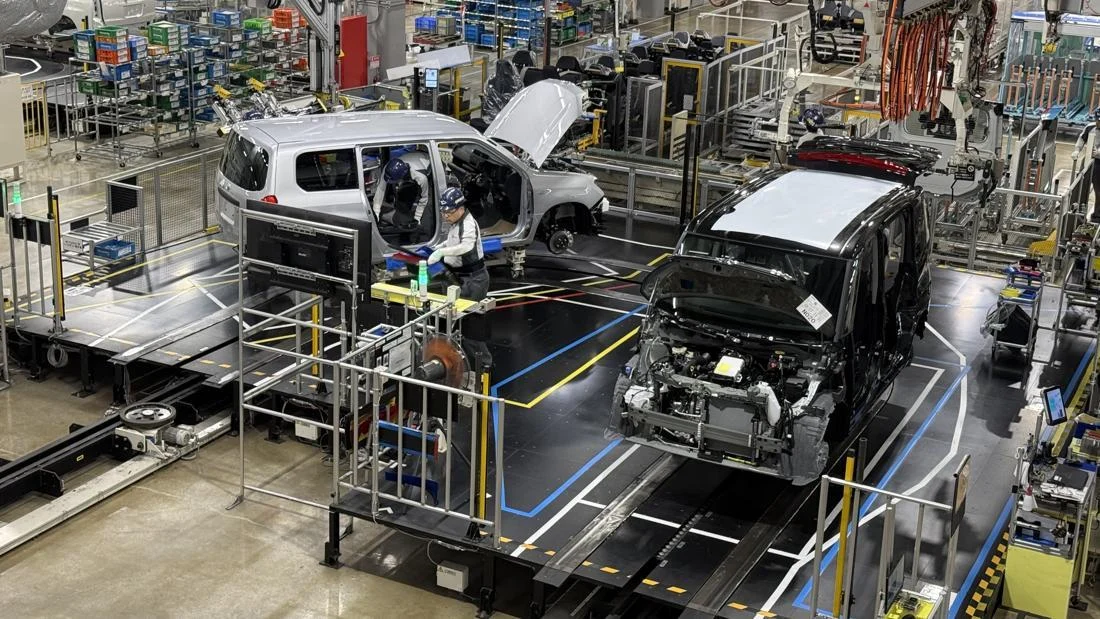
The global automotive landscape is undergoing one of the most radical transformations in its history, driven by the global imperative to decarbonize transport and embrace cutting-edge digital technologies. Against this backdrop of rapid industrial evolution, representatives from Indonesia’s national automotive sector and their long-standing Japanese industrial partners convened in Nagoya, Japan, for a high-level strategic dialogue. The gathering, structured as a Business Discussion Lunch on Saturday, September 19, served as a crucial platform for automotive stakeholders to voice operational concerns directly to senior officials from the Coordinating Ministry for Economic Affairs of the Republic of Indonesia.
The delegation from the Indonesian government was led by the Secretary of the Coordinating Ministry for Economic Affairs, Susiwijono Moegiarso, accompanied by the Deputy for Trade and Digital Economy Coordination, Ali Murtopo Simbolon. The talks brought to the forefront several critical friction points that have historically complicated the business environment for foreign investors and domestic players alike. Among the primary grievances raised by the Japanese and Indonesian business leaders were complex bureaucratic licensing procedures, restricted access to financing for small and medium-sized enterprises (SMEs) integrated into the automotive supply chain, and the nuanced challenges surrounding Domestic Component Level (TKDN – Tingkat Komponen Dalam Negeri) certification, particularly during the complex technological transition toward Electric Vehicles (EVs).
The dialogue in Nagoya underscored the intricate balancing act required by emerging economies like Indonesia, which must aggressively court foreign direct investment (FDI) while simultaneously fostering local industrial capabilities. By addressing these foundational bottlenecks head-on, the Indonesian government aims to reassure its primary automotive partner that the archipelago is not merely a lucrative consumer market, but a reliable, highly competitive manufacturing powerhouse destined to anchor regional and global supply chains.
Navigating Regulatory Roadblocks: Licensing, Finance, and TKDN Certification
During the intensive roundtable discussions, industry executives from major Japanese automotive corporations and their tier-one and tier-two local suppliers did not shy away from detailing the operational realities on the ground in Indonesia. While the Indonesian automotive market remains one of the most robust and promising in Southeast Asia, industrial players highlighted persistent structural hurdles that threaten to impede long-term efficiency and expansion.
Chief among these concerns is the labyrinth of bureaucratic licensing processes. Despite various deregulation packages introduced by Jakarta over the years, foreign and domestic investors continue to navigate overlapping jurisdictions between central and regional authorities, leading to project delays and elevated compliance costs. Streamlining these procedures remains a top priority for businesses aiming to scale operations swiftly in response to shifting global supply chain dynamics.
Furthermore, the discussion illuminated the vulnerability of small and medium-sized enterprises (SMEs) that form the bedrock of the automotive supply chain. While major assembly plants possess the capital to absorb market shocks and invest in retooling for electric vehicle production, local component suppliers often struggle with restricted access to affordable financing. Without targeted credit facilities and financial instruments tailored to industrial upgrading, these smaller enterprises risk falling behind as vehicle architectures become increasingly sophisticated.
Compounding these financial pressures is the complex framework governing Domestic Component Level (TKDN) certification. As Indonesia pushes to establish a domestic EV manufacturing ecosystem, the rules governing local content requirements must adapt to a landscape where critical components—such as lithium-ion battery cells, power control units, and advanced semiconductors—are still in the nascent stages of domestic production. Industry leaders stressed the need for transitional policies that enforce local value-addition without paralyzing production lines that temporarily rely on imported high-tech components.
Government Commitment and the Strategic Vision for Manufacturing
Responding directly to these industry concerns, Secretary Susiwijono Moegiarso adopted a receptive and proactive stance. He reaffirmed the administration’s unwavering commitment to refining existing policies and dismantling the structural barriers that hinder industrial growth and investment inflows.
"The government welcomes all of this input and reiterates its commitment to continuously refine policies through concrete measures, including addressing ongoing investment barriers," Susiwijono stated, as cited in an official release from the Coordinating Ministry for Economic Affairs.
Susiwijono emphasized that the series of high-level meetings and business engagements in Nagoya revealed a clear, overarching consensus: sustainable industrial competitiveness cannot be achieved through protectionism or capital alone. Instead, it is forged from a deliberate synergy between technological mastery, human resource development, and a resilient, deeply integrated supply chain ecosystem. These three pillars form the conceptual foundation upon which Indonesia is currently building its manufacturing renaissance.
Moreover, the Secretary underscored that the Nagoya dialogue cements Indonesia’s status as a premier strategic partner for Japan, a relationship that has spanned decades and weathered numerous global economic cycles. Rather than viewing Indonesia solely as a destination for finished goods, the government’s long-term vision positions the archipelago as an indispensable node in the global value chain. The ultimate objective is to transform Indonesia into a primary production and export base capable of supplying vehicles and components to more than 100 international destination markets.
"Through open dialogues such as this, the government is optimistic that the Indonesia-Japan partnership will continue to grow and provide tangible benefits for the economies of both countries moving forward," Susiwijono added.
Expanding Market Access Through International Trade Architecture
To facilitate this export-oriented manufacturing strategy, the Indonesian government is actively expanding its global footprint through a comprehensive network of international trade agreements. During the meetings, officials detailed the country’s aggressive trade diplomacy, noting that Indonesia has successfully signed 25 international trade agreements, encompassing both traditional Free Trade Agreements (FTAs) and comprehensive Comprehensive Economic Partnership Agreements (CEPA). The government has prioritized finalizing the ratification processes for these accords to accelerate their implementation and secure preferential market access for Indonesian-made industrial goods.
A cornerstone of this trade strategy is the impending Indonesia-European Union Comprehensive Economic Partnership Agreement (IEU-CEPA). The ratification process for the IEU-CEPA is officially scheduled to commence in November 2026, with a targeted implementation date set for January 2027. This ambitious timeline is a critical component of Jakarta’s macroeconomic strategy designed to insulate the national economy and maintain robust growth momentum.
Global economic forecasters project that the international economic outlook for 2027 will hover around a modest growth rate of 3.2 to 3.3 percent. By proactively dismantling tariff and non-tariff barriers with major economic blocs like the European Union, Indonesia aims to capture a larger share of international trade, thereby buffering its domestic industrial sector against external shocks and geopolitical uncertainties.
Balancing Domestic Resilience with Next-Generation Technologies
While international trade agreements provide the external demand necessary to sustain large-scale manufacturing, domestic economic stability remains the primary engine of Indonesia’s national growth. The domestic economy continues to be heavily anchored by household consumption and domestic investment. To protect this foundational demand against inflationary pressures and global economic fluctuations, the Indonesian government deploys a dynamic mix of targeted social assistance programs, energy and commodity subsidies, and strategic fiscal incentives designed to preserve consumer purchasing power.
Simultaneously, Jakarta is actively paving the way for new growth sectors that will define the future of global industry, with a special emphasis on artificial intelligence (AI) and semiconductor manufacturing. The modern automotive industry has evolved far beyond mechanical engineering; contemporary vehicles are, in essence, computers on wheels, requiring vast quantities of advanced semiconductors, sensors, and machine-learning algorithms to operate safely and efficiently.
Recognizing this technological paradigm shift, Indonesia has initiated aggressive international collaborations to integrate itself into the global semiconductor and tech supply chains. Earlier in the year, Indonesia forged a strategic partnership with global semiconductor design giant ARM. This foundational move was swiftly followed by Indonesia’s official accession as a member of the World Advanced IC Industry Organization (WAICO). Furthermore, the government is currently engaged in advanced exploratory talks and formal communications with PAX Silica to attract semiconductor fabrication and design investments to the country.
Implications for the Future of Indonesia’s Industrial Landscape
The convergence of traditional automotive manufacturing with next-generation digital technologies carries profound implications for the Indonesian economy. By participating in global forums and securing partnerships in AI and microelectronics, Indonesia is positioning itself to capture higher-value segments of the industrial supply chain.
For the automotive sector specifically, these technological integration efforts are expected to dramatically boost overall economic productivity. As electric vehicles become the dominant mode of transport, the demand for locally produced semiconductors, intelligent control systems, and high-capacity batteries will skyrocket. If the Indonesian government successfully resolves the regulatory, financial, and certification bottlenecks highlighted by Japanese investors in Nagoya, the nation’s automotive industry will be uniquely equipped to lead the Southeast Asian region into the green and digital era.
Ultimately, the dialogue in Nagoya signals a mature, pragmatic approach to industrial policy. By listening closely to the operational pain points of its most critical international partners and coupling this feedback with aggressive trade expansion and forward-looking technological investments, Indonesia is laying a resilient foundation for sustainable, high-value economic growth well into the next decade.

