
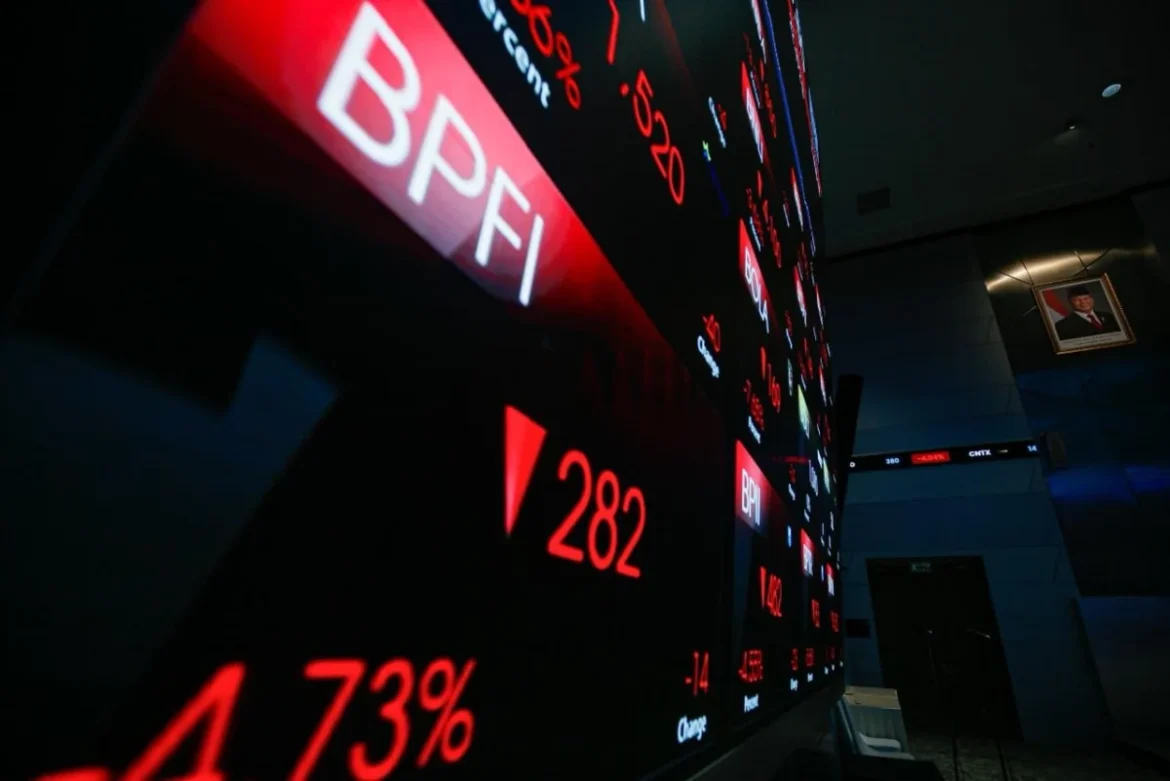
The movement of the Jakarta Composite Index (Indeks Harga Saham Gabungan or IHSG) is facing a delicate and highly scrutinized phase as technical indicators suggest the index remains vulnerable to downward pressure. Market analysts point to specific retracement levels that traders and investors must closely monitor, even as selective blue-chip and high-capitalization equities offer potential tactical entry points. Navigating the current domestic macroeconomic landscape alongside broader global financial market dynamics requires a comprehensive understanding of technical thresholds, sector rotations, and risk management strategies.
Technical Outlook and Current Market Positioning
According to the latest market research released by MNC Sekuritas on Friday, September 18, 2026, the short-term trajectory of the IHSG suggests that the index is currently moving within the framework of wave iv of wave (c) based on a localized Elliott Wave count. This structural positioning implies that the index remains susceptible to a deeper retracement phase before establishing a solid foundation for a sustained bullish reversal.
Analysts project that the index is at risk of testing lower support boundaries within the 6,290 to 6,370 range. However, a crucial caveat remains embedded within this technical assessment. Market strategists emphasize that as long as the IHSG can maintain its position and sustain closes above the critical psychological threshold of 6,370, there remains a viable pathway for the index to mount a recovery toward the 6,541 to 6,581 resistance target zone.
This technical outlook follows a modest relief rally observed during the preceding trading session. At the close of yesterday’s market operations, the IHSG managed to tick upward by 0,4 percent, settling at the 6,462 level. This upward movement was accompanied by notable volume accumulation from buyers seeking value in oversold counters. Despite this positive momentum, technical analysts note a lingering underlying weakness: the index has consistently failed to break through and sustain itself above its 20-day Moving Average (MA20), a widely watched indicator that typically signals a definitive shift from a short-term bearish bias to a bullish trend.
Detailed Support and Resistance Levels for Traders
For institutional investors, day traders, and retail market participants alike, mapping out strict risk parameters is essential during periods of elevated volatility. The latest market data outlines clear technical boundaries that dictate trading strategies for the upcoming sessions.
On the downside, the primary support level is identified at 6,279, with a secondary and more robust cushion located at 6,201. Should selling pressure intensify due to external shocks or profit-taking activities across heavyweight sectors, a breach of these support zones could accelerate the downward correction toward the anticipated 6,290–6,370 testing area.
Conversely, overcoming immediate supply barriers remains a prerequisite for any aggressive bullish expansion. The primary resistance level is pegged at 6,585, followed by a stiffer overhead barrier at 6,633. Successfully breaching these levels would invalidate the current cautious technical stance and open the door for a retest of the upper boundaries of the medium-term trading channel.
Recommended Equity Picks: BMRI and BRPT in Focus
Amidst the cautious broader market sentiment, financial institutions and technical analysts continue to scan the market for individual equities displaying relative strength or favorable risk-reward setups. For the trading session of Friday, September 18, 2026, market participants have been advised to closely monitor specific stock picks, notably PT Bank Mandiri (Persero) Tbk (BMRI) and PT Barito Pacific Tbk (BRPT).
PT Bank Mandiri (Persero) Tbk (BMRI), as one of the country’s premier state-owned banking giants, often serves as a primary barometer for foreign fund flows and institutional confidence in the Indonesian financial sector. Its inclusion in watchlists stems from its solid fundamental backing, robust loan growth prospects, and liquidity profile, which typically attract defensive capital during periods of macroeconomic uncertainty.
On the other hand, PT Barito Pacific Tbk (BRPT) represents a major player in the energy, petrochemical, and renewable infrastructure sectors. The stock often experiences heightened trading interest due to its exposure to commodity price cycles and green energy transitions, making it a favored vehicle for tactical traders looking to capitalize on sectoral momentum shifts.
Broader Macroeconomic Context and Market Sentiment
The current behavior of the IHSG cannot be isolated from the broader macroeconomic environment that characterizes the Indonesian economy in late 2026. Domestic financial markets continue to navigate a complex interplay of domestic fiscal policies, corporate earnings reports, and monetary policy adjustments by both Bank Indonesia (BI) and major global central banks, particularly the United States Federal Reserve.
Inflationary pressures, currency fluctuations involving the Indonesian rupiah against the US dollar, and commodity price volatility—particularly concerning thermal coal, crude palm oil (CPO), and metals—remain critical variables influencing investor sentiment. Foreign capital flows, which traditionally dictate the direction of large-cap banking and mining stocks on the Indonesia Stock Exchange (IDX), have experienced intermittent shifts as global investors reallocate portfolios based on shifting global yield curves and geopolitical developments.
During phases where the main index undergoes consolidation or corrective testing, market participants frequently rotate capital away from lagging sectors and into defensive assets or companies with strong fundamental earnings visibility. This dynamic explains why selective stock picking, rather than broad-based index buying, remains the preferred strategy for navigating the market.
Implications for Retail and Institutional Investors
The warning from market analysts regarding the IHSG’s vulnerability to test lower levels carries distinct strategic implications for different classes of market participants.
For retail investors, the current environment underscores the importance of disciplined capital allocation and the avoidance of high leverage. Chasing short-term rallies without confirming technical breakouts—such as crossing above the MA20 line—can expose portfolios to sudden downward reversals. Implementing strict stop-loss orders below key support levels such as 6,279 is vital to preserving capital in the event of an extended market correction.
For institutional funds and long-term asset managers, periods of index consolidation often present accumulation opportunities. Quality blue-chip stocks experiencing temporary pullbacks due to broader market sentiment rather than deteriorating fundamentals are frequently evaluated for phased accumulation. The focus remains on companies boasting strong balance sheets, consistent dividend histories, and resilience against macroeconomic headwinds.
Conclusion and Future Outlook
As the Indonesian capital market progresses through the final trading sessions of the week, the IHSG stands at a technical crossroads. While the immediate risk profile points toward a potential retest of the 6,290 to 6,370 support band, the underlying ability of the index to defend the critical 6,370 threshold will dictate whether a medium-term recovery toward 6,581 remains attainable.
Traders and investors are advised to maintain a balanced approach, combining rigorous technical analysis with fundamental scrutiny of recommended stocks such as BMRI and BRPT. As market dynamics continue to evolve in response to domestic and international economic catalysts, staying informed and adaptable will remain the cornerstone of successful investing on the Indonesia Stock Exchange.
