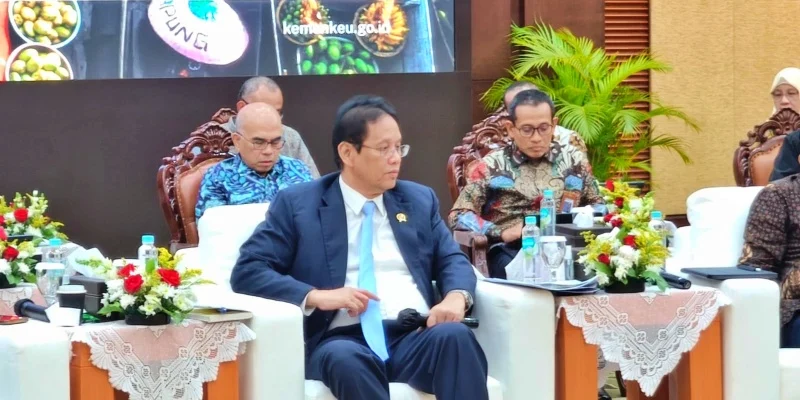
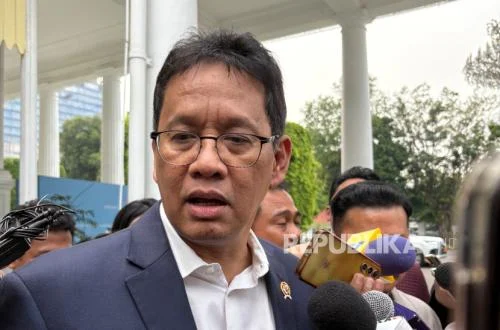
Minister of Finance Purbaya Yudhi Sadewa has maintained a firm stance, declining to disclose the precise quantum of the additional budget earmarked for Regional Transfers (TKD) within the 2026 State Budget (APBN). The decision hinges on securing requisite approvals from President Prabowo Subianto and undergoing meticulous coordination with the Ministry of Home Affairs (Kemendagri), underscoring a cautious approach to fiscal management and regional funding allocations.
Speaking at the APBN KiTa press conference held at the Ministry of Finance offices on Tuesday, July 21, 2026, Minister Purbaya emphasized the critical need for inter-agency consultation and presidential endorsement before any figures could be made public. "I must obtain permission from the President and also engage in communication with Kemendagri," he stated, highlighting the multi-layered approval process inherent in Indonesia’s fiscal planning. This deferral reflects a broader commitment to prudent budgetary practices, particularly concerning the allocation of funds to sub-national governments, which are crucial for the delivery of public services and regional development across the vast archipelago.
The Context of Regional Transfers (TKD) in Indonesia
Regional Transfers (TKD), known in Indonesia as Transfer ke Daerah, represent a cornerstone of the nation’s fiscal decentralization policy. Initiated in the early 2000s, this policy aims to empower regional governments to manage their own finances and development agendas, bringing governance closer to the people and allowing for policies tailored to local needs. TKD comprises various components, including the General Allocation Fund (DAU), Special Allocation Fund (DAK), Revenue Sharing Fund (DBH), Village Fund (Dana Desa), Incentive Fund for Regions (DID), and Special Autonomy Funds. These transfers are designed to ensure equitable distribution of national resources, support regional infrastructure development, enhance public services in sectors like education and health, and reduce inter-regional disparities. The APBN, Indonesia’s annual state budget, serves as the primary mechanism for allocating these funds, making the planning and execution of TKD a critical determinant of national development outcomes.
The continuous evolution of TKD policy reflects the government’s ongoing efforts to refine the balance between central fiscal control and regional autonomy. Over the years, adjustments have been made to improve the effectiveness, efficiency, and accountability of these transfers, ensuring they genuinely contribute to regional progress rather than leading to inefficiencies or mismanagement. The 2026 budget planning process, therefore, is not merely an arithmetic exercise but a strategic endeavor to optimize fiscal decentralization amidst evolving national priorities and economic conditions.
Uncertainty Over Additional Allocations for 2026
The current non-disclosure of additional TKD funds for 2026 comes amidst a backdrop of fluctuating economic indicators and a determined push by the government to enhance fiscal discipline. While the principle of providing additional funds to regions facing genuine financial constraints is acknowledged, the Ministry of Finance is proceeding with extreme caution. The exact amount remains shrouded in an administrative process that necessitates comprehensive review and high-level political endorsement.
This careful approach is particularly salient given the significant role TKD plays in the national economy. A substantial portion of the national budget is channeled through these transfers, directly impacting regional governments’ capacity to fund routine operations, implement development projects, and respond to local emergencies. The 2026 APBN is being formulated during a period where global economic uncertainties persist, alongside domestic aspirations for sustained growth and improved welfare. Therefore, any decision regarding additional TKD allocations must be meticulously weighed against the broader macroeconomic framework and the government’s fiscal targets, including maintaining a healthy budget deficit and debt-to-GDP ratio.
Minister Purbaya’s Stance: Prudence and Verification
Minister Purbaya’s emphasis on thorough verification before disbursing additional funds stems from a clear recognition of past challenges. He candidly admitted to concerns about funds allocated to regions remaining unutilized in bank accounts, rather than being deployed for their intended purposes. "We are indeed checking which regions truly lack funds. We observe how their money is held in banks, whether it’s being used or not," Purbaya elaborated, highlighting the proactive measures being undertaken by the Ministry of Finance. This meticulous screening process is a direct response to historical instances where regional governments, despite claiming budget shortfalls, allowed significant portions of central transfers to accumulate in their bank accounts. Such occurrences not only represent an inefficient use of public funds but also undermine the very objective of fiscal decentralization, which is to stimulate regional development and improve public services.
The verification process involves a comprehensive analysis of regional financial statements, cash flow positions, and the actual implementation rates of projects funded by previous TKD allocations. This granular examination is crucial to identify genuine fiscal distress from mere administrative delays or capacity issues. The Minister’s remarks underscore a shift towards performance-based allocation, where the ability of regional governments to absorb and effectively utilize funds becomes a key criterion for receiving additional support. This approach seeks to foster greater accountability and ensure that every rupiah transferred contributes directly to tangible outcomes for the local populace.
Addressing the ‘Idle Funds’ Conundrum

The issue of ‘idle funds’ or unutilized budget allocations at the regional level has been a recurring challenge in Indonesia’s fiscal decentralization journey. These funds, often sitting in regional bank accounts, represent an opportunity cost for development and public service delivery. While some accumulation might be due to prudent cash management or timing differences in project cycles, excessive and prolonged dormancy signals inefficiencies or capacity constraints within regional administrations.
The Ministry of Finance’s proactive verification seeks to address this conundrum head-on. By scrutinizing regional financial data, the central government aims to differentiate between genuine cash flow limitations and administrative bottlenecks that lead to funds remaining unspent. This includes analyzing the speed of budget execution, procurement processes, and the alignment of regional development plans with national priorities. The goal is not merely to prevent funds from sitting idle but to ensure that the allocated resources translate into concrete benefits for the community. The Minister’s stance reflects a determination to learn from past experiences and implement stronger safeguards to optimize the impact of regional transfers.
Inter-Ministerial Coordination: A Key Requirement
Beyond internal verification, Minister Purbaya underscored the indispensable role of inter-ministerial coordination, particularly with the Ministry of Home Affairs (Kemendagri). "Communication with Kemendagri is crucial to ascertain if what we propose is accurate. So, I cannot disclose it now," he affirmed. This collaborative approach is vital because Kemendagri possesses in-depth knowledge of regional governance structures, administrative capacities, and specific needs of local governments. Their insights are invaluable in validating the Ministry of Finance’s assessments of regional financial health and ensuring that any additional budget allocation aligns with actual on-the-ground requirements.
Kemendagri’s role extends to monitoring regional government performance, providing guidance on administrative matters, and facilitating communication between the central and regional levels. Their involvement in the TKD allocation process ensures a holistic perspective, integrating financial prudence with administrative feasibility and local development priorities. This coordination mechanism is designed to create a more robust and responsive system for regional financial support, minimizing the risk of misallocation or underutilization of funds. It also serves as a critical feedback loop, allowing the central government to understand the unique challenges faced by different regions and tailor support accordingly.
Deputy Minister Suahasil Nazara on Selective Budgeting
Earlier statements from Deputy Minister of Finance Suahasil Nazara provided additional context to the government’s strategy for TKD. He indicated that the government plans to increase the TKD budget selectively, prioritizing urgent needs such as disaster management. This selective approach aims to maintain fiscal space while simultaneously enhancing the efficiency of regional budget management. The emphasis on "urgent needs" reflects a proactive stance towards unforeseen events and critical public welfare requirements, ensuring that regions have the necessary resources to respond effectively to crises.
Disaster management, in particular, often requires rapid and substantial funding, which regional budgets may not always be equipped to provide on their own. By earmarking additional TKD for such purposes, the central government aims to strengthen national resilience and minimize the socio-economic impact of natural calamities. This strategic allocation also underscores a commitment to efficient resource utilization, ensuring that funds are directed to areas where they can yield the most immediate and critical benefits. The Deputy Minister’s remarks signal a move towards a more agile and needs-based approach to regional fiscal support, balancing broad-based transfers with targeted interventions.
Analyzing the TKD Realization and Ceiling Adjustments
The APBN KiTa report offered key insights into the actual realization and planned ceiling for TKD. As of the first semester of 2026 (June 30), the realization of transfers to regions stood at Rp357.4 trillion. This figure represents an 11.2 percent year-on-year (yoy) decrease compared to the same period in the previous year, which saw a realization of Rp402.5 trillion. This decline in actual disbursements could be attributed to various factors, including a more cautious expenditure pace by the central government, tighter fiscal conditions, or potentially slower absorption rates at the regional level.
Furthermore, the overall TKD ceiling in the 2026 APBN has been set at Rp693 trillion, a notable reduction from the Rp919.9 trillion allocated in the 2025 APBN. This significant contraction in the projected TKD budget ceiling indicates a deliberate policy choice by the central government to exercise greater fiscal prudence. Such a reduction could stem from a reassessment of revenue projections, a strategic reprioritization of national spending, or an attempt to consolidate fiscal resources in anticipation of future economic challenges.
The decrease in both the realized transfers and the budget ceiling presents a complex picture for regional governments. While a lower ceiling necessitates more disciplined and efficient budget planning at the local level, a reduced realization could impact ongoing projects and public service delivery. The government’s decision to potentially add additional funds, even after a general reduction, highlights a nuanced strategy: a base budget that reflects fiscal prudence, coupled with targeted, verified increases for regions genuinely in need or facing specific urgent challenges. This approach aims to strike a balance between maintaining overall fiscal health and providing essential support where it is most critically required.
Fiscal Decentralization in Indonesia: A Background

Indonesia’s journey towards fiscal decentralization began in earnest with the implementation of Laws No. 22/1999 and No. 25/1999 (later revised by Laws No. 32/2004 and No. 33/2004, and more recently by Law No. 23/2014 on Regional Government and Law No. 1/2022 on Financial Relations between the Central Government and Regional Governments). These landmark legislations shifted significant administrative and financial responsibilities from the central government to provincial and district/city governments. The primary objectives were to enhance democratic participation, improve public service delivery, foster regional economic development, and reduce regional disparities.
TKD plays a pivotal role in operationalizing this decentralization. The DAU (General Allocation Fund) provides a block grant to regions, ensuring they can fund basic public services. The DAK (Special Allocation Fund) is a categorical grant for specific purposes, often tied to national priorities like health, education, or infrastructure. DBH (Revenue Sharing Fund) allows regions to share in the revenues generated from natural resources within their territories. Dana Desa (Village Fund) directly empowers villages to plan and execute their own development programs. Over two decades, fiscal decentralization has transformed regional governance, empowering local leaders and communities but also presenting challenges related to administrative capacity, accountability, and equitable distribution of resources. The current adjustments to TKD reflect the ongoing refinement of this crucial policy framework.
Implications for Regional Development and Public Services
The uncertainty surrounding additional TKD funds and the overall reduction in the 2026 ceiling carry significant implications for regional development and public service delivery. Regional governments rely heavily on these transfers to fund critical sectors such as education, healthcare, infrastructure, and social welfare programs. A reduced or delayed inflow of funds could necessitate a re-prioritization of regional budgets, potentially impacting the commencement or completion of planned projects. For regions with limited local revenue-generating capacity, the impact could be particularly severe, potentially slowing down economic growth and widening development gaps.
For instance, delays in infrastructure projects (roads, bridges, irrigation systems) could hinder local economic activity and connectivity. Reductions in health or education budgets might affect the quality and accessibility of essential services, especially in remote or underserved areas. The government’s selective approach, however, aims to mitigate these negative impacts by ensuring that urgent needs, like disaster response or critical social safety nets, remain adequately funded. This requires regional governments to enhance their strategic planning and fiscal management capabilities, focusing on efficiency and prioritizing high-impact initiatives.
Broader Economic and Governance Impacts
The Ministry of Finance’s cautious approach to TKD allocation extends beyond immediate regional impacts, influencing broader economic and governance landscapes. From an economic perspective, the meticulous verification process and selective allocation strategy are designed to enhance the overall efficiency of public spending. By preventing funds from sitting idle and ensuring they are directed to areas of genuine need, the government aims to maximize the multiplier effect of fiscal outlays, contributing to national economic stability and growth. A more efficient TKD system can stimulate local economies, create jobs, and improve living standards, thereby supporting the achievement of national development goals.
In terms of governance, this policy reinforces the principles of accountability and transparency. The central government’s insistence on verification and inter-ministerial coordination promotes better fiscal management at both national and sub-national levels. It encourages regional governments to improve their financial reporting, planning, and absorption capacities. This enhanced oversight and collaboration are vital for building trust between different levels of government and ensuring that public resources are utilized effectively and responsibly. The lessons learned from past experiences of idle funds are being actively integrated into policy design, leading to a more robust and responsive system of fiscal decentralization.
Looking Ahead: The Path to Finalizing APBN 2026
The current discussions surrounding the 2026 APBN and TKD allocations are part of a dynamic and ongoing process. Following the Minister of Finance’s statements, the next critical steps will involve intensive consultations between the Ministry of Finance and the Ministry of Home Affairs. This coordination will focus on validating regional needs, assessing the capacity of local governments to absorb and utilize additional funds, and ensuring alignment with national development priorities. Subsequently, the proposed additional budget for TKD will require final approval from President Prabowo Subianto, signifying the political endorsement necessary for its implementation.
The finalization of the 2026 APBN, including the definitive figures for TKD, will likely occur later in the year, typically towards the end of the parliamentary session. Until then, stakeholders at both central and regional levels will be closely monitoring developments, preparing for the eventual budget parameters. The government’s commitment to fiscal prudence, coupled with a targeted approach to supporting regional development, indicates a strategic balancing act aimed at fostering sustainable growth and equitable progress across Indonesia while maintaining a strong fiscal posture in an evolving global economic environment.