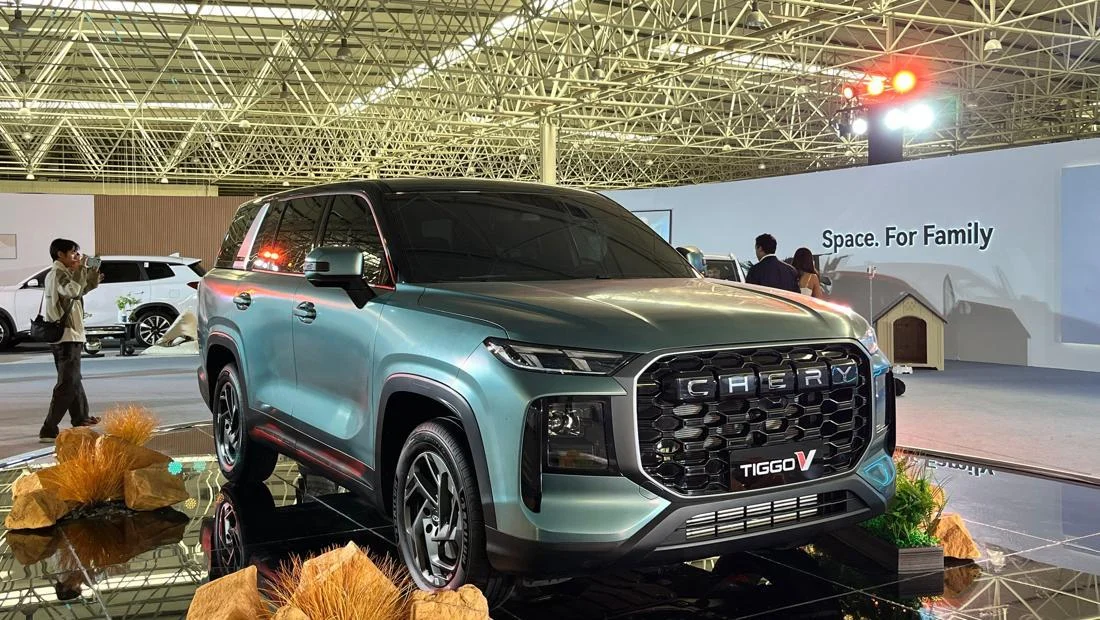
Chery International has officially announced a comprehensive long-term strategic roadmap for Indonesia, signaling a shift from a purely sales-oriented presence to establishing the nation as a primary global production and export hub. Speaking at the 2024 Chery International Business Summit held in Wuhu, China, Zhang Guibing, President of Chery International, articulated that Indonesia possesses the fundamental economic and demographic components necessary to rival, and in some aspects surpass, China’s current manufacturing advantages. This strategic pivot is driven by Indonesia’s massive population, a burgeoning middle class, and a highly competitive labor market that positions the country as a cornerstone for Chery’s expansion into the Association of Southeast Asian Nations (ASEAN) and other right-hand drive markets.
According to Zhang, the decision to deepen investment in Indonesia is rooted in a comparative analysis of global manufacturing landscapes. While China has long been the world’s factory, rising operational costs and a maturing economy have led global manufacturers to seek alternative bases. Zhang noted that Indonesia’s economic stability and demographic dividend provide a unique opportunity for Chery to scale its operations efficiently. The President of Chery International emphasized that Indonesia’s production costs are now increasingly favorable compared to contemporary China, offering a strategic edge in the highly competitive global automotive sector.
Strategic Shift Toward Localized Manufacturing and Export
Chery’s current operations in Indonesia utilize a Completely Knocked Down (CKD) assembly model, with production currently facilitated through a partnership with PT Handal Indonesia Motor (HIM). However, the company has expressed a clear intention to move beyond third-party assembly toward a more robust, independent manufacturing infrastructure. Zhang Guibing revealed that while the current assembly partnership has been instrumental in Chery’s re-entry into the Indonesian market, the existing capacity of approximately 4,000 units per year is becoming a bottleneck for the brand’s rapid growth.
The company is currently in high-level discussions with the Indonesian government and local partners to explore avenues for significantly expanding production capacity. The goal is to transform Indonesia into a central hub that not only serves the domestic market—which has shown a strong appetite for Chery’s SUV lineup—but also serves as a launching pad for exports to neighboring ASEAN countries. This move aligns with Indonesia’s national ambition to become a regional automotive powerhouse, supported by government incentives for manufacturers who achieve high levels of Domestic Component Level (TKDN).
Demographic Dividends and Market Potential
Zeng Shuo, President Director of PT Chery Sales Indonesia (CSI), echoed Zhang’s optimism, highlighting the demographic profile of the Indonesian consumer base as a primary driver for investment. Indonesia currently stands as the fourth most populous nation in the world, with a median age that trends significantly younger than many Western and East Asian counterparts. Zeng pointed out that this "youth bulge" represents the future of the automotive industry, as first-time buyers and young families prioritize modern technology, safety, and sustainable mobility—areas where Chery has focused its research and development.
Market data supports this outlook. The Indonesian automotive industry has seen a steady recovery post-pandemic, with the Association of Indonesian Automotive Industries (GAIKINDO) reporting consistent demand for Sport Utility Vehicles (SUVs) and a rapidly growing interest in New Energy Vehicles (NEVs). By positioning itself as a local manufacturer, Chery aims to tap into this sentiment, fostering brand loyalty among younger demographics who value local economic contribution and technological innovation.
Chronology of Chery’s Indonesian Expansion
Chery’s journey in Indonesia has been one of strategic persistence. The brand initially entered the market in the early 2000s but faced challenges that led to a temporary withdrawal. The current "re-entry" phase, which began in 2022, has been characterized by a much more sophisticated approach to product quality and after-sales service.
- 2022: Chery officially announced its return to Indonesia at the Indonesia International Auto Show (GIIAS), introducing the Tiggo 7 Pro and Tiggo 8 Pro.
- Early 2023: The company launched the Omoda 5, a global crossover that quickly became a flagship model, significantly boosting the brand’s visibility and sales volume.
- Late 2023: Chery expanded its footprint by utilizing the Inchcape manufacturing facility in Wanaherang, Bogor, West Java, further diversifying its production capabilities.
- 2024: The introduction of the Omoda E5, Chery’s first pure electric vehicle for the Indonesian market, marked the beginning of its transition toward electrification. The 2024 Wuhu Summit served as the platform to announce the transition from market participant to regional production leader.
Infrastructure and Partnership Landscape
Currently, Chery’s manufacturing presence in Indonesia is divided between two key locations. The primary assembly takes place at the PT Handal Indonesia Motor facility in Bekasi, West Java. This facility has been the birthplace of the Tiggo series and the internal combustion engine (ICE) versions of the Omoda 5. Additionally, Chery has leveraged the Inchcape facility in Wanaherang to streamline logistics and distribution.
Despite these partnerships, the leadership at Chery International believes that to meet the projected demand of the next decade, a dedicated, high-capacity factory may be necessary. The Indonesian government, through the Ministry of Industry, has been actively encouraging such investments, offering tax holidays and import duty exemptions for manufacturers who commit to localized EV production and battery supply chain integration.
The Role of Nickel and the EV Transition
A critical factor in Chery’s long-term strategy for Indonesia is the country’s dominance in global nickel reserves. As the world shifts toward electric mobility, Indonesia’s "downstreaming" policy—which bans the export of raw nickel ore in favor of domestic processing—has made the country an indispensable part of the global EV supply chain.
Chery’s Omoda E5 has already seen significant interest in the Indonesian market, benefiting from government-backed VAT incentives for EVs that meet local content requirements. By establishing a production base in Indonesia, Chery can integrate more closely with the local battery ecosystem, potentially lowering the cost of its New Energy Vehicles and making them more competitive for export to markets like Thailand, Malaysia, and Australia.
Economic and Geopolitical Analysis
The move to make Indonesia a production hub carries significant economic implications. For Indonesia, an influx of capital and technology from a major Chinese automaker like Chery contributes to the "Golden Indonesia 2045" vision, which seeks to transform the country into one of the world’s top five economies. The creation of a localized supply chain generates thousands of jobs, not only in direct assembly but also in the secondary and tertiary sectors, such as parts manufacturing, logistics, and retail.
From a geopolitical perspective, Chery’s investment reflects a broader trend of Chinese companies diversifying their manufacturing footprints to mitigate trade tensions and logistical vulnerabilities. By "localizing" in Indonesia, Chery can navigate ASEAN’s Free Trade Agreements (FTAs) more effectively, allowing for tariff-free exports within the region. This strategy is particularly vital as other Chinese competitors, such as BYD and Great Wall Motor (GWM), also increase their presence in Southeast Asia.
Stakeholder Reactions and Industry Impact
Industry analysts suggest that Chery’s aggressive localization strategy will likely force other established players in the Indonesian market—traditionally dominated by Japanese brands—to accelerate their own technological offerings and localized production of EVs. The Indonesian Ministry of Industry has previously lauded Chery’s commitment, noting that the brand’s presence contributes to the diversification of the national automotive industry.
Local component manufacturers have also expressed optimism. An increase in Chery’s production volume translates to higher demand for locally sourced glass, tires, interiors, and electronic components. This synergy is expected to strengthen the Indonesian automotive ecosystem, making it more resilient to global supply chain shocks.
Future Outlook
Looking ahead, Chery’s roadmap for Indonesia is clear: increase capacity, localize the supply chain, and dominate the export market. The company’s focus on the youth demographic and the transition to electric vehicles positions it at the forefront of the industry’s evolution. As Zhang Guibing noted in Wuhu, the advantages of operating in Indonesia are no longer just about market size—they are about the fundamental efficiency of production in a country that is rapidly becoming the new heartbeat of Asian manufacturing.
With the 2024 International Business Summit setting the stage, the next few years will be pivotal for Chery as it navigates the complexities of scaling up in a foreign market. However, with strong government backing, a strategic location, and a product lineup that resonates with the modern consumer, Chery is well-positioned to turn its Indonesian vision into a cornerstone of its global success. The transition from CKD assembly to a full-scale manufacturing hub will not only redefine Chery’s future but will also serve as a benchmark for the next generation of global automotive investment in Southeast Asia.