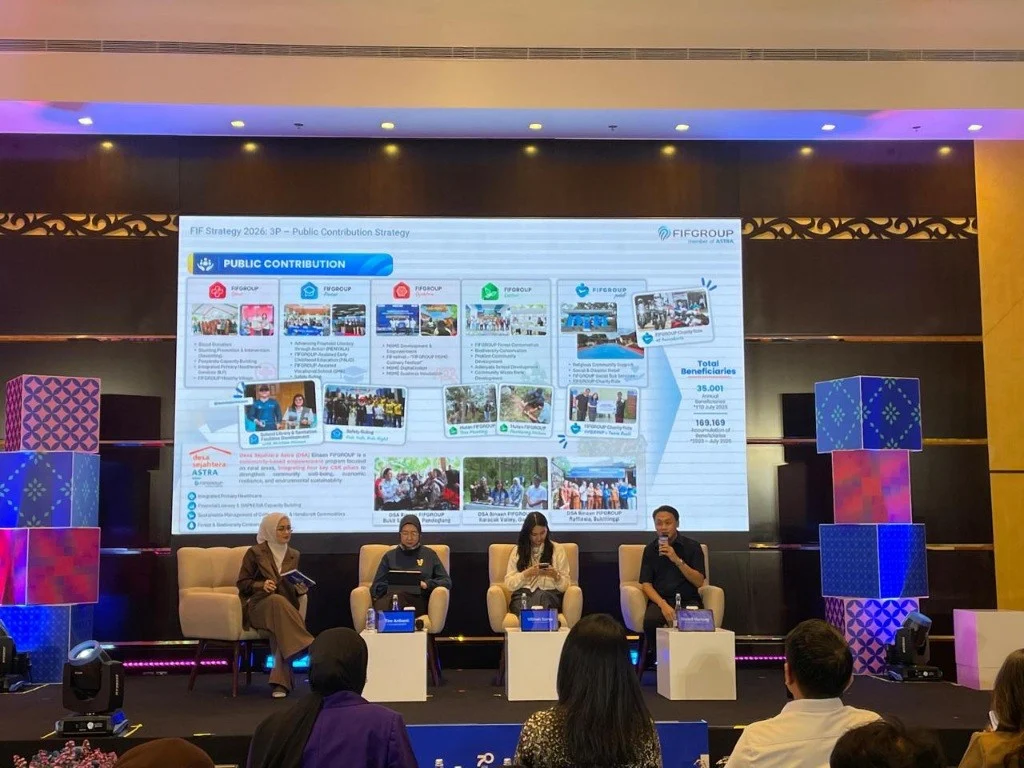
PT Federal International Finance (FIFGROUP), a prominent subsidiary of PT Astra International Tbk specializing in multi-finance services, has officially outlined its comprehensive business strategy to adapt to evolving consumer behaviors, marked prominently by the growing purchasing power of Generation Z and the gradual entry of Generation Alpha into the consumer market. Speaking at the recent Astra Media Day, company leadership detailed a dual approach centered on fortifying its core two-wheeler financing ecosystem while aggressively expanding and diversifying its financial portfolio through strategic digital integrations.
The financial landscape in Indonesia, much like the rest of the Southeast Asian region, is undergoing a profound demographic transition. As older generations mature and shift their financial priorities, younger cohorts with distinct digital preferences, lifestyle requirements, and spending habits are stepping into the economic spotlight. FIFGROUP, recognizing this tectonic shift, is pivoting its operational framework to ensure long-term sustainability, brand loyalty, and market relevance in an increasingly competitive digital-first economy.
Core Business Reinforcement: The Foundation of Two-Wheeler Financing
Despite the rapid proliferation of alternative financial products and diversified digital lending platforms, FIFGROUP remains heavily anchored in its traditional stronghold. According to Director Daniel Hartono, approximately 70 percent of the company’s total financing portfolio continues to be driven by new motorcycle financing. This core business segment has historically served as the bedrock of FIFGROUP’s financial stability and market penetration across the archipelago.
To maintain its competitive edge, the company is doubling down on strengthening its comprehensive two-wheeler ecosystem, with a specific and concentrated emphasis on Honda motorcycle financing. The strategic rationale behind this move lies in the enduring popularity and robust supply chain network associated with Honda motorcycles in Indonesia. By reinforcing ties with dealers, manufacturers, and aftermarket service providers, FIFGROUP aims to streamline the consumer journey from the initial point of inquiry to final loan settlement.
However, reinforcing the core does not mean standing still. The company recognizes that retaining existing customers is just as critical as acquiring new ones. Management reports an extensive database comprising approximately 15 million consumers, out of which roughly 4 million maintain active accounts. A primary strategic objective for the mid-term is to extend the customer lifecycle—often referred to in financial services as shelf life—while enhancing customer "stickiness," ensuring that borrowers return to FIFGROUP for subsequent financing needs, whether for automotive assets, electronics, or multipurpose cash loans.
Adapting to Generational Shifts: Understanding Gen Z and Gen Alpha
The urgency behind FIFGROUP’s strategic pivot stems directly from demographic realities. Generation Z—individuals born roughly between the late 1990s and early 2010s—now constitutes a massive segment of the workforce and entry-level consumer base. Furthermore, the oldest members of Generation Alpha, born from 2013 onward, are beginning to influence household purchasing decisions and interact with digital financial services.
Unlike preceding generations, Gen Z and Gen Alpha exhibit fundamentally different consumer behaviors. They demand seamless digital experiences, instantaneous approvals, absolute transparency, and personalized financial products that align with their personal values, such as sustainability and technological integration. For a traditional multi-finance institution accustomed to paper-heavy, branch-based processing, meeting these expectations requires a fundamental digital transformation.
Daniel Hartono acknowledged that the operational challenges ahead are substantial. Economic headwinds, regulatory shifts, and rapidly changing consumer expectations mean that multi-finance companies cannot rely solely on legacy business models. Consequently, FIFGROUP is re-engineering its service delivery mechanisms to cater to digital natives who view mobile applications, e-wallets, and online credit scoring as baseline requirements rather than added perks.
Leveraging the Astra Financial Ecosystem for Future-Proofing
To effectively bridge the gap between traditional asset financing and modern digital demands, FIFGROUP is leveraging its membership within the broader Astra Financial ecosystem. Synergy among Astra’s diverse financial subsidiaries has long been a key competitive advantage, allowing the conglomerate to offer cross-platform solutions that capture consumers across multiple touchpoints.
A pivotal element of this synergy is the integration with AstraPay, a leading digital payment tool within the Astra group. By embedding AstraPay into its repayment and transaction channels, FIFGROUP provides its users with a frictionless digital payment experience. This integration not only reduces operational friction and collection costs but also aligns with the cashless preferences of younger consumers who prefer managing their financial obligations directly via smartphones.
In addition to AstraPay, FIFGROUP has established strategic collaborations with Bank Saqu, a digital-first banking service designed to cater to solopreneurs, digital natives, and modern consumers. This partnership is strategically positioned to anticipate future financial shifts, enabling FIFGROUP to cross-sell products, offer integrated savings and credit solutions, and tap into new segments of the tech-savvy population that operate outside traditional banking loops.
Background Context: The Evolution of Indonesia’s Multi-Finance Sector
The strategic maneuvers announced by FIFGROUP take place against the backdrop of a dynamic and rapidly evolving Indonesian multi-finance industry. Over the past decade, the sector has transitioned from a traditional, collateral-heavy lending model to a technology-driven, service-oriented ecosystem.
In the wake of global economic fluctuations and the accelerated digitalization prompted by the COVID-19 pandemic, consumer expectations regarding financial services underwent a permanent change. Traditional leasing companies faced fierce competition from financial technology (fintech) startups offering rapid peer-to-peer (P2P) lending and "Buy Now, Pay Later" (BNPL) facilities. While fintech platforms initially captured the micro-lending space, established multi-finance giants like FIFGROUP utilized their vast capital reserves, regulatory compliance frameworks, and established brand trust to reclaim and modernize their market share.
The integration of digital tools into traditional asset-backed financing represents the current maturation phase of Indonesia’s multi-finance landscape. Companies that successfully merge physical dealer networks with digital financial applications are best positioned to survive and thrive.
Implications for the Broader Financial Market and Economy
The strategic roadmap laid out by FIFGROUP carries several notable implications for the broader Indonesian economy and the financial services sector:
- Accelerated Financial Inclusion: By targeting younger generations through digital platforms like AstraPay and Bank Saqu, multi-finance institutions are effectively drawing more young Indonesians into the formal financial system, promoting financial literacy and responsible credit management.
- Dealer Network Resilience: The commitment to strengthening the two-wheeler ecosystem ensures that thousands of motorcycle dealerships, small-scale mechanics, and automotive parts suppliers across Indonesia maintain steady business pipelines, supporting grassroots economic activity.
- Digital Transformation Benchmark: FIFGROUP’s approach serves as a case study for legacy financial institutions seeking to modernize without abandoning their profitable core business models. Balancing traditional asset financing with digital ecosystem partnerships creates a hybrid model capable of weathering economic volatility.
Conclusion
As PT Federal International Finance navigates the complexities of a changing macroeconomic and demographic landscape, its deliberate focus on core reinforcement and digital collaboration highlights a pragmatic approach to modern business strategy. By acknowledging the distinct needs of Generation Z and preparing for the arrival of Generation Alpha, FIFGROUP is positioning itself not merely as a traditional vehicle financing provider, but as a holistic, digitally integrated financial partner for future generations of Indonesian consumers. Through strategic alliances within the Astra ecosystem and a steadfast commitment to customer retention, the company aims to sustain its market leadership well into the future.