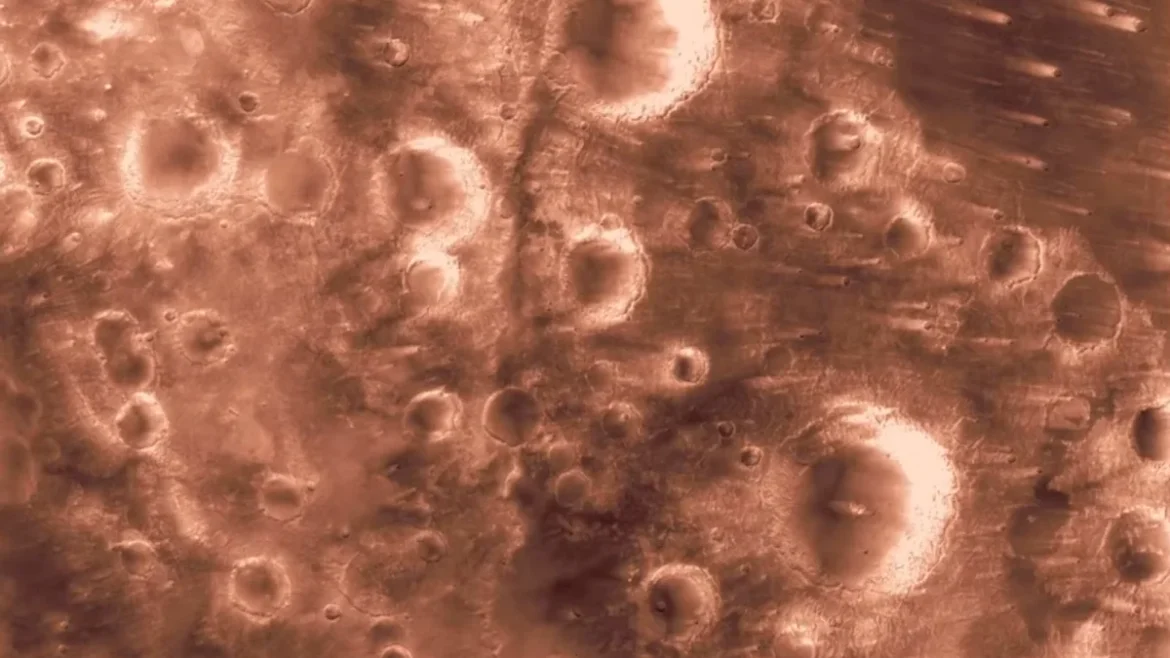
NASA’s Psyche spacecraft, currently on a high-stakes mission to explore a metal-rich asteroid in the outer reaches of the main asteroid belt, has successfully completed a critical gravity assist maneuver at Mars, capturing a stunning array of images and scientific data in the process. This flyby, which occurred in May 2026, served as a pivotal "slingshot" to propel the spacecraft toward its final destination, the asteroid 16 Psyche. While the primary goal of the maneuver was to gain velocity using the Red Planet’s gravitational pull, the mission team utilized the proximity to test the spacecraft’s suite of scientific instruments, providing a unique perspective on Earth’s neighbor and confirming that the probe is in peak operating condition for its arrival at the asteroid in 2029.
The maneuver represents a significant milestone in a journey that spans 2.2 billion miles (3.5 billion kilometers). By flying within 2,864 miles (4,600 kilometers) of the Martian surface, the spacecraft used the planet’s mass to alter its trajectory and increase its speed without the need for excessive chemical propellant. This technique, a staple of deep-space navigation, allowed the mission to enter a new phase of its voyage, characterized by a sustained push from its solar-electric propulsion system.
A Photographic Album of the Red Planet
During the month-long approach and departure, the Psyche mission team activated the spacecraft’s pair of identical multispectral imagers. These cameras, designed to map the topography and composition of the asteroid 16 Psyche, were put through a rigorous series of tests as they tracked Mars. The result was a breathtaking "travel album" of images that showcase the diverse geography of the Red Planet, from its windswept plains to its massive impact craters and the stark white of the southern polar ice cap.
The images released by NASA and the Jet Propulsion Laboratory (JPL) offer more than just aesthetic value; they provided the first real-world calibration for the imaging system in deep space. Jim Bell, the lead for the Psyche imager instrument at Arizona State University, noted that the performance of the hardware was exemplary. "The imager performed brilliantly, delivering some rarely seen views of the Red Planet," Bell stated in a press release. The cameras successfully captured the planet from various angles, including a thin crescent view during the approach and detailed close-ups of the surface during the window of closest proximity.
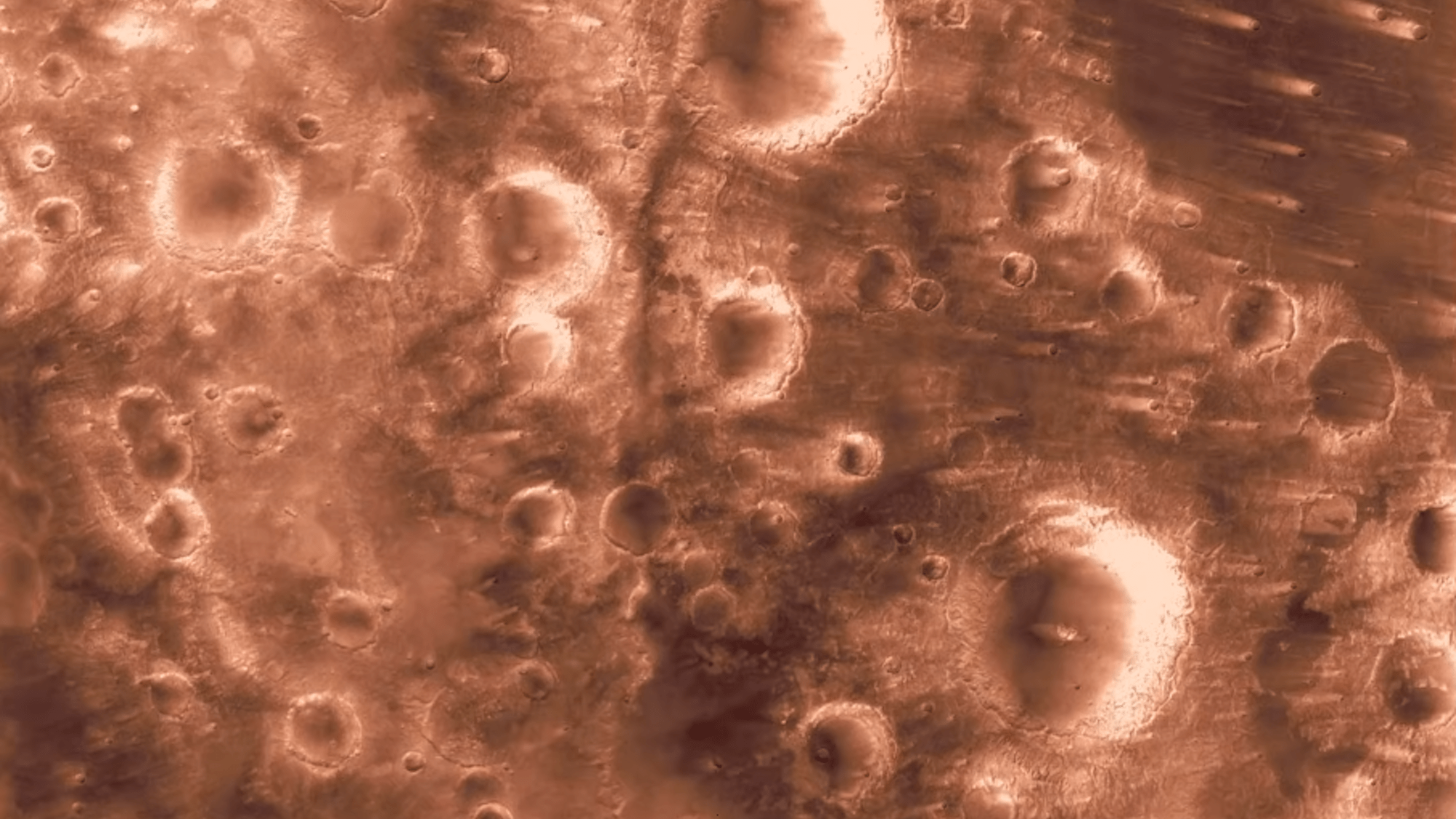
Beyond the planet itself, the imagers were used to track Mars’ two small moons, Phobos and Deimos. This exercise was particularly important for the mission’s future objectives. When the spacecraft arrives at 16 Psyche, scientists will use these same imaging techniques to search for potential "moonlets"—small rocks orbiting the asteroid—which could provide clues about the asteroid’s history and gravitational field.
Testing the Scientific Arsenal
While the cameras provided the most visible evidence of the flyby’s success, other instruments on board were equally active. The Psyche spacecraft carries a Gamma-Ray and Neutron Spectrometer (GRNS) and a magnetometer, both of which are essential for determining whether the target asteroid is the exposed core of a primordial planetesimal.
The GRNS is designed to detect the chemical elements that make up an object’s surface. When cosmic rays—high-energy particles from deep space—strike a planetary body, the surface emits neutrons and gamma rays. By measuring these emissions, the spectrometer can identify the presence of iron, nickel, silicon, and other elements. During the Mars flyby, the altitude of 2,864 miles was too high to detect Martian gamma rays, but the mission’s science team was hopeful about capturing neutrons.
David Lawrence, the spectrometer science lead from the Johns Hopkins Applied Physics Laboratory, confirmed that the test was a success. "Around the time of Mars’ closest approach, the neutron spectrometer detected a count-rate enhancement close to what we anticipated," Lawrence said. This confirmation ensures that the instrument is sensitive enough to perform its primary task once it reaches the metal-rich environment of 16 Psyche.
Simultaneously, the spacecraft’s magnetometer was used to study the interaction between Mars and the solar wind. Unlike Earth, Mars does not have a global magnetic field, but it does have localized magnetic "crustal" fields. As Psyche approached the planet, the magnetometer recorded a significant spike in magnetic field strength. This data aligned perfectly with the "bow shock" region—the area where the solar wind is slowed and diverted as it hits the Martian atmosphere. This instrument has been operational since the spacecraft’s launch in October 2023, providing continuous data on the solar wind as the probe moves through the solar system.

The Significance of the Gravity Assist
The physics of the Mars flyby is a testament to the precision of modern celestial mechanics. To reach the main asteroid belt, which lies between Mars and Jupiter, a spacecraft must overcome the massive gravitational pull of the Sun. While Psyche is equipped with highly efficient Hall-effect thrusters, the "free" energy provided by a planetary flyby is invaluable.
By entering Mars’ sphere of influence at a specific angle and speed, the spacecraft "stole" a tiny fraction of the planet’s orbital momentum. For Mars, the loss is infinitesimal and undetectable, but for the Psyche spacecraft, it provides the necessary velocity boost to reach the outer solar system on schedule. This maneuver also allowed mission controllers to fine-tune the spacecraft’s path, ensuring it remains on a trajectory that will lead to an orbital insertion at the asteroid in August 2029.
Lindy Elkins-Tanton, the mission’s principal investigator at Arizona State University, emphasized that while Mars has been studied extensively by other missions, this flyby provided a unique opportunity. "We didn’t anticipate big discoveries, given how extensively the planet has been studied, but we did complement Mars science with the data we collected through Psyche’s unique perspective," she explained.
Chronology of the Psyche Mission
The journey to 16 Psyche has been a multi-year endeavor marked by technical challenges and triumphant milestones. The timeline of the mission highlights the complexity of deep-space exploration:
- October 13, 2023: The Psyche spacecraft launched aboard a SpaceX Falcon Heavy rocket from Kennedy Space Center in Florida.
- Late 2023 – Early 2024: Initial checkout phase. The mission team tested the Deep Space Optical Communications (DSOC) experiment, a laser-based communication system that successfully transmitted data from millions of miles away, far exceeding the speeds of traditional radio waves.
- May 2026: The Mars flyby and gravity assist maneuver. This period involved intensive instrument testing and the capture of the images and data recently released by NASA.
- Late 2026 – 2028: The cruise phase. The spacecraft will rely on its solar-electric propulsion system, which uses xenon gas accelerated by electricity from the solar panels to produce a gentle but constant thrust.
- August 2029: Scheduled arrival at asteroid 16 Psyche. The spacecraft will begin a 26-month science mission, orbiting the asteroid at various altitudes to map its surface and interior.
The Target: A World of Metal
The ultimate goal of this journey, the asteroid 16 Psyche, is one of the most intriguing objects in the solar system. Measuring approximately 140 miles (226 kilometers) at its widest point, it is significantly different from the rocky or icy bodies that make up most of the asteroid belt. Radar observations and spectral analysis suggest that 16 Psyche is composed largely of iron and nickel.

Scientists hypothesize that the asteroid may be the "partial core" of a planetesimal—a building block of a planet—that had its outer rocky layers stripped away by violent collisions during the early days of the solar system. Because humans cannot travel to the Earth’s own core to study it directly, 16 Psyche offers a unique "look under the hood" of planetary formation.
The data collected during the Mars flyby confirms that the spacecraft’s instruments are ready to answer these fundamental questions. By mapping the asteroid’s gravity, magnetic field, and chemical composition, researchers hope to determine whether 16 Psyche truly is a planetary core or if it is a different type of primordial object that has yet to be categorized.
Implications and Future Operations
With Mars now receding in the rearview mirror, the Psyche mission enters its longest stretch of travel. The next major operational milestone involves the full reactivation of the solar-electric propulsion system. These Hall thrusters produce a blue glow as they expel ionized xenon, creating a thrust that is equivalent to the weight of a few business cards. While seemingly weak, in the vacuum of space, this constant acceleration allows the spacecraft to reach incredible speeds over time.
The success of the Mars flyby has bolstered confidence within the NASA and JPL teams. The integration of advanced imaging, magnetic sensing, and chemical analysis tools on a single platform represents a significant technological achievement. Furthermore, the use of the Mars flyby as a "dress rehearsal" has allowed the team to refine their data processing pipelines, ensuring that when the spacecraft finally reaches its destination, the flow of information back to Earth will be seamless.
As the spacecraft continues its 2.2-billion-mile odyssey, it serves as a reminder of the ingenuity required to explore the "final frontier." The images of Mars captured by Psyche are not just a record of a passing planet, but a signal that humanity is one step closer to uncovering the metallic secrets of the early solar system. The data gathered during this brief encounter will be studied by planetary scientists for years to come, providing a comparative baseline for the unprecedented discoveries expected at 16 Psyche in 2029.