
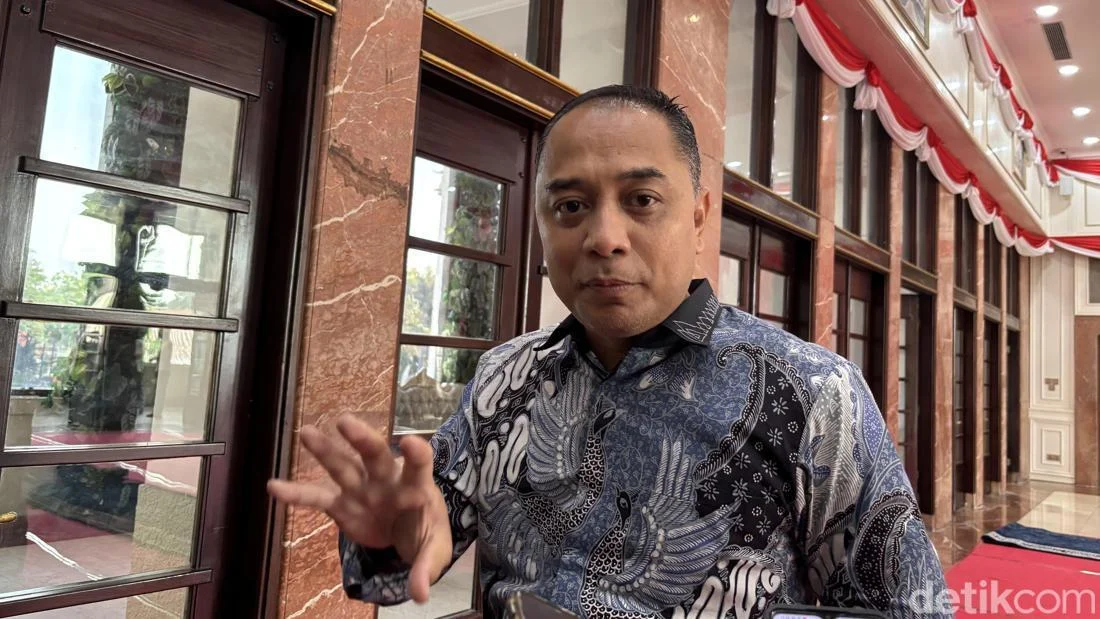
The municipal government of Surabaya has officially voiced its full support for the ongoing legal proceedings against Choirul Anwar, the former President Director of the Surabaya Zoo (KBS), following his naming as a suspect in a major corruption scandal. The East Java High Prosecutor’s Office (Kejati Jatim) recently moved to detain Anwar in connection with the alleged embezzlement of approximately Rp 10.2 billion intended for animal feed and operational costs. Mayor Eri Cahyadi, speaking to the press at Surabaya City Hall, emphasized that the legal process is a necessary step in upholding integrity within the city’s regional-owned enterprises (BUMD). Using a traditional Javanese philosophy to underscore his point, the Mayor stated that those who have committed wrongdoing must face the consequences of their actions, signaling a zero-tolerance policy toward the mismanagement of public and municipal funds.
The case has sent shockwaves through the East Java capital, as the Surabaya Zoo, known locally as Perusahaan Daerah Taman Satwa (PDTS) KBS, is one of the oldest and most iconic zoological parks in Indonesia. The investigation into the financial irregularities was prompted by a series of audits that revealed a staggering discrepancy between the zoo’s reported cash reserves and the actual funds available in its accounts. Mayor Eri Cahyadi noted that these financial "ghosts" or paper-only assets had been lingering in the reports for years, dating back to the administration of his predecessor, Tri Rismaharini. However, it was not until a 2024 independent audit, conducted under the recommendation of the State Audit Board (BPK), that the full extent of the 2016–2024 mismanagement was laid bare.
The Catalyst of the Investigation: Uncovering Financial Discrepancies
The investigation began in earnest when the Surabaya City Government detected anomalies in the financial reporting of PDTS KBS. According to Mayor Eri Cahyadi, early internal reviews suggested that at least Rp 8 billion in cash reported in the balance sheets was non-existent. This prompted the Mayor to seek a more rigorous, independent audit to ensure transparency and to avoid any "syak wasangka" or unfounded suspicion within the city administration. The independent audit, which adhered to the standards set by the BPK, eventually revealed that the total loss to the state and the municipal enterprise amounted to roughly Rp 10.2 billion.
The Mayor’s decision to call for an independent audit was part of a broader initiative to clean up various municipal enterprises. He drew parallels between the situation at the zoo and recent investigations into PD Pasar Surya, another regional-owned enterprise currently undergoing a similar process of financial scrutiny. By inviting external auditors and the BPK to examine the books, the Surabaya administration aims to institutionalize accountability. The Mayor clarified that while the suspicious reporting had roots in previous years, it was his administration’s responsibility to finalize the audit and hand over the findings to law enforcement once criminal elements were identified.
Chronology of Mismanagement and the Suspect’s Role
The corruption at the Surabaya Zoo did not occur in a vacuum; it was a systemic failure that spanned nearly eight years, from 2016 to 2024. During this period, Choirul Anwar held the top executive position, overseeing the daily operations and financial disbursements of the park. The Assistant for Special Crimes (Aspidsus) at the East Java High Prosecutor’s Office, I Gede Punia, explained that the core of the criminal activity involved the unauthorized and illegal use of the zoo’s operational budget.
Specifically, investigators identified a pattern of illicit cash outflows during the 2023–2024 fiscal years. These transactions were reportedly approved by the Director of Finance at the time, indicating a potential conspiracy or a breakdown in the internal oversight mechanisms of the enterprise. The funds, which were ostensibly earmarked for the procurement of animal feed, veterinary supplies, and cage maintenance, were diverted for unauthorized purposes. This diversion created a significant liquidity crisis within the zoo, leading to a visible decline in the health of the animals and the quality of the facilities.
The legal process reached a critical turning point on Wednesday, July 22, 2026, when the Kejati Jatim officially named Choirul Anwar (identified by the initials CA) as a suspect. The decision followed a marathon interrogation session and the collection of sufficient preliminary evidence, including bank statements, audit reports, and testimonies from several staff members. Anwar was immediately taken into custody to prevent any potential tampering with evidence or flight risk, a move that the Mayor of Surabaya has lauded as a victory for legal certainty.
The Human and Ecological Cost: Impact on Animal Welfare
Beyond the financial figures, the most harrowing aspect of the corruption case is the direct impact it had on the inhabitants of the zoo. For years, visitors and animal welfare activists had raised concerns about the condition of the animals at KBS. Reports of "thin animals" and "dilapidated cages" became frequent headlines, tarnishing the reputation of what was once considered the largest zoo in Southeast Asia.
The embezzlement of Rp 10.2 billion meant that the quality and quantity of feed provided to the animals were severely compromised. Large carnivores, such as tigers and lions, which require expensive protein-rich diets, and various species of herbivores were the most affected. Maintenance of the enclosures also stalled, leading to safety concerns for both the animals and the staff. The lack of funds for veterinary care meant that illnesses went untreated or were managed with substandard resources.
For the people of Surabaya, the zoo is not just a commercial enterprise but a cultural landmark. The revelation that the suffering of the animals was a direct result of financial greed by high-ranking officials has sparked public outrage. This case serves as a grim reminder of how corruption in public institutions can have consequences that extend far beyond the balance sheet, affecting the very lives of the creatures the institution is sworn to protect.
Legal Implications and the Road to Recovery
The East Java High Prosecutor’s Office is currently preparing a comprehensive indictment against Choirul Anwar. He is expected to be charged under Law No. 31 of 1999 on the Eradication of Criminal Acts of Corruption, as amended by Law No. 20 of 2001. If convicted, the former director faces a significant prison sentence and the possibility of being ordered to pay restitution to the state.
Furthermore, the investigation is not expected to stop with Anwar. I Gede Punia indicated that the role of the former Director of Finance and other members of the board during the 2016–2024 period remains under intense scrutiny. The goal of the prosecution is to map out the entire network of individuals who benefited from or facilitated the embezzlement.
For the Surabaya City Government, the focus is now shifting toward the stabilization of the zoo’s management. Mayor Eri Cahyadi has emphasized that the current management team must operate with a "clean slate" and that the city will continue to monitor the financial health of the park closely. The Mayor has also hinted at a potential restructuring of the oversight board for all regional-owned enterprises to ensure that such a long-term failure in governance never happens again.
Analysis: Governance Challenges in Regional Enterprises
The KBS corruption case highlights a recurring challenge in the management of regional-owned enterprises (BUMDs) in Indonesia: the gap between operational autonomy and municipal oversight. While BUMDs are designed to operate with a degree of corporate independence to ensure efficiency, they remain public entities funded by taxpayers. In the case of the Surabaya Zoo, the lack of rigorous, annual independent audits allowed financial discrepancies to be "carried over" from one administration to the next without being addressed.
The Mayor’s reliance on the BPK and independent auditors reflects a growing trend in Indonesian local governance toward "Evidence-Based Accountability." By moving away from purely internal reviews, which can be susceptible to political pressure or departmental loyalty, the Surabaya administration is setting a precedent for other cities. However, the fact that the corruption persisted for eight years suggests that the early warning systems within the city’s inspectorate need significant strengthening.
The broader implication for Surabaya is the need for a more transparent procurement system, especially for recurring costs like animal feed. Implementing digital tracking for expenditures and "real-time" auditing could prevent the kind of cash-flow manipulation that Anwar and his associates allegedly utilized.
Conclusion and Future Outlook
The naming of Choirul Anwar as a suspect is a watershed moment for the Surabaya Zoo and the city’s administration. It marks the end of a period of denial regarding the financial health of the park and the beginning of a rigorous legal accounting. Mayor Eri Cahyadi’s firm stance—"sing salah ya seleh"—resonates as a promise to the citizens of Surabaya that the city’s assets will be protected from exploitation.
As the legal process moves forward in the halls of the Kejati Jatim, the focus of the public remains on the welfare of the animals. There is a hope that with the recovery of funds and the installation of more ethical leadership, the Surabaya Zoo can return to its former glory. The city government now faces the task of rebuilding public trust, ensuring that every rupiah allocated for the zoo is used to feed its inhabitants and maintain its grounds. For now, the detention of the former director serves as a stark warning to all public officials that the era of "paper-only" profits and unchecked mismanagement in Surabaya is coming to a definitive end.
