
Jakarta, Indonesia – China’s strategic prowess in the global rare earth industry extends far beyond its abundant natural reserves. A deep dive into its industrial infrastructure reveals a foundational advantage that has long gone underappreciated in the West: a highly specialized and deeply integrated educational ecosystem. Beijing is unique in the world for offering dedicated undergraduate programs in rare earth metals, a deliberate strategy that underscores how the nation has meticulously cultivated its industrial dominance from the very roots of academia. While the United States and other Western nations scramble to reduce their critical reliance on Chinese rare earth supplies, Beijing has been investing for decades in human capital, building an unparalleled pipeline of experts.
The Unseen Advantage: Cultivating Human Capital
At the heart of China’s rare earth hegemony lies a sophisticated system of higher education that funnels talent directly into the industry. Students across various Chinese universities are immersed in comprehensive curricula covering every facet of rare earth metals—from geological exploration and mineral extraction to intricate separation and purification processes, and ultimately, the advanced development of rare earth-based materials. These materials are indispensable components in a vast array of modern technologies, including electric vehicles (EVs), wind turbines, advanced semiconductors, and critical defense systems. This educational investment began decades ago, laying the groundwork for an industrial might that is now globally recognized and increasingly challenging to replicate.
The scope of these programs is remarkable. They are designed not just to impart theoretical knowledge but to forge highly skilled professionals ready to innovate and manage complex industrial operations. The curriculum often includes practical training, laboratory work with cutting-edge equipment, and direct engagement with industrial partners, ensuring graduates possess both the academic understanding and the practical competencies demanded by the sector. This holistic approach ensures a steady supply of engineers, metallurgists, chemists, and material scientists specifically trained to propel the rare earth industry forward.
Baotou: The Epicenter of Rare Earth Education and Industry
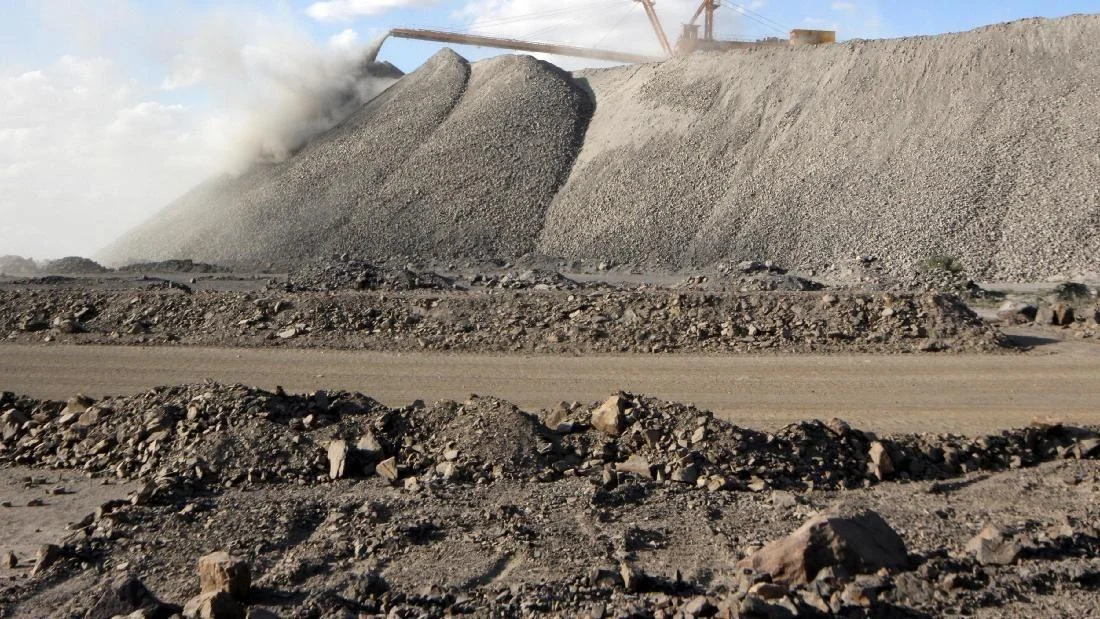
A prime example of this integrated educational model can be found at the Inner Mongolia University of Science and Technology, strategically located in Baotou, Inner Mongolia. Baotou is not merely a city; it is widely recognized as the operational heart of China’s rare earth industry and sits proximate to Bayan Obo, home to the world’s largest rare earth mine. This geographical proximity creates a symbiotic relationship between academic institutions and industrial giants. The university acts as a direct feeder system for the surrounding industrial complex, ensuring that the theoretical knowledge acquired in lecture halls and laboratories is immediately applicable in real-world processing plants and research facilities.
Upon graduation, a significant number of these specialized rare earth graduates transition directly into employment at the numerous rare earth processing companies clustered within the Baotou industrial zone. Others advance their expertise by joining research teams at institutions like the Baotou Rare Earth Research Institute. This seamless transition from education to industry, facilitated by geographical concentration and strategic alignment, is a critical competitive advantage for China, distinguishing its rare earth ecosystem from virtually every other nation. It creates a self-reinforcing cycle of talent development, industrial innovation, and sustained growth.
A Comprehensive Ecosystem: Academia, Research, and Industry Linkage
China’s commitment to this integrated model is extensive. The nation has meticulously constructed an elaborate ecosystem comprising over 40 specialized rare earth laboratories, strategically supported by a network of 11 universities and polytechnic institutes. Collectively, these institutions admit more than 500 new students annually into programs directly focused on rare earth metals. This robust intake ensures a continuous replenishment of expertise, from entry-level technicians to advanced researchers, capable of driving both current production needs and future technological advancements.
This vast infrastructure of education and research allows China to conduct cutting-edge studies on new extraction methods, more efficient separation techniques, novel material applications, and environmental mitigation strategies specific to rare earth processing. The sheer scale of this investment in human capital and infrastructure dwarfs efforts in other parts of the world, where rare earth expertise often resides in broader metallurgical or materials science departments rather than dedicated programs.
Global Recognition and Industry Impact
The efficacy of China’s educational strategy is not merely an internal boast; it has been explicitly acknowledged by international industry leaders. Constantine Karayannopoulos, a former Chief Executive Officer (CEO) of both Neo Performance Materials and Molycorp—companies deeply entrenched in the rare earth sector—has offered a telling testament to the quality of Chinese graduates. "In China, I used to recruit graduates straight out of university, and they were productive immediately. In other countries, I would have to train them for three years," Karayannopoulos was quoted as saying in a Reuters report on July 24, 2026.
This statement powerfully illustrates how higher education in China is meticulously tailored to meet industrial demands. Chinese universities are not just producing graduates who understand complex theories; they are cultivating professionals equipped with practical skills directly applicable to the rare earth processing sector. This immediate productivity translates into significant cost and time savings for companies, further cementing China’s competitive edge in an industry where skilled labor is paramount. It highlights a stark contrast with many Western nations, where a broader academic focus often necessitates extensive post-graduation training to bridge the gap between theoretical knowledge and industrial application.
The Strategic Genesis: A Decades-Long Vision
China’s rare earth dominance is not an accidental outcome but the result of a deliberate, multi-decade national strategy that began to solidify in the late 20th century. During the 1980s and 1990s, as environmental regulations tightened and operational costs rose in Western countries, many rare earth mining and processing operations were scaled back or shut down. China, seizing the opportunity, began to aggressively expand its rare earth industry, often with less stringent environmental oversight and lower labor costs. This period saw the consolidation of scattered mining operations and the establishment of large-scale processing facilities.
Crucially, alongside this industrial expansion, China also initiated significant investments in research and development and, critically, in specialized education. Leaders like Deng Xiaoping famously declared rare earths to be "the Middle East’s oil," signaling the strategic importance the nation placed on these elements. This foresight led to long-term planning that integrated resource exploitation with technological development and human resource cultivation. While other nations focused on immediate economic returns or divested from a seemingly less profitable sector, China played the long game, building an intricate web of mines, processing plants, research institutes, and academic programs.
By the early 2000s, China had secured an overwhelming share of global rare earth production and processing capacity. This strategic positioning was starkly highlighted during the 2010 rare earth export crisis, when China significantly reduced its export quotas, sending shockwaves through global high-tech industries and defense sectors. The incident served as a wake-up call for Western nations regarding their critical vulnerability, prompting renewed efforts to diversify supply chains, which have largely struggled to gain significant traction against China’s entrenched advantages.
Rare Earths: Indispensable to Modern Technology
Rare earth elements, a group of 17 metallic elements, are the unsung heroes of modern technology. Their unique magnetic, phosphorescent, and electrochemical properties make them indispensable in an astonishing array of high-tech applications. For instance, Neodymium, often alloyed with Iron and Boron, creates powerful permanent magnets essential for the electric motors in electric vehicles (EVs) and hybrid cars, as well as the generators in large-scale wind turbines. Dysprosium and Terbium are critical for enhancing the heat resistance and magnetic strength of these magnets, especially in high-temperature applications.
Beyond clean energy, rare earths are vital for consumer electronics like smartphones, laptops, and flat-screen displays (using Europium, Terbium, and Yttrium for phosphors). They are fundamental to advanced semiconductors, optical fibers, and catalysts in petroleum refining. The defense industry is another massive consumer, relying on rare earths for sophisticated military hardware such as radar systems, guided missiles, night vision goggles, and advanced fighter jets. The ongoing global technological race, from artificial intelligence to quantum computing, continues to drive demand for these critical materials, amplifying China’s leverage.
Western Efforts to Counter Dependence: A Challenging Road Ahead
In recent years, spurred by geopolitical tensions and supply chain disruptions, many countries have initiated ambitious programs to reduce their reliance on China for rare earths. The United States, for example, has designated rare earths as critical minerals and launched initiatives like the Critical Minerals Institute and various funding programs to support domestic mining, processing, and recycling. Similarly, the European Union has established the European Rare Earth Alliance (EREMA) and introduced the Critical Raw Materials Act, aiming to bolster strategic autonomy and diversify supply sources. Australia, with its significant rare earth reserves, is also seeking to expand its processing capabilities and collaborate with Western allies.
However, these efforts face formidable challenges. Re-establishing a fully integrated rare earth supply chain is a multi-billion-dollar endeavor that requires substantial investment in infrastructure, technological innovation, and, crucially, human capital. Western nations often lack the dedicated academic programs and the extensive network of specialized researchers and engineers that China has meticulously cultivated over decades. Building this talent pool from scratch, complete with the necessary expertise in complex extraction and separation techniques, is a long-term undertaking that cannot be achieved overnight. Environmental regulations and higher labor costs also add to the complexity and expense of establishing competitive rare earth operations outside of China.
Geopolitical and Economic Implications
China’s near-monopoly on rare earth processing and its strategic control over the human capital driving this industry carries profound geopolitical and economic implications. It grants Beijing significant leverage in international relations, potentially allowing it to disrupt global supply chains or impose trade restrictions in response to diplomatic or economic disputes. This creates acute national security vulnerabilities for countries reliant on rare earths for their defense industries and poses economic risks to high-tech manufacturing sectors worldwide.
The ability to control the supply of these critical materials also influences the pace of global technological innovation. Access to rare earths is essential for developing next-generation clean energy technologies, advanced electronics, and cutting-edge military systems. Any disruption or monopolistic pricing could slow down the global transition to renewable energy, hinder the development of new consumer products, and impact the strategic balance of power. Furthermore, China’s educational pipeline ensures a continuous stream of intellectual property and process improvements, further solidifying its lead and making it even harder for competitors to catch up.
Environmental Considerations and Sustainable Practices
The rare earth industry, historically, has been associated with significant environmental challenges, including habitat destruction, water contamination, and radioactive waste generation due to the co-occurrence of radioactive elements like thorium and uranium with rare earth ores. China’s rapid expansion of its rare earth production, particularly in the earlier stages, often came at a considerable environmental cost.
As global awareness of sustainable practices grows, future efforts to diversify rare earth supply chains, both within China and in other nations, are increasingly focusing on greener extraction and processing technologies. This includes developing methods for recycling rare earths from electronic waste, exploring alternative materials, and implementing stricter environmental regulations for mining and refining operations. Such a shift towards sustainability will necessitate even more specialized research and engineering expertise, potentially creating new avenues for academic programs and international collaboration focused on environmentally responsible rare earth production.
Conclusion
China’s dominance in the global rare earth market is a multifaceted phenomenon, extending far beyond the sheer abundance of its natural resources. It is deeply rooted in a deliberate, long-term national strategy that has prioritized the development of an integrated ecosystem encompassing specialized education, cutting-edge research, and robust industrial linkage. By investing heavily in human capital through dedicated rare earth programs and fostering a seamless transition from academia to industry, China has cultivated an unparalleled pool of experts who are immediately productive and continuously innovative.
While Western nations are now belatedly attempting to re-establish their own rare earth supply chains, they face the daunting task of replicating not just industrial infrastructure, but also the decades-long investment in specialized human resources that forms the very bedrock of China’s competitive advantage. This strategic foresight and comprehensive approach make China’s position as the world’s primary player in rare earth metals exceptionally resilient and incredibly difficult to dislodge, shaping global technology, economics, and geopolitics for the foreseeable future.