
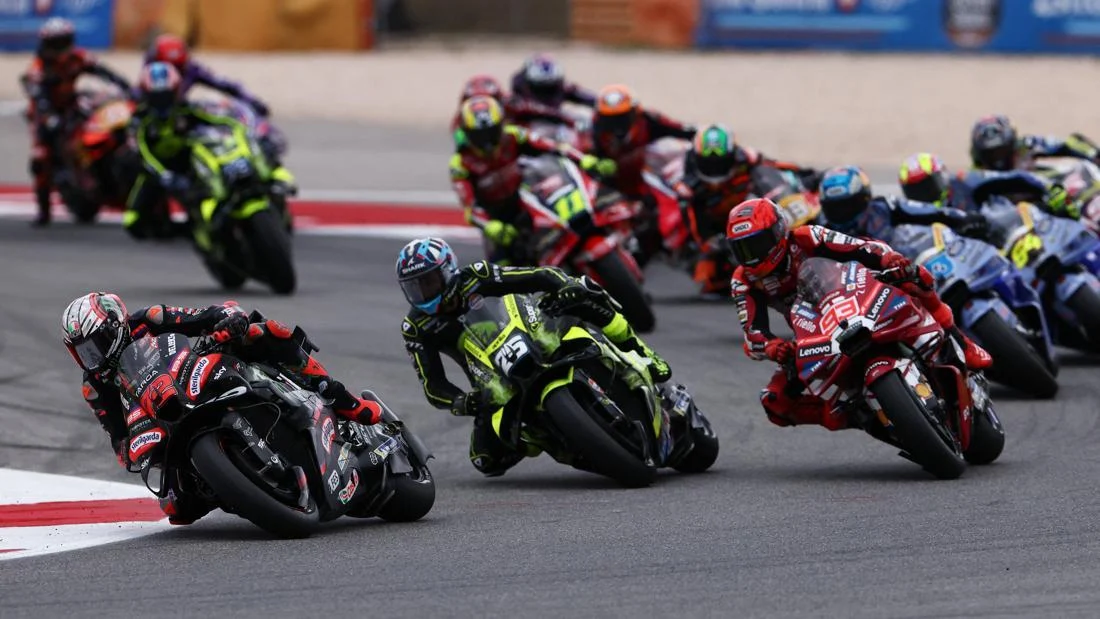
The final curtain of the 2026 MotoGP season descended upon the Ricardo Tormo Circuit in Valencia this Sunday, delivering a narrative that few had anticipated. Raul Fernandez, piloting for the Trackhouse Racing team, produced a masterclass of defensive and offensive riding to claim victory in the season finale. His performance effectively spoiled the emotional farewell of six-time premier class champion Marc Marquez, who was making his final appearance for the Ducati factory team. Fernandez crossed the finish line in 40 minutes and 46.900 seconds, leaving the veteran Marquez to settle for second place, with Pedro Acosta rounding out the podium in a thrilling end to the campaign.
A Masterclass at Ricardo Tormo
The race weekend at Valencia is traditionally synonymous with high-stakes tension, and the 2026 edition was no exception. As the lights went out, the atmosphere was thick with the weight of impending departures and career shifts across the paddock. Marc Marquez, starting from the second grid slot, executed a perfect launch. The Spaniard secured the holeshot immediately, diving into the first corner with the precision that has defined his illustrious career. For a brief moment, it appeared that the Ducati farewell would be scripted perfectly, with Marquez leading the pack and dictating the pace.
However, Raul Fernandez had other plans. The Trackhouse Racing rider demonstrated a superior pace early on, refusing to let the veteran distance himself from the field. By the third lap, Fernandez executed a decisive maneuver to overtake Marquez, seizing the lead and immediately setting about the task of building a gap. His rhythm was relentless, and by the ninth lap, he had stretched his lead to over two seconds, a significant margin in the high-pressure environment of MotoGP.
The Tactical Battle for Position
The middle phase of the race was characterized by a frantic scramble for the remaining podium spots. While Fernandez began to manage his tires and fuel load at the front, the chasing group behind Marquez was volatile. Marco Bezzecchi and Pedro Acosta were engaged in a fierce duel, which forced Marquez to remain vigilant. On the sixth lap, Bezzecchi briefly managed to displace Marquez from second place, a move that sent ripples of tension through the Ducati garage.
Marquez, ever the opportunist, retaliated almost immediately. Executing a sharp overtake in the sequence of turns two and three, he regained the runner-up spot. This sequence of events allowed Fernandez to solidify his cushion at the front. The race settled into a period of relative stability, with Fernandez maintaining a gap of over two seconds while Marquez fended off the persistent threat of his rivals.
As the race entered its final five laps, the dynamic shifted once more. Marquez, seemingly finding a reserve of pace, began to chip away at the lead. The gap, which had hovered comfortably above two seconds for much of the mid-race, began to shrink. By the time there were four laps remaining, the deficit had fallen to 1.3 seconds. With three laps to go, the margin was down to one second, raising the possibility of a last-lap showdown. Yet, Fernandez held his nerve. His sector times remained consistent, and he successfully navigated the final turns without conceding the advantage, crossing the finish line to secure a hard-fought victory.
Final Results of the 2026 MotoGP Valencia Grand Prix
The official classification highlighted the competitive nature of the field, with the top fifteen riders finishing within thirty seconds of one another. The final order was as follows:
- Raul Fernandez (Trackhouse Racing) – 40’46.900
- Marc Marquez (Ducati) – +2.200
- Pedro Acosta (GasGas) – +2.418
- Marco Bezzecchi (VR46) – +3.660
- Jorge Martin (Pramac) – +7.555
- Ai Ogura (LCR Honda) – +10.309
- Fermin Aldeguer (Gresini) – +11.687
- Enea Bastianini (Ducati) – +16.274
- Fabio Di Giannantonio (VR46) – +18.593
- Joan Mir (Repsol Honda) – +20.308
- Pol Espargaro (KTM) – +23.544
- Diogo Moreira (Trackhouse) – +24.271
- Johann Zarco (LCR Honda) – +24.687
- Fabio Quartararo (Yamaha) – +24.776
- Luca Marini (Repsol Honda) – +28.310
The remainder of the field saw Franco Morbidelli (16th), Brad Binder (17th), Alex Rins (18th), Augusto Fernandez (19th), Jack Miller (20th), and Iker Lecuona (21st) complete the race, with Lecuona trailing significantly due to technical difficulties.
The Significance of the Transition
The result in Valencia carries heavy implications for the 2027 season. For Marc Marquez, the race marked the end of an era with Ducati, a partnership that had revitalized his championship prospects. While the lack of a final victory was a disappointment for his supporters, his consistency throughout the 2026 season has reaffirmed his status as a perennial contender.
"It was a difficult race to manage," Marquez noted in a brief post-race interaction. "I gave everything to bridge the gap to Raul, but his pace today was simply better. I wanted to give Ducati a final win, but I am proud of the work we have done together."
For Raul Fernandez, this victory serves as a definitive statement of his development. After seasons of showing flashes of brilliance, the Valencia performance suggests that the Trackhouse Racing rider has matured into a consistent race winner capable of defeating the titans of the sport. The win provides significant momentum for the team as they head into the winter testing phase.
Broader Implications for the Grid
The 2026 season has been defined by a changing of the guard. The performance of younger riders like Pedro Acosta, who secured yet another podium finish, underscores the rapid evolution of the sport. Acosta’s ability to remain competitive at the front of the pack throughout the season suggests that he will be a primary protagonist in the coming years.
Furthermore, the data from the Valencia race indicates a narrowing performance window between the top factory teams and the satellite entries. With Trackhouse Racing taking the top spot and other independent riders featuring prominently in the top ten, the parity in equipment and strategy has created one of the most unpredictable seasons in recent memory.
As the paddock now shifts its focus to the winter break, the focus turns to the development of the 2027 machines. The technical regulations, which have encouraged closer racing and more aggressive tire management, will continue to play a pivotal role in the sport’s landscape. Teams will be analyzing the telemetry from Valencia to understand how to better manage degradation, as seen in Marquez’s late-race surge compared to Fernandez’s early-race dominance.
Looking Ahead: The 2027 Prospect
With the 2026 season concluded, the focus now pivots to the upcoming winter tests. The rider market, which has already seen significant movement, will continue to be a talking point, but the on-track performances in Valencia have provided a clear indicator of who will be leading the charge next year.
Raul Fernandez leaves Valencia not just as a race winner, but as a rider who has signaled his intent to challenge for the title in 2027. Marc Marquez, meanwhile, embarks on a new chapter, leaving behind a legacy of resilience at Ducati. As the sun sets on the 2026 MotoGP calendar, the sport remains in a state of flux, with talent, technology, and tactical brilliance converging to ensure that the next season promises to be as compelling, if not more so, than the one that just concluded. The records have been written, the podiums have been filled, and the focus of the motorcycle racing world now shifts to the preparation for a new era of competition.
