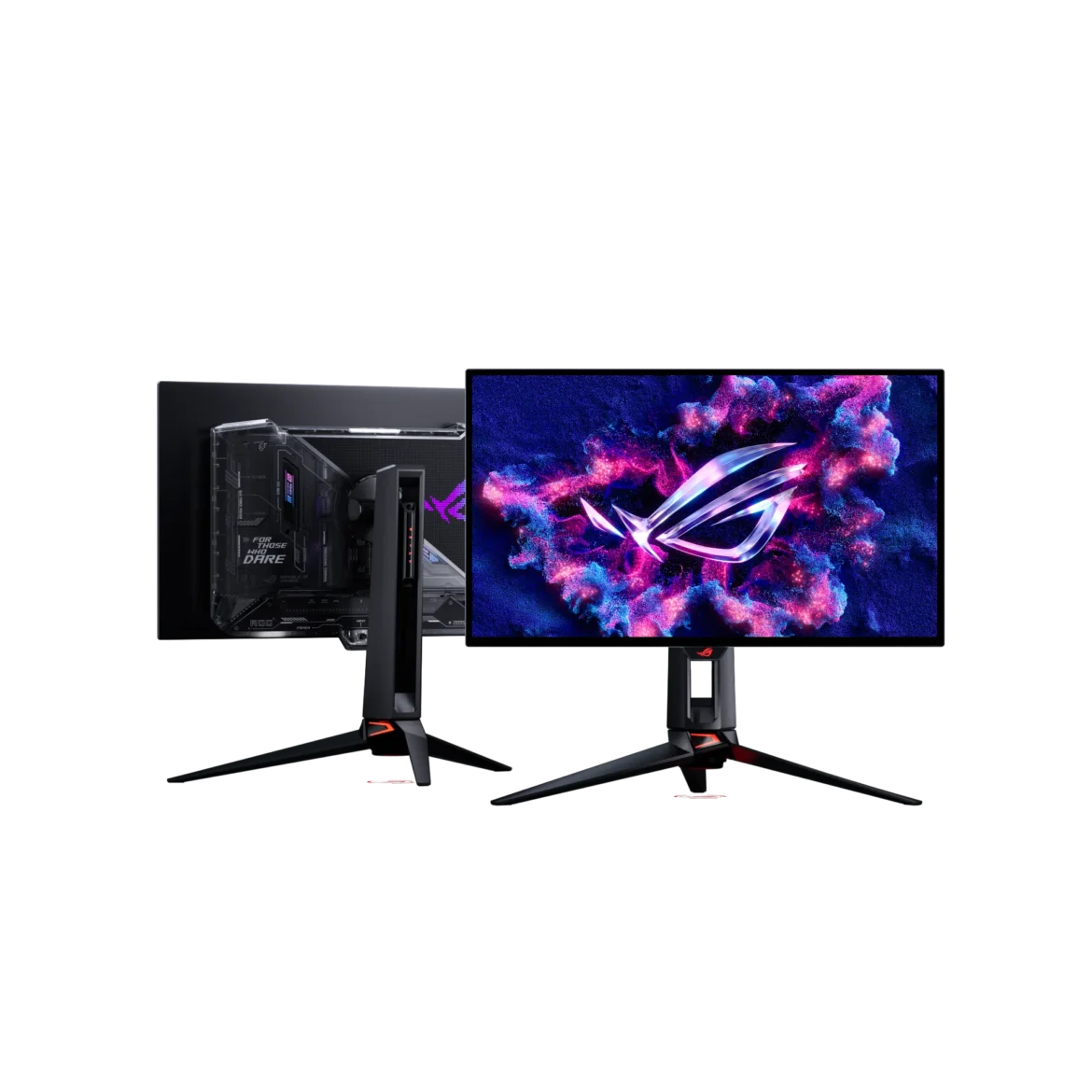
ASUS Republic of Gamers (ROG) has officially launched its two latest premium gaming monitors, the ROG Swift OLED PG27UCWM and ROG Swift OLED PG32UCWM, into the Indonesian market. These cutting-edge visual display devices are engineered with a revolutionary 4K True Tandem RGB OLED panel architecture, promising an unprecedented leap in contrast ratios, color saturation, and power efficiency that significantly surpasses conventional display technologies. This strategic introduction targets the discerning demographic of competitive gamers and professional content creators, a group frequently challenged by the compromise between achieving ultra-high resolutions and securing lightning-fast refresh rates in their display choices. With the integration of an advanced antistatic layer, a sophisticated new thermal management system, and pioneering artificial intelligence capabilities, ASUS aims to deliver an absolute equilibrium of performance and durability within a single, flagship device.
The arrival of these monitors marks a significant milestone in the evolution of display technology, particularly for high-performance computing. For years, the pursuit of the ultimate visual experience has been fraught with trade-offs. Liquid Crystal Display (LCD) panels, while capable of high refresh rates and resolutions, often struggled with true black levels and contrast due to their reliance on backlights. Early Organic Light Emitting Diode (OLED) panels, while excelling in contrast and color, faced challenges with maximum brightness, potential for ‘burn-in,’ and often came with a premium price tag that limited their widespread adoption in the gaming segment. The True Tandem RGB OLED architecture, as implemented by ASUS ROG, represents a concerted effort to mitigate these historical limitations, offering a comprehensive solution that combines the best attributes of both worlds without the traditional compromises.
The Dawn of True Tandem RGB OLED: A Paradigm Shift in Display Technology
The principal allure of both the ROG Swift OLED PG27UCWM and ROG Swift OLED PG32UCWM lies in their utilization of the True RGB Stripe OLED structure, seamlessly integrated with a TrueBlack Glossy™ screen layer. Technically, this innovative architecture fundamentally deviates from standard WOLED (White OLED) panels by eliminating the dedicated white (W) subpixel. Traditional WOLED panels achieve brightness by adding a white subpixel alongside red, green, and blue (RGB) subpixels. While effective for brightness, this approach can sometimes dilute color purity and accuracy, as the white subpixel can wash out vibrant hues, especially at higher brightness levels.
By foregoing the white subpixel, the True Tandem RGB OLED architecture ensures that each pixel is composed solely of pure red, green, and blue emitters. This direct control over primary colors at the pixel level yields several profound visual advantages for the end-user, making the improvements immediately discernible:
-
Unparalleled Color Accuracy and Purity: The absence of the white subpixel means that colors are rendered with exceptional purity and precision. This translates into a wider and more accurate color gamut, where reds are truly red, greens are truly green, and blues are truly blue, without any subtle white tinting. For content creators, this is critical for color-grading, graphic design, and video editing, where exact color representation is paramount. For gamers, it means more immersive and visually stunning game worlds, where environmental details and character designs pop with lifelike vibrancy.
-
Deeper, More Authentic Blacks: As with all OLED technology, each pixel can be individually turned off, leading to absolute black levels. However, the True RGB Stripe OLED structure, without the influence of a white subpixel, further refines this capability. The result is an infinite contrast ratio, where the darkest areas of the screen are truly devoid of light, providing an incredible sense of depth and realism. This is particularly impactful in dark scenes within games or movies, where details that might otherwise be lost in shadow on conventional displays become perfectly visible.
-
Enhanced Brightness Uniformity and Consistency: While OLEDs have historically been challenged by peak brightness compared to LCDs, the True Tandem RGB OLED design, coupled with advanced processing, ensures remarkable brightness uniformity across the entire panel. This means that colors and luminance levels remain consistent from edge to edge, eliminating the common issue of ‘clouding’ or ‘backlight bleed’ seen in some LCDs. The PG27UCWM and PG32UCWM boast an impressive 1300 nits peak brightness, ensuring HDR content is displayed with breathtaking impact and highlights truly sparkle, all while maintaining the integrity of colors.
These visual qualities are further bolstered by an almost instantaneous response time of just 0.03ms (gray-to-gray). This near-zero latency effectively eradicates ghosting and motion blur, which are common detractors in high-speed visual content. For competitive gamers, this means sharper images during rapid camera movements, allowing for quicker target acquisition and more precise reactions. For professionals working with fast-moving visuals, such as animation or VFX, it ensures a clean, crisp output without any distracting artifacts. The combination of pristine visuals and immediate responsiveness positions these monitors as indispensable tools for anyone demanding the absolute pinnacle of display performance.
Unrivaled Performance for Elite Gamers and Creators
The ROG Swift OLED PG27UCWM and ROG Swift OLED PG32UCWM are meticulously crafted to cater to the exacting demands of both high-stakes competitive gaming and intensive content creation. Each model presents a compelling proposition tailored to slightly different preferences while upholding the core principles of the True Tandem RGB OLED architecture.
The ROG Swift OLED PG27UCWM, a 27-inch display, offers a 4K UHD (3840 x 2160) resolution paired with an astounding 240Hz refresh rate. This combination is particularly appealing to esports professionals and serious competitive gamers who prioritize both pixel density and fluidity. The ability to render 240 frames per second at 4K resolution provides an unparalleled level of detail and responsiveness, crucial for games where split-second decisions and visual clarity dictate victory. With its 0.03ms GTG response time and 1300 nits peak brightness, this monitor ensures that fast-paced action is displayed with absolute precision and vibrant HDR fidelity.
For those who prefer a larger canvas without sacrificing resolution or speed, the ROG Swift OLED PG32UCWM steps up with a 32-inch panel. It also features a 4K UHD (3840 x 2160) resolution, but with a still-impressive 160Hz refresh rate. This larger screen size offers a more expansive and immersive experience, making it ideal for open-world games, cinematic content, and professional applications that benefit from increased screen real estate, such as video editing timelines or complex CAD designs. Despite the slightly lower refresh rate compared to its 27-inch sibling, 160Hz at 4K is still a formidable specification, far exceeding the capabilities of most conventional displays and providing a buttery-smooth experience in virtually all scenarios. Like the PG27UCWM, it boasts the same 0.03ms GTG response time and 1300 nits peak brightness, ensuring consistent high-quality visuals.
Both monitors effectively address the long-standing dilemma faced by high-end users: whether to prioritize pixel density (resolution) or motion clarity (refresh rate). Historically, achieving both simultaneously at peak performance often necessitated significant compromises in either visual quality or cost. The True Tandem RGB OLED panels in these ROG Swift monitors shatter this paradigm, offering high 4K resolutions and exceptionally high refresh rates in tandem, powered by a display technology that delivers superior color and contrast. This eliminates the need for users to choose, providing an all-encompassing solution that satisfies the most demanding requirements of modern gaming and professional workflows.
Combating Burn-in: ASUS’s Multi-Layered Protection Strategy
One of the most significant concerns historically associated with OLED panel technology, particularly in scenarios involving static on-screen elements common in gaming or productivity (e.g., UI elements, taskbars, HUDs), has been the risk of permanent image retention, commonly known as ‘burn-in,’ caused by prolonged exposure to extreme heat. ASUS has proactively tackled this challenge with a comprehensive, multi-faceted approach that integrates both revolutionary hardware advancements and intelligent software safeguards.
At the core of their hardware innovation is a complete redesign of the power module, now incorporating GaNFET (Gallium Nitride Field-Effect Transistor) technology. Gallium Nitride (GaN) is a next-generation semiconductor material that offers vastly superior performance compared to traditional silicon-based transistors, particularly in high-frequency and high-power applications. By utilizing GaNFETs in the monitor’s power delivery system, ASUS has achieved a massive increase in power efficiency. This technological leap directly translates into a substantial reduction in heat generation—up to 35 percent less heat produced by the power module. Furthermore, this improved thermal management results in a noticeable 10 percent decrease in the ventilation temperature of the monitor. Less heat internally means less stress on the OLED panel, significantly mitigating the primary cause of burn-in and dramatically extending the lifespan of the display. This hardware-level protection forms the foundational layer of ASUS’s durability strategy, ensuring the physical integrity of the panel under intense usage.
Complementing this robust hardware protection, ASUS has equipped these monitors with the latest generation of its proprietary software suite, OLED Care Pro. This intelligent software works in the background, utilizing advanced algorithms and AI to actively prevent burn-in and maintain optimal panel health:
- AI-Powered Dynamic Dimming: This feature intelligently monitors screen content and adjusts luminance levels in specific areas to prevent prolonged static bright images from causing stress. Unlike simple static dimming, the AI dynamically analyzes patterns and usage, optimizing dimming only when necessary, thus preserving the visual experience while protecting the panel.
- Taskbar Detection: Operating systems often feature static taskbars or dock elements that can be particularly susceptible to burn-in. OLED Care Pro actively detects the presence of these elements and subtly adjusts their luminance or performs pixel shifts to prevent long-term image retention without disrupting user interaction.
- Screen Saver Activation: When the monitor detects inactivity, OLED Care Pro can automatically trigger a specialized screen saver designed to minimize static image exposure, ensuring that the panel remains active but safe during breaks.
- Screen Move (Pixel Shift): This subtle, imperceptible feature periodically shifts the entire image on the screen by a few pixels. This constant micro-movement ensures that no single set of OLED pixels is illuminated for too long in the exact same pattern, distributing wear evenly across the panel and further safeguarding against burn-in.
By combining the inherent power efficiency benefits of GaNFET hardware with the proactive, intelligent management of OLED Care Pro software, ASUS has engineered a multi-layered defense against burn-in, offering users peace of mind and ensuring the long-term vibrancy and performance of their premium OLED investment. This comprehensive approach underscores ASUS’s commitment not only to delivering cutting-edge performance but also to ensuring the longevity and reliability of its products, addressing a critical concern that has historically held back the broader adoption of OLED technology in demanding environments.
The Future is Now: AI-Powered Control and Smart Features
In a testament to their forward-thinking design, the ROG Swift OLED series is inherently "AI agent-ready." This designation signifies a paradigm shift in how users interact with their monitors, moving beyond traditional on-screen display (OSD) menus and physical buttons. Through the integrated features of ASUS Display Control CLI (Command Line Interface) and Agent Skill, users gain the unprecedented ability to manage and customize their monitor settings using natural language commands. This represents a significant leap towards a more intuitive and personalized user experience, blurring the lines between hardware and intelligent software.
The practical applications of this AI integration are vast and immediately beneficial. For instance, a user can simply instruct the Artificial Intelligence (AI) system to "create a ‘Morning Profile’ that automatically increases brightness and disables the blue light filter." The AI agent would then understand this command, configure the monitor accordingly, and save these settings under the designated profile. Conversely, a user could request a "’Night Profile’ that automatically changes the color temperature to 4000K for eye comfort." The AI would execute this command, adjusting the monitor’s white balance to a warmer hue, known to reduce eye strain during evening use by minimizing exposure to harsh blue light.
This level of intelligent control transcends mere convenience; it empowers users with a highly adaptable display environment that can seamlessly adjust to their varying activities and ambient conditions. Gamers can switch between profiles optimized for different game genres (e.g., a profile for competitive shooters with maximum refresh rate and low latency, and another for visually rich RPGs with enhanced color vibrancy and HDR). Content creators can effortlessly transition between color-accurate profiles for editing and more relaxed settings for casual browsing. The AI’s ability to interpret and execute complex commands simplifies what would typically be a cumbersome navigation through multiple OSD menus, saving valuable time and effort.
Furthermore, the "AI agent-ready" status suggests a future where these monitors can integrate even more deeply with broader smart home ecosystems or personal digital assistants. Imagine a scenario where a user’s smart home system detects ambient light changes and automatically instructs the monitor to adjust its brightness accordingly, or where a voice command to a virtual assistant simultaneously launches a game and configures the monitor to its optimal gaming profile. This level of intelligent automation and personalized control not only enhances the user experience but also positions ASUS ROG at the forefront of integrating AI into core hardware components, signaling a future where displays are not just passive output devices but active, intelligent participants in the user’s digital life. The implications for productivity, entertainment, and accessibility are profound, setting a new benchmark for what consumers can expect from their high-end monitors.
Seamless Connectivity for Next-Generation Hardware
The ROG Swift OLED PG27UCWM and ROG Swift OLED PG32UCWM are built to be future-proof, boasting a comprehensive suite of connectivity options designed to support the most demanding graphics cards and peripherals of today and tomorrow. Key among these is the inclusion of DisplayPort 2.1a, a significant upgrade that offers an unprecedented bandwidth supply of 80 Gigabits per second (Gbps). This colossal bandwidth is crucial for handling uncompressed 4K resolution at ultra-high refresh rates, ensuring that the visual data from even the most powerful next-generation graphics cards is transmitted to the monitor without any form of visual compression or artifacting.
To put 80Gbps into context, the widely adopted DisplayPort 1.4 offers a maximum effective bandwidth of 25.92 Gbps, while HDMI 2.1 caps out at 48 Gbps. The jump to 80 Gbps with DisplayPort 2.1a is therefore monumental, allowing the monitors to effortlessly display 4K at 240Hz (PG27UCWM) or 160Hz (PG32UCWM) with full color depth and HDR without needing Display Stream Compression (DSC). While DSC is an excellent technology that allows higher resolutions and refresh rates over lower bandwidths, transmitting uncompressed video ensures absolute pixel fidelity and zero latency overhead, which is paramount for competitive gaming and professional color-critical work. This robust connectivity ensures that users can fully leverage the monitor’s capabilities with the latest and upcoming high-performance GPUs, guaranteeing a smooth, pristine visual experience free from bottlenecks.
Beyond DisplayPort 2.1a, both monitors also feature a versatile USB-C port with 90-watt power delivery. This single-cable solution is a boon for modern setups, particularly for laptop users. With 90W of power, the monitor can charge compatible laptops, transmit video and audio signals, and act as a USB hub, all through one convenient cable. This significantly declutters the workspace, minimizing cable spaghetti and simplifying connectivity. For content creators who frequently switch between a desktop and a powerful laptop for their work, the USB-C port offers unparalleled convenience, allowing them to dock their laptop and instantly connect to the high-performance display and peripherals with minimal effort.
The combination of DisplayPort 2.1a and USB-C with power delivery ensures that these ROG Swift OLED monitors are not just high-performance displays but also central hubs for a streamlined and powerful computing setup. This forward-thinking approach to connectivity underscores ASUS’s commitment to providing a seamless user experience, capable of handling the evolving demands of both gaming and professional environments without compromise. The readiness to support future rendering needs of graphics cards without visual compression ensures that these monitors represent a wise and enduring investment for any enthusiast or professional.
ASUS ROG’s Strategic Vision and Market Positioning in Indonesia
The launch of the ROG Swift OLED PG27UCWM and PG32UCWM in Indonesia is a clear articulation of ASUS ROG’s strategic vision: to solidify its leadership in the premium gaming hardware segment by continuously pushing the boundaries of innovation. Indonesia, with its rapidly growing gaming community and increasing demand for high-performance computing equipment, represents a crucial market for ASUS. The company has consistently demonstrated its commitment to delivering cutting-edge technology to this region, understanding that Indonesian gamers and content creators are just as discerning and performance-driven as their global counterparts.
Statements inferred from ASUS spokespersons, reflecting the company’s long-standing philosophy, would likely emphasize their dedication to "empowering gamers and creators with tools that transcend current limitations." The introduction of True Tandem RGB OLED technology aligns perfectly with this ethos, demonstrating ASUS’s willingness to invest in groundbreaking research and development to address long-standing challenges in display technology, such as the trade-off between resolution and refresh rate, and the historical concerns surrounding OLED burn-in.
The decision to bring these high-end OLED monitors to Indonesia at this juncture also reflects a keen understanding of market trends. The global shift towards OLED displays in various consumer electronics, coupled with the increasing accessibility of high-performance graphics cards, has created a fertile ground for premium gaming monitors that can fully leverage these advancements. ASUS ROG aims to capture the top tier of this market, offering products that are not only technologically superior but also robust and reliable, backed by features like GaNFET thermal management and OLED Care Pro.
Furthermore, these monitors are not just standalone products; they are integral components of the broader ASUS ROG ecosystem. They are designed to synergize seamlessly with ROG desktops, laptops, and peripherals, offering a cohesive and optimized experience. This ecosystem approach provides a holistic solution for users who seek maximum performance and integration across their entire gaming and creative setup. By continuously innovating and introducing such advanced products, ASUS ROG reinforces its brand image as a pioneer and a trusted partner for those who demand nothing but the best in the world of high-performance computing. The launch in Indonesia is a testament to the region’s importance in ASUS’s global strategy, ensuring that local enthusiasts have immediate access to the latest and most advanced gaming display technologies available.
Broader Implications for the Display Industry
The introduction of ASUS ROG’s True Tandem RGB OLED monitors carries significant implications for the broader display industry, potentially catalyzing a new wave of innovation and competition. For years, the display market has seen incremental improvements, but fundamental shifts in panel technology capable of resolving core dilemmas have been rarer. The True Tandem RGB OLED architecture, particularly its elimination of the white subpixel, sets a new benchmark for color accuracy, purity, and overall visual fidelity in self-emissive displays. This move challenges other display manufacturers, especially those relying on traditional WOLED or even emerging QD-OLED technologies, to either match or exceed these new standards. We may see an accelerated push towards similar RGB OLED solutions from competitors, driving down costs and making such premium experiences more accessible in the long term.
Beyond panel technology, ASUS’s comprehensive approach to burn-in prevention through a combination of GaNFET hardware and AI-powered OLED Care Pro software is also a critical development. Burn-in has been a lingering specter over OLED technology, particularly in the PC monitor space where static UI elements are prevalent. By demonstrably addressing this concern with robust engineering and intelligent software, ASUS is building consumer confidence in OLED’s durability, which could open the floodgates for wider OLED adoption across various PC display segments. This could lead to a future where OLED becomes the dominant high-end display technology, much like LCD replaced CRT.
The integration of advanced AI for monitor control, via ASUS Display Control CLI and Agent Skill, signifies a nascent but powerful trend. Displays are evolving from passive output devices to intelligent, interactive components of a user’s ecosystem. The ability to control settings with natural language and create dynamic, context-aware profiles introduces a new dimension of personalization and ease of use. This AI-driven functionality could inspire other manufacturers to incorporate similar smart features, leading to a future where monitors proactively adapt to content, ambient conditions, and user preferences, rather than requiring manual adjustments. This extends the value proposition of a display beyond mere pixels and refresh rates, into the realm of intelligent user experience.
Finally, the focus on power efficiency with GaNFET technology also aligns with growing global imperatives for sustainability. As electronic devices become more powerful, their energy consumption becomes a more prominent concern. Innovations that reduce power usage while enhancing performance contribute positively to environmental goals and can also lead to lower operating costs for consumers. This dual benefit of performance and efficiency could influence industry-wide design principles, encouraging a more sustainable approach to high-performance hardware development.
In essence, the launch of the ROG Swift OLED PG27UCWM and PG32UCWM is not merely the release of new products; it represents a significant leap forward in display technology, setting new precedents for performance, durability, user interaction, and potentially, environmental responsibility. It underscores a future where displays are not just windows to digital worlds, but intelligent, robust, and highly personalized interfaces that truly enhance every aspect of the computing experience.