
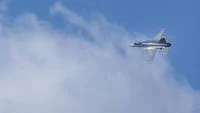
In a significant display of integrated regional defense, the air forces of Finland and Sweden launched a joint intercept mission on Friday, September 25, after a formation of Russian military aircraft was detected operating in close proximity to the territorial airspace of the two Nordic nations over the Gulf of Finland. The operation marked a historic milestone, representing the first time the two recently joined NATO members have conducted a coordinated Quick Reaction Alert (QRA) mission of this nature, signaling a new era of interoperability in Baltic security.
The interception involved a multi-role response to a Russian aerial formation, which Finnish authorities identified as consisting of a Tu-134 transport aircraft, accompanied by several MiG-31 Foxhound interceptors and Su-30 Flanker multi-role fighters. While the Russian aircraft were reportedly operating within international airspace, the proximity of the formation to the sovereign borders of Finland and Sweden triggered an immediate response from the respective air commands.
Chronology and Operational Details
The incident began on Friday morning when radar installations operated by the Finnish Air Force identified an unidentified aerial formation approaching the Gulf of Finland. Under the protocols established by the Quick Reaction Alert (QRA) system, NATO air defense centers were immediately alerted to the presence of the Russian assets.
Finland and Sweden deployed fighter jets to conduct what military officials described as an "identification mission." By intercepting the formation, the Nordic air forces aimed to verify the composition of the fleet and ensure that the Russian aircraft did not violate sovereign territorial waters. The operation was managed through the combined air operations centers that have been increasingly integrated since both nations concluded their accession processes to the North Atlantic Treaty Organization.
By mid-day, the situation had stabilized. The Russian formation remained in the international corridors of the Gulf of Finland before eventually turning away from the sensitive border zones. While the Russian Ministry of Defense has remained silent regarding the specifics of the flight plan or the purpose of the deployment, the incident serves as a stark reminder of the escalating frequency of aerial maneuvers in one of Europe’s most contested maritime theaters.
The Strategic Significance of the Gulf of Finland
The Gulf of Finland serves as a critical maritime corridor, acting as a gateway for Russian commercial and naval traffic between the port of St. Petersburg and the Baltic Sea. Consequently, the area is subject to intense surveillance by NATO member states. Since the expansion of the alliance to include Finland and Sweden—effectively turning the Baltic Sea into what some analysts call a "NATO Lake"—the region has witnessed a surge in military activity.
The presence of MiG-31s and Su-30s in such close proximity to NATO borders is often interpreted by defense analysts as a demonstration of power, intended to test the response times and communication protocols of neighboring air forces. The MiG-31, a high-altitude interceptor, is particularly noted for its speed and long-range capabilities, making its presence in the region a frequent subject of concern for Baltic defense planners.
Official Responses and Political Repercussions
Swedish Prime Minister Ulf Kristersson addressed the incident shortly after the operation concluded. In a statement posted to social media, Kristersson emphasized the fragile state of regional security, noting, "The Baltic Sea is currently at its most sensitive and vulnerable point." However, he moved quickly to reassure the Swedish public and the international community that the region is under rigorous surveillance and that the national defense posture is fully capable of addressing such incursions.
The Finnish government, which maintains one of the most robust land-based and aerial defense systems in Northern Europe, echoed the sentiment of vigilance. Officials highlighted that while the Russian aircraft technically remained within the boundaries of international law, the act of flying near sovereign borders without a flight plan or active transponders poses a significant risk to civilian aviation, which shares these busy transit corridors.
In Moscow, there has been no official acknowledgment of the incident. This silence is consistent with the Kremlin’s standard operating procedure regarding Baltic Sea aerial intercepts, which often views such maneuvers as routine training exercises intended to maintain combat readiness in the Western Military District.
Regional Context: A Pattern of Escalation
The September 25 interception is not an isolated event but rather part of a broader trend that has accelerated significantly since the Russian invasion of Ukraine in February 2022. Since the onset of the conflict, the Baltic states—Estonia, Latvia, and Lithuania—along with their Nordic neighbors, have reported a steady increase in the number of "near-miss" incidents and airspace incursions.
Analysts at the European Council on Foreign Relations suggest that Russia utilizes these aerial incursions as a form of "gray zone" activity. By pushing the boundaries of territorial integrity, Moscow seeks to gauge the cohesion of the NATO alliance, particularly the speed with which new members can coordinate their operational procedures.
Furthermore, the integration of Swedish and Finnish air forces into the NATO Air Shield initiative has changed the strategic calculus. Previously, these nations acted as partners; now, they are committed to the collective defense obligations under Article 5. This transition has forced Russia to confront a unified, contiguous air defense network that stretches from the Danish Straits to the Finnish-Russian border, spanning over 1,300 kilometers.
Fact-Based Implications for Regional Security
The joint mission on Friday carries several long-term implications for the security architecture of Northern Europe:
- Interoperability Milestones: The successful joint interception demonstrates that Finland and Sweden have rapidly integrated their Command, Control, Communications, Computers, Intelligence, Surveillance, and Reconnaissance (C4ISR) systems with the broader NATO framework.
- Deterrence Capability: The rapid deployment of QRA jets serves as a functional deterrent. It signals to Moscow that any attempt to test the borders of the Baltic nations will be met with an immediate, coordinated response, thereby reducing the "surprise" element of such incursions.
- Risk of Miscalculation: Despite the professional conduct of the pilots involved, the density of military traffic in the Baltic increases the risk of accidents. Any mechanical failure or human error during such high-speed intercepts could lead to an unintended escalation, a scenario that defense ministries in Helsinki and Stockholm are working diligently to prevent through clear communication channels.
- Resource Allocation: The constant need for QRA scrambles places a significant strain on air force budgets and pilot fatigue. Both nations will likely continue to invest heavily in long-range radar surveillance and modern fighter aircraft to sustain this level of readiness over the long term.
Conclusion: A New Standard of Vigilance
As the geopolitical landscape in Northern Europe remains fraught with tension, the cooperation between Finland and Sweden has become the bedrock of regional stability. The Friday interception was more than a mere tactical response; it was a visible assertion of sovereignty and collective resolve.
As winter approaches and the Baltic Sea becomes an even more critical strategic asset, the ability of NATO’s newest members to maintain constant, unified vigilance will be tested repeatedly. The events of September 25 confirm that the era of isolated national defense in the Nordic region is effectively over, replaced by a integrated, high-readiness posture designed to preserve the peace in a volatile and increasingly unpredictable maritime environment. For now, the "identification mission" serves as a successful proof of concept for the new, integrated defense reality in the North.
