
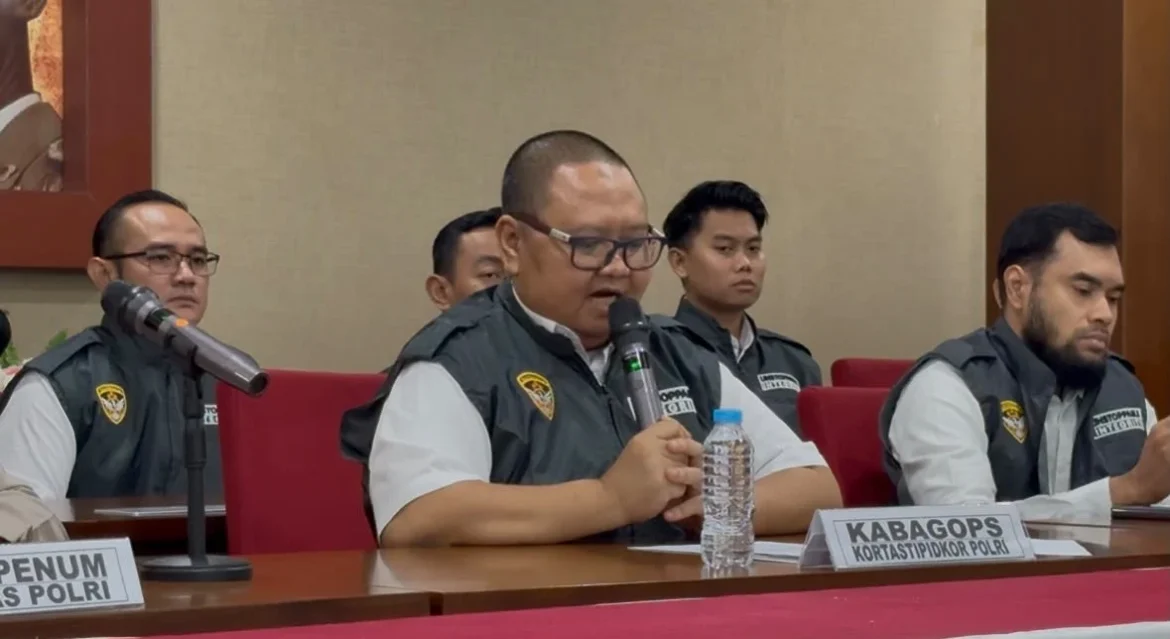
A comprehensive investigation into alleged corruption concerning invoice financing for coal procurement destined for PT PLN Batubara, a subsidiary of the state-owned electricity giant PT PLN (Persero), has revealed a substantial financial loss to the state amounting to IDR 38.84 billion (approximately USD 2.5 million, based on current exchange rates). The findings, derived from an investigative audit conducted by the Supreme Audit Agency (BPK), underscore critical vulnerabilities within state-owned enterprise (SOE) financing mechanisms and procurement processes, prompting a rigorous response from law enforcement. The National Police’s Anti-Corruption Task Force (Kortas Tipikor Polri) has confirmed the financial detriment and announced the apprehension of three individuals implicated in the scheme, which purportedly transpired between 2019 and 2020.
The core of the alleged fraudulent activity revolves around a financing agreement between PT Perusahaan Pengelola Aset (PPA) Persero, a state-owned asset management company, acting as the financing provider, and PT Bintang Abadi Sampurna, the recipient of the financing. This arrangement was ostensibly designed to facilitate the procurement of coal, a vital commodity for Indonesia’s energy security, particularly for power generation managed by PT PLN Batubara. Kombes Ahmad Yusuf Afandi, Head of Operations for Kortas Tipikor Polri, disclosed the precise figure of the state’s financial loss, IDR 38,848,461,055.81, during a press briefing on July 20, 2026. This announcement followed a period of intensive investigation and forensic auditing, bringing to light a complex web of financial irregularities that ultimately siphoned public funds.
Unpacking the Allegations: The Scheme and Key Players
The case centers on an "invoice financing" scheme, a common financial tool where a company sells its invoices to a third party (a financier) at a discount to gain immediate capital. While legitimate in principle, the alleged corruption here suggests that this mechanism was exploited for illicit gains, resulting in significant financial damage to the state. PT Perusahaan Pengelola Aset (PPA) Persero, established with the mandate to manage and restructure state-owned assets and provide financing solutions to support the national economy, found itself at the nexus of this controversy as the financing provider. Its role in such a transaction is to ensure due diligence and safeguard state assets.
On the other side was PT Bintang Abadi Sampurna, the company that received the financing, presumably for its role in the coal supply chain related to PLN Batubara. The allegations suggest that the processes surrounding the issuance and utilization of these funds were compromised, leading to the reported state losses. The exact nature of the deviation within the invoice financing process—whether through inflated invoices, fictitious transactions, or misdirection of funds—remains under ongoing judicial scrutiny. However, the BPK’s findings explicitly point to "deviations" that directly caused the financial harm.
The involvement of PT PLN Batubara, a crucial subsidiary of the national electricity provider PT PLN (Persero), underscores the strategic importance and sensitivity of the sector. Coal remains the backbone of Indonesia’s electricity generation, and ensuring a stable, transparent, and cost-effective supply is paramount for national development and public welfare. Any irregularities in this supply chain can have far-reaching implications, not only financially but also for energy security and public trust in vital state-owned enterprises.
The Financial Blow: BPK’s Investigative Findings
The quantification of the state’s loss, precisely IDR 38,848,461,055.81, is a critical element of this case, lending credibility and weight to the police’s allegations. This figure was not arbitrarily determined but emerged from a meticulous investigative audit conducted by the Badan Pemeriksa Keuangan (BPK), the Supreme Audit Agency of Indonesia. The BPK is an independent state institution tasked with examining the management and accountability of state finances, ensuring transparency and preventing misuse of public funds. Its investigative reports are often the bedrock for legal proceedings in corruption cases, providing the detailed financial evidence necessary for prosecution.
The BPK’s investigative audit process typically involves a deep dive into financial records, transaction histories, contractual agreements, and operational flows to identify discrepancies, irregularities, and direct financial losses attributable to misconduct. The precise nature of the "deviations" highlighted by the BPK report would likely detail specific transactions, financial flows, and contractual breaches that led to the identified losses. This thoroughness is crucial for establishing culpability and demonstrating the tangible impact of the alleged corruption on state coffers. The announcement by Kortas Tipikor Polri on July 20, 2026, explicitly referencing the BPK’s report, signifies the robust inter-agency cooperation essential for tackling complex financial crimes involving state assets. Such collaboration ensures that law enforcement efforts are underpinned by rigorous financial analysis, enhancing the prospects for successful prosecution and recovery of state losses.
Chronology of Events and Investigative Breakthroughs
The timeline of the alleged corruption is critical for understanding the scope and duration of the illicit activities. The period identified by investigators, 2019-2020, indicates that the scheme was active for at least two years, potentially involving multiple transactions or a sustained pattern of fraudulent activities within the invoice financing framework. During this period, the financing was provided by PPA to Bintang Abadi Sampurna for coal procurement related to PLN Batubara.
While the specific start date of the investigation is not detailed in the initial report, it can be inferred that suspicions or initial findings emerged sometime after 2020, prompting a formal inquiry. The BPK’s investigative audit would have been commissioned and conducted over a subsequent period, meticulously piecing together the financial puzzle. The culmination of these efforts was the report submitted to law enforcement, providing the necessary evidence for action.
The breakthrough in the case was formally announced by Kortas Tipikor Polri on July 20, 2026, marking a significant development in the government’s ongoing fight against corruption. At this press conference, law enforcement officials not only confirmed the state loss based on the BPK’s findings but also revealed that three individuals had been identified as suspects and subsequently detained. Among those named were IT, identified as an Investment Manager at PT Perusahaan Pengelola Aset (Persero), and FSN, the Head of the Operational Division at PT Bintang Abadi Sampurna. The apprehension and detention of these key figures underscore the police’s commitment to holding accountable those responsible for defrauding the state. Their specific roles in orchestrating or facilitating the alleged corrupt transactions will be central to the ongoing legal proceedings, shedding further light on the mechanisms of the fraud.
Contextualizing State-Owned Enterprises and Energy Security
Indonesia’s state-owned enterprises (BUMNs) play a colossal role in the national economy, spanning critical sectors from energy and infrastructure to finance and telecommunications. PT PLN (Persero), the national electricity company, is arguably one of the most vital, providing power to millions across the archipelago. Its subsidiary, PT PLN Batubara, is instrumental in ensuring the consistent supply of coal, the primary fuel source for a significant portion of Indonesia’s power plants. The scale of coal procurement required to meet the nation’s energy demands is immense, making it a high-value and strategically sensitive area susceptible to malfeasance.
PT Perusahaan Pengelola Aset (PPA) Persero, as a state-owned asset management company, is tasked with a significant responsibility: managing and restructuring state assets, including providing financing to support economic activities and improve the performance of other BUMNs. Its involvement in invoice financing, especially for crucial sectors like energy, highlights its integral role in the broader state-backed financial ecosystem. However, this also places a heavy burden of responsibility on its shoulders to maintain the highest standards of transparency and corporate governance.
The alleged corruption case involving coal procurement financing touches upon a sensitive nerve in Indonesia: energy security. As one of the world’s largest coal producers, Indonesia heavily relies on this fossil fuel for its domestic power generation. Ensuring a stable and ethical coal supply chain is not merely an economic imperative but a matter of national security and public welfare. Any disruption or financial impropriety in this chain can jeopardize electricity supply, potentially leading to power outages, increased costs for consumers, and a loss of confidence in the state’s ability to manage essential services. This context elevates the seriousness of the IDR 38.84 billion loss beyond mere financial figures, linking it directly to the nation’s foundational infrastructure and the daily lives of its citizens.
Official Reactions and Institutional Responses
The announcement by Kortas Tipikor Polri regarding the IDR 38.84 billion state loss and the arrest of suspects sends a clear message about the government’s unwavering commitment to combating corruption, particularly within state-owned entities. Kombes Ahmad Yusuf Afandi’s public statement reflects the police’s determination to pursue justice and recover state assets. This firm stance is crucial for reinforcing public trust in law enforcement and the judicial system.
In response to such allegations, it is standard practice for the implicated state-owned enterprises and related government bodies to issue statements affirming their commitment to good corporate governance, transparency, and full cooperation with legal processes. PT Perusahaan Pengelola Aset (PPA) Persero, as the financing provider, would likely emphasize its zero-tolerance policy for corruption, detail any internal investigations initiated, and outline steps taken to strengthen its internal control mechanisms and risk management protocols. This could include reviewing existing financing procedures, enhancing due diligence processes, and implementing more stringent oversight of investment managers and operational divisions.
Similarly, PT PLN (Persero) and its subsidiary PT PLN Batubara would be expected to address the allegations, assuring the public that measures are being taken to ensure the integrity of their procurement processes. Their statements would likely focus on maintaining uninterrupted energy supply, supporting the ongoing investigation, and reviewing contractual agreements with third-party suppliers and financiers to prevent future recurrences. The Ministry of State-Owned Enterprises (BUMN Ministry), which oversees all state-owned companies, would also likely reiterate its broader agenda for BUMN reform, emphasizing accountability, transparency, and ethical conduct across the entire SOE landscape. These collective responses are vital for restoring confidence and demonstrating a unified front against corruption.
Broader Implications: Governance, Trust, and Economic Stability
The alleged corruption case carries significant implications that extend far beyond the immediate financial loss. At its core, it challenges public trust in the integrity and accountability of state-owned enterprises, which are often perceived as custodians of national wealth and drivers of economic development. When such entities are implicated in corruption, it erodes confidence in government institutions and the broader business environment. This erosion of trust can deter foreign investment, increase the cost of doing business, and ultimately hinder economic growth.
From a governance perspective, the case highlights the perennial challenge of oversight within large, complex state-owned structures. It underscores the critical need for robust internal controls, independent audit functions, and transparent decision-making processes. The involvement of an Investment Manager from PPA and an Operational Head from Bintang Abadi Sampurna suggests potential collusion and systemic weaknesses that allowed these illicit activities to flourish for at least two years. This necessitates a comprehensive review of governance frameworks, not just within PPA and PLN, but across the entire BUMN sector, to identify and rectify vulnerabilities.
Economically, the IDR 38.84 billion loss represents public funds that could have been allocated to vital public services, infrastructure development, or social programs. Such losses contribute to an inefficient allocation of resources and can indirectly impact the nation’s fiscal health. Furthermore, corruption in critical sectors like energy procurement can lead to inflated costs for essential commodities, which are ultimately borne by consumers and taxpayers. The case also serves as a stark reminder of the potential for corruption to distort market mechanisms, create unfair competition, and impede the efficiency of supply chains. The repercussions could include a heightened sense of caution among legitimate businesses engaging with SOEs, potentially leading to less competitive bids and increased transaction costs in the long run, as companies factor in higher risks.
The Path Forward: Legal Proceedings and Preventative Measures
With the suspects identified and detained, the case will now proceed through the formal legal channels, including further investigation, indictment, and trial. The role of the BPK’s investigative report will be paramount in presenting a compelling case to the judiciary. The legal proceedings will aim to establish individual culpability, determine the full extent of the fraudulent scheme, and ultimately secure convictions and facilitate the recovery of the state’s losses. This process, while often lengthy, is crucial for delivering justice and deterring future acts of corruption.
Beyond punitive measures, the incident necessitates a proactive approach to implementing preventative measures. This includes strengthening regulatory frameworks governing state-owned enterprise financing and procurement, enhancing due diligence requirements for all parties involved in high-value transactions, and leveraging technology to improve transparency and traceability in financial flows. Digitalization of procurement processes, for instance, can reduce human intervention and create audit trails that are harder to manipulate. Furthermore, cultivating a strong ethical culture within BUMNs through regular training, whistleblower protection mechanisms, and clear codes of conduct is essential. Independent oversight bodies must be empowered to conduct regular and unannounced audits, ensuring continuous vigilance against potential malfeasance.
The fight against corruption in Indonesia is an ongoing battle, and this case serves as another crucial chapter. It reinforces the commitment of state institutions like Kortas Tipikor Polri and BPK to uphold the rule of law and protect national assets. The long-term impact will depend not only on the outcome of the current legal proceedings but also on the effectiveness of the reforms and preventative measures adopted to safeguard public funds and restore unwavering confidence in the integrity of Indonesia’s vital state-owned enterprises.
The alleged corruption case involving PT PPA Persero, PT Bintang Abadi Sampurna, and the procurement of coal for PT PLN Batubara represents a significant blow to state finances and public trust. The IDR 38.84 billion loss, meticulously uncovered by the BPK and now under the rigorous prosecution of Kortas Tipikor Polri, underscores the persistent challenges in safeguarding state assets within Indonesia’s vast state-owned enterprise ecosystem. As the legal process unfolds and the implicated individuals face justice, this case stands as a critical reminder of the imperative for continuous vigilance, robust governance reforms, and an unwavering commitment to transparency and accountability across all levels of state administration and enterprise. The nation watches as authorities strive to recover the lost funds and reinforce the integrity of its strategic economic pillars.
