
The synergy between the academic world and the industrial sector has become a fundamental pillar in the development of competent human resources and the strengthening of national industrial competitiveness. Recognizing the critical nature of this alignment, PT Toyota Motor Manufacturing Indonesia (TMMIN) has intensified its efforts to bridge the gap between theoretical education and industrial practice through a series of comprehensive learning programs. This initiative is designed not only to provide students with classroom insights but also to offer firsthand exposure to the complexities of modern manufacturing, ensuring they possess a robust foundation before entering the professional workforce.
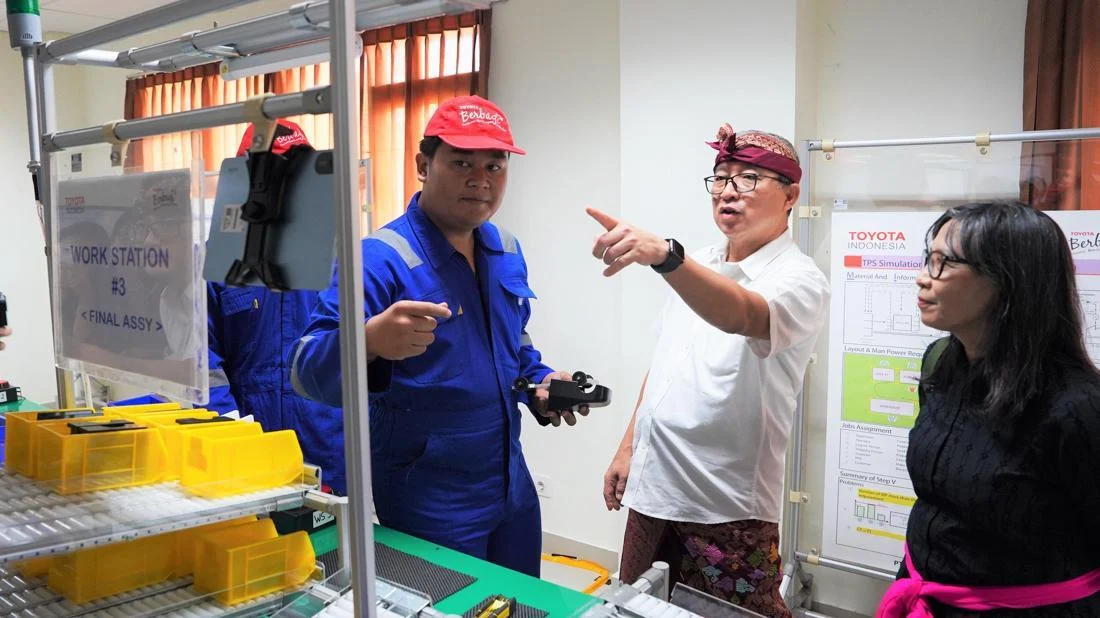
On Thursday, July 23, TMMIN extended this commitment to the academic community of Udayana University (UNUD) in Bali. The event, held at the university’s campus, served as a platform for a high-level knowledge exchange, connecting the academic curriculum of the Faculty of Engineering with the practical realities of the global automotive industry. The centerpiece of the engagement was a public lecture delivered by the President Director of TMMIN, Nandi Julyanto, followed by a strategic visit to the Lean Manufacturing Laboratory to observe the integration of the Toyota Production System (TPS) within the university’s pedagogical framework.
A Strategic Vision for Human Capital Development
The collaboration between TMMIN and Udayana University is part of a broader corporate strategy to foster a generation of industrial professionals who are not only technically proficient but also possess the mental agility required by the fast-evolving manufacturing landscape. Indonesia is currently striving to achieve its "Golden Indonesia 2045" vision, which targets becoming one of the world’s top five economies. Central to this vision is the development of a highly skilled labor force capable of driving innovation and productivity.
In his keynote address, Nandi Julyanto articulated that the Toyota Production System is far more than a set of manufacturing protocols; it is a philosophy of work and a methodology for critical thinking. "TPS is not merely a production system born from Toyota. For us, TPS is a way of thinking and a way of working. Through TPS, every individual is encouraged not to stop at surface-level problem solving, but to have the courage to seek the root cause, make decisions based on facts, and continuously perform improvements. We believe that sustainable progress always begins with small, consistent steps taken every day," Julyanto stated.
This philosophy, often referred to as the "Toyota Way," focuses on the elimination of waste (muda), the optimization of processes, and the empowerment of the individual worker. By introducing these concepts to students early in their academic careers, TMMIN aims to instill a culture of "Kaizen"—continuous improvement—that can be applied across various sectors of the Indonesian economy.
The Pillars of Toyota’s Corporate Culture
During the public lecture, which was attended by students and faculty members from the Industrial Engineering Department, Julyanto detailed the cultural foundations that have sustained Toyota’s global leadership for decades. He outlined several core values that serve as the bedrock of the company’s operations: integrity, visionary thinking, mutual respect, a sense of ownership, innovation, and collaboration.
One of the most striking concepts introduced was the principle of "Bad News First." In many traditional corporate environments, there is a tendency to delay the reporting of failures or errors. However, Toyota’s culture mandates the immediate communication of problems. By prioritizing "Bad News First," the organization ensures that issues are identified at their earliest stage, allowing for rapid intervention and the formulation of effective solutions before a minor error escalates into a systemic failure. This transparency is crucial for maintaining the high quality and safety standards for which the automotive giant is known.
Julyanto emphasized that these values are not restricted to the factory floor. They are universal principles that can enhance personal and professional efficacy in any field. The implementation of TPS is the physical manifestation of these values, driving quality, productivity, and efficiency through every stage of the manufacturing process.
Strengthening the Lean Manufacturing Laboratory
Following the lecture, the TMMIN delegation conducted a site visit to the Lean Manufacturing Laboratory at Udayana University’s Faculty of Engineering. This laboratory serves as a simulated environment where students can apply TPS theories to real-world scenarios. The visit provided an opportunity for Nandi Julyanto to engage in a technical dialogue with lecturers and students regarding the refinement of TPS application in the learning process.
A key topic of discussion was the concept of "Genba," a Japanese term meaning "the actual place." In the context of TPS, Genba refers to the location where the work is performed and where value is created. Toyota’s management philosophy dictates that leaders and engineers must go to the Genba to understand the reality of a situation rather than relying solely on reports or data viewed from an office.
"Through Genba, we want students to feel that the best learning is born from direct experience. In the field, they do not just study TPS as a theory; they learn to see the process as it is, understand why a problem occurs, and then find solutions based on facts. We hope this experience fosters critical thinking, high curiosity, and the courage to continuously improve every process. This is the expertise they will carry when they enter the industrial world," Julyanto added.
Supporting the National Education Roadmap
The partnership with Udayana University is not an isolated event but a component of TMMIN’s long-term commitment to the Indonesian government’s "Merdeka Belajar Kampus Merdeka" (MBKM) or "Emancipated Learning" program. This national initiative encourages universities to collaborate with industry partners to provide students with off-campus learning experiences, internships, and industry-certified training.
Udayana University is one of ten prestigious higher education institutions in Indonesia that have received phased assistance and mentorship from TMMIN in the implementation of TPS. This network of universities includes:
- Institut Teknologi Sepuluh Nopember (ITS)
- Universitas Diponegoro (UNDIP)
- Universitas Gadjah Mada (UGM)
- Universitas Syiah Kuala (USK)
- Institut Teknologi Bandung (ITB)
- Universitas Sebelas Maret (UNS)
- Universitas Hasanuddin (UNHAS)
- Universitas Darma Persada (UNSADA)
- Universitas Udayana (UNUD)
- Universitas Indonesia (UI)
By spreading this knowledge across a geographically diverse range of universities—from Aceh in the west to Bali and Makassar in the central and eastern regions—TMMIN is contributing to a more equitable distribution of industrial expertise across the archipelago.
Industrial Context and Economic Impact
The automotive sector is one of the primary drivers of Indonesia’s manufacturing GDP. As the country seeks to transition from a resource-based economy to a high-value manufacturing hub, the role of companies like TMMIN becomes increasingly vital. According to data from the Ministry of Industry, the automotive sector contributes significantly to national exports. TMMIN alone has consistently been a leading exporter of Completely Built-Up (CBU) vehicles, engines, and components to over 80 countries.
However, maintaining this competitive edge requires a workforce that is adept at navigating the "Fourth Industrial Revolution" (Industry 4.0). The integration of TPS with modern digital technologies—often referred to as "Digital TPS"—is the next frontier. By training students in these methodologies, TMMIN is ensuring that the future workforce is prepared for the digitalization of supply chains, the rise of electric vehicles (EVs), and the increasing demand for carbon-neutral manufacturing processes.
Industry analysts suggest that the gap between university output and industry requirements is one of the main hurdles for Indonesia’s economic acceleration. Programs like the TMMIN-UNUD collaboration directly address this by "industrializing" the academic experience. When students graduate with a deep understanding of Kaizen and Genba, they require less on-the-job training and can contribute to productivity from their first day of employment.
Broader Implications and Future Outlook
The collaboration between PT Toyota Motor Manufacturing Indonesia and Udayana University serves as a blueprint for how the private sector can play a proactive role in nation-building. By opening its "kitchen" of manufacturing secrets and philosophies, Toyota is helping to raise the standard of the entire national industrial ecosystem.
For Udayana University, this partnership enhances its reputation as a leading center for engineering excellence in the eastern part of Indonesia. It provides students with a competitive advantage in the job market, as familiarity with TPS is highly valued not only in the automotive sector but also in logistics, healthcare, and service industries that have adopted lean management principles.
Looking ahead, TMMIN plans to continue expanding its reach, focusing on the sustainability of these academic programs. The goal is to create a self-sustaining cycle of innovation where universities not only learn from the industry but eventually become hubs for research and development that can offer new solutions back to the manufacturing sector. As Indonesia moves closer to its 2045 goals, the seeds of consistency, fact-based decision-making, and continuous improvement planted at Udayana University are expected to bear fruit in the form of a resilient and world-class industrial workforce.
